Seed bombing vs sapling planting for local forests
The central problem in community reforestation is not putting planting material into the ground. It is keeping enough of it alive long enough to establish a functioning forest layer.
Seed Bombing vs Sapling Planting: Reforestation Strategies for Local Forests
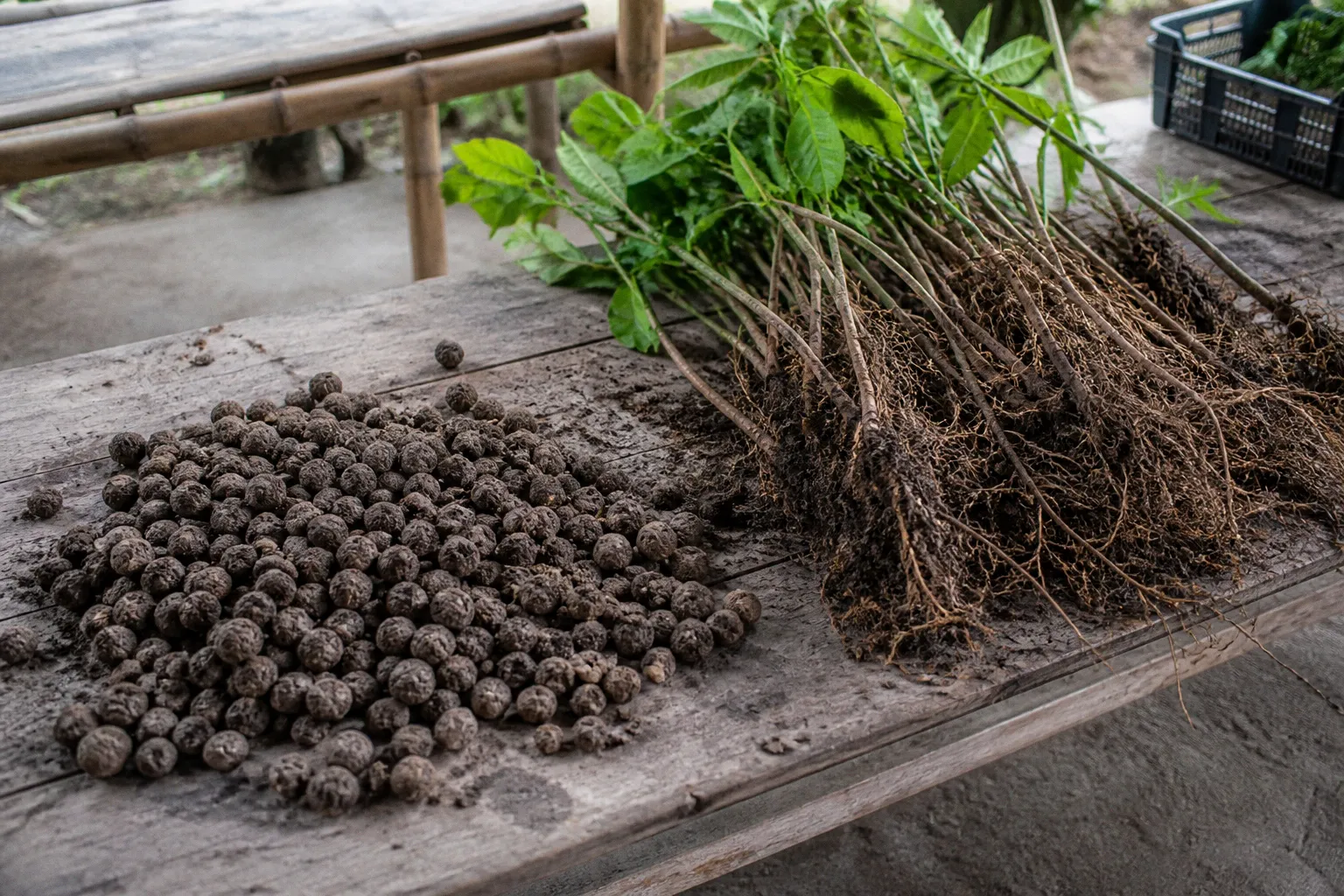
That distinction changes the comparison between seed bombing and sapling planting. Seed balls can distribute native seeds across difficult terrain at low logistical cost, but emergence is uncertain and early seedlings remain exposed to drought, grazing, weeds, and competition. Nursery-grown saplings require more transport, handling, and aftercare, yet they begin with a measurable size advantage and can be positioned with greater ecological control.
Compare car rental deals in United Kingdom
See available offersPartner link — DiscoverCars comparisonIn the debate over seed bombing vs sapling planting for reforestation, the relevant question is therefore not which technique is universally superior. It is which method produces the strongest ecological return for a particular site, budget, season, and maintenance capacity.
The mechanics of seed ball dispersal in guerrilla gardening
Seed bombing uses seeds enclosed in a protective mixture, commonly clay and compost or another locally available organic medium. The ball is dried before distribution and then placed or scattered across a restoration area. Rain softens the coating, allowing the seed to access moisture and begin germination.
The method is often grouped with guerrilla gardening, but the two practices should not be treated as identical. Guerrilla gardening generally describes cultivation on land outside the gardener’s formal control, while forest restoration requires landowner approval, ecological planning, and coordination with local authorities or community institutions. A seed ball is a delivery format; it is not a substitute for site permission or a restoration plan.
The practical appeal is clear. Seed balls are compact, inexpensive to transport, and suitable for volunteer groups that cannot move large quantities of nursery stock through steep or fragmented landscapes. They can be carried by foot, distributed from trails, or placed in areas where vehicles cannot operate without causing additional soil disturbance.
However, the apparent simplicity hides several bottlenecks:
1. Seed selection determines the ecological outcome.
A mix of fast-germinating ornamentals, invasive species, or non-native trees may create short-term visual cover while weakening the local plant community. Seed should come from species adapted to the site’s soil, rainfall pattern, elevation, and disturbance regime.
2. The protective coating has limited power.
Clay can reduce direct exposure and help hold the seed in place, but it does not create a permanent moisture reserve. A seed ball placed before an unreliable rainfall event may remain dormant, decay, or be removed by insects and small animals.
3. Germination is not establishment.
A seedling may emerge successfully and still die within weeks because of heat, grazing, fungal pressure, shading, or competition from grasses. The operational metric should not be the number of seed balls distributed. It should be the number of viable plants remaining after the first difficult season.
4. Distribution is difficult to audit.
When seed balls are scattered widely, project managers may not know where they landed, which species germinated, or which microhabitats performed well. Without mapped sample plots, the project generates activity data rather than impact data.
Seed bombing reduces the cost of distribution, but it does not remove the biological cost of establishment.
Seed balls work best when the landscape already provides some protection: seasonal moisture, leaf litter, partial shade, limited grazing, and soil that has not been severely compacted. They are less reliable on exposed slopes, heavily grazed commons, eroded ground, and sites where invasive grasses dominate the surface.
The technique also has a narrower species envelope than promotional material often suggests. Large-seeded species, species requiring specific soil conditions, and trees with slow or irregular germination may not perform well in a generalized seed-ball mix. A restoration team should test a small batch first, rather than scale a recipe across the entire site.
Survival rates and growth trajectories of nursery-grown saplings
Sapling planting begins with a more visible asset: a young plant that has already passed through germination and early nursery development. This gives the project a degree of control that direct seeding cannot provide. Teams can identify the species, inspect root health, measure plant size, and reject weak or diseased stock before it reaches the field.
The advantage is not simply that saplings are larger. It is that several uncertain stages have already been managed. A nursery can provide controlled watering, initial weed management, and protection from seed predators. By the time a sapling is transported to the restoration site, its root system and stem are sufficiently developed to withstand conditions that would eliminate a newly emerged seedling.
That advantage carries a cost. Saplings need to be propagated, hardened to outdoor conditions, transported without root damage, planted correctly, and protected during the vulnerable period after installation. If they are moved from a shaded nursery directly into a hot, exposed site, transplant shock can erase much of the initial advantage.
The quality of nursery stock should be assessed through practical indicators:
- A root system that is developed but not tightly circling the container.
- A stem with adequate strength for local wind and handling conditions.
- No visible pest infestation, fungal damage, or severe nutrient deficiency.
- A species and provenance appropriate for the restoration area.
- Evidence that the plant has been gradually exposed to field conditions before planting.
- Transport arrangements that prevent prolonged heat exposure and root-ball drying.
Planting density also requires discipline. More saplings per hectare do not automatically produce a healthier forest. Excessive density can create competition for water, encourage weak vertical growth, and increase future maintenance requirements. A mixed planting plan should account for canopy position, mature size, regeneration patterns, and the natural spacing of the target ecosystem.
A sapling’s early growth trajectory is easier to measure than that of a dispersed seed. Project managers can record planting coordinates, species, height class, and condition at each monitoring visit. This produces a usable evidence base for resource allocation: failed plots can receive supplementary planting, while successful plots can move into lighter-touch management.
The main weakness is the risk of treating saplings as guaranteed trees. They are not. A planted tree can die because of poor timing, damaged roots, compacted soil, inadequate watering, browsing, or inappropriate species selection. The survival advantage exists only when planting is matched with aftercare.
Seed balls vs saplings: the economic trade-off
The cost comparison between seed balls and saplings is frequently reduced to the price of the planting material. That is an incomplete calculation. A realistic budget includes preparation, transport, labor, site access, tools, protection, monitoring, replacement planting, and the management time required to coordinate volunteers.
Seed balls generally perform well on the distribution side of the ledger. A small team can prepare large quantities using local materials, and volunteers can carry them over distances that would make sapling transport inefficient. The method is particularly attractive when the restoration area is extensive but difficult to access.
Saplings move the cost in the opposite direction. Nursery production and transport are more resource-intensive, and planting requires organized labor during a narrow seasonal window. Yet the project gains control over placement and can concentrate investment in priority microsites rather than dispersing material across the entire landscape.
| Parameter | Seed bombing | Sapling planting |
|---|---|---|
| Initial material cost | Usually lower, especially with locally sourced materials and seeds | Higher because of nursery production, containers, handling, and transport |
| Site coverage | Broad coverage across rough or inaccessible terrain | More concentrated coverage around prepared planting points |
| Species control | Depends on seed quality, mixing, and distribution accuracy | High if nursery records and field mapping are maintained |
| Early-stage uncertainty | High; germination and emergence vary by species and microhabitat | Lower, although transplant shock remains a risk |
| Water requirement | Lower logistical demand, but seedlings depend heavily on rainfall | Higher operational demand during establishment |
| Monitoring | Difficult unless sample plots are mapped | Easier through tagged plants, coordinates, and survival counts |
| Protection needs | Often overlooked; seedlings remain vulnerable to grazing and trampling | Usually clear and manageable through guards, fencing, or patrols |
| Best operating environment | Moist, moderately protected sites with suitable ground cover | Priority sites where maintenance and protection can be organized |
| Main failure mode | Seeds never establish or are lost before monitoring | Saplings are planted at the wrong time or abandoned after planting |
The key financial metric is not cost per seed ball or cost per sapling. It is cost per established plant after the first critical establishment period. This figure requires monitoring data, but it prevents a common accounting error: declaring a low-cost technique successful because it produced a high volume of distributed material.
For community organizations, the distinction is especially important. A campaign may have enough funding for one large planting day but not enough for repeated watering, replacement, and protection. In that situation, a smaller sapling program with a defined maintenance budget may outperform a larger event designed for visibility.
A practical budget should separate at least four cost centers:
1. Propagation and material preparation — seeds, nursery inputs, clay, compost, containers, and tools.
2. Field deployment — transport, site preparation, volunteer coordination, and planting labor.
3. Protection and maintenance — watering, mulching, guards, fencing, weed control, and grazing management.
4. Monitoring and replacement — survival surveys, data recording, gap planting, and adaptive changes to the species mix.
This structure also improves corporate integration. A company funding an environmental project can support more than a public planting event: it can finance a mapped restoration block, provide vehicle capacity for remote sites, or underwrite monitoring across multiple seasons. That is a stronger resource-allocation model than counting volunteer hours alone.
Ecological suitability: matching the technique to terrain and climate
The choice between seed bombing and sapling planting should start with the site, not the preferred campaign format. Soil, rainfall, slope, land use, fire exposure, grazing pressure, and natural regeneration potential all affect the result.
Seed bombing is more defensible where three conditions overlap:
- Rainfall is sufficiently predictable to support germination.
- The ground offers some protection from erosion, intense heat, or grazing.
- Native seed can be sourced and distributed without losing species identity or viability.
Saplings are more appropriate where the restoration team must make deliberate interventions: stabilizing a degraded corridor, filling gaps around existing forest patches, restoring a school-adjacent woodland, or establishing trees in locations that need immediate spatial control.
Climate variability complicates both methods. A planting calendar based only on the nominal start of the rainy season is not robust enough. The relevant question is whether the soil will remain moist for long enough after deployment. An early shower followed by a dry interval can trigger germination without providing the sustained moisture needed for root development.
Terrain also changes the labor equation. On steep ground, saplings may be difficult to carry and plant, but seed balls may wash downslope or collect in unsuitable depressions. On compacted land, neither method will perform well without some soil preparation. On flood-prone ground, a species mix that survives temporary inundation may be more important than the choice of delivery method.
Before selecting a technique, restoration planners should classify the site across several operational dimensions:
- Moisture regime: reliably moist, seasonally dry, or highly erratic.
- Disturbance pressure: low, moderate, or exposed to frequent grazing, fire, or human traffic.
- Access: vehicle-accessible, foot-accessible, or logistically remote.
- Existing regeneration: abundant natural seedlings, scattered regeneration, or almost none.
- Soil condition: intact, compacted, eroded, nutrient-poor, or waterlogged.
- Monitoring capacity: regular field visits possible, occasional checks only, or no realistic follow-up.
- Protection capacity: community patrols, physical barriers, or no enforceable protection.
Natural regeneration deserves particular attention. If native seedlings are already emerging, the best intervention may be to protect and release them rather than introduce large volumes of new planting material. In many landscapes, removing grazing pressure, controlling fire, and protecting young growth can generate more sustainable yield than repeated planting campaigns.
This is where environmental awareness programs can add practical value. Community members who identify regeneration zones, report grazing damage, and participate in seasonal monitoring become part of the restoration system. Education is not a separate communications layer; it can reduce the maintenance burden when it creates local ownership of specific plots.
Strategic integration: combining methods for higher forest density
A binary choice is often a sign that the project has been designed around an event instead of a landscape. Seed balls and saplings solve different operational problems, so a mixed strategy can allocate each method to the conditions where it has the highest probability of success.
A useful integration model has five stages:
1. Map the restoration area and divide it into management zones.
Mark existing forest patches, erosion channels, access routes, grazing boundaries, water-retaining areas, and sites with natural regeneration. The map does not need to be technologically complex; it needs to support repeatable decisions.
2. Protect and assess natural regeneration first.
Identify where young native plants are already surviving. These areas may need fencing, patrols, weed control, or selective thinning rather than new planting.
3. Use saplings in priority locations.
Plant nursery-grown stock where spacing, species composition, and immediate visibility matter. Examples include demonstration plots, riparian buffers, school-campus greening areas, wildlife corridors, and gaps close to existing mature trees.
4. Use seed balls in suitable expansion zones.
Deploy native seed mixtures across larger areas where terrain limits access but moisture and protection are adequate. Keep species groups separated or recorded where possible, so performance can be evaluated rather than treated as one undifferentiated result.
5. Monitor by plot, not by event.
Record emergence, survival, height or condition class, browsing damage, competing vegetation, and soil moisture observations. Compare performance across methods and revise the next deployment cycle accordingly.
The integration should also reflect the organization’s fleet and logistics capacity. Sapling planting requires reliable movement of living stock within a limited time window. Vehicles need shaded or protected loading arrangements, short routing cycles, and clear unloading points. Seed-ball projects have lower transport sensitivity but may require more distributed volunteer access and better geographic recording.
For a partnership director or funding team, the performance dashboard should remain compact and decision-oriented:
- Number of sites prepared.
- Area under active restoration.
- Quantity of seed balls deployed and saplings planted.
- Native species represented.
- Survival or establishment by method and site.
- Protection coverage.
- Monitoring visits completed.
- Replacement planting completed.
- Cost per established plant, once sufficient data is available.
The dashboard is not intended to turn ecological work into a corporate scorecard. Its purpose is to identify bottlenecks early. If saplings are surviving but transport costs are excessive, the nursery network may need to be decentralized. If seed balls are germinating but seedlings are disappearing, protection or grazing management is the limiting factor. If both methods fail on compacted ground, site preparation—not planting volume—is the missing investment.
The strongest reforestation program is not the one that plants the most material. It is the one that converts the highest share of deployed material into self-sustaining native growth.
Which method should a community project choose?
Seed bombing is the stronger option when the project needs broad, low-cost distribution across terrain that is difficult to reach, and when rainfall, native seed availability, and site protection are favorable. It is especially useful as a supplementary technique around established restoration zones rather than as a universal replacement for nursery planting.
Sapling planting is the stronger option when the project needs predictable placement, identifiable species, faster structural development, or measurable performance at selected sites. It is the more defensible choice for priority corridors, demonstration plots, high-visibility public land, and locations where aftercare can be funded and supervised.
A community organization should avoid selecting either method solely because it is easier to photograph or simpler to report. Public engagement matters, but the ecological asset is created after the event, through survival and regeneration. The funding agreement should therefore include maintenance, monitoring, and adaptive management from the beginning.
For most local forest projects, the practical route is a controlled combination: protect natural regeneration, plant saplings where precision is needed, and use seed balls to extend native recovery into suitable areas. Start with a pilot that includes both methods, track performance through the first difficult season, and scale the approach that produces the best sustainable yield for that landscape.
The policy implication is direct. Environmental funding should move away from planting-day totals and toward multi-season establishment metrics. A project that finances protection, monitoring, local seed systems, and corrective planting may appear less dramatic than a mass distribution campaign, but it creates a more credible path to forest recovery. That is the adjustment that turns community action from a one-day mobilization into durable ecological infrastructure.