Native plant restoration or ornamental gardens for public spaces?
A school courtyard with bare, compacted soil does not become a living landscape simply because volunteers arrive with saplings, paint buckets, and good intentions.
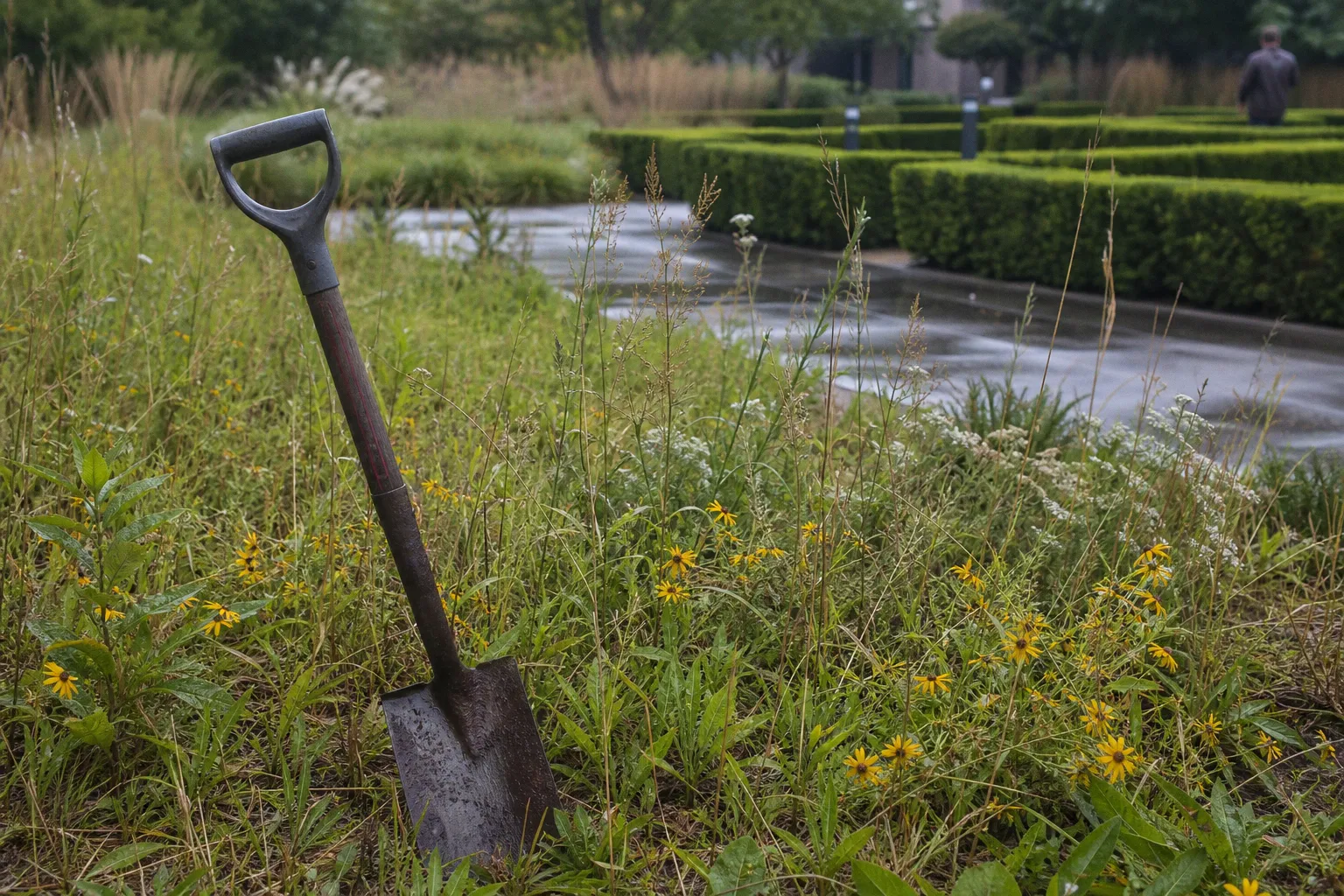
In the villages where I work alongside biker crews, teachers, and panchayat elders, the question comes up in more practical language: should we make this place beautiful for children now, or should we rebuild a piece of the local ecology that has been steadily pushed to the edges?
Compare car rental deals in United Kingdom
See available offersPartner link — DiscoverCars comparisonThe honest answer is that these are not opposing ambitions. Children deserve colour, shade, places to sit, and a campus that tells them their public school matters. At the same time, a row of attractive plants in plastic pots is not automatically an environmental project, and it should not be described as restoration merely because the plants are green. The distinction matters because it shapes everything that follows: whose knowledge is sought, what plants are chosen, how water is used, what maintenance is promised, and whether the work still serves the community after the launch-day photographs have faded.
For anyone weighing native plant restoration vs ornamental landscaping for parks, school grounds, village commons, or small public spaces, the first task is not selecting a species. It is agreeing on what the landscape is being asked to do.
Restoration begins with recovery; ornamental planting begins with experience
Ecological restoration has a specific meaning. It is a process of helping an ecosystem recover, guided by a reference model of the native ecosystem that belonged, or could reasonably belong, in that place. Current international restoration standards place real weight on that reference: practitioners need defined recovery objectives and measurable signs that the site is moving toward them.
That is a more demanding brief than “plant native trees.” It asks us to look closely at what existed around the site, what has changed, and what recovery can realistically mean under present conditions. A degraded pond edge may need stabilising vegetation, cleaner runoff pathways, and habitat structure. A compacted schoolyard may need shade, infiltration, a reduction in dust, and a modest but resilient native planting that children can help care for. These projects can be connected, but they are not identical.
Ornamental landscaping has a different centre of gravity. It is designed around public use and visual experience: a welcoming entrance, seasonal flowers, a neat boundary, shade around a seating area, perhaps a recognisable civic identity. There is nothing frivolous about that. A neglected school often carries an unspoken message that public education can make do with less; a cared-for courtyard can change how students, teachers, and visitors hold the space. Beauty can be part of dignity.
The problem starts when a formal garden, especially one composed primarily of plants from elsewhere and dependent on repeated artificial inputs, is presented as ecological restoration. It is not a matter of purity or plant snobbery. A clipped lawn and decorative shrubs may be perfectly suitable for a high-traffic assembly area, yet structurally and functionally they may resemble the regional native ecosystem very little.
| Question | Native plant restoration | Ornamental landscaping |
|---|---|---|
| Primary purpose | Recover ecological function and native community relationships | Create an attractive, legible, usable public setting |
| Starting point | A locally grounded reference ecosystem | A design brief shaped by use, appearance, and access |
| Plant selection | Native assemblages suited to the site and recovery goal | Can include native and non-native plants, subject to invasive-risk screening |
| How success is judged | Measurable recovery: plant establishment, soil stability, habitat, reduced invasion, hydrology | Plant health, visual coherence, safety, user comfort, seasonal appearance |
| Maintenance logic | Intensive establishment care, then adaptive stewardship | Ongoing grooming, replacement, irrigation, pruning, and visual upkeep may remain central |
| Best fit | Degraded edges, watercourses, buffer zones, larger underused parcels | Entrances, courtyards, gathering areas, formal paths, high-visibility beds |
The most thoughtful public landscapes often use both approaches, but they do so openly. A school can have a formal entrance bed that welcomes families and a native rain-garden strip that slows runoff from the roof. A village park can retain a clear play area while restoring a planted edge near a seasonal drain. Integration, rather than a false choice, is usually where the work becomes durable.
A landscape earns the word “restoration” through its ecological purpose and evidence of recovery, not through the simple presence of native plants.
The reference ecosystem is not a museum piece
When people hear “reference ecosystem,” they sometimes imagine an instruction to recreate a past landscape exactly, as though a public space must be returned to some untouched historical moment. That is neither realistic nor especially helpful for communities living with changing rainfall, growing settlements, roads, playgrounds, and daily public use.
A reference ecosystem is better understood as a working source of guidance. It helps answer questions such as: Which plant communities occur in comparable nearby conditions? What kind of soil cover stabilises this slope? Which species support the local web of insects, birds, and small animals? What seasonal rhythms does the area follow? Which plants can tolerate the shade, drainage, disturbance, and heat that this particular site now experiences?
In our dialogue with village elders, this can be less technical than it sounds. Elders may remember where water stood after the monsoon, which trees held soil along a path, which flowering shrubs drew bees, or why a certain patch was never cultivated. Teachers and students often know which parts of the campus become unbearable at midday and where runoff carves channels through the grounds. The biker volunteers may bring labour and logistics, but they should not arrive believing that movement itself is expertise. Local ecological memory is a form of stewardship.
There is a useful lesson in the way one national park restoration programme has collected seed from within roughly one mile of its work area: local origin can matter because it keeps planting material close to the conditions in which it developed. That distance is not a universal rule, and it would be careless to turn it into one. But the principle is valuable. For genuine restoration, a plant list copied from a catalogue is not enough. The closer we can work with local nurseries, forest departments, botanical expertise, community seed knowledge, and nearby intact patches of vegetation, the more credible the project becomes.
This is also why “native” is not a magic label. A species can be native to a broad region yet be a poor choice for a small school bed, a narrow footpath, or a waterlogged corner. Some native plants spread too vigorously for confined spaces; others need conditions that a compacted public plot cannot provide without serious soil work. Choosing plants for community sustainability means matching them to sunlight, soil texture, drainage, available root space, intended function, and the people who will live alongside them.
Ask the site before asking the nursery
Before a planting day, I would rather spend an hour walking the site with a teacher, a caretaker, two students, and a local elder than spend that hour selecting plants from photographs. The group should map, in plain language:
- where rainwater enters, pools, and exits during the wet season;
- which areas are trampled by children, livestock, visitors, or school events;
- where shade is urgently needed and where solar access should remain open;
- whether there are surviving native plants nearby that indicate what can thrive;
- who will water, weed, mulch, protect, and observe the planting after volunteers leave;
- whether any proposed ornamental species are known locally to spread beyond gardens or create management trouble.
This is not delay. It is the point at which a tree plantation drive becomes a community decision rather than an imported gesture.
Green infrastructure gives vegetation a job to do
The benefits of native plants in urban spaces and village public grounds are often described in broad, pleasant terms: biodiversity, beauty, cleaner air. Those benefits are real, but public projects become easier to defend when vegetation has a clear physical function as well.
Green infrastructure uses soil, vegetation, and natural processes to manage water. In the right conditions, planted areas can help rainfall soak into the ground, filter pollutants, reduce localised flooding, and connect fragmented habitat. That is especially relevant around schools, community halls, roadside parks, and clinics, where hard surfaces often send water quickly toward a single low point.
A planted swale, a rain garden, a vegetated edge around a pond, or even a carefully designed infiltration strip beside a roof downpipe can be more than decoration. It can slow water down. It can make a campus safer after heavy rain. It can reduce erosion that repeatedly undoes repair work. It can also become a teaching site where children observe insects, leaf litter, soil moisture, and the difference between water that runs off and water that enters the ground.
But green infrastructure is not achieved by digging a shallow hole and filling it with whichever flowering plants are available. Soil, slope, overflow routes, plant roots, and maintenance all need to work together. In a small public campus, we should be especially cautious about creating features that look attractive in the first season but become mosquito-prone puddles, blocked drains, or inaccessible muddy patches after one monsoon.
A useful division of labour is often this:
1. Use formal ornamental planting where people gather and movement must remain clear. Entrances, flag areas, memorial spaces, and narrow paths may need low, tidy, durable planting that does not obstruct sightlines or daily activity.
2. Use native, site-appropriate planting where ecological function can lead. Drainage edges, unused corners, boundary buffers, pond margins, and broad sunny areas can carry more layered vegetation, pollinator resources, and soil-stabilising roots.
3. Build transitions rather than hard borders. A public space does not need to choose between a manicured centre and an abandoned-looking edge. Mulched paths, signs made by students, defined planting boundaries, and seasonal care days help residents understand that a naturalistic area is intentional.
4. Design for the people who will maintain it. If a caretaker has one hour a week and water is scarce, the design must respect that reality. The most ecologically ambitious palette is not responsible if it depends on labour and inputs the community has never agreed to provide.
The strongest community green initiatives do not ask people to choose between dignity and ecology; they let a well-kept public space perform both.
The maintenance question is where good intentions become honest plans
The phrase “low maintenance” has done a great deal of damage in environmental conversations. It makes communities feel that a native planting should immediately look settled, need no water, defeat weeds on its own, and survive every disturbance without care. Then, when the first dry season arrives, the project is quietly judged a failure.
New native plantings need establishment care. Depending on soil, microclimate, species, and weather, that can include irrigation, mulching, weeding, replacement of failed plants, and protection from grazing or accidental damage. Guidance for rain-garden establishment commonly uses around one inch of water per week, from rainfall or supplemental watering, as a general benchmark. This is not a universal prescription for every climate or landscape, but it offers a useful reminder: young plants cannot live on aspiration.
Mulch can help conserve moisture and suppress some weeds, yet it also needs restraint. Roughly two to three inches of shredded hardwood mulch is often suggested in rain-garden guidance; a much thicker layer can create problems, including obstructing water flow in designed infiltration areas. In rural school projects, locally available leaf litter or organic material may be more realistic than purchased mulch, provided it does not carry weed seed or smother stems. The right choice is the one the site can sustain, not the one that photographs best.
The maintenance costs of ornamental gardens can be more visible because the work is regular: pruning, mowing, edging, replacing seasonal plants, maintaining formal shapes, and often watering through dry periods. Restoration can look less costly on paper once plants establish, but its early years may require patient monitoring, invasive-plant removal, and careful replacement. There is no defensible universal cost winner. Labour rates, access to water, local plant supply, soil condition, and the design itself change the calculation completely.
What we can compare is the kind of commitment each model asks for.
| Maintenance reality | Restoration-oriented planting | Formal ornamental garden |
|---|---|---|
| First year | Monitoring, watering where needed, weed control, protection, replacing losses | Frequent watering, grooming, pruning, replacement, weed control |
| After establishment | Adaptive care, invasive-species response, periodic monitoring of ecological goals | Continued visual maintenance to preserve the intended appearance |
| Water demand | Often can reduce over time if plants suit the site, but never assume zero need | May remain high where lawns, seasonal bedding, or water-demanding species dominate |
| Community role | Observation and stewardship are central to judging recovery | Care can be shared, but tasks are often concentrated in routine gardening |
| Failure signal | Loss of function: erosion, poor survival, invasive spread, absent habitat response | Decline in appearance, bare patches, overgrowth, plant loss |
This is where agency matters. A community should not be handed a maintenance burden disguised as a gift. Before planting, agree on who has authority to make decisions, where water will come from in the first dry period, whether the school has a caretaker, whether students can participate safely, and what happens if a plant palette proves unsuitable. A smaller planted area with a real care agreement is more respectful than a large plantation with no second chapter.
Invasive risk is a design issue, not an argument against beauty
Not every ornamental plant becomes invasive. That point deserves saying clearly, because careless language can turn a sensible caution into a simplistic fear of anything unfamiliar. However, some ornamental plants do escape cultivation, spread into surrounding land or waterways, and put pressure on native plant communities and biodiversity.
The risk is not theoretical in community spaces. A vigorous plant that looks neat in a nursery bag may spread along drains, colonise disturbed ground, or demand repeated cutting that no one budgeted for. Conversely, an ornamental species may remain contained and perform well in a clearly bounded, heavily used public bed. The answer lies in local knowledge and local restrictions, not in an absolute rule.
For local greening projects, the safest practice is to make the plant-selection conversation more disciplined:
- Prefer species with a known local track record rather than novelty for novelty’s sake.
- Check with locally credible horticultural, forestry, or ecological advisers about invasive concerns in the district.
- Avoid treating broad regional nativeness as proof of suitability for every micro-site.
- Keep potentially vigorous plants away from drains, water bodies, natural edges, and unmanaged land.
- Design physical boundaries and maintenance access into public beds from the beginning.
- Record what was planted, where it came from, and who will review it after one monsoon and one dry season.
That last step may sound administrative, but it can be simple: a hand-drawn campus map, plant labels made by students, a watering rota, and a seasonal walk with the school committee. These small acts create continuity. They allow a community to notice that a planted edge is holding soil, that a species is failing in deep shade, or that a plant is spreading where it should not. Ecological awareness programmes become meaningful when observation leads to action.
A public landscape should make its promise visible
I have learned that the debate is rarely settled by telling a community that one approach is morally superior. A formal flower bed may be exactly what a school entrance needs after years of neglect. A native restoration patch may be exactly what a flood-prone boundary needs after years of erosion. Trouble arrives when we blur their purposes, understate the care required, or assume that local people will quietly absorb the consequences of a decision made elsewhere.
The better route is to name the promise of each space. If we call it restoration, we should be ready to identify the local ecological reference, the recovery goals, and the signs we will watch over time. If we call it an ornamental garden, we should be honest about its aesthetic purpose and recurring maintenance. If we combine them, as many resilient public places should, we need a design that lets each part do its work without pretending they are the same thing.
For grassroots engagement, this is the principle I return to: stewardship begins when people can see that the land has been designed with them, not merely improved in front of them. A planted public space lasts when its ecology, its daily use, and its caretakers have all been invited into the same conversation.