Tree planting drives: avoiding the sapling survival trap
We've all hauled out to a site with fifty sacks of saplings, a crew of twenty volunteers, and a local news crew by noon. Every hole backfilled. Every sapling vertical. The count posted on social media before the last truck clears the gate.
Job done.
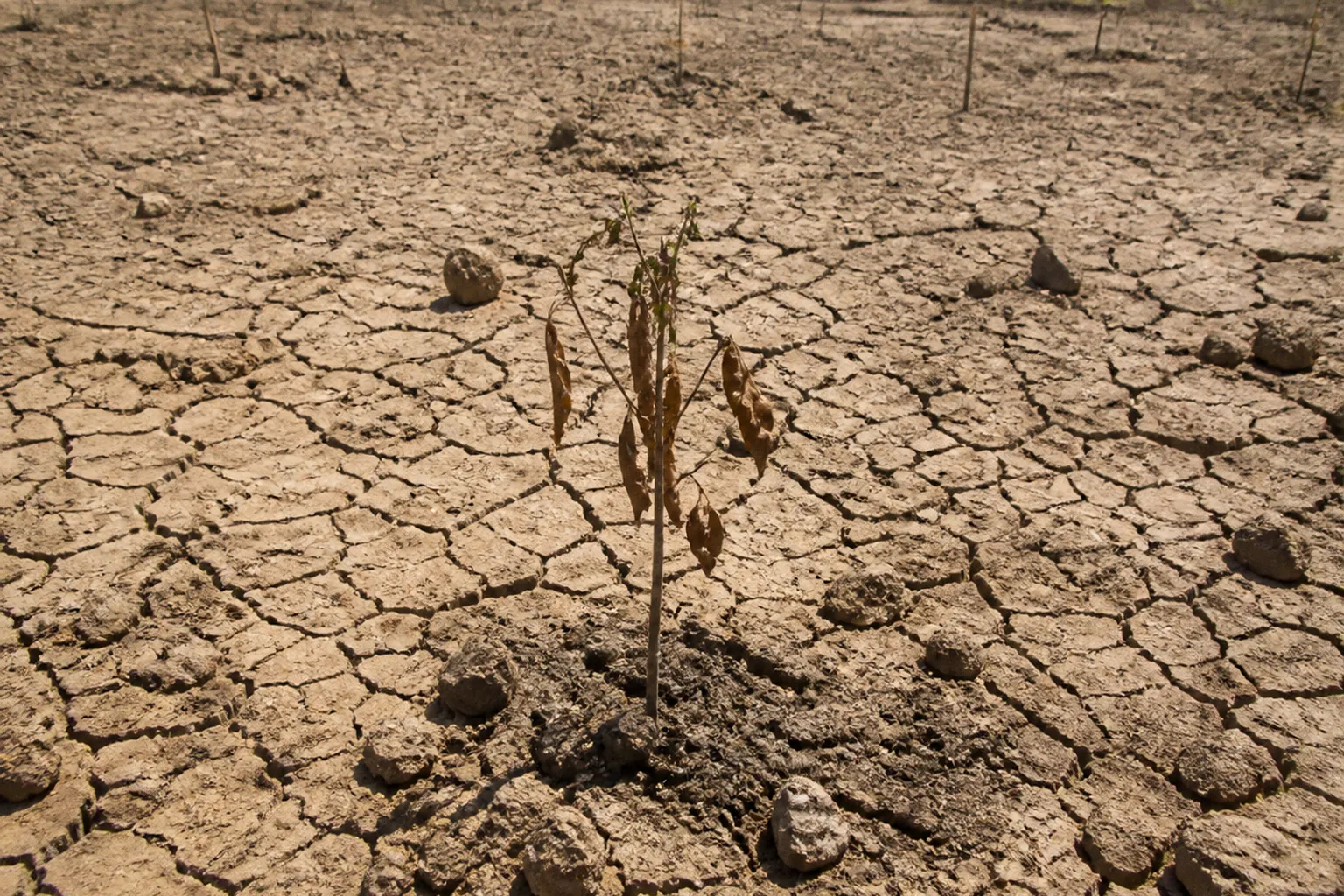
Except it isn't. A 2022 study from the UK Centre for Ecology & Hydrology tracked 176 forest restoration sites across tropical and subtropical Asia. In that study population, average first-year mortality was 18%. At the five-year mark, the average mortality rate had reached 44%. That is nearly half the planting investment—procurement budget, volunteer hours, site preparation—gone before the trees reach a meaningful canopy. It is not a universal failure rate for every planting drive, and it is not what happens automatically when one task is missed. It is a warning about what can happen across tropical and subtropical restoration projects when survival is treated as an afterthought.
The planting day isn't the bottleneck. What comes after is.
The Myth of the Golden Shovel: Why Planting Isn't Reforestation
A study published in May 2024 named the pattern precisely: tree-planting initiatives frequently prioritize media-friendly planting events over long-term maintenance, monitoring, and funding. Media-friendly events, massive volunteer turnouts, and a planted count that reads well in the grant report. What gets structurally absent is the less photogenic machinery: long-term maintenance contracts, monitoring schedules, replacement budgets, and a named human being responsible for the site six months after the cameras leave.
We've watched it repeat across dozens of drives. The planning energy goes into procurement and logistics for a single day. The post-planting phase gets a vague promise and a prayer. That's a structural failure, not a staffing one. You can't fix a funding gap with enthusiasm. You fix it by planning the back half of the project before you order the first sapling.
A planting drive is an event. Reforestation is a care system. The distinction matters because the two activities measure success differently.
An event counts holes filled. A restoration project counts living trees over time, records where losses occurred, and changes its methods accordingly. An event needs volunteers, transport, tools, and a camera-ready site. A restoration project also needs water access, species knowledge, guards, replacement stock, inspection dates, and someone empowered to make decisions when the original plan stops matching the ground.
A sapling planted but unmaintained is a hole filled with air and a receipt. The shovel doesn't anchor anything. The next eighteen months do.
The golden shovel is the belief that planting itself is the decisive act. It has an attractive simplicity: buy a tree, dig a hole, put the tree in it, move on to the next one. But the difficult work is not evenly distributed across the project. Planting day is visible and finite. Survival depends on a chain of less visible decisions made before and after it.
That chain begins with the site.
Site preparation is not ceremonial digging
Before we haul a single sapling to the planting line, three questions need hard answers.
First: what species match this soil and climate zone? A teak sapling in waterlogged laterite is a dead sapling waiting for a date. Match species to the microsite—drainage, sun exposure, existing canopy competition—not to the grant proposal photo. If a nursery supplier pushes a species because it "looks good" or "grows fast," push back. Fast-growing isn't the same as site-appropriate.
A site is rarely uniform. One corner may hold water after rain while another dries within hours. A south-facing edge may receive punishing afternoon sun; a shallow depression may be shaded by existing vegetation. Treating the whole plot as a single planting condition creates predictable losses. Species selection should follow those local differences rather than forcing the site to conform to a procurement list.
Second: has the ground been cleared and loosened to adequate depth? Root systems need un-compacted soil. Scrape the walls of a test pit with your shovel. If the blade glazes the surface and skips, you've got compaction. Break it with a mattock or a mechanical ripper, or the roots circle, bind, and strangle themselves within two seasons.
The hole itself can look generous while the surrounding soil remains functionally sealed. A narrow pocket of loose soil surrounded by hard ground gives the planting crew a satisfying measurement but gives the roots nowhere to expand. It also changes how water moves: the pit may fill and remain saturated, or water may run away across the compacted surface instead of entering the root zone.
Third: is there a water source within hauling distance? Not theoretical distance—actual distance with the vehicle and container you have on hand. If the nearest borewell is two kilometers from the planting line and you're running a single tanker with a 2,000-liter capacity, your watering plan fails before day three on a dry site with a hundred saplings. Map the logistics before you dig the first pit.
Watering plans often fail on paper before they fail in the field. Someone identifies a source, assumes the tanker can reach it, and leaves the remaining calculation to the planting crew. The crew then spends its morning transporting water instead of applying it, or cuts the amount per sapling to make the supply last. A source is useful only when the entire route, container, filling time, and distribution method work under site conditions.
Decoding Mortality Rates: The Reality of Tropical and Urban Survival
Those headline statistics—18% in the first year and an average 44% at five years—need careful handling. They describe the tropical and subtropical study population, not every tree planting drive in every climate. The five-year figure is an average mortality rate across the 176 forest restoration sites tracked in that research. It does not mean that every drive that misses one item on a planning list automatically produces a 44% loss, nor does it turn a single project into a pass-or-fail verdict.
A well-executed site with appropriate species selection, adequate watering, and structural protection can perform much better. A poorly matched project can perform much worse. The point of the number is not to create a universal failure label. It is to make the cost of neglect visible.
Urban cohorts tell a parallel story, with a different set of pressures. Typical annual mortality for newly planted city trees runs between 6.6% and 7.0% across the first five years. That translates to a population half-life of 13 to 18 years—meaning half the trees planted today may be gone before a teenager born this year graduates secondary school.
Urban planting is not simply rural restoration moved onto a pavement. The stresses are different. Roots meet compacted soil, buried services, paving, reflected heat, restricted rooting volume, salt, vehicle damage, and irregular watering. A city tree may not face the same seasonal conditions as a sapling in a restoration block, but it can be trapped in a tiny, hostile growing space with no dependable caretaker.
The variance isn't random. It's mechanical. Get the inputs right, and the numbers move. Ignore them, and you're planting expensive firewood.
| Metric | Tropical and subtropical restoration sites | Urban tree cohorts |
|---|---|---|
| Population described | 176 forest restoration sites across tropical and subtropical Asia | Newly planted trees in urban settings |
| First-year mortality | 18% average in the study population | 6.6–7.0% annual mortality |
| Five-year mortality | 44% average in the study population | Approximately 30–35% cumulative |
| Population half-life | Not specified in the available study data | 13–18 years |
| Main pressure points | Species match, site preparation, water, protection, and maintenance | Watering, rooting space, heat, physical damage, and long-term maintenance |
The table is useful only if it changes how a project is managed. If a team cites mortality data in a funding proposal but does not record its own losses by species, location, and likely cause, it is using research as decoration. The first responsibility of a planting drive is not to promise a survival rate it cannot yet prove. It is to create the records that make improvement possible.
Root soaking is the first mechanical step
Once saplings reach the site, root soaking is not a ceremonial pause before the photographs. Submerge the root ball for four to five hours before transplanting. Hydrated roots recover from transplant shock faster. This is load-bearing preparation, not a nice-to-have.
The handling matters as much as the soaking. Keep root balls from drying in direct sun, avoid dropping or dragging container stock, and do not leave plants waiting beside open holes while the crew works through the line. A healthy nursery sapling can be damaged before it ever enters the ground. By the time wilting becomes obvious, the root system may already have lost the margin needed to recover.
The planting sequence should be organized around keeping roots protected, not around keeping volunteers busy. Stage manageable batches, shade what is waiting, and make sure the person placing the sapling understands the final position of the root collar. A tree planted too deeply can suffer from stem and root problems even when the hole was dug with good intentions.
Hydration and Root Health: Beyond the Initial Planting Day
The first twelve weeks after planting define whether a sapling survives its first year. Break the protocol into phases. Assign each phase to a specific crew lead with a phone number and a calendar. "The community will look after it" is not an assignment. It is an aspiration with no route to accountability.
Weeks 1–4: establish a water cycle
Water deep, not merely frequent. The objective is to soak the soil to a minimum depth of six inches around the root zone. Shallow, surface-level watering promotes surface roots—and surface roots dry out, crack, and die during the first hot spell. One deep soak per week during dry periods may be enough on a site that holds moisture well. Two may be necessary if temperatures push past 40°C and the soil drains quickly.
The exact schedule must respond to the site. A fixed calendar can be as misleading as no schedule at all. Check the soil rather than assuming that a wet surface means the root zone is hydrated. Conversely, do not turn every watering round into a flood: poorly drained ground can drown roots while the crew believes it is preventing drought stress.
Water distribution creates another common blind spot. The first trees in the line often receive plenty because the tanker is full. The last trees receive less because the crew is tired, the route is long, or the supply is running low. Divide the site into sections, record which sections were watered, and give the crew a method for confirming that the intended volume reached the root zone.
A watering round also offers an early inspection opportunity. Look for leaning stems, exposed roots, broken guards, animal tracks, compacted soil, and water pooling at the base. Maintenance is cheaper when it is attached to a route the crew is already making.
Mulch protects roots only when it is applied correctly
Ring the base with organic mulch—wood chips, dry leaf litter, or coir pith. Two to four inches is a useful depth, with a three-inch clearance ring around the trunk. Mulch piled against the stem traps moisture against the bark. That invites rot and fungal infection.
We've pulled dead saplings where the cause of death was a mulch volcano: someone's well-intentioned heap of leaves rotting the cambium layer from the outside in. The material looked like care from a distance. Up close, it was a wet collar pressed against a vulnerable stem.
Mulch should reduce evaporation and moderate soil temperature, not become a substitute for watering or a way to hide poor planting. It should be spread broadly enough to cover the active root area without touching the trunk. Inspect it after heavy rain and after visits by livestock. It can wash away, compact into a layer that sheds water, or become mixed with debris that damages the stem.
Read the root zone, not just the leaves
A wilted leaf is an obvious warning, but it is not always a simple request for more water. Wilting can follow root damage, poor drainage, transplant shock, heat exposure, or a broken stem. Watering every distressed sapling without diagnosing the cause can turn a dry problem into a root-rot problem.
The monitoring crew should record patterns. Are all the saplings on one slope struggling? Are losses concentrated among one species? Do damaged trees sit next to a road or cattle route? Does the problem appear after every tanker visit? These observations turn a planting drive from a ritual into a learning system.
The planting event ends in a day. The care cycle runs eighteen months. Build your budget and your roster around that ratio, or watch your survival statistics flatten.
Structural Protection: Guarding Saplings Against Environmental Stress
Weeks 4–12 are not a safe interval between planting and the first report. They are when structural protection becomes decisive.
Install tree guards before the first grazing cycle reaches the site. HDPE mesh cylinders or white-painted bamboo stakes can both work when they are correctly sized, firmly installed, and checked after weather or livestock movement. The white paint matters because it reflects direct sunlight, reducing heat stress on the exposed stem during peak afternoon hours.
In areas with cattle, goats, or stray livestock, the guard is not decorative hardware. It is the difference between a sapling and a feedlot.
Protection also has to account for people. Urban saplings are vulnerable to vehicle impacts, informal parking, bicycles, construction materials, and repeated contact from pedestrians. A guard that is too small can rub against the stem as it grows. One that is too weak can collapse into the root zone. One that is installed without considering maintenance access may protect the tree from animals while preventing anyone from watering it properly.
The solution is not to put a guard on every tree and assume the risk has been solved. Inspect the connection points, the stake stability, and the clearance around the trunk. Make sure the protection is visible at night and does not create a new hazard for people using the path. A project that ignores the surrounding movement patterns will keep repairing the same damage.
Environmental stress arrives in combinations
Saplings rarely die from one neatly isolated cause. Heat increases water demand. Compacted soil limits root expansion. A damaged guard exposes the stem to animals. A dry spell then turns a manageable weakness into a fatal one.
That is why the maintenance team should resist single-cause explanations based on one quick visit. "The rains failed" may be true, but it does not explain why one species survived on the same plot while another did not. "The goats got in" may describe the visible damage while missing the fact that the guard had already loosened weeks earlier.
During each inspection, record at least:
- whether the stem is upright and intact;
- whether the root collar is exposed, buried, or damaged;
- whether soil is compacted, cracked, waterlogged, or covered with functioning mulch;
- whether the guard still stands at the intended height and clearance;
- whether animals, vehicles, tools, or people have caused physical damage;
- whether the sapling is alive, stressed, dead, or missing;
- and whether a replacement is needed immediately or should wait for the next suitable planting window.
The purpose is not to produce an impressive spreadsheet. It is to identify where the project is losing trees and whether the same intervention is working or whether the project needs to change its approach.
Building a Maintenance Culture: Shifting Focus from Events to Ecosystems
None of the previous sections matter if the organization behind the planting drive has not built a maintenance culture. A drive can do every physical step well on planting day and still watch half the saplings die because nobody owned the next eighteen months.
A maintenance culture is not a slogan on a poster. It is a set of routines, names, budgets, and feedback loops that survive the departure of the original organizer, the closing of the grant window, and the loss of public attention. It treats the planting site as an asset under management rather than a memory of a good day.
Name the person, not the community
"The community will look after it" is the most common sentence in the closing paragraph of a project report. It is also the sentence most often followed by a dead site.
Communities are made of individuals with their own time pressures, crops to tend, jobs to attend, and competing demands on their water and labor. A vague collective responsibility becomes, in practice, no responsibility at all. A named steward—paid or formally contracted, with a phone number on a roster and a defined weekly task—changes everything.
The steward does not have to do the work alone. They coordinate the volunteers, flag problems early, and keep the records. Without that single point of contact, problems surface only when the trees are already gone.
Pay the back half of the project, not just the front
Grant cycles reward visible activity. Funders like photographs, head counts, and event reports. Maintenance is invisible, repetitive, and easy to cut when the money runs thin. The result is a financing structure that lavishes resources on day one and starves the period that determines survival.
A serious project allocates a defined share of its budget to the eighteen months after planting—watering labor, replacement stock, fuel, guard repairs, inspection visits, and data collection. If a funder will not release those funds unless the planting event happens first, negotiate the post-planting tranche before the first sapling leaves the nursery. The conversation is uncomfortable. The alternative is a year-two audit that shows what happened to the money.
Build a handover, not a finale
A planting drive that ends with a celebratory post and a ribbon-cutting has already failed in design terms. A drive should end with a written handover: site coordinates, species list, planting layout, watering schedule, supplier contacts, known risks, the steward's name, and the budget for the next four seasons.
The handover is the project's first surviving artifact. It is what the next person—whether a successor organizer, a municipal parks team, or a returning volunteer—uses to continue the work without relearning it from scratch. Without it, every restart costs the project the same lessons twice.
Record losses like an honest ledger
Mortality data is not a public relations instrument. It is the operating feedback loop of a restoration project. A team that does not record its own losses by species, location, season, and probable cause cannot improve. A team that records them honestly and acts on the patterns will, over three or four seasons, change its species mix, its watering intervals, its guard design, and its site selection. That is what a learning system looks like.
The first project rarely runs well. The third project on the same site, run by the same team with the same records, will run measurably better. That compounding effect is the real return on a maintenance culture. It is the only return that lasts beyond the photograph.
Trees do not survive on enthusiasm. They survive on routines. The drive that ends in a day is a ceremony. The project that runs eighteen months is a forest.
The headline lesson of the survival statistics is not that planting fails. It is that planting is the smallest part of the work, and the work the public never sees is the part that decides whether the forest arrives.