Single-stream or multi-stream recycling: cost and time traps
Single-stream vs multi-stream recycling for communities is usually pitched as a choice between convenience and discipline. That is too soft. The real choice is where the system absorbs its friction.
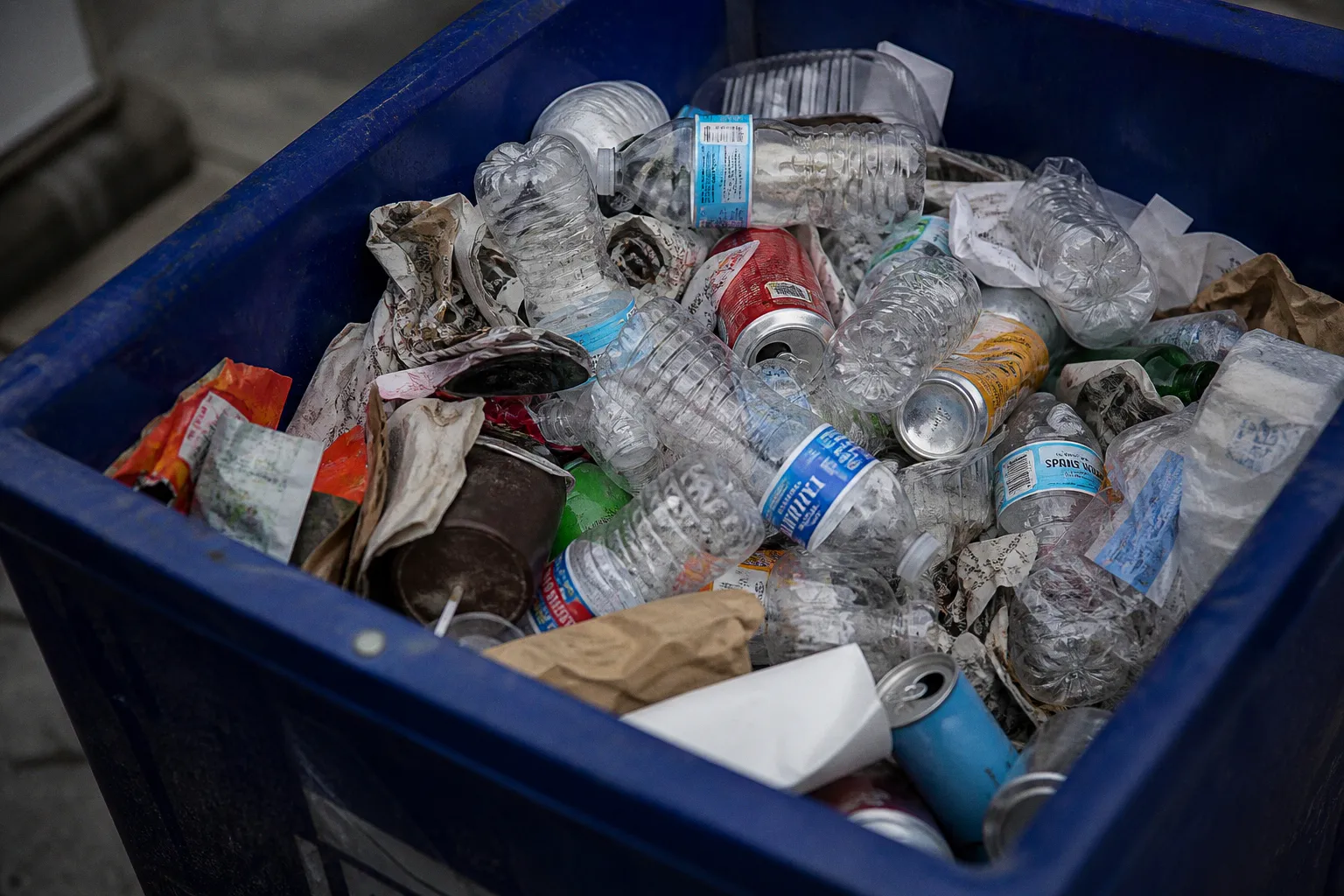
With single-stream, residents put paper, containers, and approved packaging into one cart. The truck makes a faster stop. The sorting facility takes the hit later. With multi-stream—often called dual-stream when paper is kept separate from containers—the crew spends more time at the curb, handles more containers or compartments, and sends cleaner material downstream.
Compare car rental deals in United Kingdom
See available offersPartner link — DiscoverCars comparisonNeither model fixes a weak program. A single cart does not make wrong material disappear. A second cart does not repair a route built for a truck that cannot service it. We have seen community programs fail before the first bale leaves the yard because the organizers counted households, not seconds per stop, contamination loads, truck turnaround space, and the actual intake rules of the processing facility.
The bin is not the system. The route, the truck, the crew, the sorting line, and the buyer’s specification are the system.
The economic trade-off: save seconds at the curb, spend them at the facility
Single-stream collection has a plain operational advantage. One cart. One lift. One hopper. Fewer decisions at the edge of the road.
In an illustrative EPA collection model using fully automated trucks and 90-gallon carts, weekly single-stream service came in at $54.40 per household per year. Weekly two-sort collection came in at $58.67. That is a 7% difference in the modeled scenario.
The gap widened when pickup moved to every other week: $32.86 per household annually for single-stream against $45.76 for two-sort. The reason was not mysterious. A second container adds handling time. On a thin rural route, it can also add truck movement, backing, missed stops, and calls from households that put the wrong cart out.
The time figures show where the money goes:
| Operating measure in the EPA illustrative model | Single-stream | Two-sort / multi-stream |
|---|---|---|
| Weekly collection + travel time per household | 28.64 seconds | 29.64 seconds |
| Every-other-week collection + travel time per household | 28.64 seconds | 37.64 seconds |
| Weekly annual collection cost per household | $54.40 | $58.67 |
| Every-other-week annual collection cost per household | $32.86 | $45.76 |
A second per household looks harmless on a spreadsheet. It is not harmless across a route. Add 1,500 stops, bad shoulders, narrow gates, school-zone traffic, rain, and a driver who has to bypass a parked tractor. The route runs long. Then the truck misses the transfer window or comes back with overtime attached.
But collection is only the front half of the job.
A 2022 life-cycle case study in a North American college city found that single-stream collection cost slightly less per ton than multi-stream collection: $86.96 versus $89.00. At the materials recovery facility, or MRF, the balance moved the other way. Single-stream processing cost $21.33 per ton, compared with $20.71 for multi-stream.
Those are not universal price cards. They are a useful warning. The collection crew can save money while the facility burns it back off through extra sorting, residual disposal, line cleaning, and lower-value output.
The cheap cart at the curb can become the expensive ton at the sorting line.
For a community group, the trap is simple: approving a collection model because it has the lower truck quote, without reading the processing agreement. If the MRF charges for contamination, rejects loads, tightens specifications, or pays less for mixed commodity bales, the program has not saved money. It has shifted the bill to a part of the system no one budgeted.
Contamination is not one number. Measure the right failure.
“Contamination rate” gets thrown around as if it means every bad item found anywhere in the system. It does not.
For community program management, inbound contamination is the number that matters first. It means material residents put into the curbside recycling cart even though the local program does not accept it. That number tells us whether the instructions, cart labels, outreach, and collection rules are holding.
It is different from:
- MRF residuals: everything the facility ultimately removes from the incoming stream, including material damaged or lost during sorting.
- Commodity-bale contamination: unwanted material remaining in a finished bale sold to a paper mill, plastic reprocessor, or other buyer.
- Rejected loads: material a facility will not accept under its contract terms.
Mix these figures together and the program cannot diagnose itself. A high inbound contamination figure points toward resident behavior, unclear accepted-material rules, weak cart labeling, or inconsistent enforcement. A clean inbound stream can still produce poor bales if the MRF setup is wrong for the material mix. Those are different repairs.
The field evidence is rough but useful. A 2019 survey of cities in California, Oregon, and Washington recorded inbound curbside contamination ranging from 8% to 46% in the California sample, with a 20% average. Oregon and Washington ranged from 5% to 20%, averaging 11%. The sample was too limited to prove that one collection model caused those differences. That matters. Do not use a regional survey as a verdict on every single-stream program.
Still, a cart carrying one-fifth wrong material is not a recycling system running a little rough. It is a sorting facility being asked to haul and separate waste under a recycling label.
Plastic bags are a hard example. They were among the top five contaminants reported by surveyed cities and MRFs. A bag can wrap around screens, shafts, and other sorting equipment. Then the line stops. Workers cut material loose. Throughput drops. Maintenance climbs. Safety exposure rises.
The same operational rule applies to every questionable item: do not assume a material belongs in the cart because another town accepts it. Local haulers and local MRFs set the accepted list. A program can collect glass, certain film plastics, cartons, or other materials only if its contracted system has a place to process them. The cart decal needs to match that list exactly.
Build a contamination measurement routine before changing the stream
We do not need a glossy awareness campaign first. We need a baseline.
1. Get the MRF’s inbound contamination definition in writing. Ask what counts as non-accepted material, how loads are sampled, how often samples are taken, and whether the figure is measured by weight or visual estimate.
2. Separate household mistakes from collection failures. If crews collect overflow bags beside carts, loose material blows out during loading, or commercial waste enters the route, log that separately. Do not blame residents for material the operation allowed into the load.
3. Map bad material by route, not only by townwide average. One apartment cluster, market lane, school corridor, or remote village drop-off point can anchor the whole contamination number.
4. Photograph the repeat items. Not for public shaming. For repair. If the same bags, food containers, textiles, or mixed packaging keep appearing, the instructions or the service design is failing at that specific point.
5. Tie education to a facility rule. “Recycle right” means nothing. “Paper in this cart; containers in that cart; no loose bags because they shut the sorting line” gives people a usable instruction.
Single-stream programs need this discipline more urgently because the one-cart setup hides errors. When everything goes into the same opening, residents can treat the cart as a disposal bypass. Multi-stream creates an extra decision at home. That slows participation for some households, but it also makes material categories visible.
Route density and equipment decide whether the plan can move
We have worked enough rural school corridors to know that the distance between pins on a map is not the route. A route is axle load, turning radius, monsoon runoff, gate width, parked vehicles, and whether a truck can reverse without turning a collection stop into a hazard.
The same applies to community recycling.
Single-stream works best when the collection setup can use its mechanical advantage: compatible standardized carts, automated or semi-automated lifting, dense enough stops, and a facility able to receive mixed recyclables. If residents use sacks, mismatched bins, open baskets, or shared roadside piles, the “one cart, fast lift” promise falls apart quickly.
Multi-stream needs a different kind of fit. The program must decide where separation happens and how it stays separated:
- Two carts collected by separate passes can double the route exposure if the trucks cannot carry both streams.
- A split-body vehicle can keep streams apart, but it needs the right compartments, load balance, maintenance support, and discharge setup.
- A staffed drop-off depot can work where homes are far apart, but staffing, signage, storage, rain cover, and contamination control become the operating burden.
- School campuses can use source-separated collection points for paper, bottles, cans, and organics, but only if the custodial route can haul each stream without remixing it at the back gate.
The last failure is common. We install labeled stations. Students and staff sort. Then one worker empties every bag into one drum because the service vehicle has only one compartment. The project has performed environmental education and achieved nothing material.
Before choosing a stream, torque through these site conditions:
| Field condition | Single-stream pressure point | Multi-stream pressure point |
|---|---|---|
| Long distance between households | Truck mileage can erase faster-stop savings | Extra containers or separate passes can make sparse routes unworkable |
| Narrow lanes and irregular access | Large automated carts and trucks may not fit | Smaller manual collection can work, but handling time rises |
| Existing mixed-material MRF nearby | Facility may accept the stream, subject to contamination terms | Facility may not want separated loads or may require specific grades |
| School or community drop-off point | One opening is easy to use but attracts wrong items | Multiple bins require supervision and clear internal hauling |
| Limited crew and vehicle maintenance | Fewer collection motions help | Split-body trucks and separate handling add equipment dependencies |
| High recurring contamination | Sorting cost and rejected-load risk rise | Separation can improve feedstock, but only if residents follow it |
There is no clean answer from the words “urban,” “rural,” or “community-led.” We need actual route data: stops per hour, distance to the transfer point, loading method, cart size, road restrictions, frequency, and the facility’s receiving hours.
A pilot route should run long enough to expose the ugly parts. One dry-season demonstration day proves nothing. Run it through normal traffic, full carts, staff absence, and bad weather. Record missed stops, driver time, fuel, contamination, overflow, and complaints. Then decide whether to expand.
The MRF is not a black box. Ask what it can actually sort.
Organizers often negotiate collection first because trucks are visible. The MRF contract is where the system either anchors or breaks.
Single-stream material enters a facility mixed. The MRF has to separate paper, cardboard, metal containers, plastics, and other accepted fractions using screens, magnets, optical sorters, air systems, conveyors, and manual quality control. That takes capital, maintenance, power, trained operators, and a residual outlet. If the local facility lacks the equipment or does not want the material mix, single-stream is not an option just because it sounds modern.
Multi-stream or source-separated material can reduce the burden. Paper that arrives without broken containers, food residue, and incompatible packaging has a better chance of becoming a saleable commodity. The EPA notes that effective source separation produces cleaner feedstock and that source-separated recyclables have historically achieved the highest sales revenues. The trade-off is collection efficiency. There is no free torque.
For any prospective processor, get direct answers to these questions:
- Which materials are accepted from this exact route, not from the processor’s general brochure?
- Are paper and containers preferred mixed, separate, or delivered in defined grades?
- What inbound contamination threshold triggers a surcharge, rejection, or load downgrade?
- Who owns the material after pickup, and who carries the disposal cost for rejected material?
- Does the facility sample every load, periodic loads, or only loads that look bad?
- What happens when commodity buyers tighten their specifications?
- Can the facility provide monthly inbound contamination data by route or customer account?
- What equipment failures or seasonal capacity constraints have changed its intake rules in the past year?
That is not bureaucracy. It is how we stop a community from hauling material twice: once as “recycling,” then again as residual waste.
If the processor cannot name the accepted materials, the contamination rule, and the rejection path, do not build your route around its promise.
School-campus greening projects need an added layer. A campus stream can be cleaner than curbside material because bins are controlled, but it is also vulnerable to event days, canteen waste, cleaning contractors, and storage gaps. Paper left in a damp room through a wet week is not clean feedstock. It is a disposal problem with a recycling label still attached.
Carbon claims need route math, not good intentions
The environmental comparison is not as neat as people want it to be.
The 2022 college-city study estimated collection-stage greenhouse-gas emissions at 10.56 kilograms of CO2e per ton for single-stream and 9.67 kilograms for multi-stream. The difference was small, and the researchers cautioned that route distance and local system design can change the result.
That caveat is the whole job. A multi-stream program may create cleaner output but add vehicle movement, longer service time, or extra trips. A single-stream program may run a simpler collection route but require more complex MRF processing and generate more residual material. The direction of the final result depends on the equipment and geography in front of us.
For volunteer networks serving rural schools, we should not bolt recycling collection onto motorcycle routes and call it low-carbon by default. Two wheels are useful for scouting, education, small-item pickup, and reaching places a truck cannot enter. They are not a substitute for bulk hauling. Material needs consolidation. Put collection points where a larger vehicle can load safely. Use covered storage. Keep paper dry. Do not send riders on repeated low-volume runs because no one planned a pickup schedule.
The practical environmental win is usually boring:
- reduce material entering the waste stream in the first place;
- separate the fractions the local processor can actually recover;
- consolidate enough volume for a safe, predictable haul;
- keep contamination out before it tangles equipment or ruins a bale;
- track residuals honestly rather than counting every full bin as diversion.
That sequence holds in a village school, a district market, and a municipal curbside program.
Choose the model after the audit, not before it
Single-stream recycling can be the right call when a community has compatible carts and trucks, a dense enough route, a capable local MRF, enforceable contamination controls, and a contract that does not hide processing penalties. It can reduce collection time and simplify participation.
Multi-stream can be the right call when the processor values separated material, local collection can handle the extra sort without route collapse, and the community can keep instructions simple enough to prevent bin roulette. It can produce cleaner feedstock and protect material value.
The wrong move is declaring either system “best” before the operating facts are on the table.
We would not approve a school water line without checking the pump, pipe run, storage tank, and drainage. Do not approve a recycling model because one cart looks easier in a public meeting. Put a stopwatch on the route. Get contamination data from the facility. Read the rejection clause. Confirm where each material goes when the truck leaves.
Then pick the system that your roads, crews, equipment, and processing partner can carry every week.
If those four parts do not hold, the program is not recycling. It is just hauling a better-sorted problem down the road.