School tree planting projects: a roadmap from plan to growth
A school campus tree planting project usually fails before the first sapling leaves the nursery. The failure starts when someone marks a patch of ground, orders trees, and treats digging as the main job.
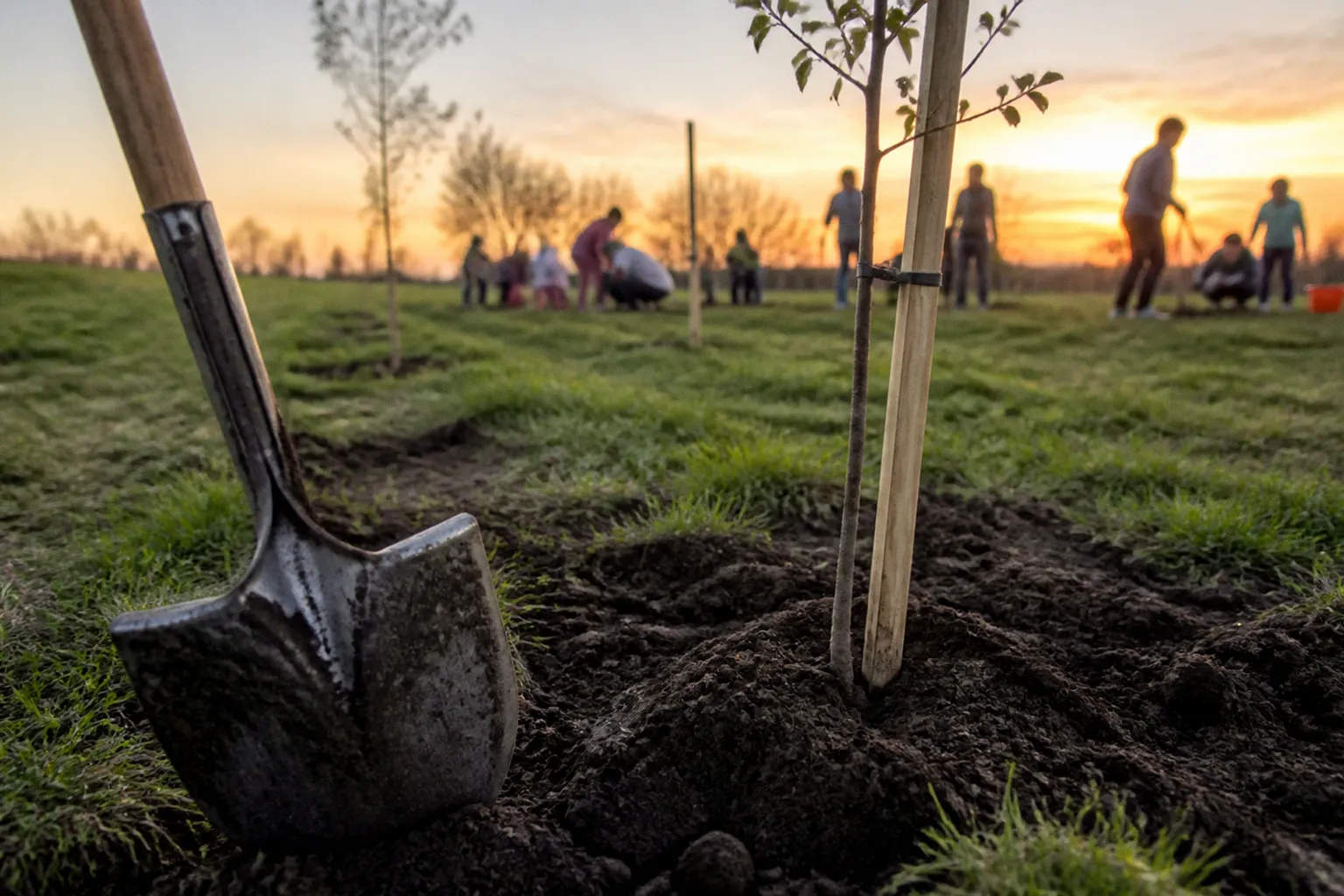
It is not. The work is route planning, permission control, utility mapping, soil assessment, species selection, water logistics, and maintenance. The planting day is one shift in a much longer operation. If we cannot say who will water each sapling six weeks after the volunteers leave, we do not have a project. We have a photo opportunity with a short service life.
The school campus tree planting project steps below are built for field conditions: public grounds, mixed soil, limited budgets, changing staff, and volunteers who may only be available for one day. We start with the ground, not the brochure.
1. Secure the site before moving a spade
The first failure point is authority. A school campus may look like open ground, but it is controlled property. The headteacher, school management committee, district authority, municipal body, facilities team, or landowner may all have a role. A tree that is planted without permission can later be cut, moved, or damaged when a building, drainage line, play area, or access road is repaired.
We get the approval in writing before ordering stock.
The permission record does not need to be elaborate. It does need to settle a few hard questions:
- Which part of the campus is available for planting?
- Who controls the land after the planting day?
- Can the site be watered during school holidays?
- Will future construction, sports use, or road access affect the planting area?
- Who approves changes if the original site becomes unavailable?
- Who removes dead or hazardous trees?
- Who owns the maintenance tools and stored materials?
We also speak to the person who maintains the site. That may be a groundskeeper, caretaker, school operations worker, or local contractor. They know where water collects, where the soil has been compacted, and which gates stay locked. A site plan made without that knowledge is a paper route.
Map the buried infrastructure
No excavation starts until underground services have been located. Water pipes, electrical cables, drainage lines, septic systems, irrigation equipment, and communications ducts can run through ground that appears empty. The correct procedure is to contact the local utility-location service before digging. In the United States, that service is commonly reached through 811. Other countries and districts use different systems. The operating rule does not change: use the local service, record the response, and mark the ground before tools go in.
A utility map is not a suggestion. It is a digging limit.
The map should be available on planting day. Mark service corridors with paint, stakes, or barrier tape. Keep volunteers out of those zones. If the location record is incomplete, stop and bring in the site authority or a qualified utility professional. We do not solve uncertainty with a deeper hole.
There are other hazards to mark:
- Building foundations and retaining walls.
- Drainage channels and flood paths.
- Septic tanks and soakaway areas.
- Fire access lanes and delivery routes.
- Roof runoff points.
- Playgrounds, assembly areas, and sports boundaries.
- Overhead power lines.
- Existing trees whose roots or canopy will conflict with new planting.
A tree needs room below ground and above it. A narrow strip beside a wall may hold a sapling for one season and become a structural problem later.
Turn the campus into a working map
Before species selection, we walk the site and split it into usable zones. A basic campus map should show:
1. Planting zones — areas with enough clearance for the intended mature tree size.
2. No-dig zones — utility corridors, structures, drainage infrastructure, and other restricted ground.
3. Water points — taps, tanks, storage drums, or locations where a water carrier can reach.
4. Access routes — the path for saplings, soil, mulch, tools, and waste removal.
5. Supervision points — places where staff can see the trees during school hours.
6. Protection zones — areas that need guards because of vehicles, livestock, sports, or foot traffic.
7. Future conflict zones — planned building sites, parking expansion, boundary works, or road widening.
We anchor the layout to existing fixed points. A gate. A building corner. A drain. A wall. Measurements taken from these points can be checked later when the paint fades.
We do not plant where the ground is empty. We plant where the tree can stay.
2. Match native species to the soil, not to the poster
The species list is where many environmental projects lose control. A nursery may offer attractive trees. A campaign may have a preferred species. A donor may want a certain name on the signboard. None of that tells us whether the tree belongs on this campus.
For a reliable community tree plantation guide, native or locally adapted species should be the starting point. But native does not mean automatically suitable for every site. A tree adapted to the regional climate can still fail in compacted clay, shallow fill, waterlogged ground, saline soil, or a strip that receives no direct rain.
We select by site conditions and final size.
Read the soil before ordering trees
A pre-planting site assessment should cover soil texture, drainage, compaction, depth, pH where relevant, organic matter, and signs of contamination. We do not need a laboratory report for every small project, but we do need more than a handful of soil held in the palm.
Walk the proposed line after rain if possible. Look for standing water and slow drainage. Use a probe or narrow rod to identify compacted layers. Check whether the ground has been filled with construction rubble. Inspect existing vegetation. If only weeds survive in a section, that is a field signal, not a mystery.
The main soil conditions change the planting method:
| Site condition | Field risk | Response |
|---|---|---|
| Compacted soil | Roots cannot spread; water runs off or pools | Break compaction across the planting area, not only inside the hole; reduce foot and vehicle traffic |
| Heavy clay | Poor drainage and low oxygen around roots | Confirm drainage before planting; avoid creating a sealed basin that holds water against the root ball |
| Sandy or loose soil | Rapid drying and weak anchoring | Build organic matter into the root zone where suitable; plan more frequent watering during establishment |
| Shallow soil over rock or rubble | Restricted roots and unstable growth | Shift the tree line or choose smaller, site-tolerant species |
| Waterlogged ground | Root loss and stem disease | Use species suited to wet conditions only after confirming the site will not flood destructively |
| Clean, well-drained soil | Lower establishment risk | Still protect the root zone and maintain a fixed watering schedule |
We keep soil amendment controlled. Dumping compost into a planting hole can create a soft pocket that holds water differently from the surrounding ground. The tree then grows inside a container made by our own hands. Where amendments are used, they should be compatible with the surrounding soil and worked across the root zone rather than used as a rich plug.
Choose trees for the mature campus
The right tree is not the largest tree available. It is the tree that can reach maturity without fighting the building, cables, drains, play areas, or each other.
For each proposed species, record:
- Expected mature height and canopy spread.
- Root behavior and tolerance for compacted ground.
- Water demand during establishment.
- Tolerance of local heat, cold, wind, and seasonal drought.
- Whether the species drops heavy branches, fruit, or thorns near walkways.
- Whether it attracts pests or requires regular treatment.
- Whether the nursery stock is healthy and correctly identified.
- Whether the tree is invasive or unsuitable for the local ecology.
Avoid a single-species campus unless there is a clear ecological reason. A mixed selection reduces the risk that one pest, disease, or weather event will damage the whole planting. Diversity does not mean random selection. We still group species by water needs, mature size, and site exposure.
Tree stock also needs inspection before acceptance. Reject saplings with damaged stems, circling roots, dry root balls, active pest infestations, or weak grafts where applicable. A tall, thin plant with a small root system is not a bargain. It is a hauling problem followed by a survival problem.
Set spacing from the future backward
The planting distance must account for mature canopy and root spread, not the size of the sapling at delivery. We mark the full proposed layout on the ground. Then we check it against doors, windows, drains, overhead lines, boundary walls, and student movement.
A campus greening plan has several useful zones:
- Shade near waiting and gathering areas, where branches can be managed safely.
- Wind and dust control along exposed boundaries.
- Habitat planting in less trafficked corners.
- Fruit or educational species where staff can manage harvesting and hygiene.
- Buffer planting around drainage or erosion-prone ground.
- Small-tree zones beside buildings and utilities.
The design should leave access for mowing, inspection, repairs, and emergency movement. Trees are part of the campus system. They cannot block the system they are meant to improve.
3. Build a crew that can work after the campaign ends
A planting day can attract students, parents, staff, local residents, and volunteer riders. That is useful, but headcount does not equal capacity. We need named roles and a handover that survives staff changes.
The crew should be divided before tools arrive:
1. Site lead: controls the map, work zones, and stop-work decisions.
2. Utility and safety lead: keeps volunteers outside marked hazards.
3. Planting team: handles root balls, hole preparation, placement, backfill, and staking.
4. Water team: moves water and records which trees have been served.
5. Protection team: installs guards, barriers, and mulch.
6. School liaison: coordinates staff, class movement, permissions, and timetable limits.
7. Records lead: labels trees, records species and location, and stores the maintenance schedule.
8. Maintenance crew: accepts responsibility for follow-up watering, weeding, inspection, and replacement decisions.
Students can take part in the work. They should not be used as a substitute for trained supervision around tools, vehicles, utility zones, or heavy loads. We brief the group in plain terms: where to stand, what not to lift, where not to dig, and who has authority to stop the job.
Treat funding as a materials plan
Funding is not only a tree purchase. The project may need transport, soil tools, water storage, guards, stakes, ties, mulch, labels, protective equipment, replacement stock, and follow-up labor. If these lines are absent, the project is underfunded even when every sapling is donated.
Potential sources include local grants, state or national programs, crowdfunding, municipal support, nursery donations, and contributions from parent or community groups. The funding request should show the complete route from nursery to establishment.
A workable budget separates:
- Site assessment and permissions.
- Utility location and marking.
- Saplings and transport.
- Soil preparation.
- Water supply and storage.
- Guards, stakes, and ties.
- Tools and protective equipment.
- Signage and recordkeeping.
- Maintenance visits.
- Replacement trees and contingency stock.
Do not hide maintenance inside the word volunteer. Volunteers may plant on a Saturday. Trees need water on ordinary weekdays, including holidays.
Some structured school planting packages in the United Kingdom have been listed from around £700 plus VAT, depending on location, tree count, and delivery. That figure is not a universal project price and should not be carried into another region as a benchmark. It does show the shape of the cost: planning, supply, transport, and follow-up all sit inside the operation.
Give students a job with a measurable output
Environmental awareness programs work better when the activity connects to a repeatable task. A class can map planted trees, maintain a watering log, inspect guards, measure canopy growth, or record new leaf flush. These tasks turn the campus into a living field station without placing care responsibility on children alone.
We use labels that survive weather and staff turnover. Each tree should have an identification number tied to a simple record:
- Species.
- Planting date.
- Location.
- Source nursery.
- Initial condition.
- Assigned maintenance team.
- Watering schedule.
- Inspection notes.
- Replacement status if the tree fails.
The record can be a paper map, a spreadsheet, or a local register. The format matters less than continuity. A perfect digital system that no one opens is dead weight.
4. Put the planting date inside the tree’s biological window
Timing is not a ceremonial detail. It controls water demand, heat stress, root establishment, and transport risk.
Planting is generally best near the end of the plant’s dormant period or at the start of active growth, depending on the species and local climate. We avoid periods of extreme heat, hard frost, waterlogged ground, and severe weather. Regional conditions decide the final window. A calendar date copied from another district is not a plan.
We also avoid saplings carrying active flower buds when possible. Flowering consumes energy that the tree needs for root establishment. The objective in the first phase is not display. It is anchoring and recovery.
Stage the operation
The clean sequence is:
1. Pre-visit: inspect soil, drainage, access, utilities, water, and hazards.
2. Permission lock: confirm the planting area and maintenance authority.
3. Species and stock approval: match trees to zones and inspect nursery condition.
4. Ground marking: place every tree position and identify no-dig areas.
5. Material haul: move trees, guards, mulch, tools, and water without crushing the root balls.
6. Planting: keep roots protected from sun and wind; place the tree at the correct depth.
7. Watering: saturate the root zone after planting according to soil and species needs.
8. Protection: anchor guards and stakes without strangling the stem.
9. Handover: transfer the map, schedule, tools, and responsibility to the maintenance crew.
10. Health checks: inspect the site at planned intervals and replace failures only after diagnosing the cause.
We keep the root ball intact during handling. Do not drag container stock by the stem. Do not leave roots exposed on hot ground. Do not bury the stem flare because the hole was too deep. The top of the root ball should sit at the correct grade for the species and soil conditions, with allowance for settling.
Backfill should remove major air pockets without compacting the root zone into a block. Water settles the soil around the roots. Stakes are used when wind, unstable stock, or site traffic requires them. They are not permanent scaffolding. Ties must allow controlled trunk movement and need inspection as the stem thickens.
Mulch reduces evaporation and limits competing weeds, but it must not touch the trunk. A thick collar against the stem holds moisture where bark should stay dry and can create a pest route.
The planting day ends when the water schedule starts. Everything before that is preparation.
Control the water route
Water is usually the first post-planting constraint. We calculate the route from source to tree. A tap at the far end of the campus may be technically available and operationally useless if the hose cannot reach the planting zones or the water carrier cannot pass through the gate.
Before planting, we identify:
- The nearest reliable water source.
- The distance and elevation to each zone.
- Storage capacity for weekends and closures.
- The person who unlocks the water point.
- The method for recording completed watering.
- The trigger for increasing or reducing frequency after weather changes.
We do not publish one universal watering quantity for every species and soil. The requirement depends on root-ball size, rainfall, temperature, soil drainage, and local species. The schedule should be set by the person responsible for the site, then adjusted through inspection. Check the soil moisture in the root zone. Look for wilt, leaf scorch, settling, exposed roots, erosion, and waterlogging. A calendar without field checks is only paperwork.
5. Protect the trees from the campus itself
Most saplings do not fail because no one cared. They fail because the campus kept operating around them.
Students cut across the planting bed. A vehicle reverses over a guard. Grounds staff strim the stem. A sports ball breaks a branch. Holiday closures stop watering. A contractor piles materials on the root zone. Goats or cattle remove the leaves. Each problem is ordinary. Together, they remove the tree.
Protection must match the site. Guards need to resist the actual pressure: foot traffic, animals, vehicles, or tools. Stakes must be anchored in the local soil. Barriers should not create a trip hazard or block emergency access. Where the risk is repeated, move the tree or redesign the route. A weak barrier is not protection; it is a delay.
The maintenance schedule should assign actions to people, not departments. Department names change. People move jobs. A schedule that says the grounds team will inspect the trees is less useful than one that names the caretaker, backup contact, inspection day, and escalation route.
A basic schedule can include:
- First week: confirm watering, settle soil, inspect ties, guards, and damage.
- First month: check leaf condition, pests, drainage, mulch, and signs of stem burial.
- Following months: adjust watering to rainfall and soil moisture; remove competing weeds; repair protection.
- Before school holidays: assign a named caretaker and confirm water access.
- After storms: inspect leaning, broken branches, exposed roots, erosion, and damaged guards.
- At the end of the first growing cycle: review survival, diagnose failures, and revise the species or site plan before replacing stock.
The first replacement question is not which new tree to buy. It is why the previous tree died. If the cause was drought, a second tree without a water fix is wasted transport. If the cause was waterlogging, add another sapling and we repeat the failure. If the cause was a mower, change the protection and work route.
Keep a failure record
Survival is a useful measure, but it needs a time frame and a cause code. We record live, stressed, damaged, dead, and missing. We note whether the problem came from water, soil, animals, vehicles, vandalism, pests, disease, transport damage, or an unknown cause.
This record supports better environmental project planning for schools. It also protects the project from inflated claims. A planted tree is not the same as an established tree. The count that matters is the number still rooted, protected, and growing after the first difficult season.
The field handover
Before we leave the campus, we check the work in order. Not for ceremony. For failure points.
- Permission is stored with the site map.
- Utility locations and no-dig zones are marked.
- Every tree has a recorded position and species name.
- Root balls are intact and planted at the correct depth.
- Soil is firm around the roots without being compacted.
- Water has reached every planting zone.
- Guards and stakes are anchored.
- Mulch is clear of the trunk.
- Access routes remain open.
- A named person controls watering during weekends and holidays.
- The next inspection date is written down.
- Replacement decisions will be based on cause, not appearance.
- Tools, waste, ties, and packaging have been removed from the campus.
A school tree planting project is complete only when another crew can continue it without calling the original organizer. That is the test of the plan.
We should leave the campus with fewer unknowns than we found. If underground services are not mapped, bypass the hole. If the water route is not secured, delay the delivery. If the species does not fit the soil, reject the order. If no one owns the maintenance shift, reduce the planting area until someone does.
Trees do not need a campaign. They need a site that will not fight them, a crew that can haul the work through, and a maintenance schedule that survives the first school holiday. We anchor the project there.