Community compost site: milestones from launch to harvest
A community compost site usually fails before the first pile heats up. The failure starts in the layout, the intake rules, or the handoff between volunteers.
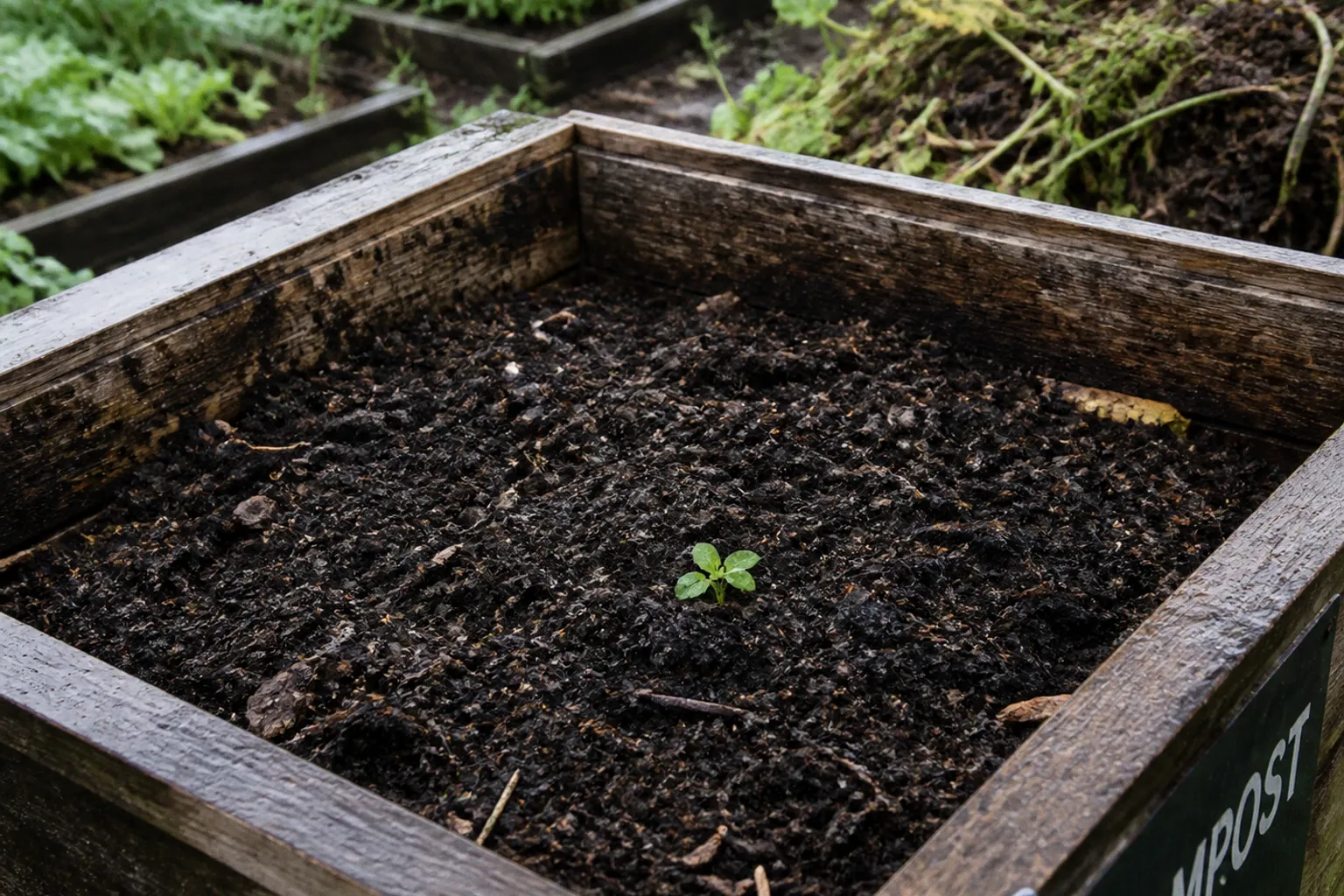
Then the site receives wet food waste, bags, plastic-coated paper, and more material than the working bays can hold. The pile goes anaerobic. Rodents move in. The operator loses control of the feedstock. The project becomes a storage problem with a fence around it.
We avoid that by treating composting as a field operation. The route is simple: select the site, lock the material flow, build the bays, train the operator, run the active pile, cure the finished material, and only then distribute the compost. Each milestone has a failure point. We deal with that failure point before adding volume.
That is the working logic behind community compost site planning milestones. The calendar matters, but the material condition matters more.
Start with the site, not the bins
A community compost bin setup is not just a row of containers. It is a small material-handling yard. Organic waste arrives, gets inspected, mixed, moved, watered when needed, turned or aerated, and transferred between stages. If the site cannot support those movements, no bin design will rescue it.
We begin with the route through the site:
1. Arrival and inspection. Residents, school kitchens, or collection riders need a clear place to unload. The intake point must be separate from the active composting area.
2. Sorting and contamination removal. Someone must be able to pull out plastic, glass, metal, treated wood, and other non-compostable material before it reaches the pile.
3. Feedstock storage. Dry carbon material such as leaves, shredded branches, cardboard without coatings, or straw must stay dry and accessible.
4. Active composting. This is where the mixed material heats and breaks down.
5. Curing. Finished active piles still need time to stabilize before use.
6. Harvest and distribution. Screening, bagging, loading, or moving compost to school beds needs its own working space.
The ground must carry wet organic material and repeated foot, cart, or motorcycle traffic. A low section that collects rainwater is a bad choice. So is a narrow strip pressed against a classroom wall, drainage channel, or food-preparation area. We need separation from flood paths and enough clearance to inspect every bay without climbing over the pile.
The exact legal classification depends on the local authority and the operating model. A neighborhood group handling its own household material may not face the same requirements as a commercial waste operator. In several European jurisdictions, non-commercial neighborhood composting is classified as household composting rather than commercial waste management. That distinction cannot be copied across borders. We check municipal rules before construction, especially where the site accepts material from outside the immediate community.
Lay out capacity by stage
A site needs more than one empty container. If all available space is occupied by active piles, the next delivery has nowhere to go. That is how operators start accepting material into sacks, corners, and improvised heaps. Control ends there.
We divide the working area into separate bays or marked zones:
| Operating stage | What the area handles | Failure if it is missing |
|---|---|---|
| Intake and sorting | Fresh food scraps and contamination checks | Plastic and unsuitable waste enter the pile |
| Dry feedstock storage | Leaves, straw, chipped branches, or other carbon material | Wet, nitrogen-heavy loads cannot be corrected |
| Primary decomposition | Managed piles in the active heating phase | Material accumulates without a controlled process |
| Secondary curing | Partially finished compost stabilizing after active breakdown | Unfinished material is distributed too early |
| Finished compost | Screened or ready material awaiting use | Harvested compost gets mixed back into active waste |
| Reserve capacity | Temporary holding during weather or collection surges | The site is forced to accept more than it can process |
We do not calculate capacity from the average delivery alone. We look at the peak. School kitchens generate different volumes during term time and holidays. A festival, cleanup campaign, or rainy period can change the feedstock mix in a week. A community composting program needs a buffer because the material will not arrive in neat, identical loads.
The first design question is not how much waste the site can receive. It is where the next load goes when every active bay is full.
Lock the feedstock before the first collection
The pile only works when the input is controlled. Food scraps are not a single material. A load of vegetable trimmings behaves differently from cooked rice, oily leftovers, meat, citrus peels, dry leaves, or grass clippings. The operator needs a basic intake rule that residents can follow without a training seminar.
For a neighborhood composting program, the accepted list should be short and visible. The rejected list should be shorter still, but specific. We do not rely on labels such as natural, biodegradable, or eco-friendly. Those terms do not tell us whether a material belongs in the pile.
At intake, we look for:
- food scraps and plant-based kitchen waste that the site is equipped to process;
- dry carbon material available for immediate mixing;
- plastic bags, stickers, cutlery, sachets, foil, and other contamination;
- liquids that may cause the pile to compact;
- large pieces that need cutting or shredding;
- loads that are too wet, too dry, or dominated by one material.
The local food waste diversion steps should be written as a physical routine. Who receives the load? Who opens the bag? Who removes contamination? Who adds dry material? Who records the delivery? If the answer is everybody, the answer is nobody.
We use a simple log. It does not need to become a paperwork project. The record should show the date, source, rough load type, contamination problem, assigned pile, and operator. That information exposes patterns. If one kitchen repeatedly sends wet scraps, the correction is at the kitchen. If a school collection point sends plastic-lined packaging, the sorting rule needs to change there.
Build the mix for air, not just decomposition
A compost pile needs moisture, oxygen, structure, and a workable balance of carbon-rich and nitrogen-rich material. The exact recipe changes with local feedstock. We do not pretend there is one universal ratio that fits every community site.
Wet food waste supplies nitrogen and moisture. Leaves, straw, shredded cardboard, and woody material add carbon and structure. Fine, wet material packs together. Coarse material creates air spaces. Both are needed, but neither can carry the pile alone.
The operator’s task is to correct the load at the point of mixing:
- add dry, coarse material when the food waste is wet and dense;
- break up compacted clumps;
- keep oversized woody pieces from forming empty voids around the pile;
- avoid burying a contaminated bag where nobody can retrieve it;
- prevent rain from saturating exposed feedstock;
- keep enough structure for air to move through the pile.
A bad smell is not a personality trait of composting. It is usually a process signal. Rotten-egg or sour odors point toward oxygen or moisture trouble. Flies indicate exposed food or poor cover. Persistent wetness means the pile is receiving more water than its structure can hold. We correct the material and the handling method, not the symptom with fragrance or extra covering.
Run the thermophilic phase as a managed operation
The primary decomposition phase is where simple sugars and proteins break down quickly and the pile enters the thermophilic range. Under active management, this phase typically lasts two to six weeks. The duration is not a fixed promise. It shifts with pile volume, feedstock composition, moisture, climate, aeration, and turning frequency.
Our job during this phase is not to make the pile look busy. It is to keep the process moving without losing control.
Milestone one: establish the active pile
The first active pile needs enough material to function as a mass, but the site should not wait indefinitely while collecting a mountain of scraps. We build the pile in layers or mixed batches, depending on the equipment and feedstock available. The key is uniformity. A pocket of pure food waste will compact and heat differently from a mixed section of leaves and scraps.
We mark the pile’s start date and assign responsibility. That date begins the operating record. It does not predict the harvest date.
Milestone two: confirm heat and structure
Temperature is a useful operating signal when measured consistently. A probe gives us a better picture than touching the surface. The outside can feel cool while the center is active. Conversely, a hot center can coexist with wet, oxygen-starved edges.
We check several points in the pile and record the readings in the same way each time. The pattern matters more than a single number. A pile that heats and then collapses may need turning. A pile that never heats may be too small, too dry, too coarse, or short on nitrogen-rich material. A pile that stays hot but smells sour may be compacted and oxygen-limited.
The repair sequence is straightforward:
1. Inspect the pile for wet pockets, dry pockets, and contamination.
2. Open compacted sections during turning or mixing.
3. Add structure if the material has collapsed.
4. Add moisture only when the material is genuinely dry.
5. Recheck the pile rather than making several corrections at once.
6. Record the action and the response.
We do not turn by calendar superstition. We turn when the material condition requires it and when the site’s labor and equipment can support the move. Excessive handling burns labor and can damage structure. Neglect leaves anaerobic pockets and uneven breakdown.
Milestone three: move the material out of the active bay
The active phase ends when the pile no longer behaves like fresh feedstock under management. That does not mean every piece has become dark, uniform compost. Larger woody fragments may remain. The material may still be warm. The operator decides whether it needs another active cycle or can move to curing.
The transfer itself is a control point. We assign the pile a new date and location. We clean the active bay before the next load enters. If old and new material are mixed without records, the site loses the ability to judge processing time.
Winter changes the storage problem
Cold weather slows decomposition. Frozen feedstock can accumulate faster than the active pile can process it. Rain can turn dry carbon stock into wet, heavy material. Roads can become unusable. Volunteer attendance may drop. A site designed only for warm-season flow will stack failure on top of failure.
Winter preparation starts before the weather forces it. By November, operators are advised to keep two to three empty bins available for stockpiling accumulating frozen organic material. Those bins are not spare decoration. They are a buffer between collection and active processing.
The winter plan needs separate decisions for three materials:
- Fresh organic material that can still be mixed into an active pile.
- Frozen material that must wait until conditions allow processing.
- Dry carbon material that must remain protected from rain so it can correct wet loads later.
We keep reserve space clear, mark the bins, and decide who can authorize filling them. If every volunteer treats reserve capacity as available working space, the winter buffer disappears before winter starts.
Covering is also a balance. The pile must be protected from excessive rain and runoff, but a sealed, wet mass can lose air. Covers need anchoring against wind and enough access for inspection. The ground around the pile needs drainage that does not carry contaminated liquid toward classrooms, wells, gardens, or public paths.
We do not set a fixed winter harvest date. Climate, pile size, feedstock, and management frequency control the timeline. The correct decision is based on the condition of the material, not the date printed on the collection calendar.
Winter management is not a pause button. It is a storage operation with a decomposition problem attached.
The operator is the load-bearing part of the site
A community compost site can have good bins, a sound layout, and willing volunteers and still fail without one trained operator. The operator is the person who sees the whole system: intake quality, pile condition, reserve capacity, weather, tools, contamination, and labor.
Training does not need to be academic. It needs to be repeatable. We teach the operator to:
- identify acceptable and rejected materials;
- recognize compacted, dry, saturated, and contaminated sections;
- use the temperature probe consistently;
- judge when to add structure or moisture;
- control access to active and curing areas;
- maintain the pile log;
- assign tasks during volunteer shifts;
- stop intake when the site has no safe capacity;
- escalate drainage, odor, pest, or contamination problems.
The operator also needs authority. If the person responsible for the pile cannot reject a bad load, delay a collection, or close a full bay, training has no force. We have built a ceremonial role, not an operating system.
Volunteer work should be divided into short, clear tasks. One person sorts. One person mixes. One person moves material. One person records. On small sites, one operator may cover several roles, but the roles still need to be understood. Ambiguous labor produces missed contamination and repeated handling.
Tools must be stored where the work happens. A probe locked in an office is not an operating tool. Neither is a wheelbarrow with a flat tire or a fork bent out of shape. We keep:
- pitchforks or compost forks suited to the pile size;
- shovels for edges and cleanup;
- carts or wheelbarrows with sound wheels;
- gloves and basic protective equipment;
- a temperature probe;
- covers and anchors;
- a simple logbook or digital record;
- a method for weighing or estimating loads if the project tracks diversion.
The site should have a handover procedure. If the operator is absent, the substitute needs to know which bays are active, which material is curing, how much reserve capacity remains, and what cannot be accepted. A compost site that depends on one person’s memory is one missed shift away from disorder.
Harvest is a separate milestone, not the end of turning
Curing follows active decomposition. During curing, the material stabilizes and becomes more uniform. The pile may cool, and biological activity changes. The operator still checks moisture, contamination, and the presence of unfinished material.
We move material to curing only when the active process has done its work. Then we leave enough time for the material to settle rather than rushing it into school beds or tree pits. The exact total timeline from launch to harvest depends on local climate, pile volume, feedstock recipe, aeration, and management frequency. There is no universal ninety-day guarantee.
At harvest, we inspect for:
- recognizable food scraps that have not broken down;
- large woody pieces that should return to an active pile;
- plastic or other contamination missed during intake;
- excessive moisture or a sour odor;
- uneven material from poorly mixed zones.
Screening can produce a cleaner product, but it also produces oversize material. That fraction is not automatically waste. We return suitable coarse material to a new or active pile. We remove contamination from the system. The finished compost goes where the project has already decided it will go: school gardens, tree planting sites, erosion-control work, or community growing plots.
Distribution needs a record. We note the receiving site, approximate quantity, and date. That closes the loop between collection and use. It also prevents the common mistake of treating compost as a by-product with no destination.
What the project returns to the community
The environmental case is direct. Localized composting keeps organic material in a managed biological process instead of sending it with mixed waste to disposal. It also gives schools and neighborhood groups a working platform for waste reduction, soil improvement, and campus greening.
There is a labor case as well. The Institute for Local Self-Reliance reports that commercial composting operations sustain four to eight times more jobs per ton of material processed than municipal landfills and incinerators. A community site is not a commercial plant, so the comparison should not be copied as a local employment forecast. The point is narrower: composting requires sorting, hauling, monitoring, turning, curing, and distribution. Those are real tasks. A project that plans only for collection has planned half the operation.
For school-based environmental awareness programs, the compost site works best when students see the full material route without being assigned unsafe handling. They can track what enters the system, measure contamination, map where compost is used, and document changes in the campus waste stream. Adults handle active piles, tools, and inspection. The educational value comes from the operating record, not from turning the site into a display.
The same principle applies to tree plantation drives. Planting is not the complete environmental project. Survival depends on soil preparation, watering, protection, and follow-up. Compost can support that work, but only when it is mature and appropriate for the planting use. We do not move unfinished material from a failing pile to a planting hole just to clear the bay.
The route from launch to harvest
A reliable community compost site follows a sequence:
1. Survey the ground and drainage. Reject locations that flood, block access, or place wet material beside sensitive facilities.
2. Map the material route. Separate intake, sorting, dry storage, active decomposition, curing, and finished compost.
3. Set the feedstock boundary. Publish what enters, what stays out, and who makes the final call.
4. Reserve working capacity. Keep empty bays available for surges, weather disruption, and winter stockpiling.
5. Train and authorize one lead operator. Give that person the tools and authority to correct the process.
6. Start the active pile with a record. Mark the date, source, material type, and assigned bay.
7. Monitor the process. Inspect heat, moisture, structure, odor, contamination, and available capacity.
8. Transfer to curing deliberately. Do not label material finished because the pile has cooled.
9. Harvest, screen, and route the output. Return suitable oversize material to the process and document where finished compost goes.
10. Repair the system before scaling it. More collection volume will magnify weak intake rules, poor drainage, and missing labor.
The final warning is simple: do not launch collection until the site can control the next load. Anchor the bins. Protect the dry material. Keep reserve capacity. Train the operator. Stop intake when the process is full.
A community compost site is not successful because it receives organic waste. It is successful when the site can move that material through every stage without losing air, labor, records, or control.