Tribal Welfare Programs: Pre-Launch Checklist
Three years is the quiet number that sits underneath almost every well-prepared tribal welfare project. It is the recommended minimum of prior community involvement before a community-based participatory research grant is submitted.
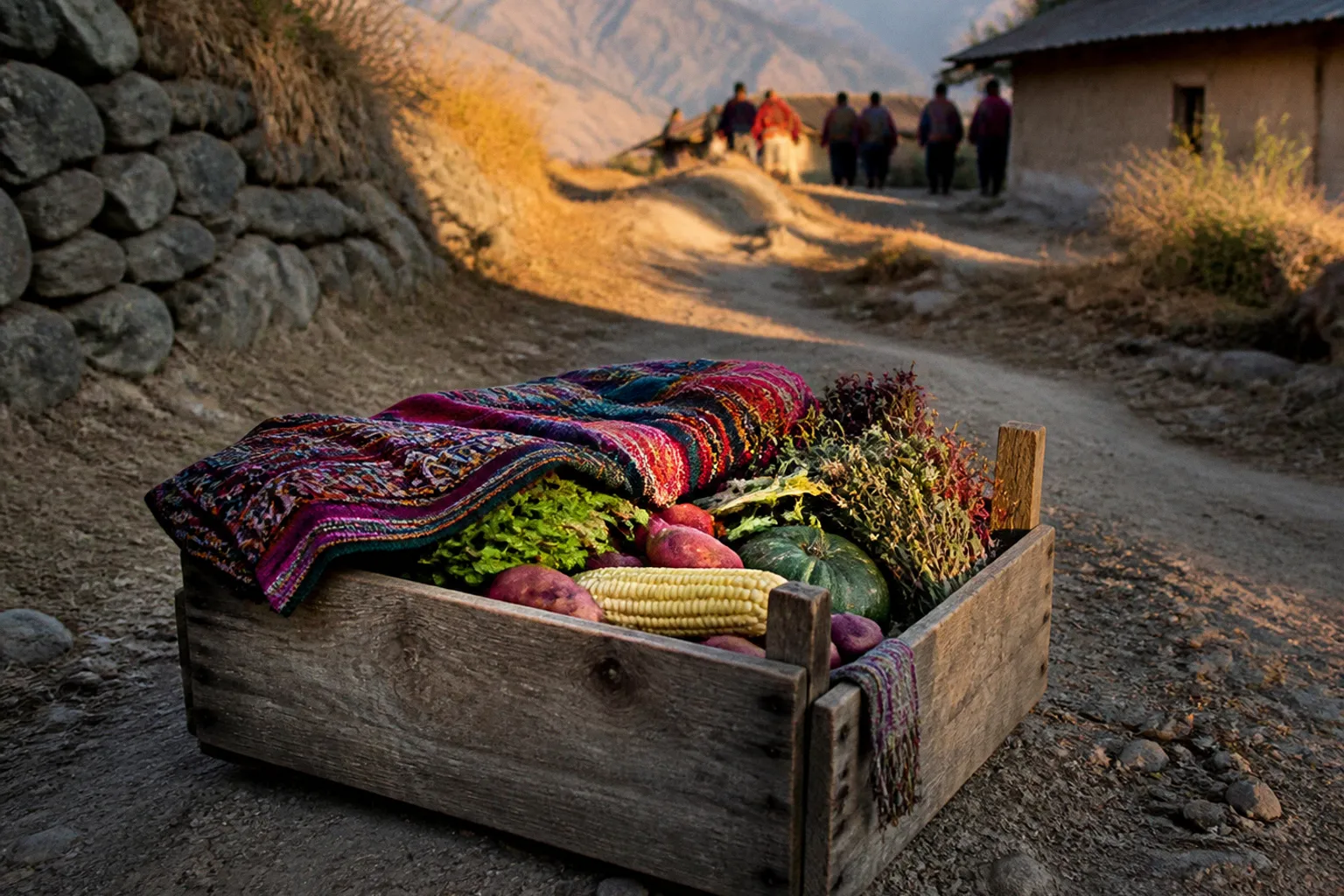
It is the minimum track record an Indian NGO must show before it can credibly apply to the Ministry of Tribal Affairs. It is the length of filed Income Tax Returns a funding officer will quietly ask to see. In a panchayat bhawan in the Santhal Parganas last August, I sat through a meeting that brought all of those clocks into the same room. The visiting programme manager had a glossy folder, a printed checklist with fifteen boxes, and ninety seconds of patience. He ticked off institutional registrations, a memorandum of understanding, a funding letter from a metropolitan donor. He smiled, said they would be on the ground within the month, and asked the sarpanch for a date to begin. She poured tea. She did not interrupt. When the vehicle pulled out of the compound, she turned to the council and asked the question that no checklist in that folder had prepared him to answer: did anyone in this room come to us first, or did they come to tell us what they had already decided?
That moment is, for me, the entire pre-launch question. The six to twelve months that precede any meaningful tribal community project preparation are not a bureaucratic delay invented by anxious funders; they are the relational infrastructure on which everything else — the classroom, the health post, the livelihood cluster, the sanitation line — will either stand or quietly collapse. Skipping them, or running them in parallel with the visible work, is how a great deal of well-meaning intervention ends up stranded on a dusty shelf within an electoral cycle. A checklist, properly used, is a record of the conversations the project has already had.
Reading the Community Before Reading the File
The first months of a genuine pre-planning phase are almost entirely about listening. The Comprehensive Community Planning framework, refined by First Nations in Canada and now used as a reference by several South Asian practitioners, treats this stretch as a six-to-twelve month window in which three things happen at once: community readiness is assessed honestly, a planning team is built that includes elders and women who will not be invited later, and the initial funding relationships are opened with the expectation that commitments may change.
What that looks like on the ground is unglamorous. It looks like repeated visits to the same hamlet, sometimes for no announced reason. It looks like asking the gram sabha, not the block development officer, what the village understands its own priorities to be. It looks like listening for the projects the community has already tried and quietly abandoned — the borewell that dried up, the school building that never got a teacher, the cooperative that dissolved when its office-bearer migrated to a mill town. None of that is in a project proposal, and all of it is in the room.
A planning team worth having is rarely the team the NGO would have chosen if left to itself. It includes the school headmaster who is also the traditional healer, the young woman who runs a self-help group that has not yet received formal registration, the returned migrant who understands both the village economy and the city labour market. It includes, crucially, someone who is paid to do nothing but keep the conversation going between meetings. That person is the bridge between the biker crew that will eventually roll in and the village council that has been there for generations. Indigenous community engagement steps of this kind are not a preliminary to the work; they are the work. The months spent listening, mapping who holds influence, and identifying what has been tried before are what distinguish a project the community owns from one the community merely hosts.
Mapping Readiness: What the Early Months Actually Measure
Community readiness is not a single metric, and anyone who reduces it to a score or a colour-coded grid is selling convenience, not understanding. What the early months measure is closer to a set of overlapping conditions: whether the community has an active governance structure that can receive and hold a commitment, whether there is at least one person inside that structure willing to champion the work across meetings, and whether the external organisation has spent enough time on the ground to know which questions it should not yet be asking.
A useful tribal outreach project checklist will include, at this stage, a simple inventory of existing community assets — not the ones a visiting assessor might photograph, but the ones the community itself names. The women's savings group that has been meeting under the neem tree for nine years. The old irrigation channel that still carries water in October. The village elder who remembers where the last land survey pegs were driven. These are the assets a project either builds on or ignores, and ignoring them is the fastest way to find out what "lack of community ownership" actually means in practice.
Readiness also means honesty about fatigue. In districts that have hosted multiple NGO interventions, the question is rarely whether the community wants change. The question is whether it has been asked to change so many times that it now waits, correctly, to see whether this particular caller will stay long enough to be held accountable. A pre-planning phase that does not budget time for this kind of earned trust is a phase that has already failed, no matter how many boxes it ticks.
The Long Road Through Institutional Approvals
If the pre-planning phase is about the community, the approval phase is about the institutions that will have to stand behind the work long after the founding team has moved on. For community-based participatory research and health projects working with indigenous populations, the formal pathway commonly runs through eight distinct levels: the tribal council itself, the tribal health board where one exists, the local Indian Health Service equivalent, the national-level approval body, and then one or more academic or institutional ethics committees. Each of these takes its own time, and they rarely move in parallel.
The honest timeline for this stretch is rarely shorter than a year, and in many cases it runs closer to eighteen or twenty-four months. Anyone who promises to compress it has either misunderstood the process or is asking you to work with communities that have already agreed to things they have not yet been asked about. Budgets and project calendars should be built on the assumption that approvals will take as long as they take, and that the time between submission and sign-off is not dead time — it is the period in which the team refines its language, confronts its own assumptions, and earns the right to claim that the project has been thought through. The deeper truth is that, by the time a project reaches the institutional approvals stage, the work that matters most has already been done. Three years of prior community involvement is the quiet minimum that sits underneath almost every successful grant application; it is also the reason so many new organisations never get past their first proposal.
| Approval level | Typical Indian counterpart | Realistic timeline |
|---|---|---|
| Tribal council / hamlet gathering | Gram sabha under PESA, hamlet-level meeting | 2–6 months |
| Local health or development authority | ITDA, district health office, block office | 1–3 months |
| State tribal welfare department | Department of Tribal Welfare / Scheduled Tribes directorate | 2–4 months |
| National ministry or apex body | Ministry of Tribal Affairs, NITI Aayog cell | 3–6 months |
| Academic or institutional ethics review | University IRB, hospital ethics committee | 2–4 months |
The table is not a recipe. It is a way of seeing how much of the so-called "delay" is in fact the project's first act of stewardship, each layer forcing the team to translate its intentions into a language that other institutions can be asked to honour. Tribal development program planning that treats approvals as a hurdle to clear rather than a process to respect will typically produce a project that is technically compliant and relationally hollow.
Resolutions as a Form of Stewardship
One of the most overlooked items on a tribal community project preparation checklist is the formal resolution. Not a memorandum, not a letter of support, but a written decision passed by the relevant tribal council or health board and entered into the village record. Its purpose is not symbolism; it is continuity.
Elected officials change. Sarpanches finish their term. State governments reshuffle portfolios. Funding cycles close and reopen under different priorities. A project that lives only in the memory of its founding team, or only in the goodwill of one sympathetic officer, is a project that ends the day the political weather turns. A tribal resolution is the document that allows the work to outlast the people who started it.
In practice, the resolution names the project, its scope, the duration for which consent is being granted, and the grievance redress contact. It is read aloud in the language the council speaks, not the language the NGO prefers. It is signed by the chair and countersigned by at least two witnesses who are not employees of the implementing organisation. A scanned copy goes into the village file; another goes into the project archive; a third travels with the proposal when it moves up the institutional ladder. When, three years later, someone asks who agreed to this, the resolution answers.
Continuity is a form of stewardship — the project belongs to the council before it belongs to the funder.
What is worth noting is that the resolution is also a test of the NGO's own commitment. Drafting it requires the organisation to state, in plain language and in the community's own terms, exactly what it intends to do, for how long, and with what consequences if it fails to deliver. An organisation that resists putting this on paper is an organisation that has not yet decided whether it is willing to be held accountable by the people it claims to serve.
Free, Prior, and Informed Consent Is Not a Formality
Free, Prior, and Informed Consent — FPIC — is the standard that separates a genuine partnership from a consultation that has been dressed up as one. Backed by the United Nations Declaration on the Rights of Indigenous Peoples, FPIC is now mandatory for any externally driven project whose activities touch indigenous lands, resources, livelihoods, or cultural heritage. It is the spine of the Indigenous Peoples Planning Framework used by the World Bank and the Asian Development Bank, and it is increasingly the standard against which Indian funders and regulators are being asked to measure themselves.
The components of an FPIC-aligned preparation checklist are concrete. A preliminary screening asks whether the project will, in any way, alter the relationship between the community and its land or resources. If the answer is yes, a full Social Impact Assessment follows, in a language the community reads, with space for written dissent. Mitigation measures are then designed in dialogue, not announced. A Grievance Redress Mechanism is established before the first activity, with at least one contact point inside the village rather than only in a city office. And finally, an Indigenous Peoples Plan — or its Indian-context equivalent, often drawn from the Scheduled Tribes and Other Traditional Forest Dwellers (Recognition of Forest Rights) Act, 2006, and from the Panchayats (Extension to Scheduled Areas) Act — is written down, translated, and returned to the community for confirmation.
The temptation to treat FPIC as the last box on the list is strong, and almost always fatal. Consent that arrives after the design has been finalised is consent in name only. The "prior" in FPIC is doing the most work; without it, the rest of the phrase collapses into courtesy, and the project's claim to community partnership is quietly withdrawn by the only people who ever had the authority to grant it. Indigenous welfare project requirements built around FPIC are not an additional layer of bureaucracy; they are the minimum standard for any intervention that claims to operate on behalf of a community rather than upon it.
What a Real Grant-Readiness File Looks Like in India
For the Indian voluntary organisations that form the backbone of this work, the pre-launch checklist takes a slightly sharper shape at the funding stage. The Ministry of Tribal Affairs, several of the larger state tribal welfare departments, and a growing number of corporate social responsibility pipelines now share a core set of expectations that an organisation is expected to have in place well before the first conversation about a specific project.
- Active registration on the NITI Aayog NGO-Darpan portal, with the organisation's profile complete and current.
- Registration on the Ministry of Tribal Affairs' own NGO portal, with trackable credentials and a Unique ID.
- At least three years of documented experience in activities of a similar nature, supported by annual reports, audited statements, and at least one reference from a peer organisation or government body.
- Three years of filed Income Tax Returns, with computation sheets and acknowledgement receipts that reconcile to the audited accounts.
- A current FCRA registration, or a credible argument for why the proposed project does not require one.
- A governing body that meets at least twice a year and whose minutes are filed, signed, and accessible to funders on request.
- A child protection policy, a sexual harassment prevention policy, and a financial controls manual — not because the law requires them at the registration stage, but because the larger funders will.
The most expensive kind of risk is the organisation with perfect paperwork and no relationships.
What the list does not say, and what a good organisation will say for itself, is the part about the field. Which villages it has been visiting, and for how long. Which elders it has consulted without asking anything of them. Which local organisation it has been quietly supporting while it waited for its own paperwork to catch up. Funders read this carefully now, because they have learned, often the hard way, that an organisation with perfect paperwork and no relationships is the most expensive kind of risk. A tribal community project preparation checklist that stops at the regulatory requirements and does not document the relational groundwork is a checklist that has confused compliance with readiness.
The Patience That Holds the Work Together
I have come to think of a pre-launch checklist less as a document and more as a record of conversations the project has already had. The boxes that get filled in during those quiet months — the readiness assessment, the council resolution, the IRB approvals, the FPIC record, the grant-readiness file — are not gates to be hurried through. They are the visible residue of the work that the community itself has been doing for generations, made legible to institutions that have only recently learned to ask.
The biker crews that ride into a tribal hamlet under a school-rebuilding banner do beautiful and necessary work, but the work they arrive to is almost always older than they are. It has been carried by a school teacher who stayed past her transfer, by an ASHA worker who walked five kilometres before dawn, by a tribal council that held the line on a forest boundary when no one was watching. A checklist, properly used, is a way of honouring that. It says, before any brick is laid: we know who was here first, we know who has agreed, and we know what we have been asked to do.
That is the only version of preparation worth the name.