Tribal artisan programs: where funding and time are lost
A tribal artisan program can have orders, skilled makers, a cooperative structure, and a product line that belongs in the market. It can still stall before the first shipment leaves the community.
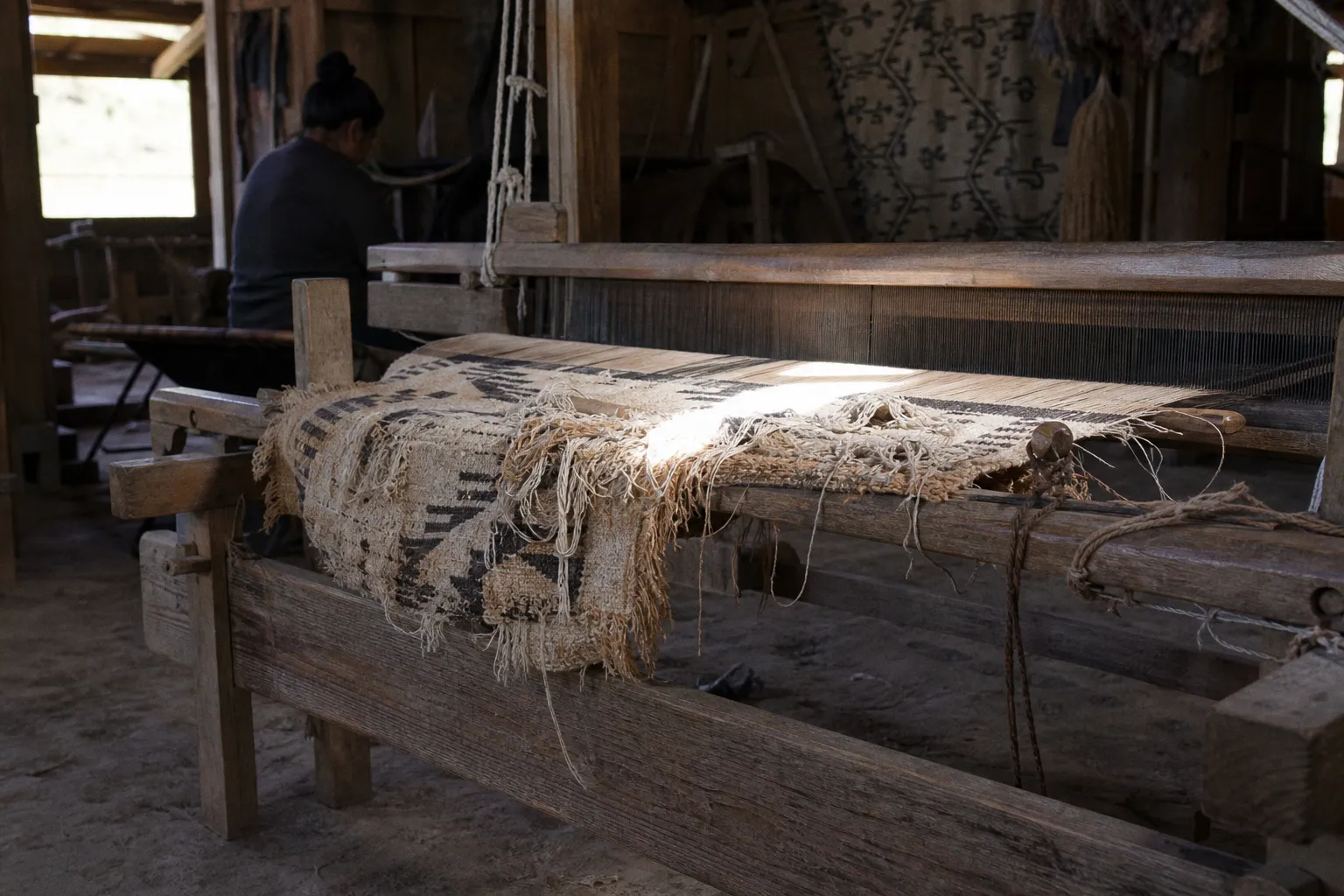
The usual break is not the loom, kiln, carving bench, or sales table. It is the funding stack. A grant arrives with a match requirement nobody can cover. Reimbursement lands after payroll is due. One staff member is expected to build a budget, gather eligibility records, write the application, track invoices, and submit reports. The project loses time at every handoff.
These are the tribal artisan program funding pitfalls that do the real damage: not a lack of ideas, but a plan built on money that cannot move when the work needs it.
We have seen this pattern in rural operations of every kind. The route looks clear on paper. Then the truck reaches a washed-out culvert, a gate is locked, or the fuel card has no balance. Grant-funded artisan work hits the same kind of obstruction. The program does not fail at the vision statement. It fails where cash, paperwork, legal status, and delivery dates meet.
The administrative load is not overhead. It is part of the project.
Grant applications are often treated as a front-end task: write the proposal, submit, wait. That is wrong. The application is the first segment of a long haul. If the organization cannot carry the reporting load after award, the award can become a burden rather than a tool.
The Government Accountability Office has documented that application and reporting requirements can strain tribal staffing capacity. Smaller Tribes may not have enough staff to complete competitive applications without technical help. That is not a minor operational complaint. It determines who gets through the gate.
An artisan cooperative may have a program coordinator who also handles maker schedules, inventory intake, community meetings, transport, customer orders, and cultural protocol. Add grant administration and the work starts to shear apart. Each task is reasonable by itself. Together, they exceed the hours available.
The pressure usually appears in five places:
1. Budget construction. Funders want costs separated into labor, supplies, equipment, travel, indirect costs, and matching contributions. A maker’s actual work may not fit neatly into those boxes. If the budget is built without understanding the production cycle, it will not survive contact with the shop floor.
2. Documentation of authority and eligibility. Tribal governments, nonprofit entities, tribally owned businesses, informal artist groups, and individual makers do not enter the same funding lane. A program can spend weeks assembling a proposal only to find that its legal structure does not qualify.
3. Procurement and invoicing. Funding rules may require quotes, approvals, vendor records, or other documentation before spending. That can slow the purchase of raw material during a narrow seasonal supply window.
4. Time tracking. If staff time or artist labor supports a grant, somebody must record it in a way the funder will accept. Memory does not count. A verbal account of long days in the studio does not count. The paperwork has to anchor the labor.
5. Reporting after the award. A small team can win a grant and still lose control of it six months later. Receipts are scattered. Deliverables were described too broadly. The person who understood the application has moved on. The grant file becomes a box of loose bolts.
A grant is not funding until the team has the staff hours, records, and cash to carry it from award notice to final report.
This is where indigenous craft market barriers connect directly to administration. Buyers may see a finished basket, beadwork piece, textile, or carved object. They do not see the staff member rebuilding a ledger at midnight because the grant report requires costs by category. But that ledger decides whether the cooperative can apply again.
The fix is not to turn every artisan program into a paperwork office. The fix is to scope the award to the crew available. A smaller grant with reporting that can be completed on time may be more useful than a larger award that consumes the program’s operating capacity.
Before submitting, assign each administrative job by name:
- who owns the application narrative;
- who collects financial documents;
- who confirms allowable costs before money is spent;
- who tracks match contributions;
- who files invoices and proof of payment;
- who prepares progress and final reports;
- who can take over if the lead staff member is unavailable.
If three of those jobs sit with one person, the project is already overloaded. Reduce the scope, find technical assistance, or do not submit that cycle.
The matching requirement can drain the tank before the work begins
Matching costs are where many well-meaning budgets come apart.
A match is often described as proof of commitment. On the ground, it can be a hard cash problem. A program may be asked to provide one dollar for every federal dollar. That means a $50,000 award is not simply $50,000 in usable project money. It may require the organization to anchor another $50,000 from eligible sources.
For the National Endowment for the Arts Grants for Arts Projects program, awards generally range from $10,000 to $100,000 and require a minimum cost share equal to the federal grant amount. That can be workable for an established institution with reserves, committed donors, and a finance office. It is a different proposition for a small artisan initiative operating from seasonal sales and limited staff time.
USDA’s Value-Added Producer Grant program has also used a 1:1 match structure. Its FY 2026 program information listed planning grants up to $50,000 and working-capital grants up to $200,000, with matching funds equal to 100% of the grant amount. But this is not a general craft-grant route. It applies where the project is tied to eligible value-added agricultural production. A textile program using wool from a qualifying producer may have a path worth examining. A jewelry collective or a general craft market usually should not torque its project description into an agricultural frame just to chase the money.
The mistake is simple: treating the match as a line item instead of a funding source that must be real, eligible, documented, and available on schedule.
| Funding feature | What the proposal may say | What operations must prove |
|---|---|---|
| Cash match | “Community contribution” | Cash is committed, unrestricted if required, and available before bills come due |
| In-kind match | “Volunteer time and donated space” | The funder allows it, values are documented, and records can be produced |
| Earned revenue | “Sales will support the project” | Sales timing matches project expenses; projected revenue is not confused with cash in hand |
| Other grants | “Leveraged support” | The other award permits use as match and does not create a prohibited double charge |
| Tribal contribution | “Tribal support” | The contribution is formally authorized and can be tracked to the project |
Federal rules vary. Do not assume that a funding source can be used as match just because the money supports the same community. The FY 2026 USDA VAPG notice, for example, stated that tribal applicants could use certain grants under Section 104(c) of the Indian Self-Determination and Education Assistance Act as matching contributions. It also stated that matching funds generally could not come from another federal award. That is a program-specific rule. Read the live notice for the cycle in front of you.
The other trap is in-kind optimism. Volunteer labor, donated workspace, and materials from community members may matter deeply to a program. They may not satisfy a particular funder’s match rules, valuation methods, or documentation standards. If a match is not confirmed in writing before submission, do not count it as secured.
We build the cash-flow sheet before we celebrate the award. It needs four columns: date money is committed, date it can be spent, date the expense is due, and date reimbursement is expected. If there is a blank gap between the third and fourth column, that gap is the project’s exposure.
Reimbursement turns a funded project into a credit problem
Many grants reimburse costs after the organization spends the money. That arrangement shifts the burden downstream. The agency gets documentation first. The artisan program carries payroll, materials, freight, and facility costs in the meantime.
GAO has identified upfront expenses before reimbursement as a barrier for Tribes with limited resources. The finding is plain because the mechanics are plain. If a cooperative has to buy silver, wool, dyes, clay, packaging, or display equipment before it can request payment, it needs working cash. If it does not have working cash, the award sits idle or the program borrows against an uncertain timeline.
This is one of the most common tribal livelihood project mistakes: calling a reimbursement award “operating capital.” It is not operating capital unless the organization can bridge the period before payment arrives.
A realistic project budget should separate costs by when they hit, not just by category. Materials might be due in week two. Artist stipends in week four. Freight in week six. Sales may not settle until week twelve. A reimbursement request may take longer still. The operating plan has to survive that span without raiding funds meant for rent, food programs, transport, or other community work.
Build the bridge before accepting the load
There are only a few honest ways to cover a reimbursement gap:
- Unrestricted reserves. This is the cleanest option, but many small programs do not have enough reserves to float a full project.
- A tribal appropriation or approved internal advance. This can work if the authority, timing, and repayment terms are clear before expenses start.
- Committed private support. A local foundation, donor circle, or business contribution may provide flexible bridge money. Do not count verbal interest as a commitment.
- Phased procurement. Break purchases into stages if the award rules and production schedule allow it. This reduces the initial draw, though it can raise per-unit shipping costs.
- A smaller scope. The least glamorous option is often the one that keeps the program alive. Fund fewer makers, produce fewer units, and report cleanly.
Commercial debt can look like a shortcut. It is often a bad one. Interest, collateral requirements, and repayment dates do not pause because a grant officer needs more documentation. If borrowing is the only bridge, run the numbers against delayed reimbursement, not the ideal timeline.
Do not haul a reimbursement project with a cash reserve sized for a cash award.
Federal processing delays add another layer. GAO found that delays can raise project costs and leave Tribes with less time to spend awarded funds. That is operationally brutal. Prices move. A supplier changes terms. A key staff member leaves. Winter roads close. A grant period does not care why the work was delayed.
Legal status is a gate, not a formality
A strong program can be ineligible. That point needs to be handled early, before anyone burns weeks on narrative drafts.
Artisan work often operates through structures that are practical locally but awkward in grant systems: an informal collective, a group of individual makers, a small for-profit studio, a cultural committee, or a project housed inside a larger tribal department. Each structure has different authority to sign contracts, receive funds, carry insurance, maintain records, and submit audits or reports.
For NEA Grants for Arts Projects, an unincorporated organization, for-profit organization, or individual cannot use a fiscal sponsor or agent merely to submit an application on its behalf. That rule blocks a common workaround. A fiscal sponsor is not a universal adapter. It cannot simply be bolted onto an ineligible applicant to get through the portal.
This matters for artisan cooperative management risks. The program may be community-led while the applicant is a separate legal entity. If responsibilities are not nailed down, trouble follows:
- Who owns equipment bought with grant money?
- Who signs vendor agreements?
- Who receives sales revenue?
- Who has access to grant records?
- Who is responsible if a report is late?
- Who decides how cultural knowledge and designs are used in marketing?
- Who can close the project if the funding changes?
The applicant of record needs a written operating agreement with the artisan group, tribal department, cooperative, or cultural authority involved. It does not need legal theater. It needs plain language and named responsibilities.
A workable agreement identifies the project manager, financial custodian, maker-payment method, ownership of materials and equipment, data access, approval process for public-facing material, and exit procedure if the award changes or ends. If those points cannot be agreed on, the group is not ready to submit.
The Indian Arts and Crafts Board can be useful in a different lane. It provides promotional opportunities, general business advice, and information related to the Indian Arts and Crafts Act for artists, craftspeople, and cultural organizations of federally recognized Tribes. That is market and compliance support. It should not be treated as a universal cash-grant source.
Certification and market language can add another layer of drag
Fair trade certification hurdles are frequently discussed as if certification automatically unlocks better buyers and better prices. Sometimes it can help. It can also add cost, paperwork, audit demands, production controls, and labeling requirements that a small artisan operation is not staffed to maintain.
The same applies to authenticity claims, origin labels, and cultural branding. These are not decoration on a product tag. They affect legal exposure, buyer trust, and control over how the work is represented.
We should separate three questions that are often mashed together:
1. Can the program produce consistent quality and volume?
A wholesale buyer may require repeatable specifications, batch records, shipping dates, and replacement procedures. That is a production system, not just a sales opportunity.
2. Can the program document what it claims?
Statements about tribal affiliation, materials, handmade production, or cultural origin need to be accurate and authorized. Marketing staff should not invent language because it sells.
3. Will the price cover the added system?
If certification, packaging, barcoding, insurance, freight, and administrative time consume the margin, the new market channel may be extracting value rather than building it.
This is where a lot of market expansion plans slip. The program chases a national buyer before it has stabilized local inventory, maker payment schedules, and returns handling. The buyer gets inconsistent shipments. The artisans get unpredictable work. The cooperative spends its margin fixing preventable errors.
Start with the channel that the operation can service without breaking its own production rhythm. A reliable small account beats a large contract that forces unpaid overtime and untracked inventory.
Build funding around the actual production route
Traditional federal grants are not the only tool, and they are not always the first tool to use. They can fund serious work. But they demand a serious administrative chassis.
For projects linked to eligible agricultural production, USDA Value-Added Producer Grants may be relevant. USDA states that preparing an application can take from a few weeks to several months, depending on project complexity and how complete the materials are. That timeline is not an inconvenience to squeeze in around daily work. It is a planning requirement.
For a general artisan initiative, other routes may fit better depending on the community and legal structure:
- tribal government allocations tied to approved economic or cultural development priorities;
- local and regional foundations that allow more flexible operating support;
- prepaid purchase orders from dependable buyers, used carefully and only with clear delivery capacity;
- revolving materials funds managed under tribal or cooperative authority;
- member-owned cooperative contributions where governance and repayment are documented;
- technical assistance partnerships that strengthen bookkeeping, pricing, inventory, and grant administration before a major application.
None of these routes are automatic. Each has its own gate. The point is to stop treating one federal grant as the entire road.
A durable program usually braids funding. Flexible dollars cover the work that cannot wait: staff time, transport, small repairs, inventory gaps, and the hours needed to maintain records. Restricted grants pay for defined expansion: equipment, training, market development, or a limited production run. Earned revenue grows only after pricing covers the true cost of materials, labor, administration, and fulfillment.
That last part gets skipped. An artisan program does not become sustainable because it sells more pieces at a price that underpays makers and ignores logistics. Volume can deepen the hole.
The field test: can the plan survive the first delay?
Before a tribal artisan initiative submits a grant application or signs a buyer agreement, run the plan through a blunt field test.
- Can we meet the match without pulling money from essential services or counting funds the rules will reject?
- Can we pay for materials, labor, and freight if reimbursement arrives late?
- Is the legal applicant actually eligible, without relying on a fiscal-sponsor workaround that the program forbids?
- Does one named person own each reporting task, with a backup?
- Are artist payments, inventory records, and cultural-use decisions written into the operating agreement?
- If the award period shortens or supplier costs rise, what gets cut first without leaving obligations unpaid?
- Does the market price cover the administrative work required to deliver the product?
If the answer to any of those is “we will figure it out after award,” stop. That is not a plan. That is a load tied down with hope.
Tribal artisan programs do not need more polished grant language. They need funding structures that match the real route: limited staff, long distances, seasonal production, community authority, and cash that rarely arrives exactly when the invoice does. Build for those conditions. Keep the scope tight. Document every handoff. Do not let a grant pull the operation farther than its cash, crew, and records can carry.