Tribal welfare projects: a pre-launch preparation checklist
A tribal community welfare project can be technically sound, fully funded, and warmly intended—and still arrive in the wrong shape.
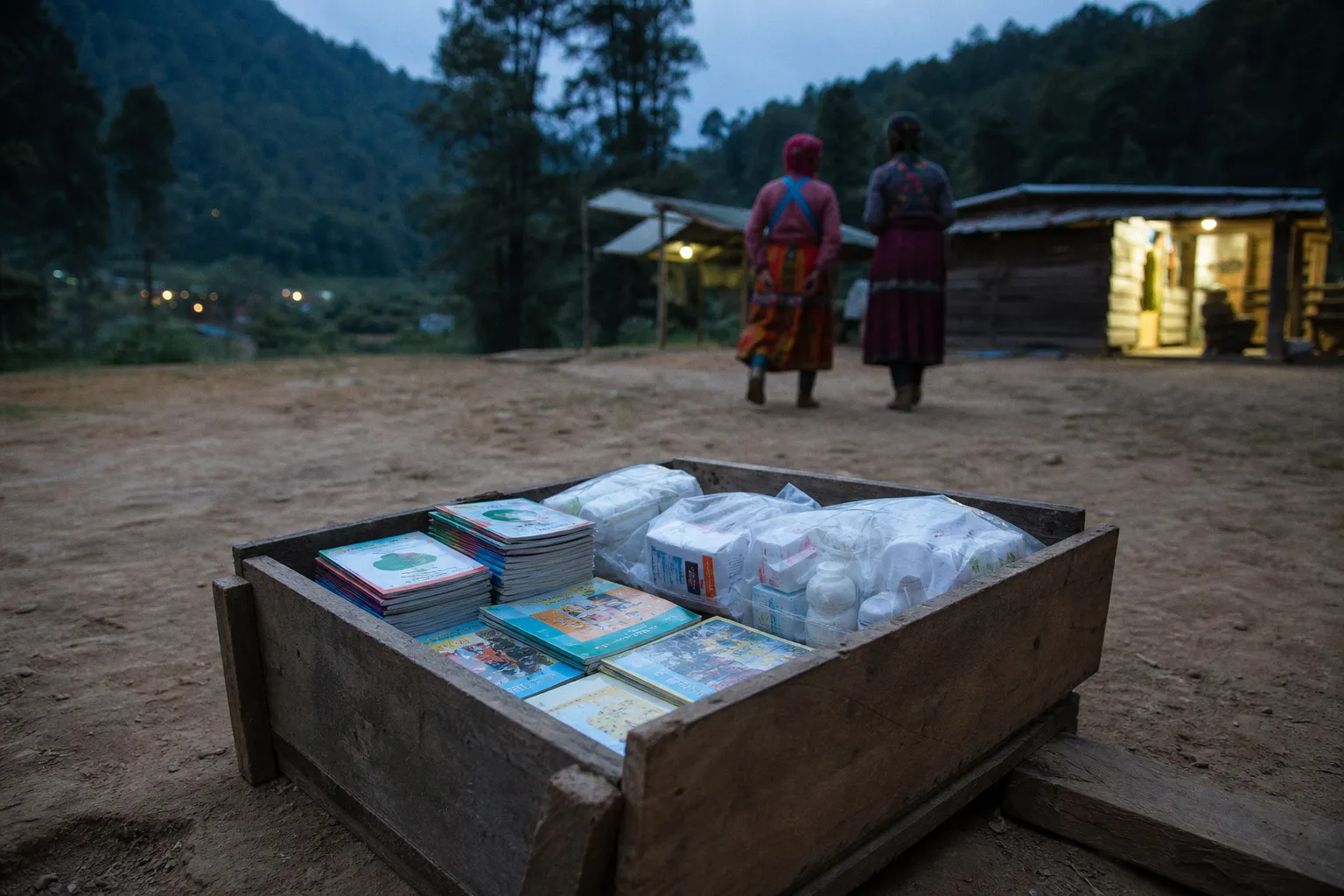
This happens when an outside organization treats a Tribal Nation as a location for its program rather than as a government, a cultural community, and the rightful steward of decisions that affect its people, land, knowledge, and future.
I have seen volunteer teams arrive with practical energy: a crew ready to repair a school roof, deliver learning materials, run a health camp, or create a transport route for students who travel long distances. That energy matters. Yet the physical work is only the visible part of the undertaking. Before a single motorcycle is loaded, a classroom painted, or a survey opened, the project needs a relationship structure strong enough to hold dialogue, disagreement, local agency, and long-term stewardship.
This tribal community welfare project preparation checklist is written for U.S.-based nonprofits, volunteer networks, and grassroots groups at the earliest stage of planning. It is not a universal approval formula—there is no such formula across hundreds of distinct Nations—but it offers a route away from generic outreach and toward a partnership that can be properly invited, governed, and sustained.
A project becomes useful not when it reaches a community quickly, but when the community has real room to shape what “useful” means.
Navigating 574 Tribal jurisdictions: beyond generic outreach
The United States recognizes 574 American Indian tribes and Alaska Native entities, a figure reported by USAGov in June 2026. That number should interrupt any instinct to speak loosely about “tribal communities” as though they share one administrative structure, one leadership model, one set of cultural protocols, or one route to approval.
They do not.
A school-support initiative on one Nation’s land may need to begin with a tribal education department, while a youth wellbeing project elsewhere may be most appropriately introduced through a health board, social services office, elected council, traditional leadership structure, or a designated community liaison. In some places, local chapters or village entities are central to early dialogue. In others, the Nation’s central government retains the relevant authority. An outside team cannot infer this from a map, a demographic report, or a previous project in another region.
For a bike-based volunteer organization, this changes the nature of preparation. The question is not merely whether riders can reach a rural school, nor whether supplies can be carried over difficult roads. The question is who has defined the need, who has authority to discuss it, and whether the proposed activity fits the Nation’s own priorities for children, families, language, livelihoods, or cultural preservation.
Begin with a jurisdiction map that is relational as well as geographic:
1. Identify the specific Tribal Nation and its governing structure. Confirm the Nation’s official name, jurisdiction, government offices, and designated points of contact. Do not rely on outdated directories or assume that a county agency speaks for the Nation.
2. Clarify the site of the proposed work. A school, clinic, community hall, or road may sit within a different web of authority than an organization first assumes. Land status, school governance, and service responsibility can be layered.
3. Learn the Nation’s stated priorities before presenting a solution. Read public plans, education goals, health strategies, youth initiatives, and cultural preservation commitments where they are available. This is preparation, not permission to presume.
4. Ask what the right first conversation looks like. A formal letter may be appropriate in one context; an introduction through a trusted local organization may be more respectful in another. The point is not to perform cultural sensitivity. It is to make room for the Nation’s own process.
5. Budget for relationship-building as real work. Travel, interpreters, accessible meeting formats, follow-up visits, and local coordination all require time and funds. They are not optional “soft costs” around the project; they are part of the project’s foundation.
There is a practical difference between learning before approaching and arriving with a polished proposal that leaves only room for agreement. The latter often asks community leaders to spend precious time correcting an outsider’s assumptions. The former begins with the recognition that the team has not yet earned the right to define the problem.
A note on consultation language
Words carry legal and political weight in this field. The Bureau of Indian Affairs defines Tribal consultation as a formal, two-way government-to-government dialogue between official Tribal representatives and federal agencies before federal decisions are made. A nonprofit holding listening sessions, hosting workshops, distributing surveys, or meeting with elders should not automatically describe that activity as “formal Tribal Consultation.”
That distinction is not a technicality. It protects the integrity of a process grounded in Tribal sovereignty.
A nonprofit can say, truthfully, that it conducted community engagement, relationship-building meetings, listening sessions, or planning dialogue—provided those words describe what happened. If a federal agency is involved in a project, separate federal consultation requirements may apply, and the relevant agency must lead its own process.
The Indian Health Service’s consultation approach offers useful planning questions even when its formal procedures do not govern a nonprofit initiative: What is the critical decision or event? Which Tribes may be affected? What level and method of engagement is appropriate? What timeline allows meaningful participation rather than last-minute reaction?
Those questions belong at the beginning, when the project is still flexible enough to change.
Establishing data sovereignty before collecting a baseline
“Baseline data” sounds harmless. It can mean attendance records, transport patterns, household surveys, disability access information, school infrastructure conditions, or interviews with parents and young people. But within tribal development work, data is not simply raw material for a grant report. It may reflect family relationships, community history, cultural knowledge, political status, or vulnerabilities that a Nation has every right to govern.
A cultural sensitivity assessment for NGOs is therefore not complete if it focuses only on respectful language, event etiquette, or dietary arrangements. It must include the more consequential question: who controls information once it leaves a conversation, a phone, a clipboard, or a cloud folder?
The National Institutes of Health has been clear that work involving American Indian and Alaska Native data should recognize Tribal sovereignty and align with applicable Tribal laws, regulations, policies, and preferences. A Tribal Nation may determine how data is collected, used, managed, shared, stored, reviewed, and published. Some Nations may require a Tribal-designated institutional review board or another research-review process. Some may require review before a presentation, report, map, or public-facing case study is released.
This applies even when a project team considers its work modest. A volunteer group documenting “before and after” classroom conditions may create records that reveal more than it intends. A needs survey can become extractive when answers are gathered for an outside funder and never returned in usable form to the community. “De-identified” data should not be casually treated as free for reuse; the relevant Nation’s policy and agreement terms still matter.
The data conversation to have before the first form
A written agreement does not need to be bloated with legal language to be serious. It does need to make decisions visible. Before collecting tribal development baseline data, work through the following together:
| Question | What a project team needs to clarify | Why it matters |
|---|---|---|
| Purpose | What decision will this information support? | Prevents collecting data simply because a funder expects numbers. |
| Authority | Who in the Tribal Nation approves collection and use? | Respects the Nation’s own governance pathway. |
| Ownership and control | Who may access, edit, retain, or destroy the information? | Keeps stewardship from defaulting to the outside organization. |
| Storage | Where will data live, for how long, and with what security? | Reduces privacy and misuse risks. |
| Sharing | Can information go to funders, partners, researchers, or the public? | Stops “internal” reports from quietly becoming external circulation. |
| Review | Does the Nation review reports, presentations, photos, or publications? | Gives the community agency over how it is represented. |
| Benefit | What will the community receive back, and in what format? | Makes the information useful locally, not only upward to donors. |
The CDC’s Tribal Public Health Data Advancement Toolkit is helpful here because it frames data capacity through five connected areas: data governance, IT governance, policy, technology, and workforce. Not every welfare project needs a complex data system. But every project involving community information needs to understand that a spreadsheet is never just a spreadsheet; it is a set of relationships, permissions, and responsibilities.
A small education project may decide that a jointly reviewed inventory of classroom repairs is enough. A youth transport initiative may need attendance and route data, but no individual family profiles. A program may choose to collect fewer numbers and invest more time in community discussion. That is not weak evaluation. It is proportionate, intentional practice.
If a community cannot see how its information will be protected, used, and returned, the project has not yet earned the right to ask for it.
Designing evaluation as a shared learning process
Many grant applications demand outcomes before a local partnership has had time to define success. The result is a familiar distortion: a volunteer organization arrives with targets already fixed—number of classrooms repaired, children reached, kits distributed, miles covered—while the more durable questions remain unasked.
Did the repair schedule fit the school calendar? Did the project strengthen local maintenance capacity? Did the new materials support the language and teaching practices valued by the community? Did the program add work for teachers without giving them decision-making authority? Did young people feel safer, more connected, more able to attend, or more visible in the way the initiative claimed they would?
The CDC’s 2024 Program Evaluation Framework places three cross-cutting actions at the center of sound evaluation: engage collaboratively, advance equity, and learn from and use insights. For tribal welfare projects, this is a useful discipline precisely because it asks teams to treat evaluation as a living relationship rather than an end-of-project proof document.
A collaborative evaluation plan should establish, early on:
- Who defines the intended change. A donor’s preferred metric may not capture what families, educators, elders, or youth consider meaningful.
- Which outcomes can reasonably be influenced. Repainting a school building may improve the learning environment; it does not by itself resolve staffing shortages, transport barriers, or historic underinvestment.
- What local knowledge will sit alongside numerical measures. Attendance figures may matter, but so can teacher observations, parent dialogue, or youth-led feedback in a format the community approves.
- How often the partnership will pause and adapt. A project should be able to change direction when community feedback shows that an assumption was wrong.
- Who receives the findings first. The community should not discover the project’s “results” in a donor newsletter, a conference presentation, or a social media campaign.
This is where a modest pilot often serves better than a grand launch. A pilot can reveal that the need is not a new water tank but repairs to an existing one; not donated tablets but reliable charging access; not an external tutoring program but transport support for local educators and students. These are not failures of planning. They are the whole point of planning with people rather than around them.
For teams accustomed to action, this can feel slow. Yet slowing down at the threshold frequently prevents far more damaging delays later: a project paused because approval was assumed, a relationship strained by an unapproved photograph, a well-meant survey that cannot be used, or a grant promise that does not fit local priorities.
Operational readiness: funding, approvals, and the unglamorous work
A project can have deep community dialogue and still falter when administrative readiness is treated as somebody else’s problem. The work of registration, insurance, safeguarding, financial controls, procurement, transport planning, and reporting is not separate from dignity. It is how a group keeps its promises once the community has made space for it.
If federal grant funding is part of the plan, the organization should begin registration work early. Grants.gov states that an applicant needs a legal entity and an EIN before registration. A System for Award Management registration is needed to obtain or verify a Unique Entity Identifier, and SAM processing averages seven to ten business days after all information has been entered. SAM registration also requires annual renewal to remain active.
Those timelines are not dramatic, but they can quietly derail a season of work. A rural school repair initiative planned around weather, academic calendars, or a community gathering should not discover days before a funding deadline that an organizational registration is incomplete.
Operational readiness also means being honest about what the team can carry. In motorcycle volunteer networks, there is often pride in improvisation: a rider can find a spare part, a route around a washed-out road, or a way to deliver supplies with limited equipment. That resourcefulness has value. It should not become a substitute for a clear safety plan, local procurement strategy, or agreement about who maintains what after the convoy leaves.
The pre-launch readiness table
| Area | Readiness question | A practical warning sign |
|---|---|---|
| Local authority | Has the relevant Tribal Nation identified the appropriate route for discussion and approval? | The team only has contact with a non-Tribal intermediary or one informal supporter. |
| Scope | Has the proposed activity been revised after early dialogue? | The original proposal remains untouched despite community feedback. |
| Data | Is there written agreement on collection, storage, use, and publication of information? | A survey or photo release is ready before governance terms are discussed. |
| Safeguarding | Are child protection, volunteer conduct, and reporting pathways understood locally? | Safeguarding is treated as a generic document rather than a shared protocol. |
| Money | Does the budget include local coordination, translation, follow-up, and maintenance? | Most funds are allocated to visible goods or a one-time event. |
| Procurement | Can materials and services be sourced locally where appropriate? | The team plans to transport everything in without asking what local businesses or workers can provide. |
| Continuity | Who will own maintenance, monitoring, and decisions after launch? | “We will come back next year” is the only sustainability plan. |
The most respectful procurement decision is not always the fastest one. Buying locally, when that is appropriate and desired, can support livelihoods, make replacement easier, and keep knowledge of the materials close to the people who will use them. At the same time, local purchasing should never be assumed to be automatically beneficial without dialogue about quality, pricing, capacity, and existing community preferences.
The same principle applies to staffing. Bringing in specialists may be necessary for a structural repair, a clinical service, or a complex technology installation. But if outside experts occupy every meaningful role, the project can leave behind a finished object without local confidence, access, or agency to sustain it.
Defining the boundaries of engagement and consent
There is a particular kind of harm that occurs when an organization mistakes welcome for unlimited access. A community meeting is not permission to photograph children. A school principal’s enthusiasm does not automatically authorize publication of student stories. A helpful conversation with one leader is not a mandate to speak publicly for the Nation. A donor’s desire for a compelling narrative is not a reason to turn community life into content.
For organizations working in tribal support, boundaries should be discussed plainly before launch, not negotiated awkwardly after an image has been posted or a report has been circulated.
This is especially relevant for volunteer biker networks. The journey itself can attract attention: riders crossing long distances, carrying supplies, gathering at a school, documenting difficult routes. But the story should not become about outsiders arriving heroically in a place represented as remote, broken, or waiting to be rescued. Communities are not backdrops for a convoy’s sense of purpose.
Ask direct questions:
- Are photographs or video welcome at all, and if so, where and when?
- Who can give consent for images involving children, cultural events, facilities, or community members?
- Are there spaces, ceremonies, names, stories, symbols, or sites that should not be recorded?
- Does the Nation wish to review public materials before they are released?
- How will the organization describe the partnership without overstating endorsement or claiming to be community-led without evidence?
- What should happen if a volunteer disregards a boundary?
A respectful answer may be “no photography,” “no social posting during the visit,” or “no publication without review.” That is not a loss for the project. It is clarity, and clarity protects everyone involved.
Cultural preservation is also not a decorative layer added through a land acknowledgment, a few translated words, or an event opening. It is present in who decides, whose knowledge is valued, how young people are represented, whether language access is supported, and whether the project leaves the community more control over its own educational and welfare priorities.
The preparation checklist, in the order it should happen
The temptation is to begin with a funding application, a public launch, or a delivery calendar. A more grounded sequence looks different:
1. Name the proposed issue without pretending you have diagnosed it. State what you have observed or been asked to explore, and leave room for the Nation to redefine the need.
2. Confirm the specific Nation, jurisdiction, and appropriate initial contact pathway. Do not treat regional familiarity as authorization.
3. Listen before designing. Create enough time for early dialogue to affect the scope, budget, schedule, and definition of success.
4. Distinguish engagement from formal Tribal Consultation. Use accurate language and do not borrow government-to-government terminology for ordinary nonprofit outreach.
5. Agree on decision rights. Establish who can approve, pause, revise, or end the initiative, and put the agreement in writing where appropriate.
6. Set data governance terms before any survey, photograph, interview, or baseline assessment. Include collection, storage, access, sharing, publication, and deletion.
7. Build an evaluation plan with the community, not merely for the funder. Decide what will be measured, whose interpretation counts, and how learning will be returned.
8. Prepare the operational base. Complete registration and funding requirements, but also secure safeguarding procedures, insurance, transport planning, maintenance arrangements, and realistic local coordination.
9. Pilot where possible. A small, jointly reviewed first phase can reveal what needs to change before resources and expectations grow.
10. Create a follow-through rhythm. Agree on meetings, reporting formats, contact points, and a process for addressing concerns after the launch moment has passed.
The thread running through all of this is not caution for its own sake. It is respect for the fact that welfare work touches structures of authority, memory, responsibility, and self-determination. A project that treats these as peripheral may complete its visible task while weakening the relationship that should have made the work possible.
The most durable grassroots engagement begins with a simple discipline: arrive prepared to contribute, but equally prepared to be changed by what the community tells you. That is where practical service becomes partnership, and where partnership begins to deserve trust.