Rain gardens or bioswales for neighborhood runoff
An estimated 27,000 gallons of stormwater run off every acre of impervious surface during a single one-inch rainfall event.
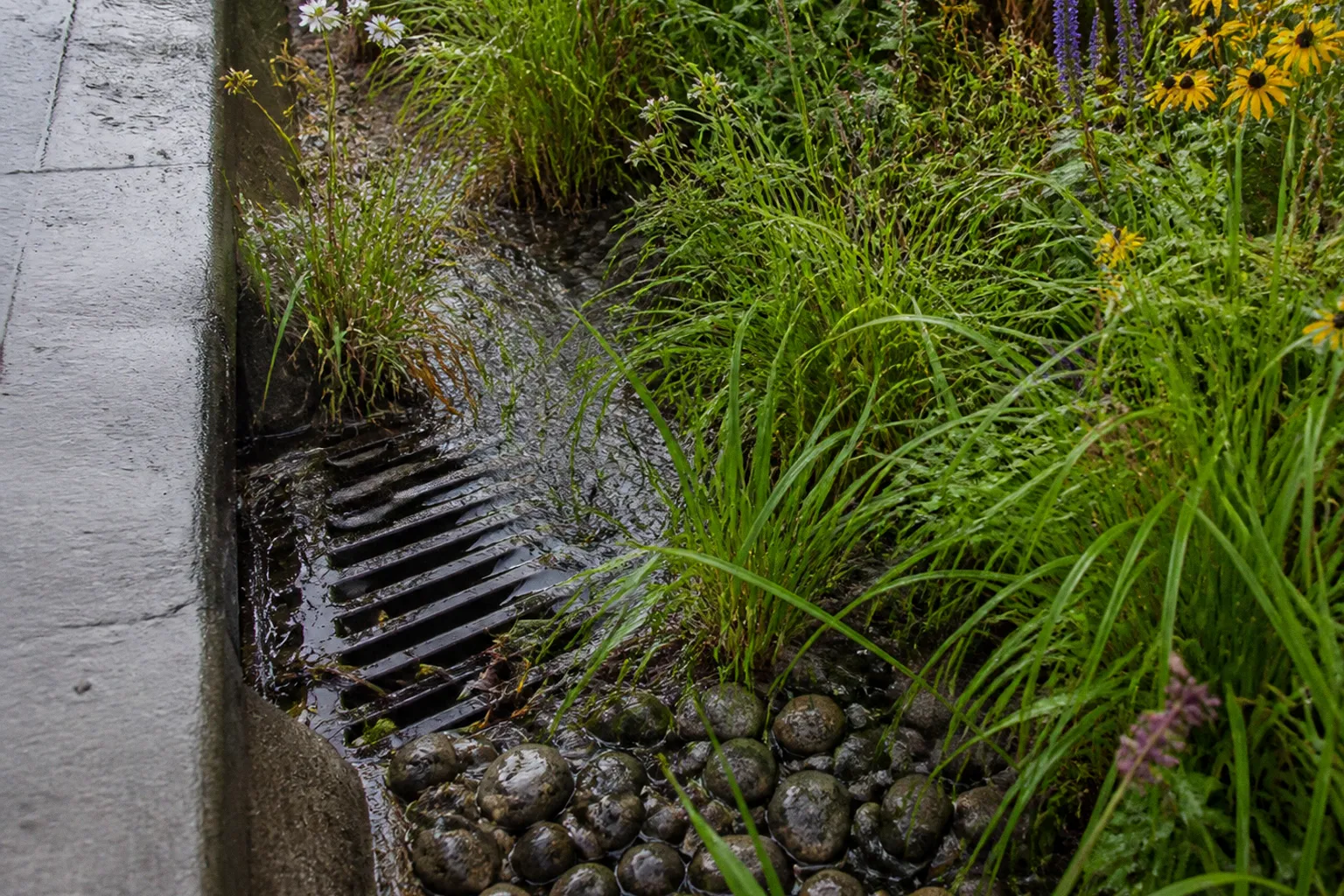
For a neighborhood association, a school sustainability committee, or an environmental NGO weighing a $50,000 capital allocation, the choice between a rain garden and a bioswale is not a matter of aesthetic preference. It is a hydraulically constrained decision tree that determines whether a green infrastructure project delivers its projected pollutant load reduction or quietly underperforms within two growing seasons. The two systems manage runoff through fundamentally different mechanics, and the engineering literature consistently treats them as complementary tools rather than substitutes. Treating them as interchangeable is the single most common procurement error observed in community-scale greening programs, and it produces the kind of implementation bottleneck that erodes donor confidence in subsequent funding cycles.
Compare car rental deals in United Kingdom
See available offersPartner link — DiscoverCars comparisonHydraulic Mechanics: Vertical Infiltration vs. Horizontal Conveyance
A rain garden is a shallow, basin-shaped depression engineered to capture runoff and hold it long enough for vertical infiltration through amended soil media. Water enters, ponds briefly, and exits downward. The system is diffusion-driven, dimensionally compact, and depends on a small contributing area relative to the garden footprint.
A bioswale is a linear, vegetated channel engineered to convey runoff along a defined longitudinal path while filtering it through vegetation and engineered soil media. Water enters at the upstream end, moves horizontally, and exits at a downstream outlet — typically a storm drain, daylight outfall, or infiltration trench. The system is conveyance-driven, dimensionally elongated, and responds to slope as a primary design variable.
A rain garden is a bucket; a bioswale is a gutter. Both hold water, but only one is designed to move it.
That distinction is not a stylistic preference. It dictates the contributing drainage area each system can service, the engineered infrastructure each requires, and the maintenance cadence each will demand over a ten-year operational lifespan. Procurement decisions that lump the two together — treating them as a single line item in a green infrastructure budget — typically produce a system that fails to perform either function at spec.
Sizing and Capacity: Residential Lots vs. Neighborhood Drainage Networks
Capacity is the first metric that separates the two systems, and it is the metric most often misread during early-stage planning.
Rain gardens are designed for residential and small-institutional runoff, with the literature placing the typical upper bound of the contributing impervious drainage area at roughly 0.5 acres. The garden itself is typically sized at 10% to 20% of that contributing area, depending on native soil percolation rates and the design ponding depth. A 4,000-square-foot impervious catchment, for example, generally yields a rain garden footprint in the 400 to 800 square foot range — small enough to fit comfortably inside a school campus, a community center courtyard, or a residential side yard.
Estimating the contributing impervious area is the single most important data point in the early sizing conversation. For residential lots, a straightforward survey of rooftop area, driveway footprint, and any compacted gravel surfaces produces a defensible estimate. For institutional sites, impervious area mapping through county GIS portals or simple aerial imagery analysis provides the baseline. The calculation does not require professional engineering input at the concept stage — it requires an honest accounting of every hard surface that drains toward the proposed location. Skipping this step, or relying on a rough visual impression, is where most community projects first diverge from the engineering reality that will govern performance.
Bioswales operate at a different scale. They are engineered to handle runoff from streets, parking lots, and integrated drainage networks up to approximately 5 acres, with the swale footprint itself typically sized at 1% to 3% of the contributing impervious area. The sizing standard published by the NRCS — the conveyance of at least 4.3 inches of rainfall over a 24-hour period, corresponding to the 10-year storm event in many regions — serves as a widely referenced design benchmark and a common starting point for bioswale sizing in projects that undergo engineering review. Individual municipalities may adopt this figure, adjust it to reflect local rainfall intensity curves, or set independent thresholds; the designer's obligation is to verify the applicable standard with the reviewing authority before committing to a footprint.
| Parameter | Rain Garden | Bioswale |
|---|---|---|
| Maximum contributing drainage area | Up to roughly 0.5 acres (typical) | Up to approximately 5 acres |
| Typical footprint ratio (vs. impervious area) | 10%–20% | 1%–3% |
| Design storm standard | Local ponding frequency | 4.3 inches in 24 hours (10-year storm, NRCS reference) |
| Hydraulic function | Vertical infiltration | Horizontal conveyance + filtration |
| Typical geometry | Basin, amorphous footprint | Linear channel, defined slope |
The practical implication for a community-scale project is straightforward. As contributing areas grow beyond the typical rain garden envelope, a single basin becomes increasingly strained during moderate-to-high frequency storm events, and the risk of chronic ponding, surface erosion, and media clogging rises sharply. Conversely, deploying a bioswale across a 2,000-square-foot residential lot is an overcapitalization that produces diminishing impact metrics per dollar spent. School campus greening projects — a common entry point for community environmental campaigns — almost always resolve to the rain garden end of this axis, and the numbers above explain why.
Engineering Requirements: Soil Media, Slopes, and Underdrain Systems
Engineering complexity is the second axis on which the two systems diverge, and it is where the budget differential originates.
Bioswales have non-trivial subgrade requirements. The system demands a minimum soil media depth of 2 feet, a longitudinal slope between 0.5% and 6%, and — critically — an underdrain system (typically a 6-inch perforated pipe) wherever the native soil drainage rate falls below 0.5 inches per hour. Slopes below the 0.5% threshold risk standing water and anaerobic conditions that compromise vegetation and water quality. Slopes above 6% require check dams to prevent channel erosion and scour, which adds iterative cost. The result is a system whose civil engineering content is closer to a small utility trench than a landscape installation.
Rain gardens, by contrast, require substantially less engineered infrastructure. They depend on amended soil media and, in well-drained native soils, often function without an underdrain. The ponding depth is shallow, the geometry is forgiving, and the design tolerance for site variability is high. This is the engineering content that allows community volunteer labor to substitute meaningfully for contracted excavation, which has direct implications for the resource allocation model a non-profit or school committee can adopt.
Soil percolation testing is the prerequisite that both systems share, and it is the step most frequently shortchanged in community-scale projects. A standard percolation test — a flooded borehole measuring the rate at which water drops in a saturated soil column — takes two to four hours and costs modestly when conducted by a soils technician. The result determines whether a rain garden can function without an underdrain, whether a bioswale's native subgrade will support infiltration or requires full underdrain routing, and — in either case — whether the proposed site is viable at all. Sites with percolation rates below 0.5 inches per hour are not disqualified, but they shift the design toward underdrain-dependent configurations that alter both the engineering scope and the maintenance profile. Skipping the perc test and designing to assumed soil conditions is the most expensive shortcut a community project can take, because retrofitting an underdrain into a completed rain garden or bioswale is a disruptive and costly proposition.
Financial Planning: Cost per Square Foot vs. Cost per Linear Foot
The financial comparison is deliberately asymmetric, because the two systems are priced in different units. Confusing the units is the second most common procurement error in community green infrastructure.
A residential rain garden typically costs between $3 and $6 per square foot of garden footprint, inclusive of soil media, plants, and basic site preparation. A bioswale typically costs between $15 and $50 per linear foot of channel, inclusive of excavation, soil media, underdrain installation, and outlet structures. The unit-price gap looks artificial until the comparison is normalized against the contributing drainage area each system is designed to service.
| Project Profile | Indicative Rain Garden Cost | Indicative Bioswale Cost |
|---|---|---|
| Residential lot (0.1 acre catchment) | $1,200 – $3,200 | Overcapitalized for this scale |
| Small institutional site (0.4 acre catchment) | $4,800 – $12,800 | $7,500 – $25,000 if slope and soil permit |
| Neighborhood street segment (2.5 acre catchment) | Beyond typical design capacity | $7,500 – $125,000 over roughly 500–2,500 linear feet |
The figures above should be read as illustrative planning estimates derived from the per-unit cost ranges, not as bid specifications. Soil conditions, regional labor rates, design complexity, and the proportion of volunteer versus contracted labor will move every number. Community greening projects that pair paid civil works with volunteer planting crews often see meaningful cost reductions on the planting and establishment phases — though the magnitude varies widely with project scale, crew experience, and local labor market conditions. What holds across most documented projects is that the savings materialize in the labor-intensive establishment work (planting, mulching, initial watering) rather than in the civil engineering scope (excavation, grading, underdrain installation), where professional crews and equipment are non-negotiable.
Beyond the headline installation cost, several line items routinely escape early-stage budgets. Permitting and review fees — which can range from nominal to several thousand dollars depending on the municipality and the project's proximity to regulated waterways — are the most commonly overlooked. Design and engineering fees, if the project warrants a stamped plan set, typically add 10% to 20% of the construction cost. Plant replacement during the first two establishment years, before root systems are fully established, is a near-certainty rather than a contingency; budgeting for 10% to 15% plant mortality in the initial cohort is prudent rather than pessimistic.
The honest caveat: a direct ten-year maintenance cost comparison between residential rain gardens and neighborhood-scale bioswales is not robustly documented in the public literature, and the differential is highly sensitive to local plant survival rates, sediment loading, and the cost of underdrain rehabilitation. Procurement officers should treat long-horizon operational expenses as a planning variable with significant uncertainty rather than a fixed line item.
Operational Lifespan: Drainage Timelines and Maintenance Realities
A functional green infrastructure system must drain on a predictable schedule. Standing water beyond the design window is a vector for mosquito breeding, anaerobic soil conditions, and root rot that compromises plant survival and the pollutant load reduction figures cited in the original grant application.
Rain gardens are designed to drain completely within 24 to 48 hours after a storm event. The wider tolerance band reflects the system's lower hydraulic load and its dependence on biological infiltration, which varies seasonally with plant cover and soil biological activity. Sites that fail to drain within this window typically indicate either under-engineered soil media, surface compaction, or a contributing area that has grown beyond the original design assumption — usually because a neighboring parcel was paved over without updating the receiving garden's capacity.
Bioswales are designed to drain within 24 hours, with 12 hours preferred when site conditions permit. The tighter window reflects the system's higher hydraulic load and the operational risk of slow-moving water sitting in a linear channel adjacent to a roadway or pedestrian path. Sites that fail to drain within 24 hours typically indicate an underdrain blockage, sediment accumulation at the upstream forebay, or vegetation collapse along the channel invert.
Drainage time is the single most reliable operational performance metric for either system, and it should be measured quarterly against the original design specification.
Quarterly measurement does not require professional monitoring. A field crew — staff or trained volunteers — can document post-storm drawdown time by marking the water surface immediately after a rain event and recording the time at which the basin or channel is visually dry. The data set builds over seasons, and the trend line is what matters: a garden or swale that took 18 hours to drain in Year 1 and takes 36 hours in Year 3 is communicating a clear maintenance signal before it becomes a system failure. That trend data also provides the quantitative basis for maintenance budget requests and funding renewal proposals, which is where community-scale projects most often lose the thread.
Maintenance cadence is the second operational variable. Rain gardens generally require annual inspection, periodic sediment removal from the inflow area, and replacement of individual plants on a 3- to 5-year cycle. The plant palette matters here: native perennial grasses and forbs with deep, fibrous root systems outperform ornamental cultivars in both infiltration capacity and long-term survival, and they reduce the replacement cadence substantially over the system's first decade. Bioswales require the same baseline maintenance, plus periodic underdrain inspection, forebay cleanout at a higher frequency due to sediment loading from street runoff, and — on slopes above 6% — structural inspection of check dams. The bottleneck is the underdrain, which is the single most expensive component to rehabilitate once it has failed.
Strategic Selection: A Decision Framework for Community Projects
The selection problem resolves to three binary questions, applied in order:
1. What is the contributing drainage area? Under 0.5 acres directs the project toward a rain garden. Between 0.5 and 5 acres, with a defined slope and a linear drainage path, directs the project toward a bioswale.
2. Is the longitudinal slope within 0.5% to 6%? If not, the site is not a candidate for a standard bioswale without engineered check dams or alternative infiltration systems, and the cost calculus shifts accordingly.
3. Does the native soil drain at 0.5 inches per hour or faster? If not, the bioswale requires an underdrain, and the project budget must absorb the underdrain cost line — typically 25% to 40% of the total installation figure.
Projects that fail Question 1 should not be force-fit into either system. They require either a hybrid design, a distributed network of multiple rain gardens, or — for sites outside the bioswale envelope — a conventional storm sewer with downstream treatment. Treating a 2-acre catchment as a single rain garden project is a fundamental misapplication of the technology — one that typically produces chronic overflow, erosion, and a system that fails to deliver on its design promise long before the community recoups its investment.
The nuance that most decision frameworks gloss over: the two systems are not mutually exclusive at the site scale. A bioswale conveying runoff along a neighborhood street can feed into a rain garden at a downstream corner lot, capturing the residual volume that the swale's conveyance capacity does not absorb. Hybrid configurations of this kind are increasingly common in municipal green infrastructure standards, and they allow community projects to address both the linear drainage corridor and the terminal infiltration point in a single, phased capital plan.
Where the Funding Conversation Has to Go
The bottleneck in scaled deployment of either system is not technical. The engineering specifications are well documented, the plant palettes are regionally catalogued, and the construction labor market for vegetated infrastructure is mature in most metropolitan areas. The bottleneck is the procurement model, which continues to treat community green infrastructure as a discretionary line item rather than a measurable stormwater utility asset.
For environmental NGOs, school sustainability committees, and municipal grant programs, the resource allocation question is no longer whether to deploy green infrastructure — it is how to fund the underdrain and the ten-year maintenance reserve that determine whether the system survives its design life. Donor frameworks that fund capital installation without an explicit operations and maintenance line are building a deferred maintenance liability — one that surfaces as accelerated system degradation and unplanned capital expenditure well before the end of the system's intended lifespan, along with a credibility cost in the funding cycle that follows.
The strategic next step is straightforward: integrate the ten-year maintenance reserve into the capital budget at the proposal stage, measure performance against the 24-hour or 48-hour drainage standard on a quarterly cadence, and report the impact metrics back to the funding committee in the same format as the installation report. That reporting discipline is what converts a one-time green infrastructure project into a scalable, repeatable community asset — the kind of durable yield that justifies the next round of capital allocation and the policy adjustments that follow.