Hygiene kit drives: how to avoid budget waste
A homeless hygiene kit drive can lose money before the first bag reaches a distribution table. The usual failure is not a dramatic one.
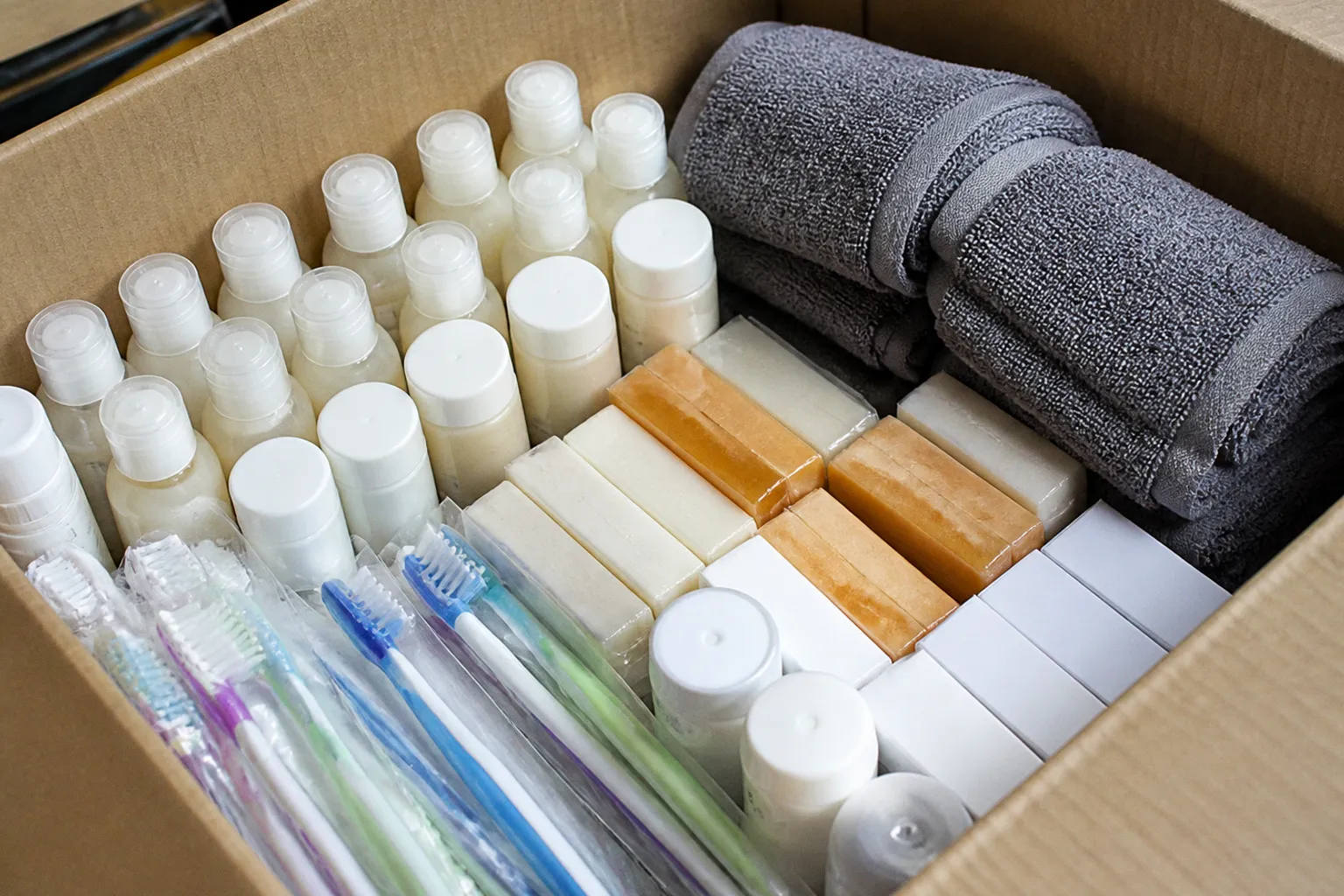
It is a stack of retail receipts, oversized bottles, uncounted donations, and cartons ordered without a place to put them.
We see the same mechanical problem in every grassroots welfare campaign: the plan is built around what is easy to buy, not what people can carry, store, open, and use. That mismatch burns the budget. It also slows the handoff when the distribution line is already moving.
A workable hygiene drive for homeless shelters starts with the route, the load, and the receiving conditions. Then we source the items. Not the other way around.
Retail purchasing is the first budget leak
Buying supplies one packet at a time from retail stores feels controlled. It is not. It hides the true unit cost and makes the final spend difficult to track. Volunteers buy what is available on the shelf, substitute brands without recording the change, and return for another trip when one item runs short.
That process creates three separate losses:
- The organization pays retail pricing instead of negotiating case or wholesale pricing.
- Staff time gets spent hauling small orders, collecting receipts, and reconciling scattered purchases.
- The kit contents drift from one batch to the next, making demand forecasts unreliable.
For a small emergency collection, retail may be unavoidable. For a planned homeless hygiene kit drive, it should be the exception. Build a unit-cost sheet before ordering. Record the price per item, the number of units per case, the minimum order quantity, freight, taxes, and any payment terms. A low case price can stop being low once delivery is added.
Wholesale does not mean every supplier is automatically suitable. Vendors set their own minimum order quantities and nonprofit terms. Some will sell mixed cases. Others will not. Some require a business account or advance payment. We need those conditions on paper before we anchor the budget to them.
A basic purchasing table should look like this:
| Item | Portable target | Quantity per kit | Buying question |
|---|---|---|---|
| Fluoride toothpaste | 1–1.5 oz | 1 | Is the case size close to the planned drive volume? |
| Bar soap or body wash | 1–2 oz | 1 | Can recipients carry it without leaking? |
| Solid-stick deodorant | 0.5–1 oz | 1 | Is it sealed and suitable for unsheltered storage? |
| Clear resealable bag | 1 gallon | 1 | Can the entire kit fit without crushing the contents? |
| Additional items | Based on site need | Site-specific | Does the recipient location actually request them? |
The target sizes are not a universal law. They are a practical starting point for portable street-outreach kits. Full-size products can be correct for shelter intake, where the recipient has a locker, a bed, or access to a storage area. They are a poor default for someone carrying personal property from place to place.
Build the cost around a standard kit
A standard kit gives us a fixed loadout. That matters because volunteers tend to overpack when the rules are vague. One bag gets three kinds of soap. Another gets a large bottle of shampoo. A third receives items that cannot be used without access to a bathroom or running water.
Set the contents first. Then set a cost ceiling. Budget-friendly sourcing strategies can place an individual care package in the range of roughly $5–$10, but the actual figure will move with location, freight, supplier terms, and the contents chosen. Treat that range as a planning reference, not a promise.
The kit cost should be separated into four lines:
1. Consumables: toothpaste, soap, deodorant, wipes, menstrual products, or other approved items.
2. Packaging: clear resealable bags, labels, and any secondary cartons.
3. Transport: freight to the assembly point and fuel or vehicle cost for distribution.
4. Handling: storage, sorting, packing, and disposal of damaged or unsuitable donations.
If we only calculate the soap and toothpaste, we are not calculating the kit. We are calculating two pieces of it.
A cheap case is not a saving if it arrives without storage, without a route, or in a size nobody can carry.
Portability decides whether the kit works
People experiencing homelessness may carry everything they own. That changes the engineering of the package. A full-size bottle is not merely inconvenient. It adds weight, takes space, and creates a leak risk inside the only bag available.
This is where many charity hygiene drives fail. The donor sees more product and assumes more value. The recipient receives a load that must be hauled through the day.
For street distribution, compact items usually perform better:
- Fluoride toothpaste in the 1–1.5 oz range.
- Bar soap or body wash in the 1–2 oz range.
- Solid-stick deodorant in the 0.5–1 oz range.
- Small, sealed items that can be used without measuring, transferring, or finding another container.
- Packaging that can be closed again after the first use.
We should also separate street outreach from shelter intake. A shelter can have shelves, lockers, bathrooms, and staff who can control distribution. In that setting, full-size hygiene products may be appropriate and more economical. An outreach team working on foot has a different load calculation.
The route determines the kit.
Use site conditions to choose contents
Do not copy a shelter intake package into a street-outreach bag without checking the operating conditions. The same item can be useful in one location and dead weight in another.
Before locking the contents, get direct answers from the receiving organization or outreach team:
- Is there reliable access to water?
- Are kits handed out on foot, from a vehicle, or at a fixed site?
- Do recipients have somewhere to store items?
- Are there restrictions on scented products, aerosols, or liquid containers?
- Are menstrual products requested?
- Are shaving supplies suitable for the site?
- Will the kit be used immediately or carried for several days?
- Are unopened donated goods accepted, and who will inspect them?
This is not paperwork for its own sake. It prevents us from hauling the wrong load.
A kit should also avoid unnecessary duplication. One useful soap is better than three small products that crowd out toothpaste and deodorant. The objective is not to maximize the number of objects inside the bag. The objective is to produce a usable, portable package with a predictable cost.
Forecast demand before ordering cases
Bulk purchasing creates leverage only when the volume is real. Otherwise it creates a storage problem with an invoice attached.
Overbuying usually starts with a loose estimate: the team expects a large turnout, orders for that number, then discovers that distribution volume, storage capacity, and volunteer labor do not match. The cartons sit. Products approach expiration. Packaging gets crushed. The next drive repeats the purchase because nobody has a reliable inventory count.
Forecasting does not require complex software. It requires a hard number for each stage of the operation:
- Expected number of recipients.
- Number of kits for the first distribution window.
- Reserve percentage or reserve quantity.
- Existing inventory by item.
- Confirmed donations.
- Case quantities and minimum order quantities.
- Available storage volume.
- Packing capacity per shift.
- Transport capacity on distribution day.
Use a simple formula:
Required units = planned kits × units per kit + reserve − usable inventory − confirmed donations
The reserve should be a deliberate decision, not an instinct. If the route normally serves a changing number of people, record the range and plan the first load separately from the reserve stock. Do not order the reserve if there is nowhere dry and secure to store it.
Treat storage as part of the route
A warehouse is not required for every drive. A safe, clean, dry room is still required. Cartons should be off the floor where possible and protected from moisture, pests, heat, and accidental mixing with uninspected donations.
Measure the available storage before the purchase order goes out. Record:
- Floor area and shelf capacity.
- Maximum carton height.
- Door and stair dimensions.
- Temperature and moisture exposure.
- Access hours.
- Whether inventory can be locked.
- Space needed for sorting and packed kits.
- Space for rejected or damaged items.
A case purchase that fits on the supplier’s pallet may not fit through the assembly-room door. That is a basic failure. We bypass it before money changes hands.
The Midwest domestic-violence shelter case gives the correct direction. By forecasting demand, joining a Group Purchasing Organization, and negotiating payment terms, the shelter reduced annual hygiene-kit spending by 42%. That result is not a standard discount available to every nonprofit. It shows what happens when purchasing is treated as an operating system instead of a series of emergency errands.
Standardize assembly so the line does not jam
The packaging format should make the kit visible, countable, and quick to inspect. Clear 1-gallon resealable bags are a strong default for portable hygiene kits because volunteers can see the contents without opening every package. The closure also helps recipients keep the remaining items together.
Opaque bags create extra handling. Volunteers open them to check the contents. Missing items pass through. Damaged products remain hidden until distribution. Clear bags reduce those errors.
Set the assembly line in a fixed order. The exact sequence can change, but the principle does not: every bag moves through the same stations.
1. Receive and quarantine. Keep new, sealed donations separate from unprocessed material. Do not place loose or opened goods on the packing table.
2. Sort by category. Group oral care, body care, deodorant, packaging, and any site-specific items in separate bins.
3. Inspect. Remove damaged packaging, leaks, expired items, and products that do not match the approved kit.
4. Count the first component. Put the same quantity in every bag before moving to the next item.
5. Close and inspect the bag. Check that the seal works and that no sharp edge or leaking container can damage other contents.
6. Pack into transport cartons. Mark the carton with the kit count and destination.
7. Record the finished inventory. Packed units are not the same as received units. Track both.
The sorting stage is where community supply drives either protect the budget or waste it. Donations should be limited to new, sealed items. Then they need to be sorted by category before kit packing. Unhygienic or unusable goods cost labor to process even when they cost the donor nothing.
If the drive accepts donations, publish the item rules before collection begins. A vague request for hygiene products generates mixed sizes, opened packages, and products that do not suit the route. A narrow request generates fewer items but more usable inventory.
Keep exceptions out of the standard bag
There will be items that matter at a specific site but do not belong in every package. Keep them in a separate, labeled loadout. That allows the team to adapt without breaking the standard count.
For example, a shelter intake may need full-size bottles. A street outreach route may need compact products. A fixed-site distribution may be able to handle extra supplies that would be impractical for a mobile team. Use separate kits or add-on packs instead of producing one oversized package for everyone.
That also makes the budget easier to read. We can see what the base kit costs and what the site-specific addition costs. Without that separation, special requirements disappear inside the average.
Use purchasing groups when the drive becomes recurring
A single event can run on a controlled local order. A recurring program needs stronger purchasing structure.
Group Purchasing Organizations can help nonprofits access negotiated terms, but participation does not remove the need to check supplier conditions. Review minimum order quantities, delivery windows, freight, payment terms, substitutions, and return policies. The purpose is to reduce friction across repeated orders, not to chase the lowest catalog price.
Payment terms also affect cash flow. A discount that requires immediate payment may be worse for a small organization than a slightly higher price with a manageable payment window. We need to protect the next distribution cycle, not just this month’s invoice.
Build a rolling purchasing record with:
- Last order quantity.
- Actual kits assembled.
- Actual kits distributed.
- Damaged or rejected units.
- Remaining stock.
- Supplier lead time.
- Price changes.
- Freight cost.
- Payment deadline.
- Next confirmed distribution date.
After two or three cycles, the program should have a usable demand pattern. Until then, keep the order conservative. A clean stockout is easier to correct than a room full of unsuitable inventory.
Bulk buying only works when the bulk has a destination, a shelf, and a date.
The field checklist before the truck rolls
The final inspection is not a ceremonial sign-off. It is where we catch the load that will fail on the road.
Run this list before distribution:
- The receiving site has confirmed the kit type and quantity.
- Street-outreach kits are separated from shelter-intake kits.
- Every item is new, sealed, and within its usable date.
- Portable products match the agreed size range.
- No leaking liquid sits beside paper goods or unprotected packaging.
- Clear resealable bags close fully.
- Packed kit counts match the inventory sheet.
- Reserve stock is labeled and held back from the first load.
- Cartons are within vehicle capacity.
- The delivery route and receiving hours are confirmed.
- The team has a plan for damaged, rejected, or leftover items.
- The next order will be based on actual distribution numbers, not the original estimate.
We should also weigh the finished carton when vehicle capacity is tight. A kit can meet the item list and still create a hauling problem once multiplied across dozens or hundreds of units. Weight is a logistics variable. It belongs in the plan.
The most common homeless hygiene kit drive budget mistakes are ordinary: retail buying, oversized products, loose donation standards, weak forecasting, and no storage check. None requires a sophisticated fix. They require discipline at the point where the plan meets the material.
Set the loadout. Source by case where the numbers hold. Match the package to the recipient’s living conditions. Count every unit. Keep the reserve under control. Then move the kits.
If the bags cannot be carried, the cartons cannot be stored, or the contents cannot be used, the drive has already failed—regardless of how much was collected.