Clothing drives: four hidden budget and time drains
A community clothing drive can fail before the first box leaves the collection site. The failure usually starts with a simple mistake: treating every donated garment as usable cargo.
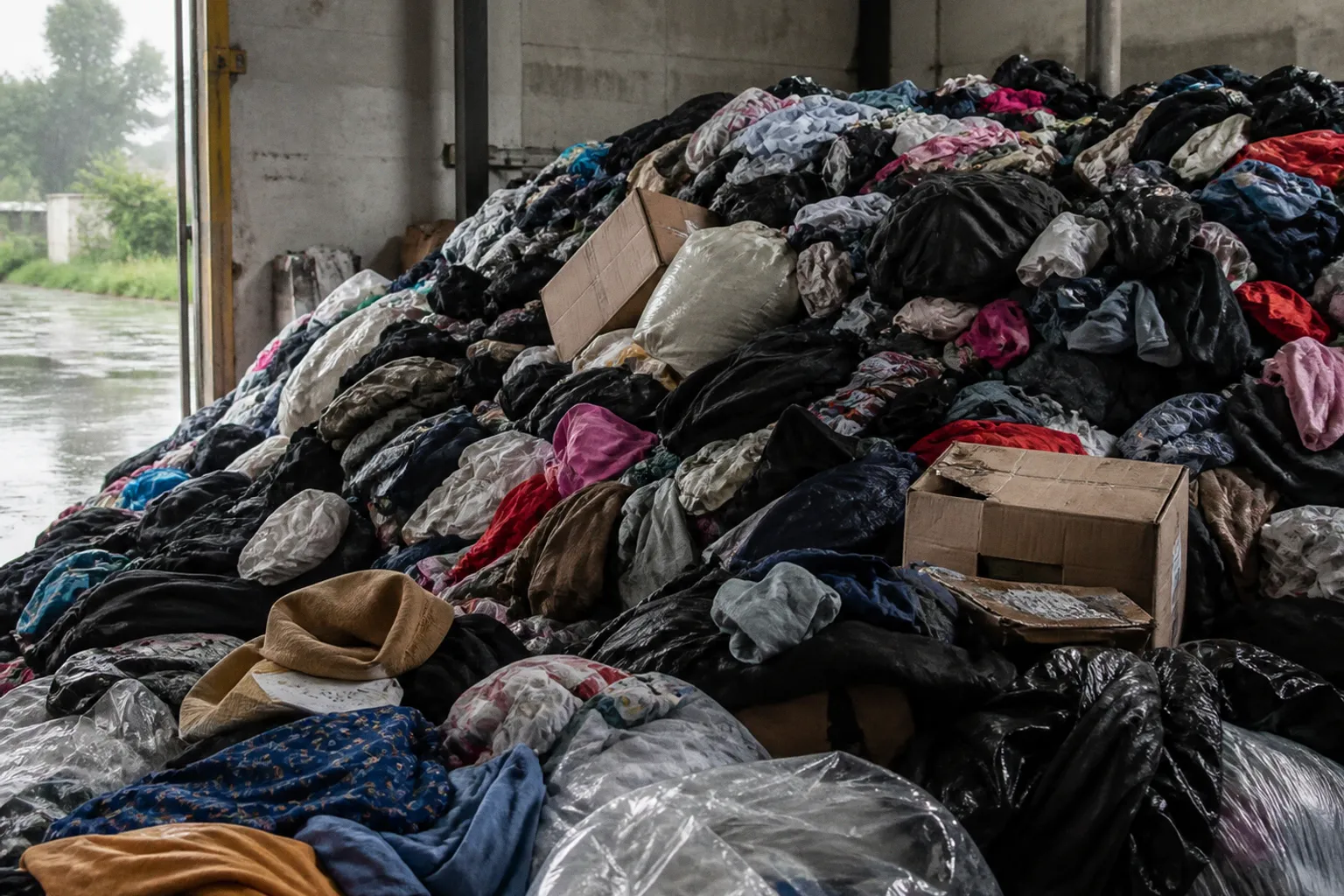
We open a bin, find wet jackets, single shoes, torn trousers, stained children’s wear, and bags with no labels. Then the drive turns into a sorting operation, a storage problem, a vehicle-loading exercise, and finally a disposal job. The public sees a donation campaign. We see labor hours, floor space, fuel, sacks, tape, and decisions made under pressure.
That is the real problem behind community clothing drive hidden costs. The collection itself is easy. The material flow after collection is where the budget takes damage.
The scale is not small. Only about 15% of clothing in the United States is donated or recycled; most of the rest goes to landfill. Global textile waste is estimated at about 92 million tons each year. A clothing drive does not solve that system by default. Without a route, a quality rule, and a receiving partner, it can add another pile to the same problem.
1. Sorting turns donations into a labor bill
The first drain is time. It begins when the campaign accepts clothing without defining what can enter the load.
A usable donation normally has three basic properties:
- It is clean and dry.
- It is intact enough to wear.
- It matches a known need, season, size range, or recipient group.
Remove those conditions and the collection team becomes a manual inspection crew. Every bag must be opened. Every garment must be checked. Wet fabric must be isolated. Damaged items must be separated from good stock. Shoes need pairing. Blankets need inspection for mold, pests, and contamination.
None of this work is difficult. It is simply slow, physical, and easy to underestimate.
During disaster-relief campaigns, the problem gets worse. Donors often send whatever they can remove from their own homes, including clothing that has been stored in damp rooms or damaged during relocation. The volume arrives faster than the team can inspect it. If the operation lacks a quality gate, the intake area becomes a holding yard for unusable material.
That creates several costs at once:
- Volunteers spend hours sorting instead of packing or distributing.
- Collection space remains occupied by material that will not move.
- Good clothing gets buried under bad clothing.
- Supervisors must make disposal decisions without a prepared route.
- The receiving organization may reject the entire load if contamination or waste is mixed into it.
The common response is to narrow the campaign to brand-new clothing only. That can work for emergency operations, but it is not the only answer. A controlled drive can accept good-quality used items if the rules are clear and enforced at the door.
Build the quality gate before opening the bin
We need a short acceptance rule that a volunteer can apply in seconds. Not a paragraph. Not a policy document. A physical rule.
For example:
- Accept clean, dry, wearable garments.
- Accept paired shoes with usable soles and fasteners.
- Reject wet, moldy, heavily stained, torn, or contaminated items.
- Reject loose fabric scraps unless a textile-recycling partner is already confirmed.
- Pack coats, children’s clothing, adult clothing, footwear, and blankets separately.
The wording must appear before the donor arrives. Put it on the collection bin, the campaign notice, and the registration page. If the rule lives only in the coordinator’s head, it does not exist at the collection point.
The cheapest garment to handle is the one we reject before it enters the truck.
We should also assign one person to the intake gate. That person does not need to inspect every seam. They need authority to stop a bag that clearly fails the rule. Without that role, volunteers accept everything to avoid confrontation, and the sorting crew pays for the decision later.
Sorting by need beats sorting by color
A drive that collects for a named group should sort around the delivery route. If the partner needs school uniforms, rain protection, and children’s footwear, those categories should become the first packing lanes.
Sorting by color or generic garment type may look orderly, but it does not necessarily support distribution. We need to know what can be loaded together, what can be issued directly, and what requires another destination.
A simple intake record should capture:
- Number of bags or cartons received.
- Main category of material.
- Condition problems identified.
- Destination partner.
- Date received.
- Date packed or transferred.
We do not need a software platform for this. A marked sheet on a clipboard can hold the line if the operation is small. The point is traceability. When the storage area fills, we need to know which pile has a route and which pile is stranded.
2. Storage becomes the hidden site cost
The second drain is space. Clothing takes up more room than most campaign plans allow because it arrives loosely packed, mixed by donor, and rarely ready for direct distribution.
A collection drive often begins in a room that appears empty: a school corridor, a community hall, a volunteer’s garage, or an NGO office. Then bags arrive. The floor disappears. Access routes narrow. Moisture enters. Staff shift the same sacks three or four times because the transport date slips.
This is where charity coat drive storage issues become operational, not cosmetic.
Storage affects the condition of the goods. Fabric needs to remain dry and off the ground. Bags need airflow where possible. Cartons need labels that remain readable. Emergency exits and electrical panels cannot be blocked. If the site also serves as a classroom, office, clinic, or distribution point, the clothing pile competes with the primary function of the building.
A drive with no end date can occupy that space for months. Seasonal campaigns are especially vulnerable. A winter coat campaign launched too early may hold stock through a hot season. A monsoon collection may receive wet garments that are packed before they are fully dry. Both cases create handling and quality problems.
Set the campaign window to the transport capacity
The recommended campaign duration is usually two to four weeks. That window is long enough to reach donors and short enough to keep the material moving.
The exact duration must match the receiving partner and the vehicle plan. If the partner can accept one truckload every Friday, the campaign needs weekly consolidation. If the partner cannot receive anything until the end of the month, we need a dry, secured holding site with measured capacity.
Before opening collection, record four physical limits:
1. Bin capacity. How many bags or cartons fit before the site needs a pickup?
2. Floor capacity. How much space can be occupied without blocking the building?
3. Volunteer capacity. How many people can sort and pack per shift?
4. Vehicle capacity. How much volume and weight can the planned transport actually haul?
These numbers do not need to be elegant. They need to be real. A small drive with one van and a room for 40 bags should not advertise unlimited donations.
| Operational point | Weak setup | Controlled setup |
|---|---|---|
| Collection period | Open-ended or extended when bags keep arriving | Two to four weeks with a fixed closing date |
| Intake rule | All clothing accepted | Clean, dry, wearable items accepted |
| Storage | Mixed bags on a shared floor | Labeled categories on pallets or raised platforms |
| Transport | Vehicle arranged after collection | Pickup date and load size confirmed before launch |
| Waste handling | Decided after the event | Disposal or recycling route agreed in advance |
| Partner handoff | One large unsorted load | Packed categories matched to the recipient’s request |
The table is not decoration. It shows where a small operational decision prevents a large physical mess.
Do not use residential storage as a buffer
Volunteer homes are often offered as temporary storage because they are close and free. That saves money on paper. It can cost more in labor, rehandling, and delay.
A home garage usually lacks a formal intake lane, pallet space, moisture control, and loading access. Neighbors may add donations outside the agreed hours. The campaign coordinator then becomes responsible for moving the stock again when the actual partner is ready.
If residential storage is unavoidable, cap the volume and set a hard removal date. Never allow a temporary room to become the campaign’s final warehouse by accident.
3. Transport fails when the load is not prepared
The third drain is transport. Fuel is visible. The hidden cost is everything that makes the vehicle wait.
A driver arrives and finds mixed bags without labels. The team has not counted the cartons. Some clothing is still wet. The loading area is blocked by furniture. The receiving partner has not confirmed whether they can unload that day.
The vehicle idles. Volunteers repack. The route changes. A second trip appears.
We should treat the vehicle as a timed asset, not as an empty box with wheels. The load needs to be staged before the vehicle arrives. Categories should be marked on the outside. Heavy cartons go low and forward. Fragile or lightweight bundles stay above them. Wet material does not enter the load. The receiving point gets the approximate count before departure.
For direct deliveries, the route is often shorter and cleaner. Taking personal clothing donations directly to a designated charity drop-off can reduce the partner organization’s internal transport burden. That does not eliminate the need for sorting, but it removes one transfer from the chain.
Use the smallest route that closes the job
Grassroots clothing drive pitfalls often come from building a route around donor convenience instead of material flow. Multiple neighborhood collection points may increase visibility, but they also create scattered pickup loads.
We need to choose between two basic patterns:
- Central drop-off: Donors bring material to one approved site. We reduce pickup mileage and consolidate faster.
- Distributed collection: Volunteers maintain several bins. We reach more donors but add monitoring, overflow control, and collection trips.
Distributed collection only works if each bin has a capacity limit and a scheduled inspection. An unattended bin is not a collection system. It is a blind storage container.
At every collection site, assign:
- A person responsible for the key or access window.
- A contact number for overflow or contamination.
- A defined pickup day.
- A weather protection plan.
- A label showing accepted and rejected items.
If we cannot monitor a site, we should not deploy a bin there.
Load for the destination, not for the donor
The receiving partner may not want a random mix of adult jackets, single shoes, household linens, and damaged bags. They may need sizes, categories, or seasonal items separated for issue.
Pack to the partner’s workflow. Use strong sacks or cartons. Mark each package with category, approximate quantity, and destination. Keep a separate count of rejected material. That count is not an embarrassment; it is the number we must move through another route.
When transport is arranged, confirm:
- Vehicle type and usable cargo volume.
- Pickup address and access restrictions.
- Loading assistance.
- Receiving hours.
- Unloading equipment.
- Contact person at both ends.
- Backup date if weather or road conditions stop the trip.
We do not need a fleet. We need a confirmed handoff.
4. Disposal is a route, not an afterthought
The fourth drain appears at the end, when the team discovers that some material cannot be distributed.
Unusable clothing still needs a destination. If it goes into mixed waste without a plan, volunteers must haul it, the organization may pay for disposal, and the original collection site remains occupied until the job is done. If the material is wet or contaminated, it may also damage nearby usable stock.
We should separate this stream at intake. Do not mix rejected material with good clothing and promise to sort it later. Later is when the volunteers are tired, the truck is full, and the storage room has no floor left.
The disposal route depends on local capacity. Possible paths include:
- Textile recycling for clean but non-wearable fabric.
- Industrial wiping or rag programs for suitable cotton material.
- Municipal disposal for contaminated or mold-affected items.
- Return to the donor when the rules clearly state that unsuitable items cannot be accepted.
- A specialist partner that handles damaged textiles.
The safe choice is not always the most environmentally ambitious one. Contaminated material should not be pushed into a recycling stream that cannot process it. We anchor the decision to the actual receiving capacity, not to the label on a campaign poster.
A donation is not complete when it enters the bin. It is complete when a receiving organization can use it or a defined waste route takes it away.
The number of unusable items in a standard community drive will vary by location, season, donor instructions, and collection site. There is no universal percentage we can responsibly use for budgeting. We should instead measure the first campaign and use that result to set the next one’s capacity.
That means weighing or counting the rejected stream at the close. Record the cause: wet, torn, stained, incomplete, wrong category, or unknown. The record tells us whether the problem came from donor behavior, weak signage, poor weather protection, or the wrong collection audience.
The repair sequence: build the drive backward from delivery
The safest way to plan a clothing drive is to start at the receiving point and work backward.
First, confirm what the partner can use. Do not collect a general category such as “clothes” if the partner needs only school-age clothing, rain gear, or adult winter layers.
Second, confirm the handoff conditions. Ask how goods should be packed, when they can arrive, and whether the partner has storage space. A receiving organization may support the campaign but still lack the capacity to accept an unscheduled truckload.
Third, calculate the campaign limit. Use the available storage and vehicle capacity, not the number of potential donors.
Fourth, build the intake gate. Place the rule where donors see it. Train the person working the collection point. Keep sacks for different categories ready.
Fifth, reserve the transport. A campaign without a confirmed pickup is not ready to launch.
Sixth, assign the disposal route. Keep rejected material physically separate from usable stock from the first hour.
Seventh, close the campaign on schedule. Do not extend collection because the first announcement performed well. More volume is not automatically more impact. If the route cannot move the material, the extra volume becomes labor and storage.
What the budget should actually include
The budget is not just fuel and printed signs. We should price the full chain:
- Collection-site approval or rental, where applicable.
- Bins, sacks, cartons, labels, tape, and pallets.
- Volunteer meals or local support costs.
- Sorting tables and protective equipment.
- Storage, including any short-term warehouse charge.
- Vehicle hire, fuel, tolls, and loading labor.
- Disposal or recycling of rejected material.
- Communication with donors and receiving partners.
- Contingency for a delayed pickup or a second transport run.
Exact costs will vary by country, road conditions, partner capacity, and material volume. We should not use a universal dollar figure for a clothing drive without a local expense record. The correct method is to estimate the route, then track actual hours, vehicle movements, storage days, and rejected volume.
A simple after-action review should answer five questions:
1. How many bags or cartons entered?
2. How much was usable on arrival?
3. How many labor hours went to sorting and rehandling?
4. How many vehicle trips were required?
5. How much material required a separate disposal route?
Those figures turn a one-time campaign into an operating baseline. The next drive can then tighten the intake rules, shorten the route, or reduce the collection limit.
Final field check before the first donation arrives
We should not open a community clothing drive until these items are anchored:
- The receiving partner has confirmed the categories and quantities they can use.
- The collection site has approval, weather protection, access control, and a fixed capacity.
- The campaign has a closing date, normally within a two-to-four-week window.
- The donor instructions reject wet, moldy, contaminated, torn, and unusable items.
- Sorting lanes and labels are ready before the first bag arrives.
- A pickup date, vehicle, driver, and receiving contact are confirmed.
- Usable and rejected material have separate routes.
- Storage space remains clear for normal site operations.
- The team has a plan for overflow, delayed transport, and bad weather.
- Someone owns the final count and the handoff record.
The failure point is usually not generosity. It is an unanchored load.
If we control intake, limit storage, prepare the vehicle, and route the waste before launch, the drive can support a real grassroots welfare operation. If we skip those steps, we are not building a distribution line. We are collecting a problem and moving it around until someone else has to haul it away.