Cash transfers or food aid for poverty relief?
In April 2026 the World Food Programme reported that 3.8 billion people — roughly half of humanity — still lack any form of social protection. Against that scale, the question is no longer whether to intervene but how to allocate each intervention dollar.
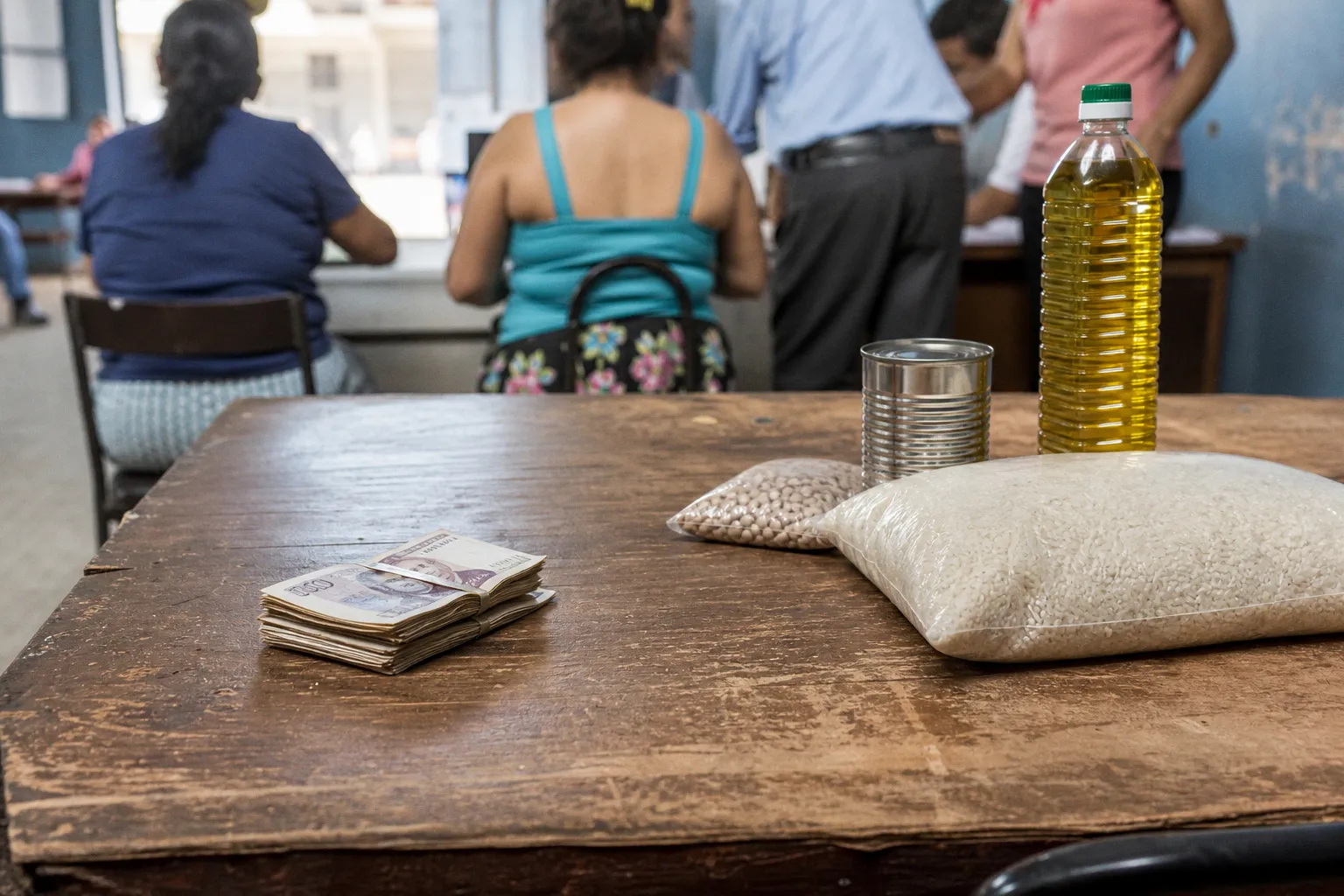
The choice between cash transfers and in-kind food aid has moved from ideological argument to operational accounting, and the evidence base has matured enough to support framework-driven decisions rather than reflexive commitments to one modality. Three variables dominate: market functionality, transfer design, and the specific outcome the program is optimizing for.
Compare car rental deals in United Kingdom
See available offersPartner link — DiscoverCars comparisonA common misconception treats the choice as binary. In practice, the World Bank and Innovations for Poverty Action concluded in March 2024 that cash transfers generally outperform in-kind transfers and vouchers on monetary poverty, health, nutrition, and food security — but the same review cautioned that a universally superior modality cannot be identified, because study contexts, objectives, and designs vary. The decision is therefore context-dependent, and the context must be measured before funds are committed.
The Economic Logic of Cash Transfers in Functioning Markets
Cash transfers minimize administrative friction and maximize recipient agency where markets are functional. The mechanism is straightforward: when local supply chains can absorb additional demand without distorting prices, giving households purchasing power allows them to allocate resources to their highest-priority constraint — which may or may not be food.
The World Food Programme operationalizes this logic by deploying cash transfers in places where markets are functioning but households cannot afford food. Recipients in those settings commonly direct assistance toward food, but the same transfers also cover medical bills, rent, and school fees, which gives programs a multi-purpose flexibility that in-kind transfers structurally cannot match. From a resource-allocation standpoint, this flexibility is the single largest efficiency argument for cash: it removes the need for program designers to pre-specify which constraint the household is binding on.
The trade-off is precision. Cash transfers cannot guarantee that any specific outcome — a particular caloric intake, a specific micronutrient, a defined dietary diversity score — will be achieved. Where such targeting matters, the multi-purpose flexibility becomes a measurement liability rather than an asset.
Caloric Impact and Dietary Diversity: Lessons from Randomized Experiments
The clearest empirical comparison comes from a randomized experiment in northern Ecuador, where six monthly transfers of cash, food vouchers, and food — each with the same stated value of US$40 — were tested against a control group. All three modalities significantly improved both the quantity and quality of food consumed. The differences emerged in the structure of those improvements:
- Food transfers produced larger increases in calorie consumption. The pre-defined basket (24 kg of rice, 4 liters of vegetable oil, 8 kg of lentils, and eight 0.425-kg cans of sardines per month) directly added a fixed caloric floor to household intake.
- Vouchers produced larger improvements in dietary diversity. Restricted to food purchases but redeemable across a range of products, they let households compose a more varied basket than the fixed food parcel allowed.
- Cash transfers fell between the two on most measures, reflecting the fact that households split their US$40 across competing needs — food, but also non-food essentials.
The lesson is structural rather than absolutist. In an urban setting with well-functioning food markets, food was the least cost-effective modality for every measured food-security outcome because implementation costs were higher. But the same data set does not license the claim that food aid is universally inefficient; in settings where markets are thin, remote, or disrupted, the fixed caloric floor of a food basket may be the only reliable delivery mechanism.
A modality's measured efficiency is not a property of the modality itself — it is a property of the modality paired with the market it enters.
Operational Costs and the Efficiency of Delivery Modalities
Across a four-country IFPRI–WFP experimental comparison in Ecuador, Niger, Uganda, and Yemen, one finding held consistently: cash transfers were always significantly cheaper to deliver than food transfers. The cost differential reflects procurement, logistics, warehousing, and in-country transport — line items that simply do not exist in a cash program.
The scale of that operational difference is visible in WFP's own 2025 reporting. Cash-based transfers reached a programmatic value of approximately US$2 billion. Commodity vouchers, by contrast, covered US$170 million serving 5.9 million people. The disparity reflects two compounding factors: vouchers carry lower per-unit procurement cost than physical food, and both fall below cash in administrative overhead.
A useful summary for funders weighing modality choice:
| Parameter | Cash transfer | Commodity voucher | In-kind food |
|---|---|---|---|
| Delivery cost | Lowest | Moderate | Highest |
| Recipient choice | Highest | Restricted to defined goods | None |
| Caloric floor guaranteed | No | Indirect (via product range) | Yes |
| Dietary diversity contribution | Indirect | Strongest in Ecuador data | Moderate (basket-dependent) |
| Market dependency | High | Moderate | Low |
| Administrative complexity | Lowest | Moderate | Highest |
| Measurability of food-specific outcome | Weakest | Moderate | Strongest |
This table should be read as a directional map, not a ranking. In any given program, the right cell to optimize depends on the chosen outcome. A calorie-floor objective points toward in-kind food; a dietary-diversity objective under functioning markets points toward vouchers; a multi-purpose household-support objective points toward cash.
Assessing Market Readiness: The WFP Nine-Dimension Framework
Cash transfers fail when markets fail. The most common operational mistake in cash programming is deploying transfers before measuring whether the local market can absorb the additional demand without price distortion or stockouts. WFP's Market Functionality Index guidance, published on January 5, 2026, structures that assessment around nine dimensions:
1. Assortment of essential goods — whether the range of products households need is actually available locally.
2. Availability — whether supply volumes meet current demand plus expected incremental demand from the transfer.
3. Price — current price levels and the historical volatility that will determine whether transfer value is preserved.
4. Supply-chain resilience — the robustness of upstream logistics feeding local retailers.
5. Market competition — the degree to which local sellers compete on price, which constrains the rent-seeking response to injected demand.
6. Infrastructure — physical transport, storage, and energy systems that keep goods moving.
7. Services — the financial and ancillary services (mobile money agents, payment points) needed to deliver the transfer itself.
8. Food quality — the safety and nutritional adequacy of available goods.
9. Access and protection — whether recipients can transact safely and without discrimination.
A weak score on any single dimension is a signal to reconsider modality, reduce transfer size, or sequence cash with complementary in-kind support. The framework is not a checklist that must be passed in full; it is a diagnostic that maps specific failure modes to specific operational responses.
Beyond Food Security: The Multi-Purpose Flexibility of Unrestricted Aid
Food security is not synonymous with nutrition, and cash transfers are explicitly designed to address a wider constraint than calories. Calorie availability, dietary diversity, food quality, care practices, health services, and water and sanitation are distinct considerations — and cash, by design, addresses only the first through household choice.
The World Bank's review of humanitarian social-assistance research confirmed that cash and in-kind transfers can both improve food security, but the evidence on outcomes beyond basic needs — health, education, labor, gender-based violence, and social cohesion — was limited or inconclusive. That gap is not a flaw in cash programming; it is a measurement consequence of cash's multi-purpose nature. When a household redirects part of a transfer to a school fee or a clinic visit, the food-security outcome metric does not capture the welfare gain.
For grassroots organizations operating at community scale, this flexibility is operationally valuable. A volunteer-run rural education program, for example, can use cash transfers as an indirect subsidy to school attendance when families redirect part of the assistance to fees, uniforms, or transport — outcomes that an in-kind food parcel cannot produce. Conversely, the same flexibility weakens the program's ability to claim a defined nutritional result, which complicates fundraising appeals framed in narrow food-security terms.
Multi-purpose cash trades measurable specificity for household-level welfare breadth. That trade is rational when the program objective is welfare; it is irrational when the objective is a narrow, attributable outcome metric.
The Decision Framework and Where It Points
The evidence does not support a universal winner. What it does support is a structured decision sequence that any program designer — whether a multinational donor, a national ministry, or a grassroots NGO — can apply before committing funds:
- Define the objective first. Calorie floor, dietary diversity, monetary poverty reduction, multi-purpose household welfare, and school-attendance subsidy are different objectives and point to different modalities.
- Measure the market. Apply the nine-dimension Market Functionality Index or an equivalent diagnostic. If market scores are weak in assortment, availability, or supply-chain resilience, cash is not yet a safe option at full scale.
- Match transfer design to objective. Unconditional cash for multi-purpose welfare; restricted vouchers for dietary diversity in functional markets; in-kind food for guaranteed caloric floor in disrupted markets.
- Plan for coexistence. WFP explicitly anticipates cash and in-kind assistance coexisting and being used separately, sequentially, or jointly. A program that locks in a single modality forecloses the most responsive operational tool.
- Build measurement around the chosen outcome. Cash programs measuring only food-security indicators will understate impact; food programs measuring only delivery tonnage will overstate it.
For funders and policy designers, the operational implication is direct: the modality question should be answered at the proposal stage with documented market evidence, not deferred to implementation. Too many programs commit to a modality on the strength of organizational preference or donor familiarity, then discover at the mid-term review that the market was not ready — or that the objective was not what the modality could deliver. The cost of that misalignment is measured in welfare outcomes that did not occur, not just in administrative spend.
The choice between cash transfers and food aid is not a referendum on either instrument. It is a resource-allocation decision that depends on market readiness, defined objectives, and the willingness to measure outcomes honestly. Programs that frame the choice as ideological will continue to lose efficiency to whichever modality they did not select. Programs that frame it as a structured trade-off — and act accordingly — will be the ones that move the 3.8 billion unprotected people into measurable, attributable welfare gains.