Hygiene kit drives: what to secure before launch
A volunteer walks into the packing room with a bag of mini-toothpastes bought on a clearance rack and the best of intentions, and she sets them on the table next to a stack of full-size deodorant that another donor brought in. Both are welcome.
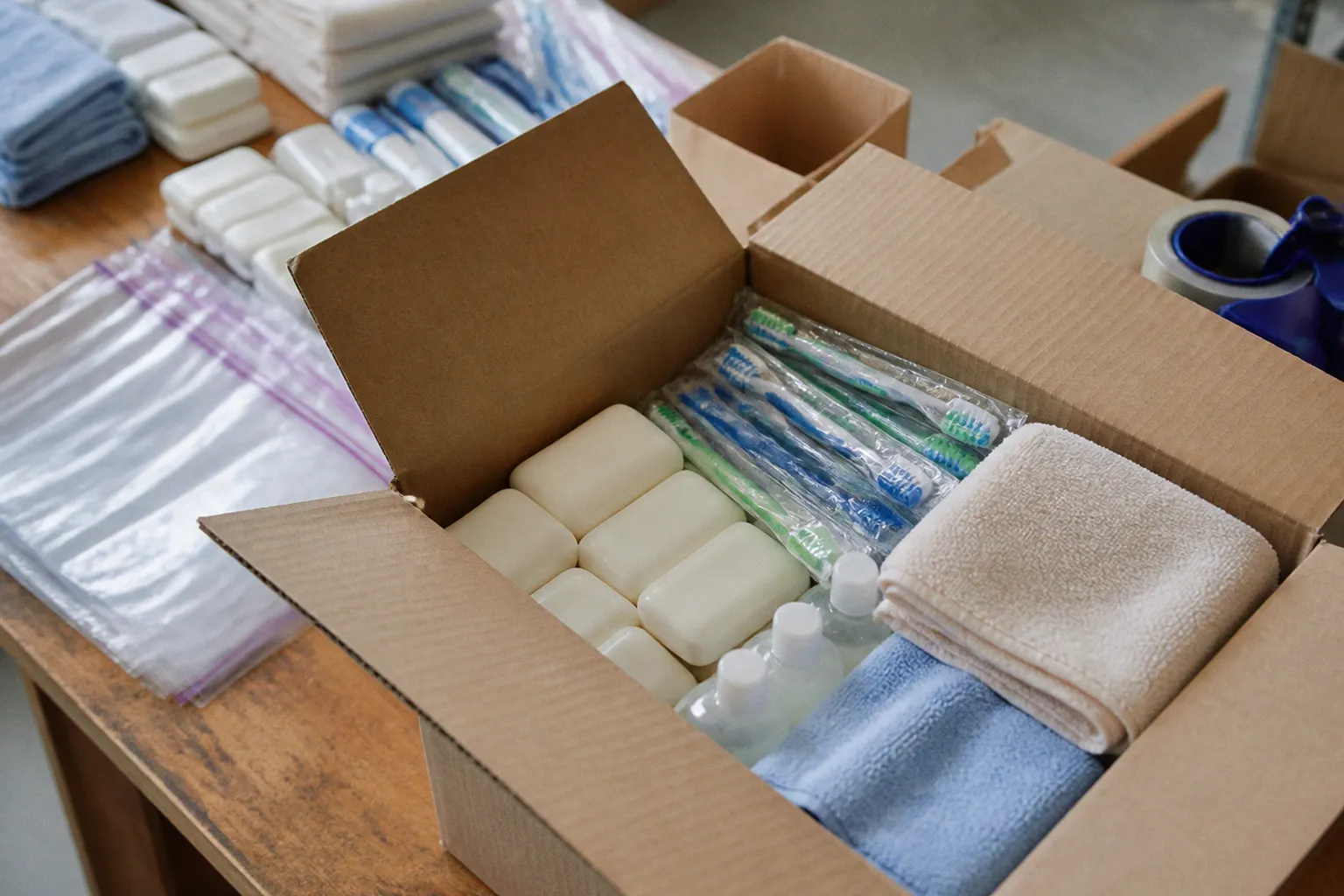
Neither is automatically right. That quiet moment — when a kit organizer has to decide what actually goes into the bag — is where a hygiene drive either honours the people it serves or quietly misses them.
The work looks simple from the outside: collect, sort, pack, deliver. Anyone who has actually stood at that long table, however, knows that every step carries a small decision about dignity, and that those decisions accumulate into either a kit that meets someone where they are or a kit that tells them what we assumed they needed. The pre-launch groundwork — the partnerships, the timelines, the workflow, the incentives, the specialized kits — is where that difference gets made. What follows is the framework I have learned to lean on, drawn from the rhythms of community welfare work and the practical wisdom of the organizations that already do this well.
Aligning kit contents with recipient needs
Before a single donation box is printed, the first conversation has to happen between the organizer and the recipient organization — not the donors, not the volunteers, not the social media audience, but the shelter, the school liaison, the women's collective, or the elder care home that will actually receive the kits. That conversation is not optional. It is the entire spine of the drive, because it answers a question that no amount of goodwill can answer on its own: what does the person receiving this kit actually need, and in what size?
There is no universal checklist. Some partner organizations, like Refresh NTX in the United States, specify full-size products with hard minimums: 4 oz toothpaste, 5 oz shaving cream, 1.8 oz deodorant, and an 18-count minimum for tampons and pads. Others, particularly those serving people in transient shelter situations or moving between facilities, accept or even prefer travel-size kits — typically a toothbrush, 1 to 1.5 oz of toothpaste, 1 to 2 oz of soap or body wash, the same range of shampoo, a 0.5 to 1 oz deodorant stick, a disposable razor, tissues, and a small comb, all sealed into a clear 1-gallon resealable bag.
The size of the bottle is a conversation about dignity, not a logistical preference.
The reason this distinction matters goes deeper than shelf space. For some recipient groups — survivors of sex trafficking, for example, or people transitioning out of institutional living — hotel- or travel-sized toiletries can be genuinely triggering, a small daily reminder of the transient, surveilled, and disposable conditions they have worked to leave behind. For those populations, a full-size product signals permanence, stability, and the kind of ordinary life that a small bottle of shampoo can quietly represent. For other populations — people moving between shelters, families sleeping in vehicles, students cycling between homes — travel-size is actually the more practical and respectful choice, because it fits into the bag they already carry. The organizer who chooses without asking is choosing for someone else's life. The organizer who picks up the phone is choosing with them.
A few practical notes follow from that opening conversation:
- Ask the recipient partner for their written packing list, with sizes and counts, before opening any donation channels.
- Confirm whether the partner accepts opened, partial, or hotel-repurposed items; many do not, and a donated hotel bottle can quietly undo a partnership.
- Ask whether the population served prefers unscented products, since fragrance sensitivities are common in shelter settings.
- Clarify packaging rules — most organizations require the 1-gallon clear resealable bag, both for visibility during intake and for hygiene reasons.
- Confirm the drop-off protocol (palletized, boxed, by appointment) so the drive ends with delivery, not a leftover stack in someone's garage.
| Parameter | Travel-size kit | Full-size kit |
|---|---|---|
| Toothpaste | 1–1.5 oz | 4 oz or more |
| Soap or body wash | 1–2 oz | Standard bar or 8+ oz bottle |
| Shampoo | 1–2 oz | 8 oz or more |
| Deodorant | 0.5–1 oz stick | 1.8 oz or more |
| Shaving cream | Often omitted | 5 oz or more |
| Menstrual care | Light supply, if any | 18-count minimum for pads/tampons |
| Razor | 1 disposable | 1 reusable or multi-pack |
| Packaging | 1-gallon clear resealable bag | Standard zip pouch or organizer-supplied bag |
| Best fit | Transient populations, school drives, vehicle living | Residential shelters, trafficking recovery, long-term housing transitions |
Establishing a strategic collection timeline
Two weeks is the floor, not the ceiling. Most community hygiene drives that I have watched succeed — and a few that I have watched nearly fail — share the same lesson: the timeline is the thing you protect, because once the timeline slips, every downstream step slips with it. Two weeks gives the outreach team enough room to reach schools, workplaces, faith communities, and neighbourhood groups; it gives donors enough room to buy, gather, and bring items in; and it gives the assembly crew enough runway to organize a packing day that does not end in chaos.
A workable two-week rhythm tends to follow a predictable arc. Days one through three belong to partnership confirmation and the production of physical materials: donation boxes at partner businesses, posters in community spaces, a simple one-page list of accepted items, a digital flyer that travels well in WhatsApp and Signal groups. Days four through ten are the active collection window, when the bulk of donations arrive, and they benefit from at least one mid-drive check-in, a quick count, and an honest conversation with the recipient partner about whether any item category is lagging. Days eleven and twelve are reserved for sorting and replenishment, because some categories will be over-supplied (hand soap, in my experience, almost always) and others will be desperately short (deodorant, full-size shampoo, menstrual products). Days thirteen and fourteen are packing and delivery, and the drive ends with a quiet debrief.
There is one timeline decision that organizers consistently underweight, and it is the question of when to stop accepting donations. The instinct is to leave the door open as long as possible, because turning someone away feels like failure. In practice, donations that arrive after the assembly day become storage problems; they sit in closets, they expire, they demoralize the crew, and they erode the discipline of the next drive. Pick a hard cut-off date, communicate it clearly on every flyer, and honour it. The discipline of a closed window is part of what makes the next window possible.
Designing efficient assembly line workflows
The packing day is where the drive either becomes a kit or remains a pile of donations. The difference is almost entirely a function of how the room is laid out before the first volunteer walks in. I have learned, from standing at the head of more than a few of these tables, that the assembly line is not a logistical detail — it is a choreography of dignity, because every awkward reach, every confused shuffle, every moment of "where does this go?" is a small tax on the people who showed up to give their time.
The setup that has worked best across the drives I have facilitated is also the simplest: a long table, oriented so that volunteers move in one direction only, with the bags placed at the start of the line, the unpackaged hygiene items arranged in the order they go into the bag in the middle, and the empty boxes plus packing tape at the far end where finished kits go. No volunteer ever has to backtrack. No volunteer has to ask which side of the table holds the toothbrushes. The flow does the teaching.
An assembly line is just a quiet promise that your volunteers' time will be respected.
For menstrual care kits specifically, the workflow needs its own small architecture. Pads and tampons should be kept in separate, clearly labeled piles or baskets at the packing table — not because they cannot sit together, but because the act of separating them at the packing stage respects the privacy of the recipient and speeds the work considerably. Volunteers reach into one basket for pads, into the other for tampons, and the kit becomes a kit rather than a decision.
A few small things make a large difference on the day:
- Pre-sort the donations by category the night before, so the table is laid out in the morning rather than mid-shift.
- Label every station with a printed card showing the item and the quantity per kit; volunteers should not have to memorize anything.
- Keep a "shortage" basket visibly at the end of the line; if a kit is missing an item, it goes there for replenishment rather than being boxed incomplete.
- Stage finished kits in clearly marked boxes by destination (shelter A, shelter B, school program) so delivery is loading, not sorting.
- Reserve one station for quality control — a single volunteer who opens each finished kit and confirms the contents match the partner's written list.
Implementing incentive structures for volunteers
Most volunteers are not motivated by incentives; they are motivated by the chance to do something useful with their hands alongside other people who care about the same thing. That said, the work of a hygiene drive is also, for many younger volunteers, the work of accumulating service hours — for school, for college applications, for faith community requirements, for court-ordered community service — and a clear, written incentive structure lets those volunteers count their time honestly while protecting the integrity of the drive.
The structure I have seen work best, particularly for youth-led and school-based drives, is straightforward and worth printing on every flyer: one community service hour for every five hygiene items donated, up to a maximum of three hours for fifteen products. The cap matters, because without it the incentive becomes the point, and the donations become a transaction rather than a contribution. With the cap in place, the incentive is what it should be — a recognition of real work — and the kit is still the centre of gravity.
For adult volunteers and corporate groups, the incentive structure usually lives elsewhere: a thank-you note from the recipient partner, a short visit to the shelter on delivery day if the partner permits, a photograph for the company's community engagement report, a quiet moment at the end of packing where the crew stands in a circle and someone reads a short note from the recipient organization about what the kits will mean. None of these are transactions. All of them are acts of stewardship, in the truest sense — the recognition that the volunteer is briefly holding something that belongs to someone else.
Managing logistics for specialized care kits
Some kits are not general hygiene kits, and treating them as if they were is one of the more common mistakes I see in newer drives. Menstrual care kits, infant care kits, elder care kits, men's grooming kits, and trauma-informed kits each carry their own logic, their own product list, and their own conversation with the recipient partner. The general framework above — align contents, protect the timeline, choreograph the assembly, recognize the volunteer — applies to all of them. The specifics do not transfer.
Menstrual care kits
For menstrual care kits, the partner organization will almost always specify count minimums (eighteen pads and eighteen tampons is a common floor), absorbency levels (light, regular, super, overnight), and packaging preferences. Some partners want pads and tampons together; others want them kept separate for dignity and discretion. Pre-sorting by absorbency at the packing table saves enormous time and signals to volunteers that the work is precise, not approximate.
Elder care kits
For elder care kits, the product mix shifts dramatically: smaller packaging is often harder to handle for arthritic hands, fragrance-free everything becomes a hard requirement rather than a preference, and items like denture tablets, adult wet wipes, and barrier creams enter the list in ways that general hygiene kit checklists rarely anticipate.
Trauma-informed kits
For trauma-informed kits — those destined for trafficking recovery houses, domestic violence shelters, and certain youth residential programs — the conversation about travel-sized versus full-sized is non-negotiable. The partner will tell you, in writing, what their clients have said about what triggers them. Listen. Adjust the product list accordingly. Build the kit around their guidance, not around your assumptions.
The logistics of running a specialized kit drive alongside a general kit drive can feel like running two drives at once, and in practice it is exactly that. The organizers who handle it best are the ones who name it as such early — to volunteers, to donors, to the recipient partners — and who build a parallel workflow rather than trying to fold specialized kits into the general assembly line.
The principle under all of it
If there is a single thing I would leave with someone preparing to launch a community hygiene drive, it is this: the work is not finished when the kits are delivered. It is finished when the person who receives one of those kits has been treated, throughout the entire chain — from the donor's shopping list to the volunteer's packing station to the shelter's intake desk — as an agent in their own life, not as the passive endpoint of someone else's good intentions. The size of the toothpaste tube, the clarity of the bag, the honesty of the service-hour count, the separation of the menstrual products, the phone call to the recipient partner before the first donation box is printed — these are not administrative details. They are the visible shape of a quieter commitment: that the people we serve deserve our precision as much as our compassion, and that the two are not in competition.
A hygiene drive is, in the end, a small civic instrument. Run well, it does more than move soap across a city; it teaches a community — donors, volunteers, partners, recipients — that the ordinary rituals of staying clean are worthy of care, and that the way we hand someone a toothbrush says something about who we believe them to be. That is the principle worth carrying into the next drive, and the one after that.