Emergency relief distribution: a roadmap for nonprofit logistics
The truck pulls up, and you realize the pallets don’t match the manifest. That’s the moment the plan meets the road. We’ve all been there—standing in a lot, staring at mismatched boxes, watching the clock tick toward distribution time.
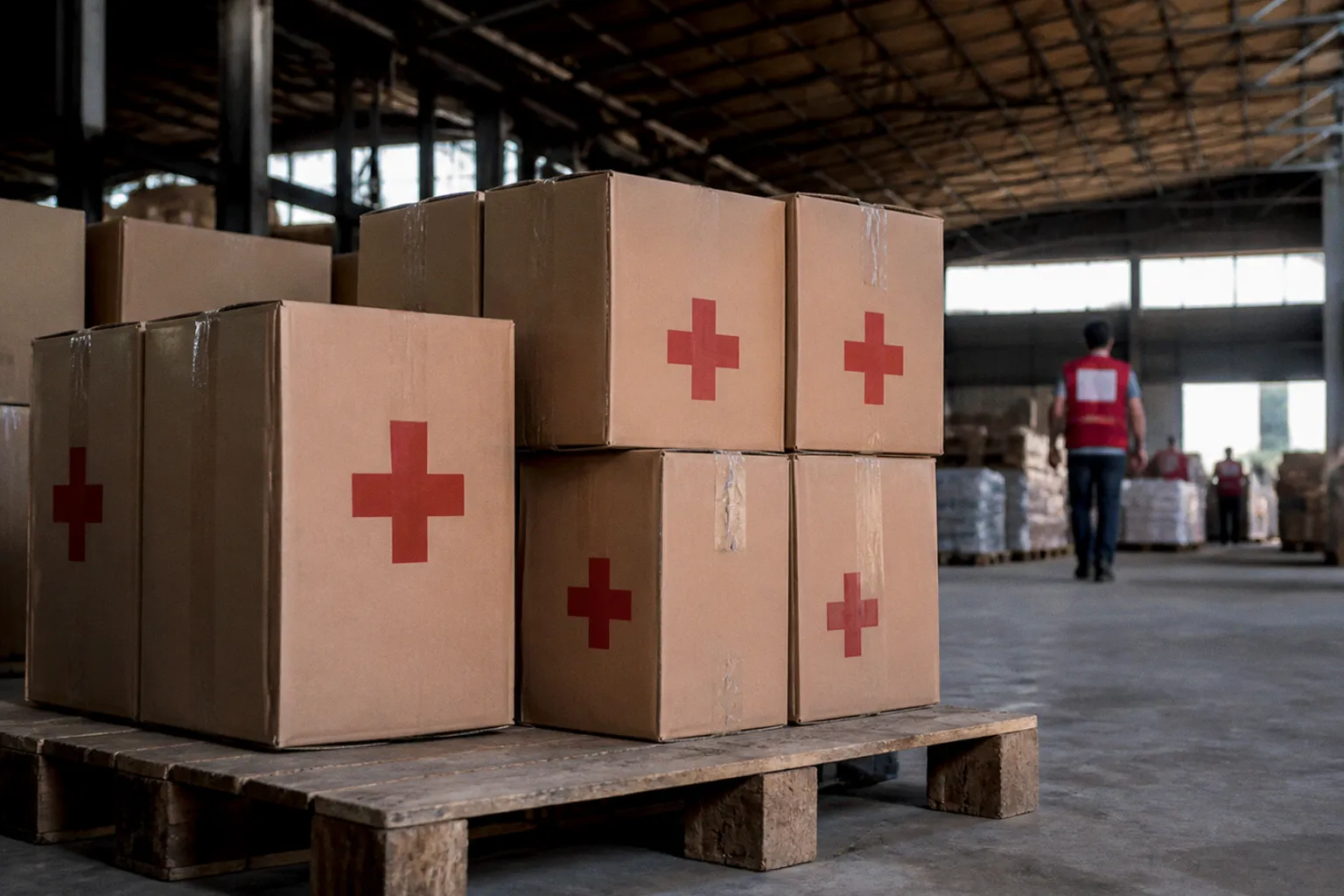
This isn’t about good intentions. It’s about load charts, access routes, temperature records, and getting the right gear to the right people before the window closes.
Emergency relief distribution logistics for nonprofits is a chain of decisions made under pressure. A weak link may be a mislabeled pallet, an inaccessible entrance, a warehouse with no backup power, or a beneficiary list that excludes people who arrived after the registration team left. None of those failures looks dramatic in isolation. Together, they turn a distribution site into a bottleneck.
The answer is not a perfect plan. There is no perfect plan once roads close, populations move, and the weather changes. The answer is a system that can absorb those changes without losing track of supplies or people. Strip it down to the working parts, then rebuild the operation around the conditions on the ground.
Categorizing Relief Supplies for Efficient Inventory Control
You can’t manage what you can’t label. The first hard stop is sorting inventory into defined classes that make sense for the operation. This is not simply an alphabetical filing exercise. The categories should help a warehouse team answer three questions quickly:
- What is this item?
- How urgently is it needed?
- Where should it go next?
A small local response may need only a few broad categories. A regional operation may need more detailed subcategories for food, water, shelter materials, medical supplies, hygiene products, tools, and specialized equipment. The right system is the one that volunteers can understand during a long shift, under poor lighting, with incomplete information.
A practical starting point is the four-part operational grouping often used in emergency supply planning:
1. Life-sustaining: Water, ready-to-eat meals, bulk food, and non-prescription medicine. These supplies usually receive the highest priority because delays can create immediate health consequences.
2. Comfort: Hygiene kits, blankets, tents, clothing, and similar items. They may not solve the first urgent need, but they support health, dignity, and the ability to remain safe over several days.
3. Clean-up: Shovels, gloves, disinfectants, storage bins, and other tools used during recovery and site maintenance.
4. Other essential supplies: First-aid kits and disaster-specific items such as sandbags or water-purification tablets. This category should not become a dumping ground; use subcategories when the list grows.
These groupings are a working model, not a universal law. In a flood response, water-purification materials may be as urgent as food. In a cold-weather displacement, blankets and shelter materials may move into the first wave of distribution. In a health emergency, medical supplies will require a separate control system rather than being treated as just another pallet type.
The category must therefore connect to priority, not replace judgment. Mark each pallet, carton, and bin with enough information to support a handoff: category, item description, quantity, unit of measure, lot or batch information where relevant, expiration date where relevant, storage requirement, and destination. A large label on the outside of a box is more useful than a perfect spreadsheet that no one can consult at the loading point.
Use consistent codes only if the codes are visible and explained. A volunteer who sees “L-03” should know whether that means bottled water, infant formula, or a particular distribution route. A simple color system can help, but colors should never be the only identifier; low light, color-blindness, damaged labels, and mixed teams will defeat it.
The loading sequence also depends on how the supplies will be distributed. “First in, first out” is useful for dated goods, but it is not enough by itself. You may need to prioritize:
- Items with short shelf lives or strict expiry controls.
- Supplies needed by people with specific vulnerabilities.
- Heavy or awkward goods that require a particular handling method.
- Items assigned to a location with limited storage.
- Temperature-sensitive stock that cannot remain on a loading dock.
A pallet that is easy to count but impossible to reach is not controlled inventory. Keep an exception log for damaged cartons, partial cases, substitutions, and unexplained variances. If a shipment arrives with 48 units instead of 50, record the difference before the stock moves. That small act protects the next handoff from becoming an argument.
A manifest without a category code is just a shopping list. It has no operational value until the warehouse can act on it.
The same logic applies to digital tools. A barcode scanner may be useful in a stable warehouse, while a paper tally sheet and a phone-based backup may be more reliable after a power failure. Nonprofit disaster supply chain management is not about choosing the most sophisticated platform. It is about maintaining a trustworthy record when connectivity, staffing, and time are all limited.
Designing Accessible Distribution Sites: Layout and Capacity Benchmarks
Forget the empty field as a default. A distribution site is a temporary machine, but machines come in different sizes and operate in different environments. A rural site serving scattered households cannot be designed like an urban site serving a dense apartment district. A location reached by foot needs different decisions from one reached by buses or trucks. A site working during a heatwave needs different shelter and water arrangements from one operating in heavy rain or cold.
The first design question is not, “What is the standard layout?” It is, “What is this site trying to move, through which constraints, and for whom?”
Humanitarian guidance, including UNHCR operational benchmarks, can provide useful reference points. Figures such as a site serving up to roughly 20,000 people or being located within about 5 kilometers of the population it serves are best treated as planning prompts and context-specific benchmarks—not universal mandatory limits. Population density, road conditions, security, terrain, transport availability, accessibility needs, climate, and local administrative requirements may justify a different arrangement.
A population of 20,000 concentrated near a safe, well-connected site may be easier to serve than a much smaller population spread across isolated settlements. Conversely, a five-kilometer distance may be unrealistic for people without transport, unsafe for women traveling alone, or impassable during flooding. If the distance or population creates unacceptable queues, travel burdens, or security risks, consider additional sites, mobile distributions, scheduled collection windows, or direct delivery for people who cannot travel.
Capacity should be tested in people per hour, not just people per day. Estimate the arrival pattern, the number of verification points, the time required for a household handover, the space available for waiting, and the speed at which vehicles can replenish stock. A site that can technically serve 2,000 people over a day may still fail if 1,500 arrive in the first two hours.
Build a flow, but do not worship a single pattern
The site needs a defined sequence of activities, but that sequence does not have to be a rigid one-way street in every operation. A controlled progression from arrival to departure can reduce confusion, yet some sites need multiple lanes, separate service points, or a flexible layout for people with disabilities, urgent medical needs, language barriers, or incomplete documentation.
The goal is to prevent conflicting movements and unnecessary backtracking. Use barriers, signs, volunteers, and clear verbal instructions to distinguish vehicle areas from pedestrian areas. If a one-way flow is unsafe or impractical, create clearly separated routes instead of forcing everyone through the same path.
A useful set of zones may include:
- Truck staging: A separate area for unloading, pallet breakdown, and vehicle movement. Keep reversing vehicles away from beneficiaries and provide a spotter when visibility is poor.
- Controlled entrance and waiting area: A sheltered, shaded, or weather-protected space where people can receive instructions and wait without blocking the road. The required capacity depends on expected arrival patterns and the local climate.
- Reception and verification: A point for confirming eligibility, household information, or distribution entitlement. It should include a process for people who are not on a pre-registered list, have lost documents, or need assistance communicating.
- Distribution area: The location for the physical handover. Organize it by the supplies being issued, but leave enough room for carts, wheelchairs, caregivers, and safe lifting.
- Confidential complaints and feedback desk: A visible but appropriately private place where people can report missing items, discrimination, exploitation, or other concerns without having to announce the problem in front of the queue.
- Exit and emergency access: People should be able to leave without crossing the incoming line or the vehicle route. Emergency access must remain open even when the site is crowded.
- Water and sanitation: The provision should match the duration, crowd size, weather, and local requirements. A site operating for more than a few hours may need more than a nominal facility; a site operating across several days also needs a plan for waste, cleaning, and replenishment.
- Protection and first aid: Depending on the risk profile, include a shaded rest point, first-aid capability, safeguarding contacts, and a route for urgent referrals.
| Layout zone | Primary function | What changes with context |
|---|---|---|
| Truck staging | Vehicle movement and pallet breakdown | Space, traffic controls, and unloading methods depend on road width, vehicle type, security, and terrain. |
| Waiting area | Crowd management and shelter | Capacity depends on arrival patterns, climate, shade, seating, water, and whether people can wait safely. |
| Verification | Identity or entitlement confirmation | The process must include alternatives for missing documents, unregistered households, language barriers, and privacy concerns. |
| Distribution point | Physical handover of supplies | The number of counters and the layout depend on item mix, lifting needs, household size, and replenishment speed. |
| Feedback desk | Confidential complaints and issue resolution | It should be accessible, trusted, and private enough for sensitive reports, with a clear referral path. |
| Exit and emergency route | Safe departure and incident response | Keep routes visible and unobstructed; adapt them to crowd density, terrain, and emergency-service access. |
The physical terrain is part of the logistics. A route that looks accessible on a site map may become mud after rain. A ramp may be too steep for some wheelchairs. A distribution counter may be too high for a person of short stature. Queue barriers can help with crowd control, but they can also trap people if there is no way to leave the line for water, medical attention, or a child-care need.
Security planning should be specific rather than theatrical. Determine who controls entry, how staff identify themselves, where sensitive items are stored, and what happens if a crowd becomes distressed. Avoid concentrating all valuable goods in a visible pile. Keep staff away from isolated corners, protect personal data at the verification point, and establish a pause-and-escalate procedure for threats or disorder.
A site plan should be tested before opening. Walk it with a loaded cart. Walk it with a wheelchair or mobility aid if possible. Ask a volunteer unfamiliar with the operation to follow the signs. Time a normal handover and a handover involving a substitution or a question. The friction points will appear quickly.
Maintaining Quality and Safety in Warehouse Operations
Your warehouse is the heart. If it fails, everything downstream fails. The basic requirement is straightforward: preserve both the quantity and the quality of the supplies until they reach the people they are intended for. That means a clean, dry, secure, and appropriately ventilated facility, with conditions suited to the goods inside it.
Site selection should consider more than available floor space:
- Can trucks reach the building in the current season, not just on a clear day?
- Is the site secure from theft, flooding, fire, and unauthorized access?
- Are there reliable utilities, lighting, drainage, and sanitation?
- Is there a backup power plan for essential equipment?
- Can people safely unload, move, count, and repack supplies?
- Is there enough separation between food, chemicals, fuel, medical items, and waste?
- Can the facility continue operating if one access route or supplier fails?
A warehouse does not need to be elaborate to be controlled. It does need marked storage areas, clear aisles, protected stock, a receiving point, a dispatch point, and a record of what entered and left. Keep cartons off the floor and away from walls where moisture or pests may be a problem. Stack according to the strength and stability of the packaging, not simply to maximize height. Heavy items belong where workers can handle them safely.
For standard goods, a dry and secure warehouse may be enough. Temperature-sensitive items—certain medicines, vaccines, biological products, and some specialized foods—belong to a different control regime. The storage range is product-specific. Some biologicals may require storage around -80°C, many vaccines are held around +2°C to +8°C, and certain medicines may be kept around +15°C to +25°C. Those ranges are not interchangeable and should come from the product information and the responsible health authority.
Cold-chain control involves more than owning a refrigerator. It requires:
- Continuous or frequent temperature monitoring appropriate to the product.
- A documented response when temperatures move outside the permitted range.
- Reliable power, backup power, and a plan for fuel or battery failure.
- Staff who understand quarantine procedures for potentially compromised stock.
- Adequate space for air circulation and safe loading.
- A record of transfers between storage, vehicles, and distribution points.
A generator without a tested transfer process is not a cold-chain plan. A temperature reading without a response protocol is just a number. If a vaccine refrigerator fails overnight, staff need to know who can authorize quarantine, where the stock will move, how long it may remain viable, and how the incident will be documented.
Inventory control is a physical discipline. Use cycle counts rather than relying only on annual audits. Count high-risk, high-value, fast-moving, or temperature-sensitive items more often. Reconcile the physical count with the ledger, investigate variances, and distinguish a data-entry error from a missing carton. Apply expiry controls such as first-expire, first-out where appropriate, but do not assume that the oldest item should always move first if its condition is uncertain.
Receiving is a control point, not a ceremonial signature. Check the shipment against the manifest, inspect packaging, record damage, verify dates and quantities, and isolate anything questionable. At dispatch, record the destination, vehicle, driver or responsible team, quantities, and time of release. These records support accountability when a shipment is delayed or a community reports that it received less than planned.
Your goal is accuracy because a missing item is not merely a number on a spreadsheet. It is a person who may have waited in heat, traveled a long distance, and gone home without what they were promised.
Implementing Equitable Distribution and Non-Discrimination Protocols
This is the gear that grinds if it’s poorly machined. The legal and ethical baseline is clear: assistance should be provided without discrimination based on race, color, religion, nationality, sex, age, disability, English proficiency, economic status, or other protected or irrelevant characteristics. The exact legal requirements vary by jurisdiction and program, but the operational principle is consistent: relief must be based on need and eligibility, not on a person’s ability to navigate a confusing system.
A registration list can improve control. It can also reproduce the blind spots of the registration process. People may arrive after an evacuation, lose identity documents, move between shelters, share a household across multiple addresses, or avoid registration because of safety concerns. Treating the database as more reliable than the people in front of the team is how an orderly process becomes an unfair one.
Turn the principle into operating behavior
- Use verification with an exception path. Pre-registered lists and unique beneficiary IDs can reduce duplication, but staff need a documented way to refer unlisted households, correct records, and handle lost documents. The exception path should not depend on a volunteer’s personal favor.
- Make the route accessible. The path from entrance to verification, distribution, and exit should be navigable for people with mobility, vision, hearing, or cognitive disabilities. Provide alternatives when terrain, queues, or service-counter design creates a barrier.
- Offer meaningful communication. Translate key instructions where needed, use plain language, and make it possible to ask questions privately. English-only signage is not a neutral choice in a multilingual response.
- Train volunteers on edge cases. Staff should know how to respond when a household is missing from the list, when a caregiver collects for someone else, when an individual cannot safely wait, or when a person reports harassment. Training should cover what volunteers can decide and when they must refer the matter.
- Protect personal information. Do not announce sensitive details across a crowded queue. Limit access to beneficiary data, keep paper lists secure, and avoid collecting information that the program does not need.
- Provide a trusted complaints process. The desk should be visible enough to find, private enough for sensitive reports, and connected to someone who can act. People should not fear losing assistance because they reported a problem.
- Track who is not being reached. Compare distribution records with local knowledge, outreach reports, and feedback. If women, older people, people with disabilities, or remote households are consistently absent, the answer may be a delivery redesign rather than a stricter verification rule.
Equity can require different treatment. A person who cannot stand in a queue may need a seated service point or a scheduled collection time. A household without transport may need a smaller, more frequent delivery or support carrying supplies. A person facing a language barrier may need an interpreter, not a faster hand signal. Treating everyone identically at the counter is not the same as giving everyone a fair chance to receive aid.
Equity isn’t an outcome you hope for. It’s a process you engineer into the site map, the database, and the decisions made when the plan breaks.
The complaints mechanism should also be connected to safeguarding. Reports of exploitation, sexual harassment, threats, diversion, or abuse cannot be handled as ordinary customer-service complaints. Staff need clear referral routes and must avoid promising outcomes they cannot deliver. Confidentiality has limits when someone is at immediate risk, but information should still be shared only with those responsible for responding.
Coordination matters here. A nonprofit may be operating beside government services, local groups, health teams, or other aid organizations. Agree on who is serving which area, what information can be shared, how duplicate distributions will be handled, and how unmet needs will be referred. Coordination is not a reason to delay urgent assistance; it is a way to prevent gaps and conflicting instructions.
Post-Distribution Monitoring: Measuring Impact and Accountability
Distribution day isn’t the finish line. It’s the midpoint. You need to know whether the aid arrived, whether it was what people needed, whether the quality was acceptable, and whether the process was fair. That is the purpose of post-distribution monitoring, or PDM.
The timing should fit the aid and the operating environment. UNHCR guidance commonly frames PDM within a window of roughly two weeks to two months after distribution. That is a useful planning range, not a stopwatch that applies identically to every item. Food may need to be discussed after households have used part of the ration. A shelter kit may be assessed after people have attempted installation. A complaint about staff conduct may require immediate follow-up rather than waiting for a scheduled survey.
Too soon, and people may not have had a chance to use the goods. Too late, and memory fades, households move, and the next distribution cycle may already be underway. In a fast-changing crisis, use a combination of immediate feedback, early incident review, and a fuller follow-up later.
The sample size should be proportionate to the distribution and the decisions you need to make. One commonly used set of planning benchmarks is:
- For distributions of 200 households or fewer, sample approximately 15% of the population.
- For 200 to 750 households, sample approximately 10%.
- For more than 750 households, sample approximately 5%.
These are planning benchmarks, not a substitute for judgment. A smaller sample may miss a problem concentrated in one neighborhood, language group, or vulnerable population. A larger or targeted sample may be justified when there were delivery disruptions, complaints, suspected diversion, or a major change in the operating context. Document how the sample was selected and who may be absent from it.
A useful PDM looks beyond “Did you receive the package?” Ask questions that expose the chain:
1. Did the household receive the intended quantity and the correct items?
2. Was anything damaged, expired, unusable, or unsafe?
3. Did the household understand how to use the item, particularly for water treatment or specialized equipment?
4. Was the distribution point reachable and physically safe?
5. Were people treated respectfully, and could they raise a concern without retaliation?
6. Were there costs, informal fees, transport burdens, or other barriers that reduced the value of the assistance?
7. Did the supplies match the actual need, or did households have to trade, discard, or borrow to make the package useful?
8. Were some groups or locations missed entirely?
Do not design the questionnaire as an exercise in proving that the operation worked. Include open responses and a route for serious complaints. Interviewers should be independent enough to hear criticism and trained enough not to lead respondents toward a positive answer. Where security or privacy is a concern, choose the interview setting carefully and do not expose respondents to local power brokers.
PDM findings need owners and deadlines. If households report that water containers are too heavy for older people to carry, the next plan should address container size, delivery method, or household-level support. If several sites report confusion at verification, revise the message and train the team. If stock records show repeated discrepancies at a particular handoff, investigate the process rather than blaming the last person who signed the form.
Close the loop with the community when possible. Explain what changed, what could not change, and why. Accountability is weakened when an organization collects feedback into a black box. It becomes useful when people can see that their information altered the next distribution.
Final Load Check
Before you turn the key on the first truck, run through the operation as if you were the person receiving it.
1. Inventory is sorted into functional categories and labeled with descriptions, quantities, storage requirements, and destination information. Paper and digital records can support each other if one system fails.
2. The site plan fits the context. It separates vehicles and pedestrians, provides accessible routes, protects people from weather, and includes verification, distribution, feedback, sanitation, and emergency access. Population and distance benchmarks have been tested against terrain, security, transport, and local needs rather than copied as universal limits.
3. Warehouse conditions are verified. Stock is protected from moisture, pests, theft, and unsafe stacking. Sensitive supplies have the correct storage equipment, monitoring, quarantine procedure, and backup-power plan.
4. The verification process has an exception path. Staff know how to handle missing documents, unregistered households, duplicate records, language barriers, and urgent accessibility needs without making arbitrary decisions.
5. The complaints process is real. People can find it, use it privately, and understand what happens after a report. Safeguarding concerns have a clear referral route.
6. The PDM plan is in place. It includes timing, sampling logic, questions tied to decisions, responsible staff, and a process for acting on findings.
7. The contingency plan has been tested. Someone knows what happens if the road closes, the generator fails, the crowd exceeds the expected size, the shipment is short, or the security situation changes.
The plan is a schematic. The execution is everything, but execution does not mean following a diagram after the conditions have changed. It means recognizing the change early and adjusting without losing control of the supplies or the people the operation exists to serve.
Check the loads. Confirm the route. Leave room for the unexpected. Haul with precision, and keep the system accountable all the way to the last handover.