Neighborhood emergency relief: a path to community resilience
A neighborhood emergency relief network fails long before the storm, fire, outage, or evacuation order.
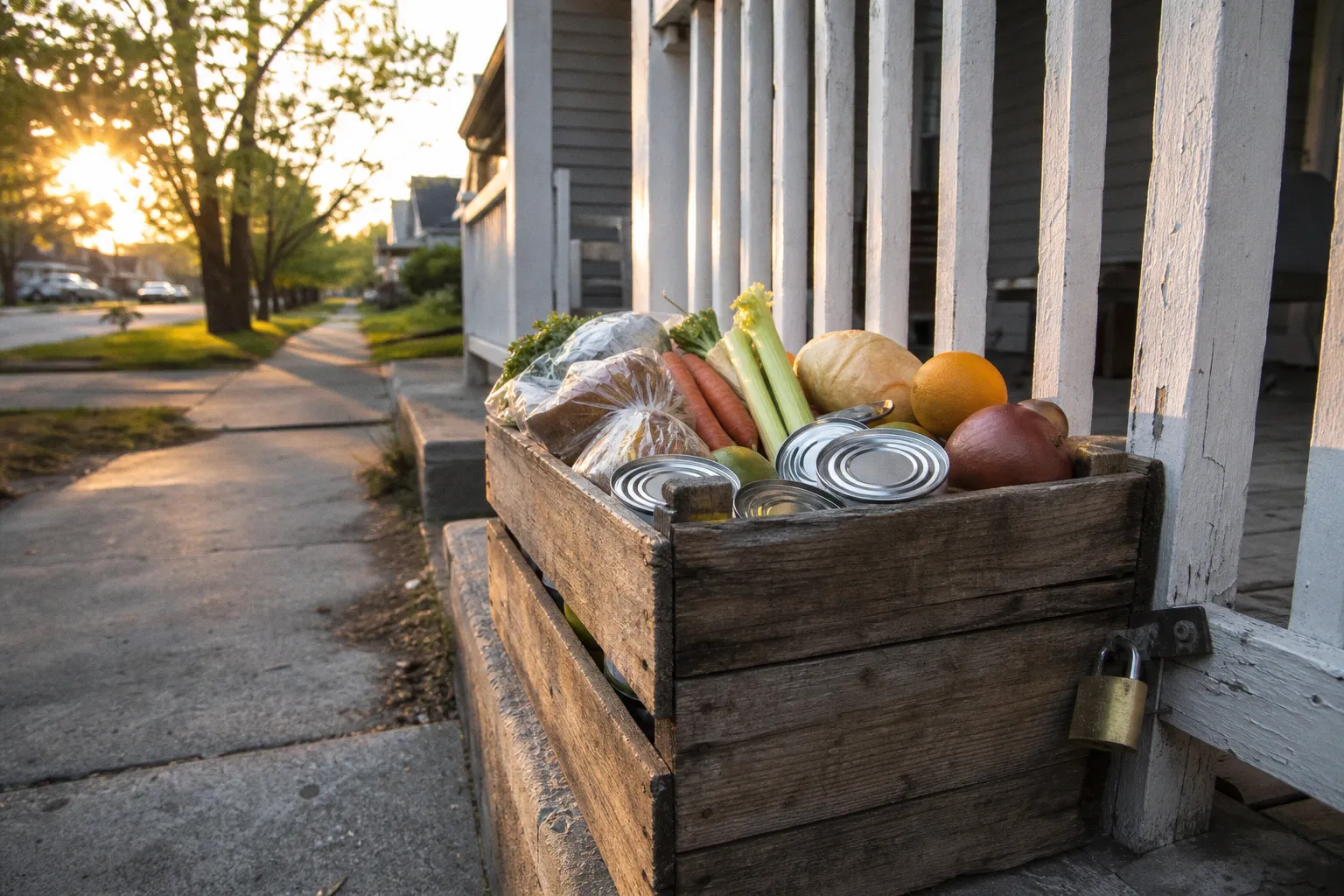
It fails when nobody owns the contact list, when the supply closet has canned food but no can opener, when the person using oxygen is absent from the map, and when five volunteers decide they are dispatchers without a radio, training, or lane to operate in.
We have seen the same breakdown in different zip codes. Good intentions pile up. Roles stay loose. Information gets passed hand to hand until it is wrong. Then the road closes, cell service stutters, and the group discovers it built a chat thread, not a response network.
Neighborhood emergency relief network planning is the work of fixing that structure before pressure hits it. This is not a replacement for 911, fire, EMS, public health, or emergency management. It is the local layer that can identify needs, move verified information, connect residents to formal services, and keep basic support from drifting into chaos.
Map the ground before assigning people to it
Do not start by recruiting a large volunteer roster. Start with the terrain, the hazards, and the people who will get boxed in first.
Federal preparedness guidance uses a simple sequence: understand the situation, set goals, build the plan, test it, then maintain it. That sounds administrative. On the ground, it means we stop guessing.
A useful neighborhood map does not need software. It needs current information and a clear boundary. Mark the streets, apartment buildings, trailer courts, public housing blocks, schools, faith buildings, grocery stores, fuel stations, clinics, cooling centers if known, and likely choke points. Add the things that change during an incident:
- Roads that flood, ice over, wash out, or become blocked by fallen trees.
- Buildings with elevators, narrow stairwells, locked entry systems, or unreliable backup power.
- Areas where residents may not receive digital alerts because of language, device access, poor service, or distrust of official channels.
- Places where people gather during the day but may be empty overnight, such as schools, workshops, or senior centers.
- Households with access and functional needs, identified only through voluntary, privacy-conscious outreach—not a public list of “vulnerable people.”
The last point is where many local emergency support groups get sloppy. A spreadsheet full of diagnoses is not preparedness. It is a liability and, in the wrong hands, a problem. We need operational facts: who may need a welfare check after a prolonged outage, who uses a mobility device, who needs a language-specific alert, who has no transportation, who may need medication refrigeration. Keep that information limited, consent-based, and available only to the people assigned to use it.
The CDC approach is sound here: identify groups at increased risk, understand where they live or work, and use channels they actually trust. Population-level tools can show where hardship may stack up. They cannot tell us which apartment has an empty insulin cooler or which resident has no family nearby. That requires local relationships.
A hazard map is not a report. It is a work order: where access fails, who gets cut off, and what must move first.
Build a risk profile that can drive decisions
Do not write “severe weather” and call it analysis. Name the event and the failure it causes.
| Local condition | Operational failure | What the network must prepare to do |
|---|---|---|
| Flooding or flash runoff | Roads close; homes become isolated; vehicles cannot reach low crossings | Track closure routes, identify safe check-in methods, pass verified closure information |
| Long power outage | Refrigerated medication, mobility equipment, heat or cooling, phone charging fail | Identify referral paths, charging locations, welfare-check protocol, accessible transport contacts |
| Wildfire smoke or extreme heat | Outdoor work becomes unsafe; indoor air and cooling access become uneven | Share clean-air and cooling information, check residents with respiratory risk, route people to official sites |
| Winter storm | Travel stops; food and medication runs break; falls increase | Pre-position household supplies, identify block-level contacts, avoid untrained transport or rescue work |
| Evacuation order | Residents leave through the same few routes; families split; rumors spread | Push official routes, meeting-point plans, out-of-area contact procedure, verified shelter information |
This table is not universal. A coastal block, a mountain town, and a dense city neighborhood will torque it differently. That is the point. The plan must fit the ground.
Set a review date before you finish the first map. Construction changes access. Tenants move. A bridge gets repaired or condemned. The school that looked like a logical staging point may not be available during an emergency. Plans rot when nobody opens them.
Build a planning team with jobs, not titles
A grassroots disaster relief effort does not need a boardroom chart. It needs named people who can carry a specific load without stepping into a responder role they do not have.
FEMA’s planning model begins with a collaborative team for a reason. Emergency relief crosses lines fast: residents, landlords, businesses, schools, faith groups, nonprofits, disability advocates, local government, and media outlets may all hold one piece of the route. If they build separate plans, the seams will split under load.
Keep the core team small enough to work. A neighborhood crisis response group can start with five functions:
1. Coordinator. Calls meetings, maintains the plan version, records decisions, and keeps the network from becoming a set of competing group chats. This person does not need to be the loudest. They need to finish tasks.
2. Risk and access lead. Maintains the hazard map, notes blocked routes and access barriers, and works with residents who have disability, mobility, language, or transport needs.
3. Communications lead. Maintains contact trees, alert templates, rumor-control rules, translation capacity, and the list of official information sources.
4. Resource and referral lead. Tracks what the group actually has, what it can borrow, and where to refer needs it cannot meet. Food, temporary lodging, medical care, utility assistance, and transportation all run on separate systems.
5. Volunteer lead. Matches people to tasks, tracks training, sets shift limits, and stops untrained volunteers from improvising technical work.
One person may carry two roles at the beginning. That is fine. But write the handoff. If the coordinator’s phone dies or they leave town, somebody else needs the current files, call list, and meeting schedule.
We also need to state the boundaries in plain language. Volunteers can check on neighbors, distribute information, move shelf-stable supplies when conditions are safe, document unmet needs, and make referrals. They do not enter unsafe structures, perform medical care beyond their training, direct traffic on active roads, conduct water rescue, clear energized lines, or promise government aid.
If a local Community Emergency Response Team program exists, use it. CERT classroom training through a local emergency management agency, fire department, or police department gives volunteers a better base for disaster operations. An online introductory course does not qualify someone as a CERT volunteer. Do not blur that line because a certificate looked useful on a screen.
Anchor communications before the first alert goes out
The fastest way to wreck a community mutual aid network is to let every message carry equal weight. A neighbor’s observation, an agency evacuation order, a request for diapers, and a rumor about a shelter all need different handling.
Build three lanes.
The alert lane
This lane carries urgent, verified information: official warnings, evacuation orders, road closures, shelter notices, boil-water notices, and changes in service availability. Use the source name and time stamp in every message.
Bad: “Shelter opening at the school.”
Better: “County emergency management reports the Eastside School shelter is open as of 6:15 p.m. Confirm access needs before travel. Do not rely on this message for transport.”
The network should not rewrite official orders into speculation. It should move them to people who may miss them.
The check-in lane
This is where block contacts ask a short set of questions after an event:
- Are you safe where you are?
- Do you have power, water, medication, food, and a way to communicate?
- Do you need an emergency service, a welfare check, or a referral?
- Is there a hazard at your location that should be reported to authorities?
Keep the form short. During a real outage, a six-page assessment is dead weight. Record only what you can act on or pass to the correct agency.
The referral lane
Not every need belongs in a volunteer trunk or neighborhood pantry. United Way 211 operates as a free, confidential, 24/7 information-and-referral service in many parts of the United States, with more than 200 local agencies. It can be a practical routing point for health and human service needs, including disaster-related requests. But capability varies by area. Test your local 211 pathway before an incident, including language access and after-hours options.
For immediate danger, the route is emergency services. For a need beyond the network’s capacity, the route is the relevant public agency, provider, or established relief organization. For a routine welfare request, the route may be a block contact or local nonprofit. Write these forks down.
We do not haul every problem ourselves. We verify, route, log the handoff, and stay clear of lanes owned by trained responders.
A communications plan also needs analog backups. Ready.gov recommends a family communication plan with meeting places, evacuation routes, and an out-of-town contact. Neighborhood networks should build around the same reality: phones fail, batteries drain, and local towers can overload.
Use more than one method:
- Phone tree for residents who prefer calls or lack reliable data.
- SMS group for short operational updates.
- Printed door hangers or notice-board postings where digital reach is weak.
- Designated physical check-in points, only when conditions allow.
- Out-of-area contacts for families separated by an incident.
- Translation support through trusted local organizations, not machine-generated emergency instructions sent without review.
Do not publish private addresses, health details, or names of people requesting assistance in an open group. That is not transparency. That is unsecured data.
Set supply standards that households can actually carry
Community stockpiles get attention because they are visible. Water cases, tarps, canned goods, folding tables. Fine. But the first unit of resilience is still the household. If every resident assumes the neighborhood network will supply them within hours, the network will be buried before it starts.
The American Red Cross recommends one gallon of water per person per day. Its baseline separates a three-day supply for evacuation from a two-week supply for sheltering at home. Those are different loads. Do not turn the three-day number into a universal answer for every household and every event.
A practical household standard includes:
- Water based on one gallon per person per day, with storage matched to whether the household may evacuate or shelter in place.
- Nonperishable food that can be eaten with the tools available during an outage.
- A flashlight, batteries, and a battery-powered or hand-crank radio.
- A first-aid kit sized for the household, not a decorative pouch bought at checkout.
- A seven-day supply of medications and medical items where possible, plus copies of prescriptions and care instructions.
- Mobility, communication, and power backup plans for residents who use assistive devices.
- Pet supplies, infant supplies, and sanitation items. These are not optional extras when the event lasts.
- Paper copies of key phone numbers, meeting points, and the out-of-area contact.
The relief network’s job is not to duplicate every household kit. It is to cover gaps that can be responsibly covered: shared charging capacity, bulk water distribution arrangements, translation, check-ins, referrals, accessible information, and delivery support where conditions are safe.
Track resources by function, not by vague labels. “Emergency supplies” tells us nothing. “Six sealed water cases, two manual can openers, one accessible van contact, four bilingual phone volunteers, no cold-storage capacity” tells us where the bolts are loose.
Treat donated goods as inventory, not goodwill
Unsorted donations will block a hallway faster than they will help a resident. Set acceptance rules before the first drive.
Accept what you can store, inspect, and distribute. Refuse expired medication, opened food, damaged electrical gear, random clothing bags, and anything requiring specialized handling unless an established partner has agreed to take it. Label storage locations. Rotate dates. Assign a custodian. Count what leaves.
Money, vouchers, and direct purchase arrangements often move faster than a mountain of mismatched goods. That does not mean every group needs a cash fund. It means we should not confuse volume with capability.
Run the plan under friction, then repair it
A plan has not been validated because everyone nodded at a meeting. It has been validated when a message reaches the right residents, a referral lands with a real provider, and volunteers can operate without creating a second emergency.
FEMA’s broader preparedness cycle includes identifying risk, estimating capability needs, building capabilities, planning delivery, validating capability, and then reviewing and updating. The sequence matters. We cannot validate a capability we never defined.
Run exercises in stages.
1. Tabletop drill. Put a realistic incident on the table: a three-day outage during high heat, a flash flood closing the main road, or a winter storm that cuts delivery routes. Walk each role through the first six hours. Record unanswered questions.
2. Communications test. Send a non-emergency check-in message at a scheduled time. Measure who receives it, who replies, what languages are missing, and where messages stall.
3. Contact-tree test. Have block contacts reach assigned households without using the main chat. This shows whether the network has actual redundancy.
4. Resource pull. Ask the team to locate the inventory list, retrieve a sample supply kit, and identify the referral route for a resident needing food, medication support, or accessible transport. Time the process. Friction is data.
5. After-action repair. Name what failed, assign an owner, set a due date, and revise the plan. “We should communicate better” is not a repair. “Communications lead will add two Spanish-speaking call volunteers and update the phone tree by June 15” is a repair.
Keep exercises short enough that people will repeat them. A 45-minute drill every few months beats a grand annual event that nobody can attend.
The maintenance work is plain and necessary: update contacts, rotate supplies, review access needs with consent, refresh maps, check official alert enrollment, and replace people who have moved on. Review the communication plan annually at minimum, and after any incident that exposes a failure.
The network holds when its limits are clear
A neighborhood emergency relief network is not measured by how many logos appear on a flyer. It is measured by whether the right person gets a verified message, whether a request is routed without delay, whether the volunteer knows their boundary, and whether the plan still works after the organizer’s phone goes dark.
Start with the block you can map. Assign jobs you can sustain. Build referral routes before you need them. Test the contact tree. Keep household preparedness separate from shared relief capacity. Then revise the plan after every drill and every real incident.
The final safety warning is simple: do not send volunteers into hazards to prove commitment. Anchor the network to verified information, trained roles, and safe handoffs. Everything else is noise on a bad line.