Holiday Toy Drives: Four Logistics and Storage Traps
A holiday toy drive can fail before the first donation reaches a child. The usual break point is not donor interest.
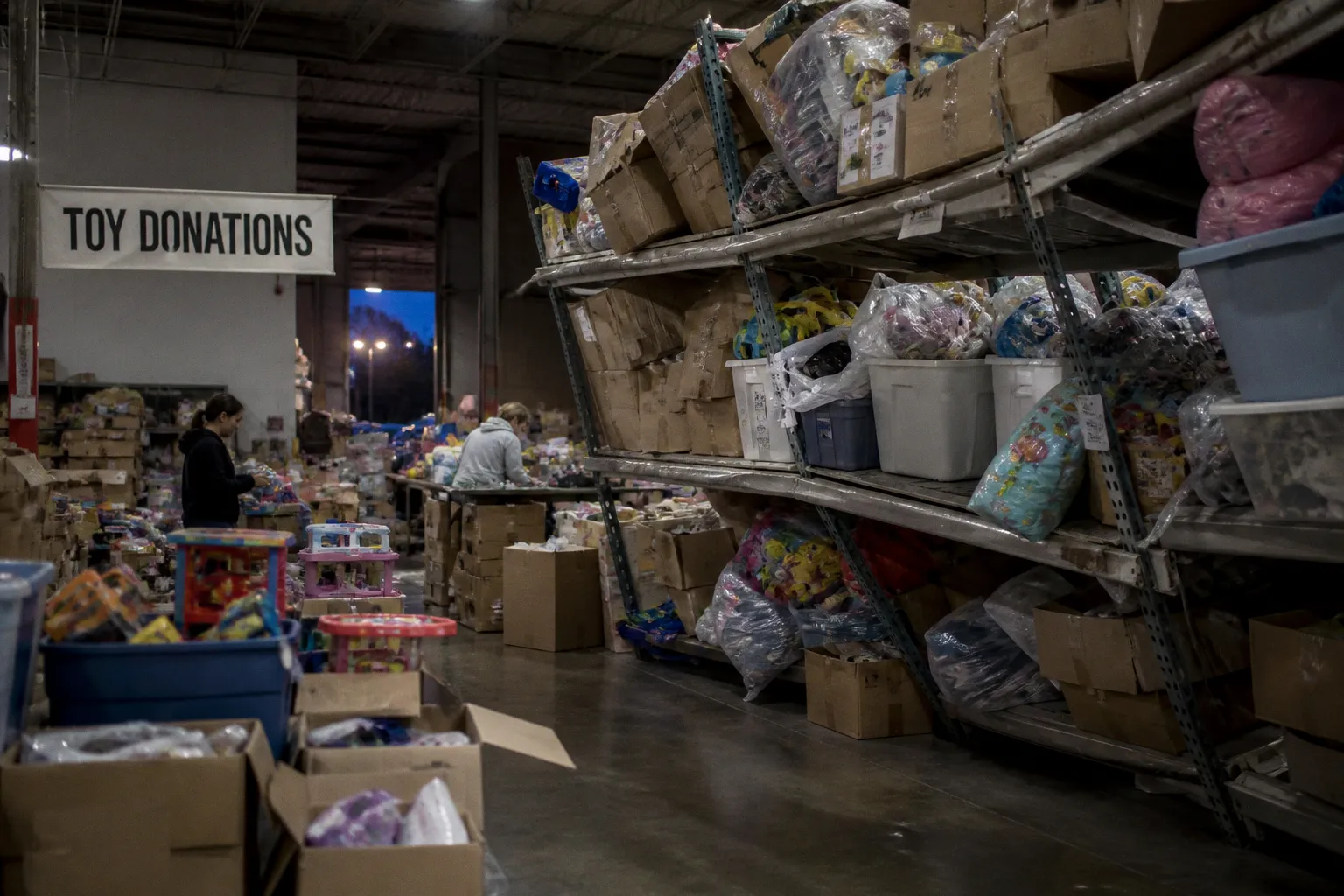
It is the gap between what people buy, what the charity requested, and what the warehouse can actually receive, inspect, sort, store, and dispatch.
We have seen the same pattern across community welfare operations: a full collection point, empty space where the requested items should be, and staff spending days handling duplicates. The charity toy drive logistics pitfalls are predictable. That means we can plan around them instead of pretending every donated box is automatically useful.
The work is reverse logistics. Goods move from scattered donors to one intake point, then through inspection, classification, storage, allocation, and final delivery. Every handoff creates friction. If we do not anchor the process early, the road decides the route for us.
Trap one: building the drive around small children
Donors usually start with the easiest mental picture: infants, toddlers, and young children. That is where most toy-drive displays begin. It is also where the supply piles up.
Older children and teenagers are frequently under-served because their needs are less obvious. A soft toy is easy to select. A suitable item for a 13-year-old requires more information about age, interests, safety, and local conditions. The result is an uneven load: too many gifts for one age band, not enough for another.
That imbalance creates extra work at the sorting table. A charity may have to hold excess stock for later distribution, redirect it to another program, or remove it from the drive entirely. None of those options are free. They require storage space, staff time, transport capacity, and another organization capable of receiving the surplus.
We avoid this by treating the request list as a load plan rather than a suggestion. Before opening a collection point, we break the intended recipients into clear groups:
- infants and toddlers, with age-appropriate soft goods and simple toys;
- primary-school children, with construction sets, books, art materials, and durable games;
- older children, with items that do not read as infant products;
- teenagers, who may need practical recreation items, books, sports equipment, headphones, or hobby materials;
- children with accessibility requirements, where the item must match a specific physical or sensory need.
The list does not need to become a catalogue. It needs to stop donors from guessing.
A request such as “new toys for children” is not an operating instruction. It gives no age range, no quantity target, no safety boundary, and no indication of what the charity already holds. A usable request names the gap: a certain number of items for a defined age group, with restrictions stated in plain language.
We also separate “requested” from “accepted.” A charity may request new toys but decline used items, opened packages, toy weapons, products with loose small parts, or anything that cannot be inspected. That boundary belongs on the collection notice before the first box arrives.
A donation is not useful because it exists. It is useful when it matches a recipient, survives inspection, and can move through the system without blocking the next load.
The age-band problem in practice
The common mistake is to measure success by volume. A collection point reports hundreds of toys, and everyone assumes the operation is covered. Volume hides the real question: how many usable items are available for each recipient group?
We need a simple count by category. Not a sophisticated warehouse platform. A paper tally, shared sheet, or basic inventory app can work if one person owns the updates. The count should separate at least:
| Inventory field | Why it matters |
|---|---|
| Recipient age band | Prevents the drive from loading one group while missing another |
| Item type | Shows whether the stock is books, games, sports equipment, dolls, building sets, or other goods |
| Condition | Keeps damaged, opened, or incomplete items out of the dispatch pile |
| Quantity | Establishes whether a category is short, balanced, or over-supplied |
| Destination | Links each accepted item to a school, shelter, community group, or distribution route |
Without that split, the warehouse becomes a pile with good intentions attached to it. Piles do not produce accurate dispatches.
Trap two: accepting wrapped gifts at intake
Pre-wrapped gifts create a clean public display and a dirty operational problem. Staff cannot inspect the item properly. They cannot confirm that it matches the intended age group. They cannot find missing parts, damaged packaging, recalled components, or unsuitable content without opening the package.
Charities commonly request unwrapped toys for this reason. Inspection comes before allocation. The team needs to see what entered the system.
That does not mean donors should send loose, damaged items. The working standard is simple: new, complete, clean, and unwrapped unless the receiving organization has issued different instructions. The item can still be placed in a bag or carton for transport. It should not be sealed in a way that prevents inspection.
At intake, we run a short sequence:
1. Receive and record. Assign the item to a category and count it.
2. Inspect the packaging. Look for damage, moisture, crushed corners, broken seals, or missing labels.
3. Check the contents. Confirm that the toy is complete and matches the visible description.
4. Remove unsafe or unusable goods. Do not push questionable stock into the main pile to deal with later.
5. Label the accepted item. Mark its age band, category, and destination if already assigned.
6. Move it to the correct zone. Intake is not storage. The item must leave the receiving table.
The sixth step is where many small drives stall. Donations arrive faster than volunteers can classify them. Boxes then sit beside the intake area. New arrivals cover older arrivals. The team loses the date, donor group, and status of each item. By the time sorting resumes, nobody knows whether a carton has been inspected.
We anchor the flow with separate physical zones:
- unprocessed: received but not checked;
- accepted: inspected and ready for allocation;
- hold: requires clarification, repair, or a decision;
- rejected: unsuitable for the drive and awaiting responsible disposal or redirection;
- allocated: assigned to a destination;
- dispatch: packed for a specific route.
The labels need to be large enough to read from across the room. A small sticker on a large carton is not a control system.
Do not let presentation outrun inspection
A drive often wants a photograph of full donation tables. That pressure can push teams to stack, wrap, and display items before they have been counted. It feels productive. It is not.
We need the opposite order:
- receive;
- inspect;
- record;
- sort;
- allocate;
- pack.
If presentation is required, use a separate display stock after the main inventory has been processed. Do not turn the entire warehouse into a photo prop.
Trap three: vague request lists create duplicate stock
A list that is not updated becomes a procurement error. Donors follow the first version they see. The charity then receives the same popular items long after the need has been filled.
This is one of the main toy drive storage issues. Duplicate goods consume the same shelf and floor space as useful goods. The difference is that surplus stock may have no immediate route out.
The request list needs an owner. That person does not need to supervise every donation, but they must control the public information. When a category reaches its target, the list changes. When a partner school or community group reports a new gap, the list changes again.
We use a short operating cycle:
Set the target
Define the recipient group, quantity, acceptable item types, and deadline. If the drive supports several destinations, assign separate targets. A single combined number hides shortages.
Publish the restrictions
State whether gifts must be new, whether they must be unwrapped, and which categories are not accepted. Include limits on toys with loose parts, unsafe materials, or unsuitable content where relevant.
Update the list
Remove filled categories. Mark urgent gaps. If a donor is being directed to a retail wish list or online registry, keep that source synchronized with the field count.
Close the intake window
A drive does not need to accept donations indefinitely. Once the load plan is filled, the collection point should close or change its request. More stock is not automatically better.
Reconcile the physical count
The public list is not the inventory. We still need to count what is on the floor. A target of 100 does not mean 100 usable items if 12 are incomplete, 8 are the wrong age group, and 20 are duplicates with no destination.
This is where managing toy drive donations becomes less about fundraising and more about control. Every item needs a status. Every status needs a next action.
The first box is easy. The hundredth box is where the system proves whether it was built or merely announced.
Trap four: treating storage as empty floor space
Temporary storage is often arranged late. A school room, garage, office, or community hall becomes the warehouse because it has available floor area. Then the collection begins and the room fills from the walls inward.
That is not storage planning. That is blocking the exit.
A workable site needs a receiving lane, sorting tables, accessible shelving, packing space, and a clear route to the vehicle. It also needs protection from moisture, dust, direct heat, and unauthorized access. Toys are not indestructible cargo. Cardboard absorbs water. Batteries leak. Small components disappear. Soft goods pick up dirt when placed on an untreated floor.
We plan the room around movement:
- incoming cartons enter through one point;
- unprocessed stock remains close to intake;
- accepted stock moves to shelving or marked floor bays;
- allocated goods move toward packing;
- dispatch cartons stay near the exit but not in the vehicle path;
- rejected or held items remain isolated from the usable inventory.
Heavy cartons stay low. Fragile packaging stays above them. Narrow aisles are not acceptable if volunteers must carry boxes through them. A route that works for one person carrying one bag may fail when three people move cartons in opposite directions.
We also set a maximum storage limit before the drive opens. If the site reaches that limit, intake pauses. This is not a failure of generosity. It is a safety and inventory decision.
Storage capacity is a calculation, not a mood
We do not need a warehouse engineer to make a basic capacity estimate. We need to know:
- how many cartons or loose items the site can hold;
- how much floor space must remain clear for movement;
- how many shelves or pallets are available;
- how often the stock can be removed;
- how long goods may remain before dispatch;
- whether the site can protect the inventory from weather and unauthorized handling.
The unknown cost in many local drives is temporary storage. There is no universal rate that applies to every grassroots operation. A donated room may cost nothing in rent but still require cleaning, shelving, lighting, transport, volunteer coverage, and security. Those costs belong in the plan even when no invoice arrives.
A free room can become expensive if it forces the team to reload every box twice.
Do not mix intake and dispatch
One of the more damaging charitable gift drive mistakes is using the same area for receiving and final packing. New donations get placed beside completed cartons. Volunteers open a dispatch box to find room for new stock. Destination labels detach. The inventory count stops matching the physical load.
We keep the lanes separate. If the building is small, we use time windows:
- morning for receiving;
- midday for inspection and sorting;
- afternoon for packing and route preparation.
The schedule matters because volunteer availability is rarely continuous. A process that depends on everyone being present at once will break as soon as one shift leaves.
Inventory tracking: the cheap control that gets skipped
Small operations often avoid inventory tracking because the system appears heavier than the drive. That is backwards. The larger the donation pile, the more basic control is needed.
Research on small businesses has found that approximately 46% do not track inventory, while another reported figure places the share with no inventory tracking system at 24%. The exact definitions differ, but the operational point holds: many small organizations run without a live count. A holiday drive cannot afford to rely on memory once donations come from multiple sites.
The tracking method can remain simple. Each entry should answer:
- what is the item;
- how many are usable;
- which age group does it serve;
- where is it located;
- has it been inspected;
- is it allocated;
- when does it leave.
A shared spreadsheet is enough for a modest drive if updates happen at the intake table. For multiple collection points, one central coordinator must reconcile the numbers. Otherwise, every site reports a separate version of reality.
We do not count only at the end. End-of-drive counting is an audit after the vehicle is already loaded. It will not prevent duplicates, missing categories, or cartons with no destination.
Promotion timing affects the warehouse
Promotion is part of logistics. Start too late and donations arrive in a compressed surge. The team has no time to inspect or correct shortages. Start too early without maintaining the request list and donors continue buying from information that is no longer accurate.
A three- to six-week promotion window is commonly recommended for donation drives. That gives the operation time to announce the need, monitor incoming stock, update categories, recruit sorting crews, and schedule delivery.
The timing should match the actual route:
1. Three to six weeks out: publish the target, restrictions, collection points, and final intake date.
2. Two to three weeks out: review early donations and remove categories that are already full.
3. One to two weeks out: recruit sorting and transport teams; confirm the receiving organizations.
4. Final week: stop vague appeals, publish the remaining gaps, and prepare packing materials.
5. After intake closes: reconcile, pack, and dispatch rather than continuing to collect.
The delivery date is not the end of the drive. It is the point by which the inventory must already be stable.
The reverse-logistics problem nobody advertises
Unsolicited in-kind donations create serious post-collection problems in disaster and humanitarian operations. Toy drives are smaller, but the mechanism is similar. Goods arrive without a destination, in mixed condition, and outside the receiving organization’s actual request.
That is why direct targeting matters. A donation that cannot be assigned may need a second transport, another inspection, and another storage location. If no partner wants it, the original charity carries the disposal burden.
We bypass that problem by securing destination information before collection begins. For each receiving partner, we record:
- recipient count or approximate demand;
- age groups served;
- accepted and refused item types;
- delivery address and access conditions;
- receiving hours;
- packaging requirements;
- named contact for final reconciliation.
Rural routes add their own friction. A community center may have a narrow approach, limited unloading space, or no staff available outside a fixed window. A dispatch carton that is easy to move in a city warehouse may be wrong for a motorcycle, small van, or unpaved access road. The packing plan must match the last mile, not just the warehouse.
We label cartons on two sides and the top. The label should include the destination, age band, category, carton number, and handling notes where needed. If the route is divided across several vehicles, the load list must show which vehicle carries each carton.
A manifest does not need to be elegant. It needs to survive rain, dust, a missed phone call, and a tired volunteer at the unloading point.
Before the trucks roll
We use this final operating check before dispatch:
- every accepted item has been inspected;
- wrapped gifts have been opened and cleared;
- age groups are balanced against the destination requests;
- duplicate categories have a defined outlet;
- held and rejected goods are physically separated;
- the inventory count matches the cartons on the floor;
- each carton has a destination label;
- the route has a receiving time and contact;
- the vehicle can carry the planned load without blocking emergency access;
- the warehouse has a clear path from storage to the exit;
- no collection point continues accepting goods after the storage limit is reached.
If one of these points fails, we stop and fix it. We do not bury the problem under another layer of tape.
Holiday toy drives work when the operation is designed around movement. Donors supply the material. The crew must anchor the categories, torque the intake process, bypass duplicate stock, and haul the right goods to the right destination. That is the job.
The final warning is plain: never confuse a full room with a completed drive. A completed drive has inspected inventory, assigned recipients, controlled storage, and a route out. Everything else is cargo waiting to become someone else’s problem.