Government school library development from space to shelves
A locked cupboard of donated books is not a library. Neither is a freshly painted room with empty racks, nor a pile of exam guides pushed under a teacher’s desk. We have seen all three. The failure point is usually not money alone.
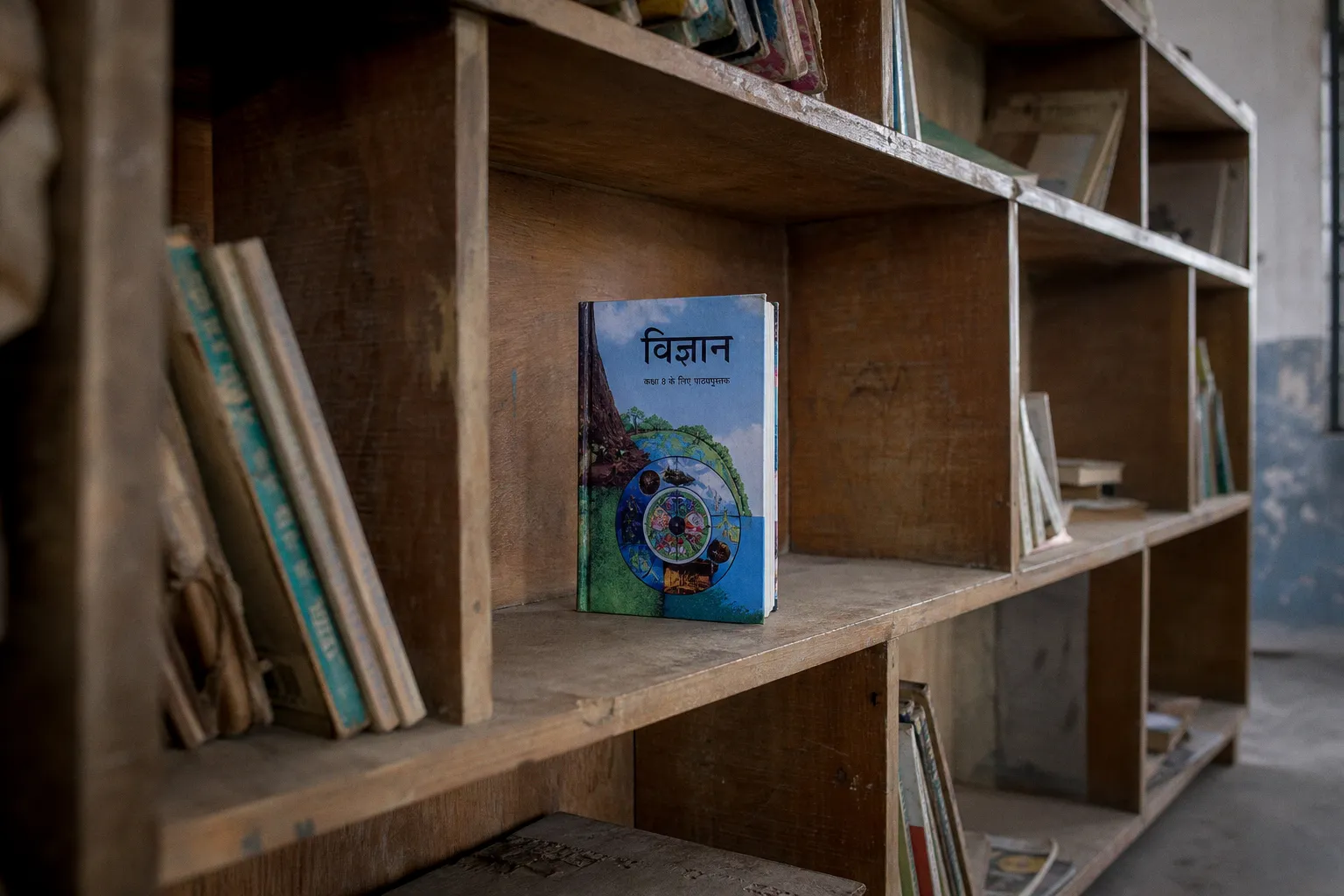
It is sequence.
A government school library has to work as a small operating system: a reachable space, books children can actually read, a named adult to run circulation, and a routine that puts materials into hands every week. Miss one part and the rest becomes dead load.
This government school library development roadmap starts where field teams should start: with the room, the grant route, and the person holding the key.
Build for circulation first. Shelves come after access, not before it.
Start with the funding lane, not the donation pile
Samagra Shiksha extended the Library Grant to government schools serving Classes I–XII from the 2018–19 implementation year. The 2019–20 guidance set annual grant bands by school type, ranging from ₹5,000 for a standalone primary school to ₹20,000 for a composite senior secondary school serving Classes I–XII.
Those figures are useful for planning, but we should not treat them as a current universal entitlement. State and Union Territory implementation, annual work plans, and current funding rules can shift. Before hauling in books or ordering steel racks, get the head teacher and block or district office to identify the school’s applicable allocation and the purchase route they can clear.
The historical bands provide a working scale:
| School category in the 2019–20 guidance | Annual Library Grant band |
|---|---|
| Standalone primary school, Classes I–V | ₹5,000 |
| Upper-primary, secondary, or standalone senior secondary school | ₹10,000 |
| Composite elementary school, Classes I–VIII | ₹13,000 |
| Selected composite secondary configurations, Classes VI–XII, I–X, or IX–XII | ₹15,000 |
| Composite senior secondary school, Classes I–XII | ₹20,000 |
A small grant does not carry a room build, collection, furniture package, and staffing solution at once. Trying to make it do that is how teams buy fifty books, one decorative rack, and no system. Break the work into lanes:
1. School funds the core recurring need. Use the sanctioned library route for books, periodicals, replacement copies, basic processing material, and locally appropriate titles.
2. Community support fills defined gaps. A local donor can fund floor mats, low book bins, labels, repair tape, or a lockable cabinet. Do not let donations dictate the collection.
3. Civil work moves through the proper plan. A new dedicated room, electrical work, a ramp, windows, or permanent fixtures needs to sit inside the approved annual work plan and budget. It is not a weekend volunteer fix.
4. The school names an operator before delivery. This can be a teacher, librarian where available, or a staff member assigned specific time. “Everyone will manage it” means no one will.
For a rural school book donation process, the first question is not “How many books can we send?” It is “What can this school receive, process, shelve, and circulate without creating a second storage problem?” Get the class range, teaching languages, usable wall length, flood or dust exposure, and the name of the staff member who will sign books in and out. Then build the consignment.
The guidance also permits up to 20% of Library Grant funds for regional- and local-language books from relevant publishers when procurement is difficult. That is not a side note. It is a practical control. A library stocked in a language children do not read is inventory, not access.
Survey the space before specifying furniture
We start every educational resource center setup with a tape measure and a fault list. Not a brochure.
Walk the campus with the head teacher. Check which room stays open during the school day, which wall is dry through monsoon, where direct daylight falls, whether a child using a mobility aid can enter, and what happens to the room during exams, mid-day meal operations, elections, or storage shifts. A room that gets requisitioned four times a year needs a mobile library plan, not fixed furniture bolted to every wall.
For secondary and senior secondary schools, the Indian guidance allows proposals for a library room that can include civil works, furniture, cupboards, racks, fixtures, and fittings. Where a full room is not feasible, it explicitly allows classroom libraries and reading corners. That bypass is often the correct move, especially in primary schools with tight floor area.
The old benchmark figures cited in the guidance—reading-room seating for 40–120 students, stack capacity for 10,000–15,000 volumes, and 10 square feet per pupil—belong to BIS-referenced provisions for secondary and senior secondary library buildings. They are planning references, not a compulsory template for every school. Do not use them to reject a workable primary-school corner with three low bins and a mat.
Choose the setup that matches the site.
| Site condition | Build response | Common failure |
|---|---|---|
| No spare room, active primary classes | Reading corners inside classrooms; low, open bins; a rotating class set | Keeping every book in a central locked cupboard |
| Small spare room with reliable staff access | Shared library room with open shelves, floor seating, issue desk, and timetable | Installing tall racks that children cannot reach |
| Secondary school with room in the approved plan | Dedicated library with reading area, storage, work surface, lighting, and accessible entry | Building a room without funding the collection or operating hours |
| Seasonal damp, dust, or leakage | Raised shelves, closed lower storage, moisture check, repair box, and a move plan | Placing books against wet exterior walls |
The physical rules are plain:
- Put children’s books on open shelves at child height. Face-out display works better for picture books and new arrivals than a wall of identical spines.
- Keep a clear path from door to reading area. A shelf line that blocks movement will block younger children and students with disabilities first.
- Use stable furniture. Anchor tall steel racks to a sound wall where the building condition allows. Check sharp edges, loose fasteners, and overloaded top shelves.
- Separate reading stock from archive stock. Textbook surplus, obsolete guides, and donated adult books cannot occupy the same access zone as children’s material.
- Plan light and heat together. Daylight helps, but books baked against a hot window and readers sitting in glare are poor trade-offs.
- Hold back one dry, lockable section for registers, repair supplies, devices, and material that needs controlled handling.
IFLA guidance does not prescribe a universal library size or book count. It does prescribe the right direction: central access, enough light, some protection from outside noise, workable temperature, and design that does not bypass users with special needs. That is the right field standard too. Fit the room to the school’s traffic and timetable, not to a photograph from a better-funded campus.
If a Class II child cannot pull a book, choose it, and return it without asking permission, the access system is still broken.
Build the collection around readers, not donors
The fastest way to sink a library is to accept every donated book. We have unloaded cartons containing outdated professional manuals, test-prep books for the wrong board, damaged encyclopaedias, and English-language novels far beyond the school’s reading level. Free freight is not free if teachers spend weeks sorting material children will never open.
Samagra Shiksha calls for wide, age-appropriate, and culturally relevant collections. The list includes storybooks, picture books, newspapers, journals, magazines, reference works, biographies, dictionaries, encyclopaedias, audiovisual materials, and digital resources where possible. The point is range. A library cannot run on moral tales alone, and it cannot run on exam manuals alone.
Set the collection in working bands:
Early grades: Classes I–V
Start with durable picture books, read-aloud stories, local folktales, simple informational books, wordless books, and material in the children’s strongest reading language. Add books that let a child enter without decoding every line. A picture sequence, a map, an animal guide, or a local craft book can pull in a hesitant reader faster than a formal reader series.
Keep these books low. Use face-out bins. Rotate them often. At this stage, the operational target is repeat handling: browse, borrow, return, browse again.
Upper primary: Classes VI–VIII
Add short fiction, illustrated nonfiction, science and environment books, local history, sport, art, biographies, age-appropriate newspapers or children’s magazines, dictionaries, and bilingual support where it serves the classroom. This is where a reading corner can become a bridge between textbook language and independent reading.
Secondary and senior secondary: Classes IX–XII
Keep leisure reading alive, then add reference tools tied to curriculum needs: science, social science, language, careers, general knowledge, and reliable local information sources. Do not turn the whole room into a coaching shelf. Students need materials that support research, reading stamina, and practical questions beyond the exam cycle.
Accessibility is collection work, not a label on the door. For visually impaired children, the guidance names tactile-map books, NCERT’s Barkha Series, and audiobooks from the National Institute of Open Schooling and NCERT. Confirm the learner’s needs and available playback conditions before procuring audio resources. A file on a device with no charging plan is another locked cupboard.
For every incoming lot, run a hard sort:
1. Keep: clean, complete, age-fit, language-fit, and usable in the school timetable.
2. Repair: loose pages, minor spine damage, covers that can be reinforced with tape or simple binding.
3. Redirect: books suitable for an older school, teacher resource room, or community learning space.
4. Remove: mouldy, badly damaged, obsolete, discriminatory, or irrelevant material.
Do this before books reach shelves. Once a mixed pile lands in a room, it becomes someone else’s problem.
Put one person on the register and put books into motion
A library room fails quietly. The key goes missing. The issue register stops in July. New books arrive, stay boxed, and disappear from memory by the next inspection. We do not fix that with a launch event. We fix it with a routine that survives staff workload.
The guidance calls for available-book data, cataloguing, shelving, stock-taking, check-in and check-out procedures, and lists for weeding or withdrawal. That sounds administrative because it is administrative. The work is not glamorous. It is also where the library lives or dies.
Use a system the assigned staff member can run during a normal school week. A handwritten accession register and class-wise borrowing card can outperform a laptop-based catalogue that nobody opens after the project team leaves.
The minimum operating kit is small:
- An accession register: serial number, title, language, level band, source, date received, and condition.
- A simple class or borrower register: book number out, date out, date back.
- Shelf labels that match the register categories. Keep them readable from standing height.
- A return tray or marked return shelf. Do not make children hunt for the operator every time.
- A repair box with tape, labels, glue suitable for paper repair, and spare cards.
- A withdrawal list. Damaged beyond repair, lost, obsolete, or unsuitable stock needs a recorded exit, not a hidden pile.
Assign a weekly operating slot. Twenty or thirty minutes by class can be enough to start if it is protected. The school can run whole-class borrowing, paired reading, silent reading, teacher read-alouds, or a rotating library period. The exact format varies. The non-negotiable part is that books move on a calendar.
Track use with numbers that help the school make decisions, not numbers designed to impress a donor:
- classes served that week;
- books issued and returned;
- titles sitting untouched for a term;
- missing or damaged books;
- language and level gaps flagged by teachers;
- days the room or corner was unavailable.
If 80% of issues come from two classes, do not call the project successful. Find the blockage. It may be timetable access, a teacher who does not use the library period, shelves too high for younger students, or a collection weighted toward one reading level.
A monthly review between the operator and head teacher should take fifteen minutes. Check the register, spot stock damage, identify empty level bands, and decide what the next grant or donation batch will fill. That is enough to keep the system torqued down.
Use community support to extend the school, not replace it
Volunteer rider networks can haul materials into hard-to-reach blocks. Local groups can help paint, sort, label, repair furniture, and build reading days into a school calendar. But we should keep the line clear: the government school owns the library. The community helps it operate better; it does not create a parallel room that collapses when volunteers leave.
Before a ride or donation drive, lock down these details with the school:
- Delivery date, storage point, and unloading crew.
- Inventory list and receiving signature.
- Book categories and language mix agreed in advance.
- Whether furniture can enter the gate and fit through the room door.
- Responsibility for unpacking, stamping, accessioning, and shelving.
- The first three library periods already placed on the timetable.
That last one matters. If there is no first use date, the delivery is not complete.
Community learning space planning can also work beyond the library room. A veranda reading station, a classroom corner, or a rotating crate system may serve better where room access is tight. Keep the stock countable and the custody clear. A book box that travels between classrooms needs a route sheet, not goodwill.
Do not confuse a finished room with a finished library
The useful measure is not how many cartons arrived, how many shelves were installed, or how clean the paint looks on handover day. The useful measure is whether students can find material at their level, take it without friction, use it during school time, and bring it back into circulation.
We build in this order: confirm the funding lane, survey the site, choose room or corner, set the collection bands, assign the operator, install the register, and schedule use. Then we deliver. Not before.
A final field warning: never stack a library around a single enthusiastic volunteer or one teacher’s spare time. Staff change. Rooms get reassigned. Monsoon finds weak walls. The system has to keep running after the convoy leaves.