Toledo Non-Profit Launches 40 Years Forward Campaign to Offset Public Funding Cuts
A Toledo non-profit just launched what it calls the "40 Years Forward" campaign, aimed at backfilling the money that government funding left behind.
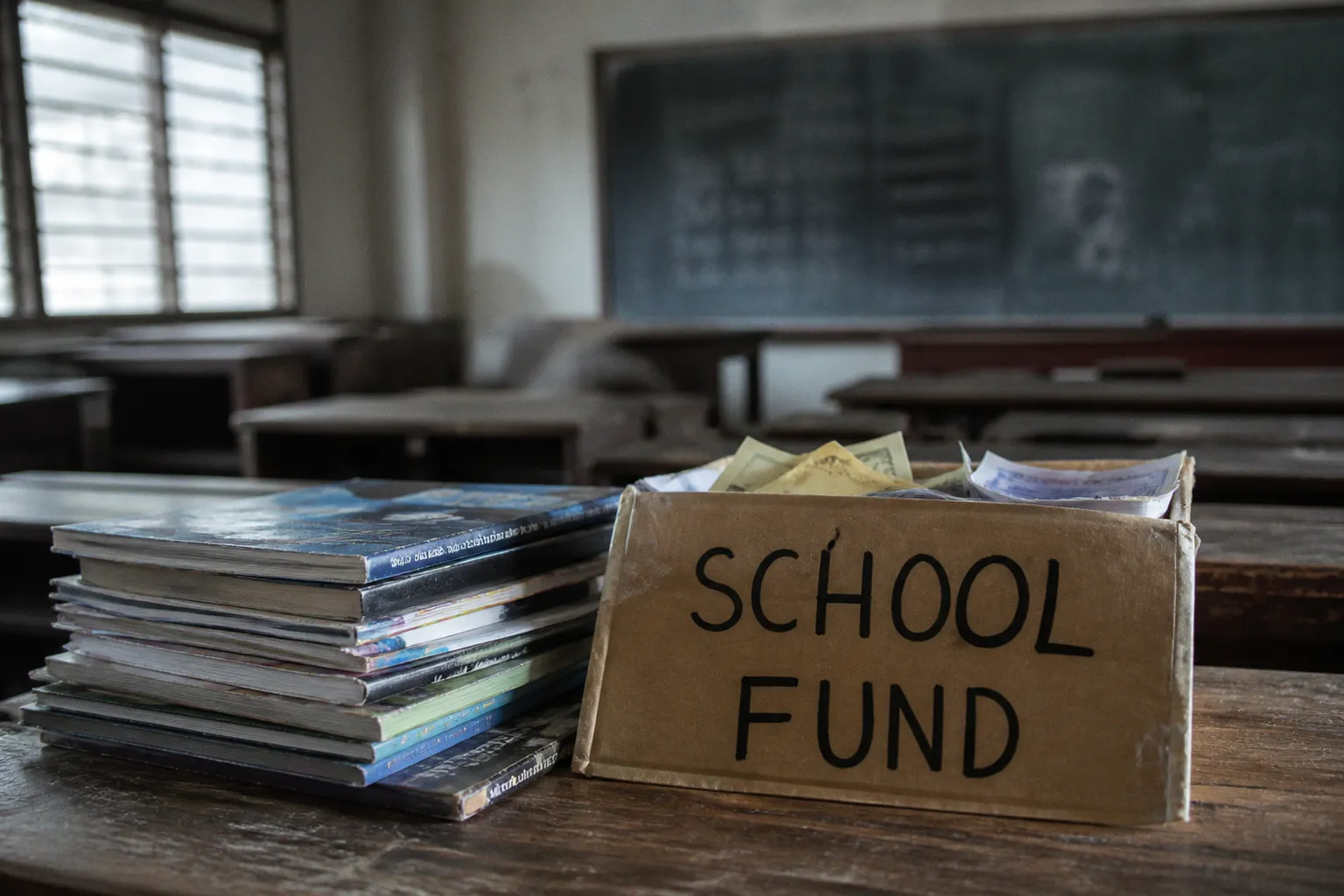
Funding Gaps Don't Fix Themselves
According to wtol.com, the organization is targeting the shortfall created by years of declining public investment in education infrastructure. For those of us running ground operations—patching roofs, hauling desks, anchoring school buildings that local authorities walked away from—this is a familiar problem dressed in different clothes. The question isn't whether the gap exists. It's whether the repair plan holds up under load.
The Pattern We Keep Seeing
Look at the data coming out of Kenya right now. The government announced Term Three 2026 capitation funding is being processed, but education stakeholders are already flagging a bottleneck: the official circulars detailing how that money should be spent haven't reached schools on time. Headteachers can't plan procurement, can't schedule maintenance, can't allocate for repairs without that document. A primary school with 500 learners receives roughly Sh129,850 for the term—spread across textbooks, stationery, staff wages, renovation, transport, electricity, water, and a dozen other vote heads. That's not a budget. That's a triage list.
Junior Secondary Schools get more—Sh1,501.64 per learner plus a Sh38,216.97 basic allocation per school—but even that larger figure is locked into specified expenditure categories. No circular, no movement. The money sits while the buildings keep sagging.
Meanwhile, in Udupi district, India, the process of channeling Corporate Social Responsibility funds into government school development has reportedly begun. CSR pipelines are a different animal from government capitation—faster when they work, more fragile when the corporate sponsor pivots. We've seen that play out on builds where the paint was barely dry before the funding dried up.
What This Means for Ground Crews
The Toledo campaign and the Kenyan circular delay are two symptoms of the same structural failure: public systems that were never built to sustain the infrastructure they promised. When government funding declines—as it has in Toledo over four decades—the gap doesn't stay empty. It fills with improvisation, volunteer labor, and NGO campaigns that have to justify their existence every fiscal quarter.
For us, the operational takeaway is straightforward:
Verify before you haul. If your local authority is cutting disbursements or delaying circulars, don't assume the next quarter will self-correct. Map the actual cash flow timeline for your target schools. Get the numbers in writing.
CSR money is a bypass, not a main road. The Udupi model of tapping corporate funds for school development can accelerate a build, but it's structurally dependent on corporate goodwill and regulatory compliance. Anchor your project plan to something more durable.
The "40 Years Forward" framing matters. Four decades of underfunding can't be reversed by a single campaign cycle. Any crew chief will tell you: a deferred maintenance backlog that long means you're not doing repairs anymore—you're doing rebuilds. Budget accordingly.
Final Check
Before you commit resources to a school rebuild, run this sequence: confirm the current funding status with the school's Board of Management or equivalent body; verify whether government disbursements are on schedule or delayed; identify at least one alternative funding stream that doesn't depend on a single donor or a single policy cycle. If any of those checks come back empty, you're building on a foundation that hasn't been poured yet. Sort the money first. Then torque the bolts.