Ferndale Schools Deploy Carpool App to Combat Chronic Student Absenteeism
Per a CBS News report out of Michigan, Ferndale Public Schools is launching GoKid — a school-managed carpool app — at University High School, where 80.5% of students were chronically absent in the 2024-25 school year.
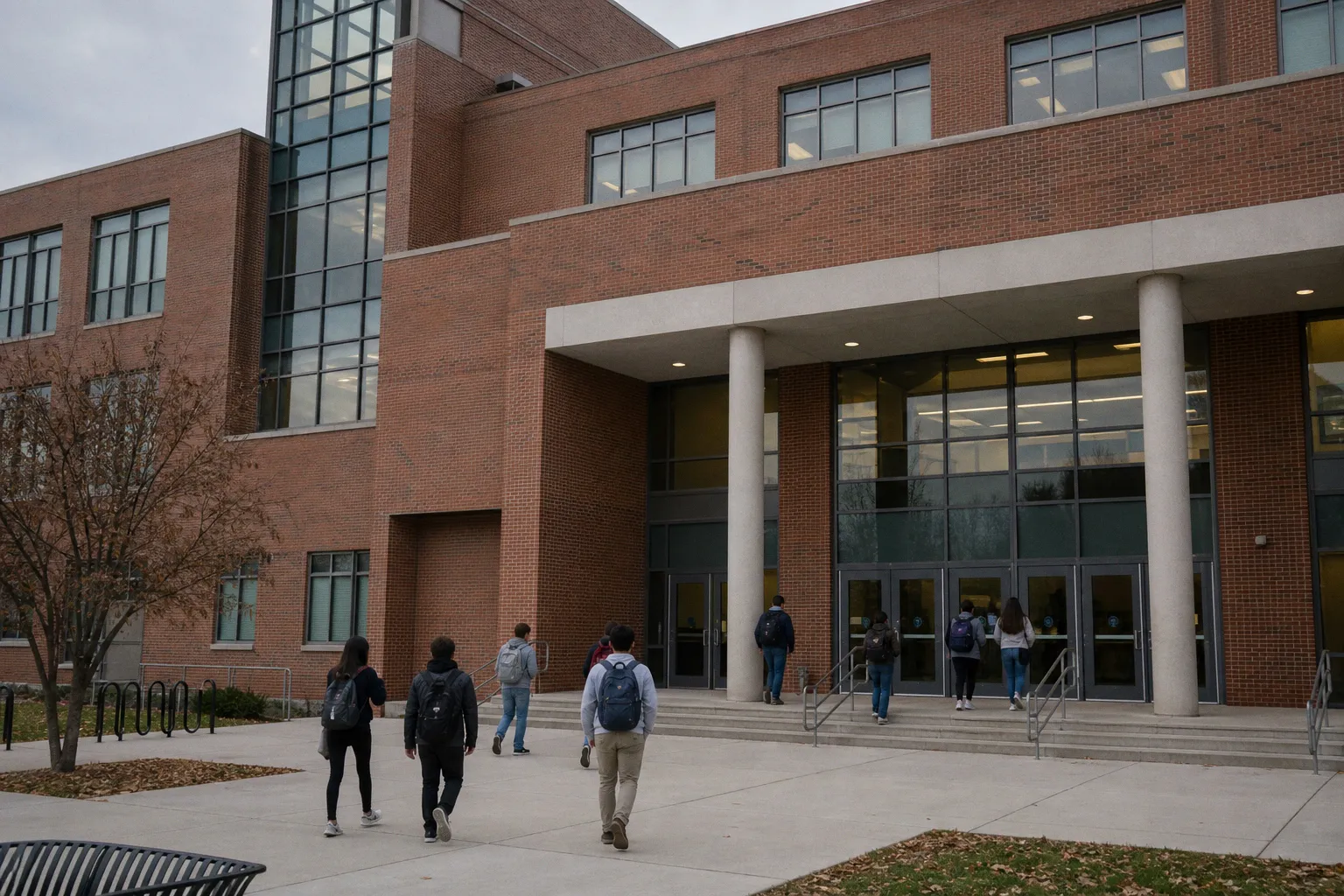
Statewide, the chronic absence rate was 27.9%. The district runs school buses, but Superintendent Camille Hibbler told CBS the routes sit at capacity. GoKid is the patch for a transport gap the fleet cannot close.
University High pulls students from outside Ferndale through Michigan's Schools of Choice program, which means long one-way distances and households scattered across the map. Assistant Principal Margaret Schultz framed the app two ways to CBS — it builds school culture, and it removes the friction that keeps kids home.
How the Mechanic Works
GoKid is not a rideshare. Parents download the app, get vetted by the district, then coordinate shared rides with other approved families. The district holds the access layer; families hold the routing. It is a thin coordination tool bolted onto an informal practice that almost certainly already existed along those school-run corridors.
Hibbler was blunt about it to CBS: "no barriers." The bet is that one barrier removed — a reliable ride — produces multiple downstream effects: attendance up, family logistics easier, fewer missed days compounding into chronic absence.
Why It Maps to Us
The geometry is familiar. Long student-to-school distance. Institutional vehicle capacity capped. Households that already own vehicles and already pass each other on the road for work, errands, market runs. Crowd-coordinated transport absorbing what the formal fleet cannot.
That is also the geometry of last-mile school runs in rural India — except the coordinating crowd there is a volunteer biker network, not a parent app. The structural failure is identical: a fixed fleet cannot serve a dispersed student body, so the route gets redistributed onto movement that already exists. GoKid formalizes that redistribution with software. Our networks formalize it with a ride log, a roster, and a fuel budget.
The Michigan district is not an Indian story. The arithmetic transfers cleanly: when you cannot add vehicles, coordinate the ones already on the road.
Three Things to Watch
Vetted uptake past launch. The rollout is scheduled before the new school year — a narrow window to test whether families actually use a school-managed app versus the WhatsApp groups they already run.
Movement on the 80.5% number. A drop to 60% in the first reporting cycle is a story. A drop to 30% is a transformation. Anything else is noise without matched controls.
Whether the model scales past one high school. A case study and a district-wide rollout are two different claims. The second is what we would actually need before borrowing the mechanic.
For the rest of us running school-access routes, the operative lesson is logistical, not philosophical. Audit the route. Audit the vehicles on it. Audit the households that already pass through. The answer is usually already moving. The work is to connect it.