Scaling Educational Impact: Beyond the NSF Tribal College Grant Awards
According to TCUP-HUB, the National Science Foundation’s Tribal Colleges and Universities Program made 18 awards to 12 institutions in 2026, totaling more than $14 million.
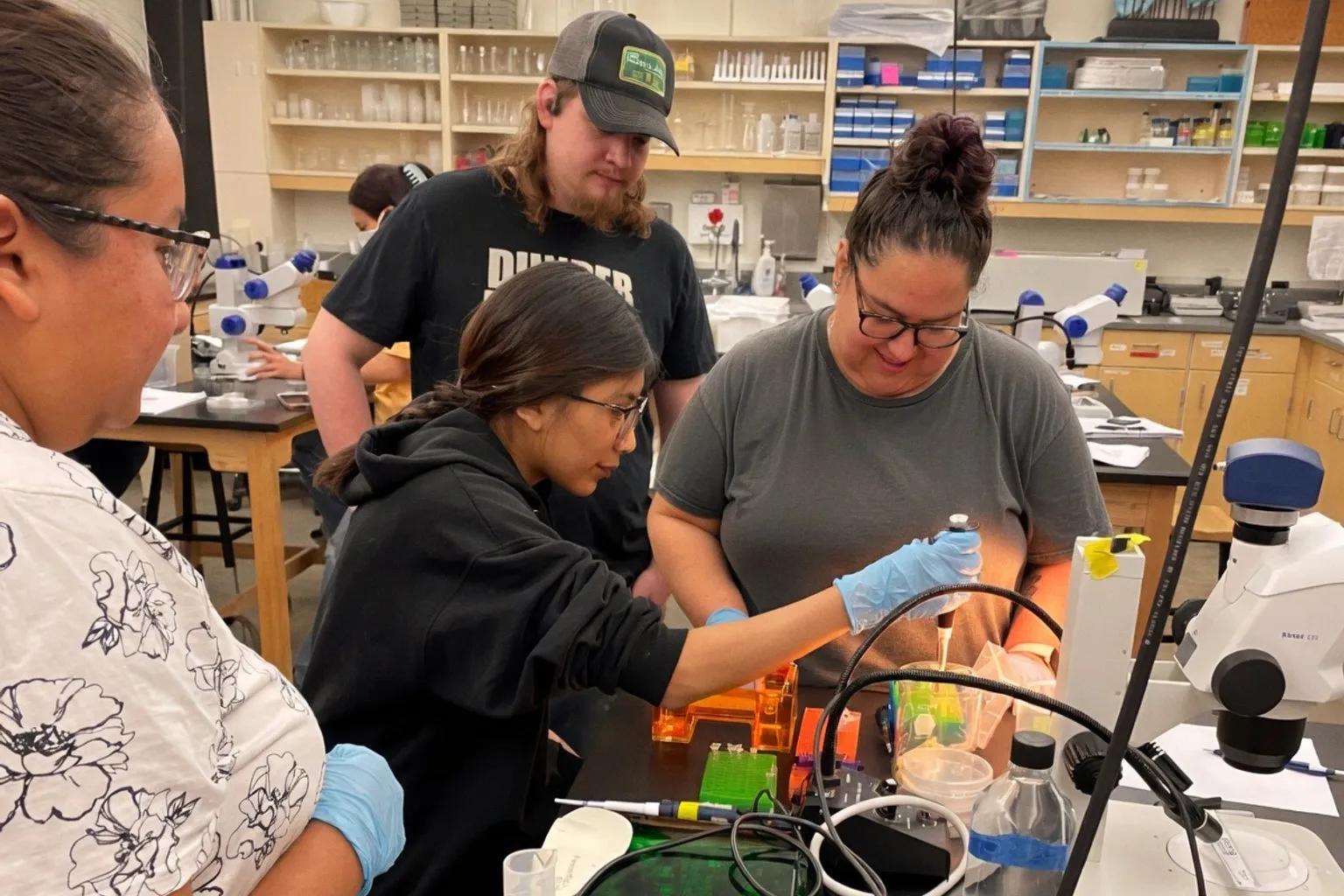
The hard question for riders and builders is not the award count; it is whether the people and school partners can keep the work moving after the announcement. The funded work spans an environmental research center, K-12 computer-science instruction, sustainable agriculture and energy research, and new robotics work.
Follow the funding trail
The award list is a map, not proof that a school can absorb the work. For a field plan, we would keep the four project areas separate instead of turning them into one generic supply request.
An environmental research center is a different operating problem from K-12 computer-science instruction. Sustainable agriculture and energy research is a different job from robotics. The source confirms the categories, but not the staffing, equipment, or timetable at each institution. Before hauling tools, choose one institution or partner, confirm the requested task, and agree on what counts as finished.
Ask who receives the materials or instruction, who owns the next step, and how the work continues after the initial visit. The award total is more than $14 million across 12 institutions, but a total cannot tell a field crew what one campus needs. It can only tell us where to ask better questions.
These reports are US-based. They are useful as a field lesson, not as a map of a project in our area. The practical point is portable: an award on paper does not replace a local lead, a defined scope, or a delivery plan.
Check the handoff
A second route hazard appears in the paperwork. According to KSFR, several tribal nations and Native students filed an amended federal complaint challenging the transfer of Indian education operations and staff from the Department of Education without the required tribal consultation. The complaint alleges that staffing cuts and delayed funding have harmed tribal colleges and early-childhood services.
The report treats those points as allegations, not as an established court judgment. We still need to plan around them. This is not an instruction to bypass tribal input. It is a reason to confirm the operating chain before anyone announces a school visit or a repair date.
A volunteer group should ask the local partner which program currently handles the work, whether staff capacity is expected to remain available, and what funding date the partner can actually work to. We should not publish a visit date, promise a repair, or count a program as served until those answers are on the table.
If early-childhood services are the requested destination, they require their own contact and scope. A school repair is not automatically a mandate to touch every program in the education system. That is how a clean route turns into a scattered one.
Work the local agreement
According to Cascadia Daily News, the Nooksack Tribal Council and Mount Baker School Board adopted a memorandum of understanding to improve support for tribal students. The agreement includes a Native student-success coordinator, data-sharing rules, culturally relevant education, and family engagement.
Those details are not decoration. They are the sort of handoff information a field crew needs before it rolls. We would treat them as four separate checks:
- Ask whether the coordinator is identified and reachable.
- Ask what data can be shared, with whom, and for what purpose.
- Ask how culturally relevant education will be delivered rather than assuming the term means the same thing everywhere.
- Find out how families will be involved.
When a biker network offers transport, tools, or labor, it should not invent the support model when a local agreement already sets the terms. The Nooksack agreement is a local example, not a template to paste onto another school.
The route is straightforward: fund the work, then anchor the handoff. Before we leave, leave one named contact, one agreed task, one date, and one reporting line. If any of those are missing, hold the rollout. A convoy is easy to organize. A reliable school partnership is the part that has to survive the road.