Modernizing Public Schools Through Strategic Energy Retrofits
The scope is energy retrofits: cutting consumption and costs, fixing indoor air quality, turning classrooms into healthier learning environments.
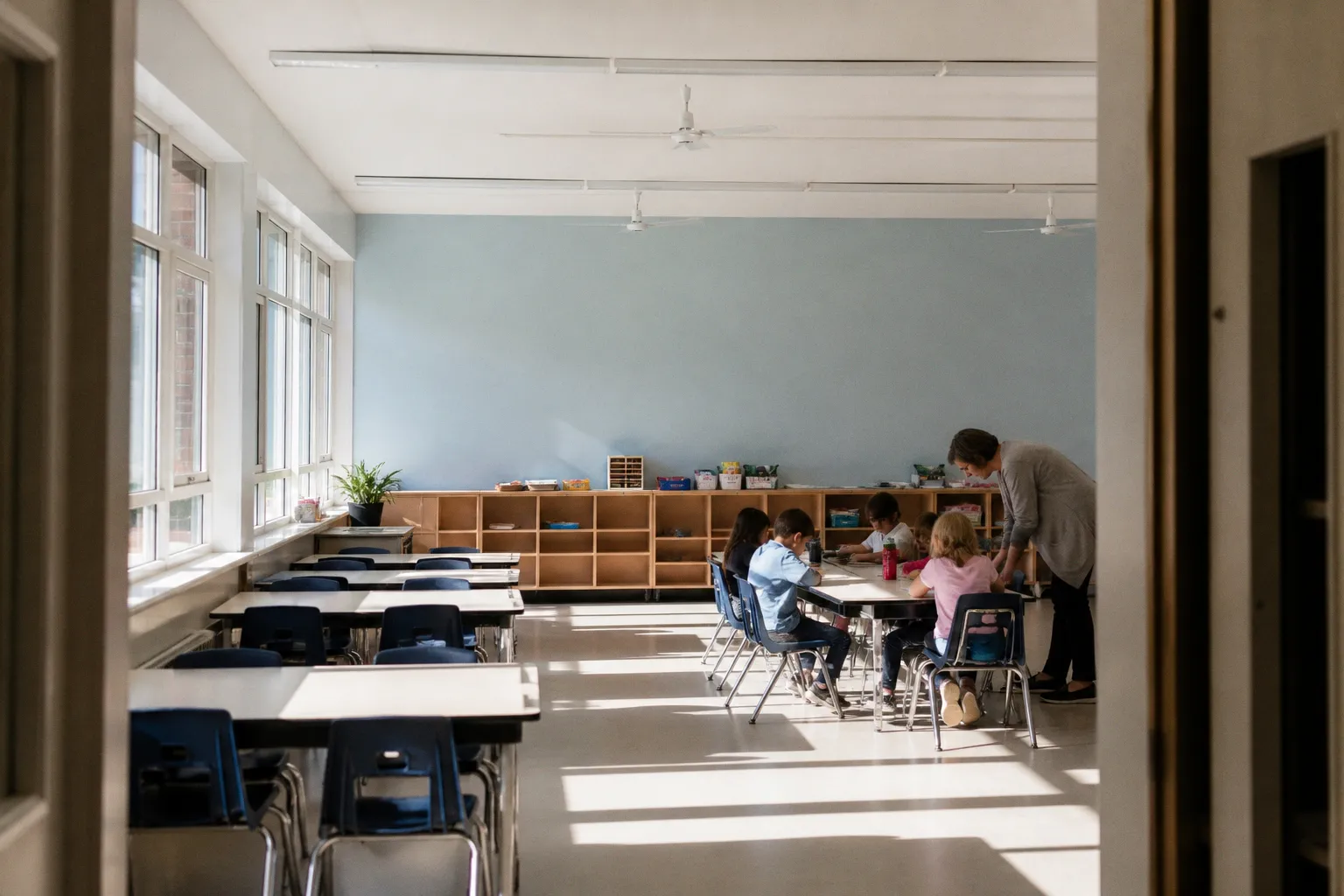
The $500 Million Benchmark Across 36 States
According to the U.S. Department of Energy, the $500 million Renew America's Schools Program has already pushed $372.5 million into K-12 public school districts. The work covers roughly 410 facilities across 36 states, directly touching about 197,000 students and 14,000 teachers. Two funding rounds have run so far — the 2022 Renew America's Schools Grant, and the 2024 Prize and Grant selectees announced in August 2024. The scope is energy retrofits: cutting consumption and costs, fixing indoor air quality, turning classrooms into healthier learning environments. The DOE also anchors capacity-building at two dozen Local Educational Agencies so districts can actually manage the upgrades once the contractors pull out. That's the part most crews forget.
What Our Routes Should Haul Back From This Playbook
We don't have a federal grant office waiting to wire funds to base camp. But the structural sequence — assess, fund, retrofit, build local capacity — maps cleanly onto how our biker networks already operate across rural India. Three points worth pinning to the workbench:
- Measure the building before you measure the budget. The DOE tied every dollar to energy use reduction, air quality improvement, or learning environment gains. Our volunteer crews should track the same three metrics per school — kWh saved, particulate levels down, desks filled. Without hard numbers, donors stop sending fuel money.
- Capacity beats construction. America's program funds district staff to run the energy systems after install. Our equivalent is training local masons, electricians, and school watchmen to maintain what we rig. A roof we replace in 2025 with no one able to patch it in 2027 is a roof we'll be rebuilding in 2030. Reporting out of Ondo State in Nigeria points the same direction — 310 public schools are getting governing boards specifically to manage development, per the regional press. Governance is the afterburner.
- Pair the retrofit with the route. Our bikers carry tools, not just paint buckets. If a U.S. district can fund an entire energy management apparatus off federal cash, our crews can at minimum bundle basic electrical safety, ventilation checks, and lighting upgrades into every school visit.
What's Open and What to Track
The DOE program is federal and ongoing. Three signals our network should monitor:
1. Application cycles and selectee lists. They post winners publicly. We can study which districts won and why, then pressure Indian state education departments to publish equivalent data.
2. Indoor air quality benchmarks. If America publishes standard metrics, we have leverage to demand similar thresholds instead of letting classrooms rot around leaking roofs.
3. Parallel recovery work closer to our actual routes. ReliefWeb reports public schools in Colombia's Chocó department are entering a long recovery after a recent earthquake, with humanitarian groups prioritizing educational continuity and safety assessments. That's the same sequence we run after monsoon damage — assess, shore up, reopen. Reporting from Assam Times also notes CCR extending educational support to flood-affected students in Simaluguri and Nazira. The geography is local. The methodology is universal.
Borrow the process, not the press release. The dirt road doesn't care what flag is on the funding check.