School for Life Urges Urgent Funding for Rural Ghana School Infrastructure
According to the Ghana News Agency, School for Life — an education-focused NGO operating across Northern Ghana — has called for stronger state and partner investment in rural school infrastructure…
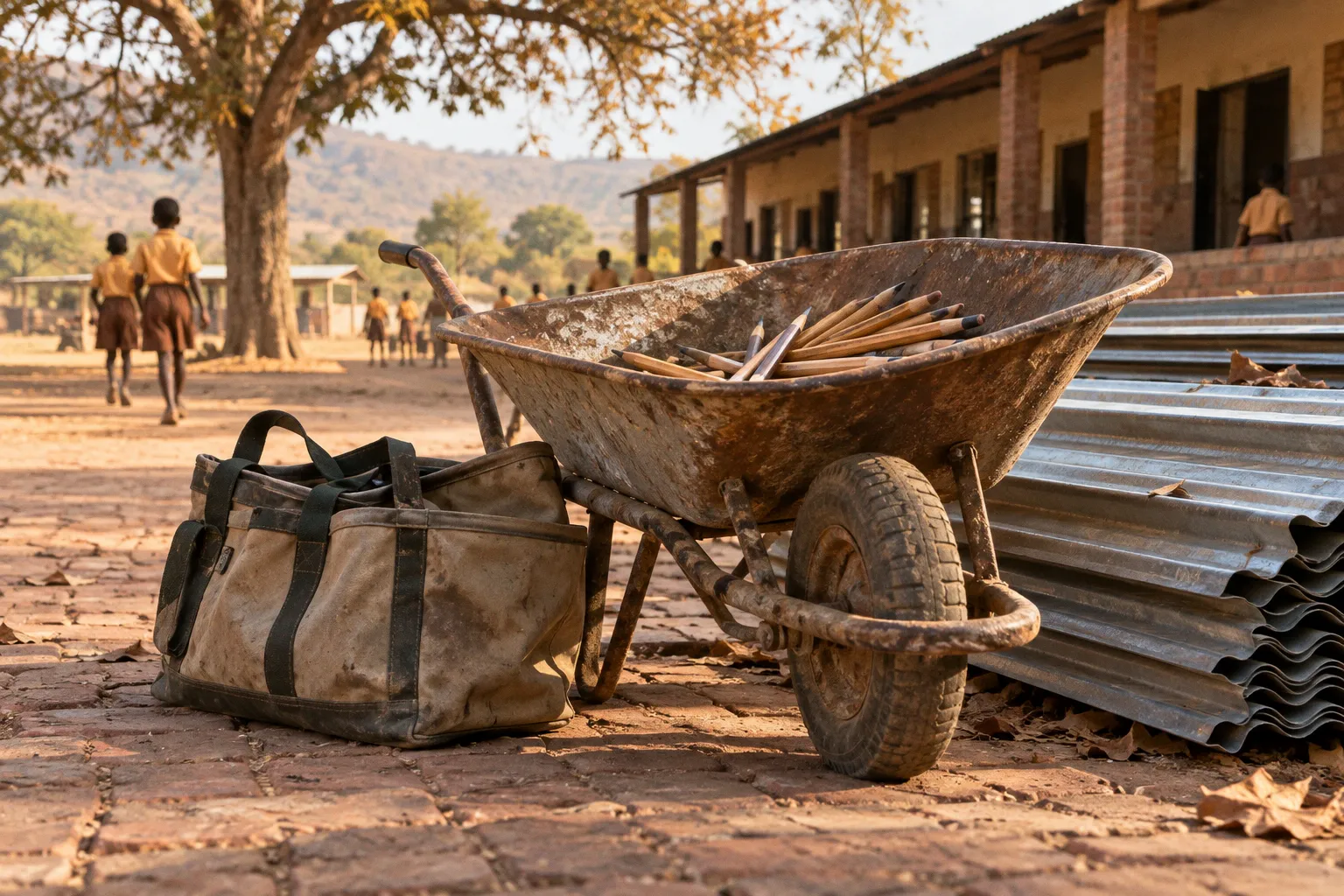
According to the Ghana News Agency, School for Life — an education-focused NGO operating across Northern Ghana — has called for stronger state and partner investment in rural school infrastructure, flagging severe shortfalls in classrooms, furniture, and water, sanitation, and hygiene facilities.
The assessment came from Zulyaden Amadu, Programmes Manager at School for Life, speaking at a media engagement in Tamale this week. His inventory of what's failing in the rural school system, and the practical levers he's pointing to, maps closely onto what volunteer-led rebuild projects keep running into.
What's broken in the field
Amadu's shortlist reads like a field engineer's punch list. Classrooms are short. Furniture is missing. Learning materials are thin. WASH facilities — particularly separate facilities for boys and girls — are inadequate, which the organization flagged as a direct hit on attendance, safety, and dignity.
Beyond the physical plant, the deployment chain is jammed. Teacher shortages and posting gaps are pushing pupil-teacher ratios upward in some districts. Teachers who do land in remote posts struggle to find accommodation within reach of the school, which eats into contact hours. Out-of-school children, per School for Life's field engagements, remain clustered in remote and rural communities where poverty, infrastructure gaps, and gender-related barriers stack up.
The levers being pulled
School for Life is pointing to three things they say actually move the needle on enrolment and retention: community ownership of school governance, mother-tongue instruction at the foundational level, and local volunteer facilitators who bridge gaps where formal teacher deployment falls short. Amadu also called on the Ghana Education Service to strengthen deployment and consider reverting to decentralised teacher postings, so districts can respond to local shortfalls rather than wait on a central queue.
For disability access, the NGO is asking for stronger social protection linkage so children with disabilities can get to and stay in school — physical access to classrooms remains a barrier in some sites.
What this means for ride-and-rebuild crews
When we scope a rural school rebuild, this readout is a reminder to inspect before we haul materials out. Count the latrines — gender-segregated or not. Check whether teachers have somewhere to anchor within reach of the school. Ask whether the community has a governance seat at the table. Press the education authority on what happens after the ribbon is cut: teacher posting, retention funding, and WASH upkeep decide whether the building is a school or just a roof.
Watch the decentralisation lever. School for Life's call to revert to decentralised teacher postings is a structural ask, not a funding ask — the kind of policy gear volunteer networks should track. How a state posts teachers reshapes which sites are actually teachable, and which ones sit empty after the crew pulls out.
Across the wider rural-education wire this week, related dispatches include a Ball State grant to strengthen the rural health workforce, an education foundation marking community support for Lexington schools, and an Australian feature on intergenerational care campuses redesigning how communities back both kids and elders. Different geographies, same core test: whether the surrounding infrastructure can carry what gets built.