Reusable containers vs compostables for school waste
When a school board approves a switch to “compostable” lunch trays, the decision often carries an implicit promise: the new product will break down, return to the soil, and complete a closed-loop cycle within the academic year.
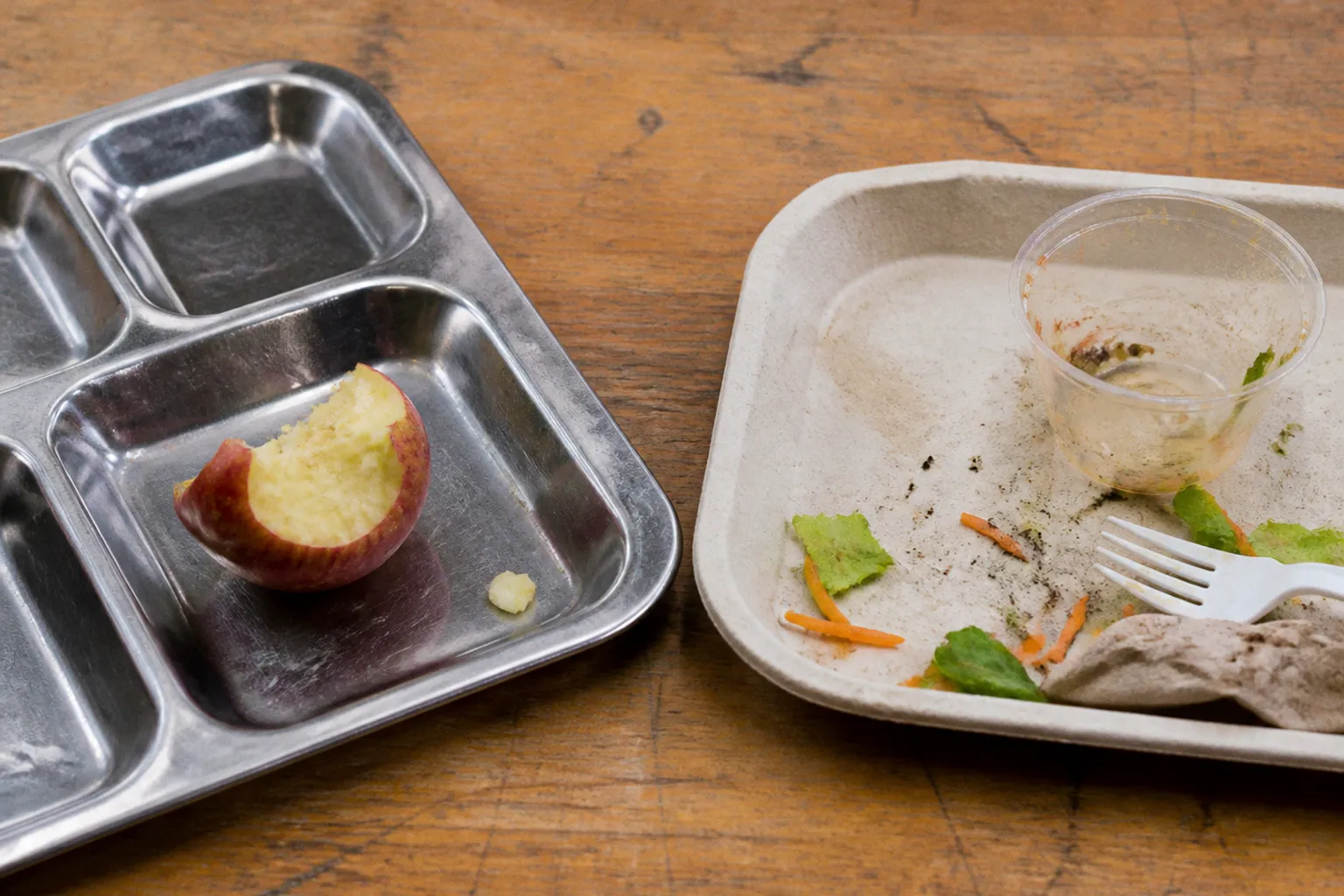
Reusable vs Compostable: The Numbers Behind School Cafeteria Waste
The reality tracked by waste audits is far less forgiving.
Compare car rental deals in United Kingdom
See available offersPartner link — DiscoverCars comparisonAccording to the Zero Waste International Alliance, roughly 90% of compostable materials never reach the industrial composting systems required to process them. They are instead sent through landfill or other conventional waste pathways. Plates, cups, and cutlery stamped with ASTM D6400, EN13432, or BPI certifications may look different from plastic serviceware, but certification does not create a collection system, a sorting station, or a composting contract.
That single figure reframes the procurement conversation. The question is not simply which disposable is greener. It is whether a school should continue investing in disposables when a durable tray can be washed and used again, meal after meal, for years.
The comparison commonly described as reusable containers vs compostable packaging in school waste is therefore a comparison between two operating systems. One depends on purchasing, disposal, hauling, and outside processing. The other depends on dishwashing, storage, maintenance, and the useful life of physical assets. Both have costs and environmental impacts. The difference is where those impacts occur, who controls them, and whether the system improves with every additional use.
The Compostable Label Is Not a Guarantee
A material marked compostable is engineered to biodegrade under controlled conditions: specific temperatures, moisture levels, oxygen availability, and microbial activity. Those conditions are common in an industrial composting facility and uncommon in a standard municipal waste stream.
Research from the Oregon Department of Environmental Quality confirms that products carrying biodegradable or compostable claims require highly specific industrial equipment and processing conditions to break down as intended. That conclusion matters because a school cafeteria does not control what happens after a tray is placed in a bin. If the local hauler does not collect compostable serviceware, or if the receiving facility does not accept it, the certification has no practical route to deliver its promised end-of-life outcome.
Landfilling is the clearest example. A compostable product placed in a landfill does not receive the managed conditions assumed by the product standard. It remains part of a conventional disposal stream, regardless of the label printed on the tray. The Oregon DEQ research supports this limitation for landfilled compostables. It should not be stretched into a blanket claim about every form of thermal treatment: the climate consequences of incineration depend on the facility, the energy system, the material mix, and the accounting method used.
A compostable label describes what a product can do under the right conditions. It does not prove that those conditions exist after lunch.
This is the operating environment that determines whether a school’s “green” procurement contract produces the environmental performance promised on paper. The bottleneck is not only the material. It is the infrastructure surrounding the material.
What Industrial Composting Actually Requires
Industrial facilities that process certified compostable products operate with controlled heat, moisture, aeration, and microbial activity. The process takes weeks rather than the months or years associated with some forms of backyard decomposition, but it still depends on conditions that municipal dumpsters and mixed cafeteria bins do not provide.
A school district that wants compostables to move through the intended pathway needs more than a branded tray. It needs a functioning chain from the cafeteria counter to the composting facility:
- Access to a certified industrial composting facility within a viable haul radius.
- A hauler contract that accepts food-soiled compostables and clearly defines contamination limits.
- Front-of-house sorting infrastructure, including correctly placed bins, visible signs, and staff supervision.
- A back-of-house procedure for checking loads and removing plastic, utensils, packaging, and other non-compostable items.
- Reliable collection frequency, so food waste and serviceware do not remain in storage areas long enough to create odor, pest, or sanitation problems.
- A communication plan that teaches students what belongs in each bin and makes the correct choice easy during a short lunch period.
The sorting problem is particularly difficult in schools. A cafeteria may serve hundreds of meals within a narrow window. Students are moving quickly, volunteers may rotate, and the person responsible for emptying a bin may not be the person who negotiated the waste contract. A single container can hold food scraps, a compostable tray, a plastic wrapper, a milk carton, and a half-full drink. If the receiving facility considers the load contaminated, the material may be rejected and sent through a conventional disposal route.
The result is a system in which the school pays for a specialized product but cannot reliably access the specialized processing it requires. The unit cost is higher, the sorting labor is additional, and the environmental result may be no better than the result from an ordinary disposable.
That does not make compostables useless in every setting. A district located close to a facility that accepts certified food-service products, with a trained staff and a dedicated collection contract, may be able to make the system work. But that is an infrastructure decision, not a packaging decision.
Life Cycle Realities: What the Models Actually Show
The most useful comparative work on reusable lunch trays vs compostable serviceware does not focus on the tray in isolation. Life cycle assessments examine the full system: raw material extraction, manufacturing, transport, use, washing, waste collection, processing, and end of life.
A 2017 literature review conducted by StopWaste consolidated comparative models and found that reusable systems, when paired with efficient commercial dishwashing infrastructure, can produce lower greenhouse-gas emissions and less solid waste than single-use compostables. The result is not automatic. It depends on how often the item is reused, how efficiently it is washed, how far products travel, what powers the equipment, and what happens after disposal.
The basic mechanism is straightforward. A reusable tray carries its manufacturing footprint across many meal cycles. A disposable tray repeats its manufacturing and purchasing footprint every time a student eats lunch. The more consistently a durable item is used, washed, and returned to service, the more the initial production impact is distributed across those uses.
A school cafeteria is well suited to this model because meal service is repetitive. The same types of trays, bowls, cups, and utensils move through a predictable loop each day. That predictability makes it easier to measure losses, identify damaged items, set washing loads, and schedule replacements. A disposable system may appear operationally simple, but it also creates a new material demand every lunch period.
Comparative Impact Snapshot
| Parameter | Reusable serviceware | Compostable disposable |
|---|---|---|
| Manufacturing impact | Concentrated in the production of durable items and replacement stock | Repeated with every new tray, cup, or utensil purchased |
| Use phase | Requires collection, washing, drying, inspection, and storage | Requires distribution and disposal after one use |
| Waste volume | Low during normal service; losses and damaged items still need management | Continuous waste stream, with composting dependent on local infrastructure |
| Water and energy | Concentrated in dishwashing; affected by equipment efficiency and load size | Used mainly in manufacturing, with additional impacts from transport and disposal |
| Cost trajectory | Initial investment followed by lower marginal cost when assets are used frequently | Recurring purchasing, hauling, and possible contamination costs |
| End-of-life pathway | Durable goods can be repaired, reused elsewhere, resold, or recycled | Depends on whether a suitable industrial composting program actually accepts the product |
| Main operational risk | Insufficient dishwashing capacity, storage, or item recovery | Contamination, unavailable processing, and reliance on outside contractors |
The table is not a universal verdict. Districts with on-site or nearby composting, short collection routes, and reliable sorting may see a narrower gap between the options. Districts without those conditions have to account for the full disposal pathway rather than stopping the analysis at the purchasing dock.
The same caution applies to reusables. A reusable tray is not environmentally neutral. It must be manufactured, transported, washed, dried, stored, and eventually replaced. A poorly loaded dishwasher, repeated half-empty wash cycles, or a high loss rate can weaken the case. The correct comparison is not “reusable equals good” and “compostable equals bad.” It is whether each system is being operated in the conditions that make its design work.
Where the Break-Even Point Comes From
The environmental break-even point is the stage at which the impact of manufacturing and washing a reusable item becomes lower than the accumulated impact of replacing it with single-use products. The point varies by material, weight, washing method, energy mix, water use, transport, and number of cycles.
High-volume K-12 cafeterias have one structural advantage: the serviceware can be used repeatedly in the same building, often within a predictable daily routine. A tray does not need to travel through a consumer supply chain after every use. It moves from the dining area to the dishroom and back again.
That advantage disappears if the district buys durable ware but does not build a recovery system. Trays left in classrooms, discarded in outdoor bins, or taken home by students become replacement costs. The program therefore needs simple collection points, visible ownership, and enough spare inventory to keep service running without over-purchasing.
Financial Efficiency and the Long-Term ROI of Reusables
Cost arguments often decide cafeteria procurement before environmental ones are seriously considered. That is not necessarily a problem. In many schools, the financial case is what makes a waste-reduction project durable enough to survive changes in leadership, grants, and public attention.
The clearest published case study in the draft evidence comes from a Minnesota Pollution Control Agency grant project conducted at two Minnetonka middle schools. The project tracked per-student foodware costs during the transition from disposable to reusable serviceware.
The first-year results showed combined savings of $3,000 across the two campuses. Annual per-student foodware costs fell from $6.89 to $4.83. Those figures included the operational cost of dishwashing—labor, detergent, energy, and water—against the disposable purchasing costs that the schools no longer carried in the same way.
The result is significant, but it needs to be described accurately. The reported data establish first-year savings in foodware costs. They do not, by themselves, establish that the capital outlay for trays, racks, or dishwasher upgrades was fully recovered within the first academic year.
That distinction matters. Operating savings and capital payback are related, but they are not the same calculation. A school may spend less on foodware during the first year while still carrying an equipment investment that will be recovered over several years. The payback period depends on the purchase price of infrastructure, financing, grants, equipment life, maintenance, and the number of meals served.
Minnetonka’s first-year figures show that reusable foodware can reduce operating costs, but the infrastructure investment still needs its own payback calculation.
Three points about the Minnetonka numbers matter for any district reading them:
1. The savings appeared in the first year of operation. The case challenges the assumption that washing always costs more than buying disposables, especially when the comparison includes labor, detergent, water, and energy on one side and recurring purchasing on the other.
2. The result came from sites with enough meal volume to use the equipment regularly. A dishwasher, rack system, and dishroom labor are easier to justify when they serve a predictable number of meals each day.
3. The longer-term advantage remains a projection unless later-year data are available. Durable assets may continue to reduce per-meal costs as they are used across more meal cycles, but that does not mean every district will see the same return or the same payback period.
A credible financial model should separate at least four categories:
- Recurring foodware costs: disposable trays, cups, cutlery, lids, and replacement stock.
- Operating costs: dishroom labor, water, detergent, electricity or gas, and routine maintenance.
- Capital costs: dishwashers, racks, sinks, storage, ventilation, electrical work, and plumbing.
- Loss and replacement costs: missing trays, damaged items, breakage, and additional inventory required during peak service.
For elementary schools or small private institutions, the cost calculus shifts. Dishwasher infrastructure represents a fixed cost that scales poorly below a certain meal-volume threshold. A small campus may need a shared kitchen, district purchasing, contracted dishwashing, or external capital support to make the transition workable. A grant or donation can reduce the initial barrier, but it should not be mistaken for the operating model itself.
The strongest business case is usually found where three conditions overlap: high daily meal volume, regular use of the same serviceware, and existing or upgradeable dishwashing capacity. Where those conditions are absent, a district should not force a reusable program through optimistic assumptions. It should calculate the full cost of building the missing infrastructure.
Health and Operational Benefits of Transitioning to Dishware
Waste is only one part of cafeteria performance. Food temperature, meal presentation, staff workload, and the materials that come into contact with food all influence whether students eat what is served or discard it.
A 2025 qualitative study by researchers from the Nutrition Policy Institute and UC Berkeley School of Public Health tracked a California school district’s transition to reusable serviceware. The findings extended beyond waste reduction. Cafeteria staff reported improved food-temperature maintenance, with reusable serviceware retaining heat longer than the compostable trays used previously. The study also reported reduced student exposure to chemicals detected in compostable trays during testing.
Those findings should be handled with care. “Compostable” is a broad category, and chemical composition varies by resin, coating, additive, and manufacturer. A result associated with one product should not automatically be applied to every compostable tray. The practical lesson is that schools should request product-specific food-contact documentation rather than treating an environmental label as a complete health assessment.
The operational benefit is easier to understand. A tray that supports better temperature retention may help preserve meal quality during the time between serving and eating. Better meal quality can affect leftovers and plate waste, although the size of that effect depends on menu design, service timing, student preferences, and portioning. Reusables do not solve those variables, but they remove one potential source of weakness from the service line.
What Changes in the Kitchen
Transitioning to dishware changes the work rather than eliminating it. The disposable system concentrates labor in ordering, stocking, unpacking, and waste handling. The reusable system concentrates labor in collection, scraping, washing, inspection, and storage.
A well-designed dishroom needs:
- Adequate rack capacity so clean items are not stacked while still damp or returned to service before inspection.
- A washing schedule matched to meal periods, particularly where breakfast, lunch, and after-school programs share equipment.
- Separate dirty and clean flows to prevent cross-contamination and reduce unnecessary handling.
- Storage close to the point of use, limiting the distance staff must move heavy stacks of trays.
- A replacement protocol for cracked, warped, chipped, or otherwise damaged items.
- Training for cafeteria staff and students, including what should be scraped, where items should be returned, and how missing serviceware is tracked.
The transition can initially feel more complicated because the work becomes visible. That visibility is useful. A school can measure how many trays it owns, how many are returned, how many are lost, and how many wash cycles are required. In a disposable system, the material stream is easier to ignore because the problem leaves the building quickly.
Reusables Versus Compostables in Daily Service
- Reusables: Higher upfront capital requirements; recurring dishroom labor and utility costs; lower marginal cost per meal when the equipment is used efficiently; need for storage racks, recovery procedures, and trained staff.
- Compostables: Lower equipment requirements at the point of service; recurring per-meal purchasing costs; need for dedicated bins, trained sorting, an accepting hauler, and access to an industrial composting facility.
- Reusables: Performance depends on return rates, wash efficiency, asset durability, and maintenance.
- Compostables: Performance depends on product specifications, contamination control, collection logistics, and the receiving facility’s acceptance rules.
The right choice depends on the bottleneck each district faces. A school with access to a functioning industrial composting system and no feasible dishwashing space may use compostables as a transitional measure. A school with an existing commercial kitchen, reliable meal volume, and limited waste-processing options may be better positioned to move directly to reusables.
For rural campuses, the decision can be even more dependent on local logistics. Long hauling distances, limited municipal services, and irregular access to specialized facilities make an external composting pathway harder to guarantee. That does not remove the need for washing capacity or sanitation standards, but it can make locally controlled infrastructure more valuable than a product whose environmental performance depends on a contractor several hours away.
Scaling Zero-Waste Strategies Beyond the Cafeteria
The cafeteria is the most visible waste stream on a school campus, but it is rarely the only one that deserves attention. A reusable tray program can reduce food-service waste without delivering zero waste across the campus. That broader goal requires a set of connected decisions about purchasing, drinking water, events, classrooms, and end-of-life management.
The average college student in the US generates 640 pounds of trash per year, contributing to roughly 13.4 billion pounds of waste annually across US university campuses. K-12 figures are lower per student but follow similar patterns: food service, disposable drinks, classroom materials, events, and maintenance all contribute to the campus stream.
Three scaling moves extend the impact of a reusable cafeteria program.
1. Bring Staff Rooms Into the Same System
Staff rooms and teacher lounges often operate independently of student cafeteria logistics. Disposable cups, plates, stirrers, and individually packaged supplies may be purchased by departments or parent groups and bypass the main kitchen entirely.
Extending the same dishware standards to these spaces closes a gap that is easy to miss in a cafeteria-only audit. It also makes the school’s policy more coherent. Students are less likely to treat reusables as a special environmental exercise if adults use disposable products throughout the building.
The change does not have to be elaborate. Shared dishware, a clearly marked return location, and a scheduled collection route can be enough to bring staff spaces into the wash loop.
2. Pair Dishware With Drinking-Water Infrastructure
Water-bottle filling stations and standardized reusable bottles can displace a separate PET bottle waste stream. The impact depends on access, maintenance, placement, and whether students can use the stations during the school day without creating long queues.
Filling stations work best when they are treated as essential service infrastructure rather than a one-time installation. Filters need replacement, units need cleaning, and students need bottles that are durable enough to survive daily use. The behavior change is more reliable when the refill point is visible, convenient, and available near the places where disposable drinks are normally purchased.
3. Create Repair and Resale Pathways for Durable Goods
Reusable serviceware has value after it leaves the main cafeteria. Trays and cups that are no longer suitable for high-volume school service may still work in staff rooms, outdoor events, partner organizations, or community kitchens, depending on their condition and food-safety requirements.
Schools that track asset condition can rotate goods into secondary use before disposal. A repair-and-resell pipeline may also create a modest revenue stream for future replacement, although the primary benefit is extending the useful life of the item. The key is to distinguish genuinely reusable inventory from damaged products that should not remain in circulation.
Implementation Roadmap for a District Transition
A district evaluating reusable containers vs compostable packaging for school waste should begin with its own operating conditions rather than with a product brochure.
1. Audit current waste streams by weight and category over a representative period. Record food waste, serviceware, packaging, recycling contamination, and items discarded in classrooms or outdoor areas.
2. Map local composting infrastructure. Confirm which facilities accept certified food-service products, what contamination limits apply, how often collections occur, and where rejected loads go.
3. Measure meal volume and dishroom capacity. Include breakfast, lunch, summer programs, events, and any second-shift use of the kitchen.
4. Build a full cost model. Separate capital expenses from recurring operating costs and include labor, utilities, maintenance, replacement stock, and hauling.
5. Choose serviceware for the menu. A tray system for hot meals may require different shapes, compartments, or materials from a program serving salads, sandwiches, or meals taken to classrooms.
6. Design the return loop before purchasing. Decide where students place used items, who moves them, how they are scraped, and how missing stock is identified.
7. Phase the transition where necessary. A grade level, meal period, or cafeteria line can provide a controlled starting point without treating a pilot as proof that every campus will perform identically.
8. Track results against a baseline. Monitor per-student cost, items purchased, waste tonnage, loss rates, wash cycles, labor time, and meal-temperature complaints.
The baseline is crucial. Without it, a district may celebrate lower disposable purchasing while overlooking higher labor, underused equipment, or rising replacement costs. Conversely, it may reject reusables after a difficult launch even though the initial problems came from poor storage or an undersized dishroom rather than from the concept itself.
The Position: Stop Buying Disposables Twice
The procurement choice between reusables and compostables is, at its core, a question about which infrastructure investments a school is willing to make.
Compostables place the environmental work outside the school: at the composting facility, with the hauler, in the sorting system, and in the contracts that connect those pieces. When that network is missing, the school has bought a specialized disposable without securing the conditions needed for its intended end of life.
Reusables place more of the work inside the school. The district must pay for dishwashing capacity, racks, storage, labor, maintenance, and replacement stock. In return, it controls the serviceware loop and can spread the production impact of each item across many meals. The financial and life cycle cases become stronger when meal volume is high, equipment is used efficiently, and losses are kept under control.
The Minnetonka project offers a useful financial signal: reusable foodware can produce first-year operating savings even after dishwashing costs are included. It does not eliminate the need to calculate capital payback. The Oregon DEQ research offers a corresponding environmental warning: compostable products do not automatically receive composting conditions simply because they are certified for them. Neither finding should be inflated into a universal promise. Both should be used to make procurement more honest.
For volunteer-driven networks working to support rural classrooms across India, where specialized composting facilities may be limited, haul distances can be long, and capital budgets are tight, the question is especially practical. A durable steel tray or plate may require an upfront purchase and a functioning wash routine, but its useful life remains under the school’s control. A compostable alternative may carry a higher price while depending on a disposal pathway that the school cannot verify.
The compostable label should therefore be treated as a question, not an answer. Where will the product go? Who accepts it? What happens when the load is contaminated? What does the complete cost look like after labor, hauling, and rejected material are included?
The honest comparison is not between two categories of disposable. It is between a controlled, reusable service loop and a recurring procurement contract whose environmental performance depends on systems the school may not operate. For many campuses, reducing school lunch waste begins not with finding a better throwaway, but with deciding whether the cafeteria needs a throwaway at all.