Indigenous Language Projects: A Pre-Launch Checklist
Across the adivasi belts where our biker outreach runs, the demographic pattern repeats itself hamlet after hamlet: the eldest generation carries full fluency in its mother tongue, while the youngest…
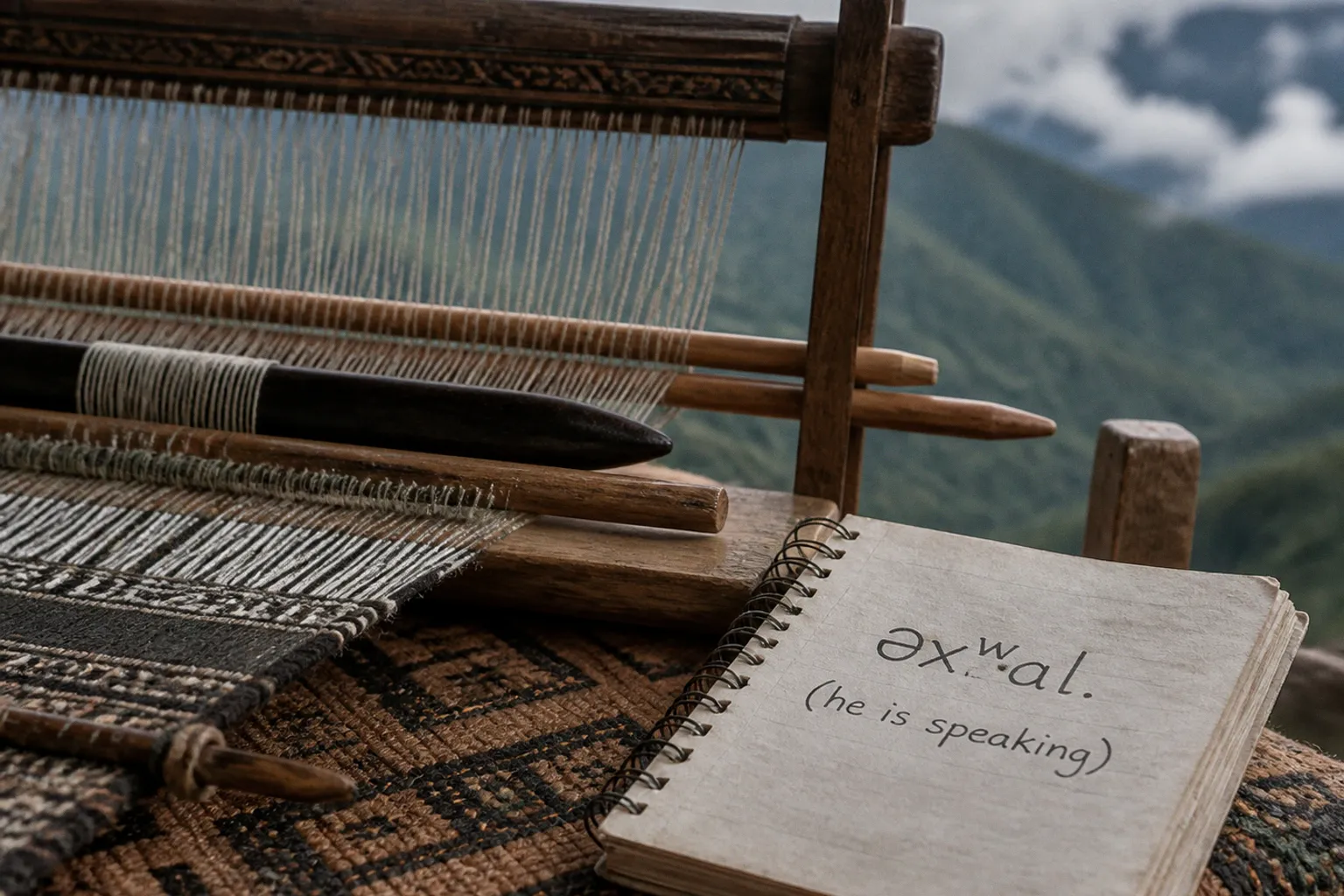
Across the adivasi belts where our biker outreach runs, the demographic pattern repeats itself hamlet after hamlet: the eldest generation carries full fluency in its mother tongue, while the youngest listens politely to the songs without being able to shape a single word in return. The window of transmission is not an abstraction. Of the roughly 6,700 languages spoken on the planet, United Nations data indicates that around 40% are at risk of disappearing, and Indigenous languages carry a disproportionate share of that burden — spoken by communities that make up roughly 6% of the global population yet carry more than 4,000 distinct languages into the present moment.
When a documentation project is being imagined, the temptation is to begin with equipment: microphones, laptops, metadata schemas, perhaps a custom app. The actual beginning sits somewhere else. Before a single recording is made, there is a sequence of conversations, agreements, and small institutional decisions that determine whether the project will belong to the community or to the volunteers who arrived with good intentions. What follows is the route map our liaison work has made us rely on — drawn from the standards Indigenous communities themselves have insisted upon, anchored in Free, Prior, and Informed Consent, and stretched toward the long horizon of the UNESCO International Decade of Indigenous Languages.
Securing Free, Prior, and Informed Consent Before Anything Else
Free, Prior, and Informed Consent — FPIC — is the doorway to any language project that hopes to last beyond its first field season. Rooted in the United Nations Declaration on the Rights of Indigenous Peoples, FPIC is not a one-off form to be signed at the start of a workshop. It is an ongoing relationship in which the community, through its own chosen representatives, retains the right to give, modify, or withdraw consent at every meaningful stage of the work.
Treating FPIC as paperwork is one of the most common — and most damaging — mistakes a well-meaning outsider crew can make. It converts a relationship into a transaction and leaves the community with no meaningful lever once the bikers have ridden home.
In practice, a credible FPIC process begins with identifying who actually speaks for the community in matters of cultural knowledge. That is rarely a single chief or sarpanch acting alone, and almost never an individual elder approached in isolation at the edge of a field. It is more likely to be a council of elders, a language committee, or a recognised cultural authority that the community itself names — sometimes through the gram sabha, sometimes through a body created specifically for the project.
The conversation has to happen in the language the community understands best, often with translation into the working language of the project. It also has to happen before any proposal is finalised — not after the funding has been cleared and the team is already on the road. A community cannot make an informed decision about a project whose scope, audience, funding conditions, and technical plans are still being withheld.
Three elements matter more than the others.
Free means consent given without coercion, incentive pressure, or the unspoken leverage that outside funding sometimes creates. A modest honorarium for elders’ time is appropriate; tying community acceptance to a future school renovation, water connection, or solar installation is not. The distinction matters because a material benefit can easily become pressure when the project team controls access to resources the community needs.
Prior means consent sought before the project begins, with enough lead time for the community to deliberate internally. That may require several meetings, consultation with different families or settlements, or discussion across more than one season. A meeting held the evening before recording starts may be convenient for the visitors, but it is not necessarily meaningful prior consent.
Informed means the community has been told, in plain terms, what will be recorded, how it will be stored, who will access it, what rights community members retain, and what the project will and will not do with the material. The explanation should include future uses that may seem remote at the planning stage: educational resources, academic research, public exhibitions, online databases, machine-learning systems, or requests from government departments and publishers.
Consent is not a signature. It is the first conversation in a relationship that will outlast the project.
A useful internal test is simple: if the community were to withdraw consent six months into the work, would the team know exactly what to do? Would it know how to return recordings, transfer metadata, close access permissions, and leave the field without treating withdrawal as a breach of contract? If the answer is unclear, the FPIC process is not yet complete.
The same principle applies to individual speakers. Community-level approval does not automatically erase a person’s right to refuse a particular interview, song, photograph, or recording. Every session should begin with a clear explanation of what is being requested, and speakers should be able to stop the session without having to justify the decision.
Establishing Community-Led Governance and Data Sovereignty
Once consent is in place, the next decision is governance: who owns the recordings, who controls access, and who decides how the material can be used in the future. The default assumption baked into many academic and NGO workflows — that the field team owns the data until publication — is incompatible with the principle of Indigenous data sovereignty.
The community that produced the language has the strongest claim to stewardship over its documentation. Any responsible project reflects that claim in its governance design from day one, rather than trying to retrofit community control after the archive has already been deposited elsewhere.
Concretely, this means drafting a data agreement before the first microphone is unpacked. The agreement names a community body — sometimes a newly formed language council, sometimes an existing tribal welfare committee or a federation of hamlets — as the custodian of the archive. It spells out what kinds of recordings will be made:
- everyday speech and conversations;
- ceremonial speech and songs;
- oral histories and personal narratives;
- children’s games and teaching materials;
- work chants, instructions, and practical vocabulary;
- photographs, video, transcriptions, and translations connected to the recordings.
The agreement should distinguish open-access material from restricted categories. These may include sacred narratives, gender-specific knowledge, funerary speech, healing chants, and any repertoire that elders identify as bound by season, kinship, place, or rite. Restriction is not a technical inconvenience to be solved by a clever permissions system. It is part of the cultural meaning of the material.
The agreement also sets out who can request access, on what terms, and how disputes will be handled if a researcher, publishing house, or state education department later asks to use the material. A request from an institution should not automatically outrank the community’s own rules simply because the institution has greater legal or technical capacity.
Finally, the governance plan needs an end-of-project provision. At the end of the grant cycle or volunteer campaign, what happens to the archive, the equipment, the metadata, and the trained local hands? The project should not quietly dissolve while its most valuable assets remain on a former coordinator’s laptop.
A simple governance matrix can make those decisions visible before fieldwork begins:
| Question | Community-led answer | Outsider-led default to avoid |
|---|---|---|
| Who owns the raw recordings? | The named language council or community body | The university or sponsoring NGO |
| Who approves new users? | The council, after internal discussion | The principal investigator |
| Who decides which material is restricted? | Elders and other recognised cultural authorities | Project staff alone |
| Where is the master copy held? | In a location the community controls | Only on an external cloud server |
| Who can change the access rules? | The body named in the community agreement | Whoever still has the password |
| What happens at project end? | Materials and responsibilities transfer to the community archive | Data is retained indefinitely by outsiders |
The goal is not bureaucracy. The goal is to ensure that, years after the bikers have ridden home, the community still holds the levers and can invite — or refuse — the next visitor on its own terms.
Governance should also account for the people doing the work locally. If community members are trained to record, transcribe, translate, catalogue, or teach from the archive, they should not be treated merely as assistants to an outside researcher. Their roles, compensation, training, and authority over the material should be explicit. A project that leaves behind files but no local capacity has preserved a collection, not necessarily strengthened language continuity.
Technical Standards for Digital Archiving and Documentation
The technical decisions come third, not first — and that ordering is itself part of the checklist. Once governance is settled, the team can choose formats, storage, and metadata with confidence that the choices serve the community rather than the project.
The Digital Endangered Languages and Musics Archives Network publishes a Minimal Checklist for the Preservation of Digital Language Documentation Materials. It remains a practical baseline for grassroots projects that do not have a digital humanities department behind them. The point is not to reproduce a university archive in a village office. It is to avoid preventable loss and to create files that can still be opened, understood, and used after the original project team has moved on.
The baseline covers a small number of decisions that disproportionately determine whether material survives the next decade.
Files should be stored in open, non-proprietary formats where possible: WAV or FLAC for audio, uncompressed TIFF for still images, and plain UTF-8 text for transcriptions and metadata. The precise format matters less than the principle of avoiding dependence on a single piece of commercial software or a platform that may disappear, change its terms, or become inaccessible.
Metadata should be captured at the moment of recording. At minimum, the project should be able to identify who is speaking, what language variety is being used, where and when the session took place, what was recorded, what equipment was used, and what consent and access conditions apply. If the community uses its own names for places, clans, genres, ceremonies, or speech varieties, those terms should be retained rather than replaced by a generic outside taxonomy.
Session notes are not optional decoration. Sketches of equipment placement, room layouts, environmental conditions, and short biographical notes about speakers can travel with the audio. So can information about whether the recording was made during a ceremony, at work, in a classroom, or in an ordinary household conversation. Context is part of the documentation. Stripping it out can make technically clean files culturally unusable.
The archive should outlast the project. Format choices are how you promise the community that it will.
Two practical cautions are worth flagging.
First, do not over-invest in cutting-edge tools at the expense of basic capture. A reliable field recorder, a sturdy lavalier microphone, a windscreen, a backup drive, and disciplined file hygiene will do more for the next generation than a custom-built application that no one maintains after the grant closes. Technology should reduce dependence, not create another layer of it.
Second, plan for redundancy from the outset. Maintain at least two copies of the master archive in geographically separate locations, with one copy held by the community itself on infrastructure it controls. That might be a local hard drive kept by the language council alongside an institutional backup, provided the community has the training and authority to manage it. Cloud-only storage in a foreign jurisdiction is not stewardship; it is dependency dressed up as modernity.
A working archive also needs a naming and versioning system that ordinary users can understand. File names should make it possible to identify the session without opening every file. Transcriptions, translations, consent records, photographs, and audio should remain connected through stable identifiers. When a recording is corrected, restricted, or replaced, the archive should preserve a clear record of what changed and who authorised the change.
Access controls need to be tested before sensitive material is uploaded. A folder marked restricted is not enough if every project volunteer still has administrator access. The team should know who can view, download, copy, edit, or share each category of material, and those permissions should reflect the community agreement rather than the convenience of the software.
Ethical Recording and Elicitation Strategies
The moment recording actually begins, the project moves from agreements into practice, and practice is where many ethical lapses happen. The Canadian Commission for UNESCO and the Supporting Indigenous Language Revitalization working group have published practical beginner guidance, Safeguarding Your Language Through Documentation, addressing equipment setup, elicitation, and the everyday ethics of sitting in front of a fluent speaker with a microphone in hand. For volunteer crews arriving from outside, it offers an accessible primer on the field.
Elicitation is the term for how a fieldworker draws out language. Done carelessly, it produces material that is technically well recorded but culturally thin: speakers producing word lists on command, decontextualised phrases without the relationships that hold them together, and translations shaped more by the outsider’s categories than by local meaning.
Done well, elicitation produces documentation a community can actually use — narratives, conversations, instructional exchanges, songs, laments, jokes, and the small talk between elders that often carries grammar no one thinks to teach. The aim is not to force a language into a pre-existing questionnaire. It is to create conditions in which speakers can decide what is worth recording and how it should be explained.
A few rules of thumb belong on the wall of any field workstation:
- Let the speaker lead. A prompt that invites a story will often return more usable language than a prompt that asks for a word list. Where word lists are necessary, build them collaboratively with the elder so that the categories reflect local meaning rather than outside linguistic assumptions.
- Record naturally occurring speech whenever possible. Everyday conversation, work songs, the chatter at a handpump, and the back-and-forth while grinding grain carry intonation, rhythm, and pragmatics that elicited speech rarely does. They are also the material the community may most want for its own teaching and cultural work.
- Respect protocols around what is recordable. Some narratives can only be told at certain times of year, by certain people, in certain places, and sometimes not in the presence of outsiders. The team’s job is to honour those conditions, not to negotiate around them.
- Compensate speakers fairly and visibly. Elders’ knowledge is labour. Honoraria should reflect that labour and should be agreed in advance, not improvised after the session. Payment should not be presented as purchasing ownership of the knowledge.
- Bring multiple speakers into the room when appropriate. Dialogue between two elders can capture the dynamics of real talk — overlaps, repairs, laughter, and disagreement — that a single-speaker interview never does. It should only happen when everyone involved understands and accepts the recording.
- Build in pauses and review. Speakers should have time to listen back, correct a transcription, identify a sensitive passage, or request that a section be restricted. Review is part of the documentation process, not an administrative delay.
- Do not confuse fluency with consent. A person may be highly knowledgeable in the language and still decline to have that knowledge recorded, circulated, or used in teaching materials.
Equipment should be tested in the actual recording environment before any irreplaceable session begins. Humidity, monsoon wind, generator noise, the acoustics of a thatched-roof community hall, and the persistent hum of an inverter all behave differently from a soundproofed studio. The team should know what it is working with before an elder begins to speak.
The same care applies to photographs and video. A camera can expose people, places, objects, or ceremonies in ways an audio recorder does not. Visual consent should therefore be treated separately when necessary. A speaker who agrees to an audio interview may not want their face, home, ritual objects, or family members shown publicly.
Field notes should record not only what went well, but also what the team was asked not to do. A refusal is valuable information for future volunteers. It prevents the next team from returning with the same request and treating an earlier boundary as an oversight.
Aligning With the UNESCO International Decade of Indigenous Languages
A pre-launch checklist gains its full meaning when set against the larger horizon of the UNESCO International Decade of Indigenous Languages, which runs from 2022 through 2032. The decade framework organises its work around eight approaches — Facilitating, Multiplying, Normalising, Educating, Reclaiming, Imagining, Defending, and Protecting — and a serious project should be able to say, honestly, which of these it serves and how.
Most grassroots documentation projects will see themselves most clearly in Protecting, by preserving material that might otherwise be lost; Facilitating, by making it easier for communities to use their languages in everyday life; and Reclaiming, by supporting intergenerational transmission in families, peer groups, and community schools.
Multiplying describes the work of expanding the number of speakers and contexts: language nests, master-apprentice pairs, and mother-tongue early-grade reading. Normalising is about visibility — signage, public events, media, and the quiet politics of hearing a language in a marketplace. Educating is the longer arc of putting the language into formal learning, from anganwadi to high school.
Imagining and Defending — creating new expressive forms in the language and resisting policies that suppress it — usually belong to community-led initiatives rather than external projects. Outside teams can support them by keeping their tools, archives, and training open and unowned, but they should be careful not to claim leadership over work that is fundamentally political and cultural.
The framework is useful because it forces a project to look beyond the archive itself. A collection of recordings may protect evidence of a language without making the language easier to speak. A dictionary may support education without changing whether young people hear the language in public life. A digital platform may multiply access while still excluding the people who produced the material if it is designed only for outside users.
The decade is a runway, not a finish line. A checklist is the tarmac before the runway begins.
Alignment changes the question the team asks at every step. The question is not simply whether the team can record something. It is whether the work contributes to a community that is still speaking, teaching, adapting, and choosing this language in 2032 and beyond.
That question should shape the project’s measures of success. The number of hours recorded may matter, but so may the number of community members trained to manage the archive, the number of recordings returned in usable form, the teaching materials created locally, or the decisions the community has been able to make about access. A project that produces an impressive archive but leaves no pathway for community use has documented a language without necessarily helping it live.
Closing
Language preservation, in the end, is not a salvage operation. It is a stewardship practice — the slow, unglamorous work of handing the microphone to the people who already own the language and stepping back into a support role.
The checklist above is not a test to be passed. It is a sequence of doors that the project must walk through in roughly this order: consent first, governance second, technical standards third, ethical practice fourth, and the larger horizon of the decade always in view. The order is not ceremonial. Each stage protects the next one. Without consent, the archive has no legitimate foundation. Without governance, technical competence can simply make extraction more efficient. Without ethical practice, even a well-managed archive can preserve the wrong things in the wrong way.
When our crew rolls into a new tribal hamlet, the temptation will always be to start at door three — unpack the recorder, set up the chair, and begin the work that feels most like progress. The work begins, every time, at door one: with the elders, on their terms, in their language, with consent given freely and recorded carefully.
Everything after that follows from how the first conversation is held.