Food bank or community kitchen: choosing the right local outreach
Approximately 1.3 billion tons of food are wasted globally each year—enough, according to the Food and Agriculture Organization, to feed an estimated 870 million food-insecure people. The operational problem is not simply a shortage of food.
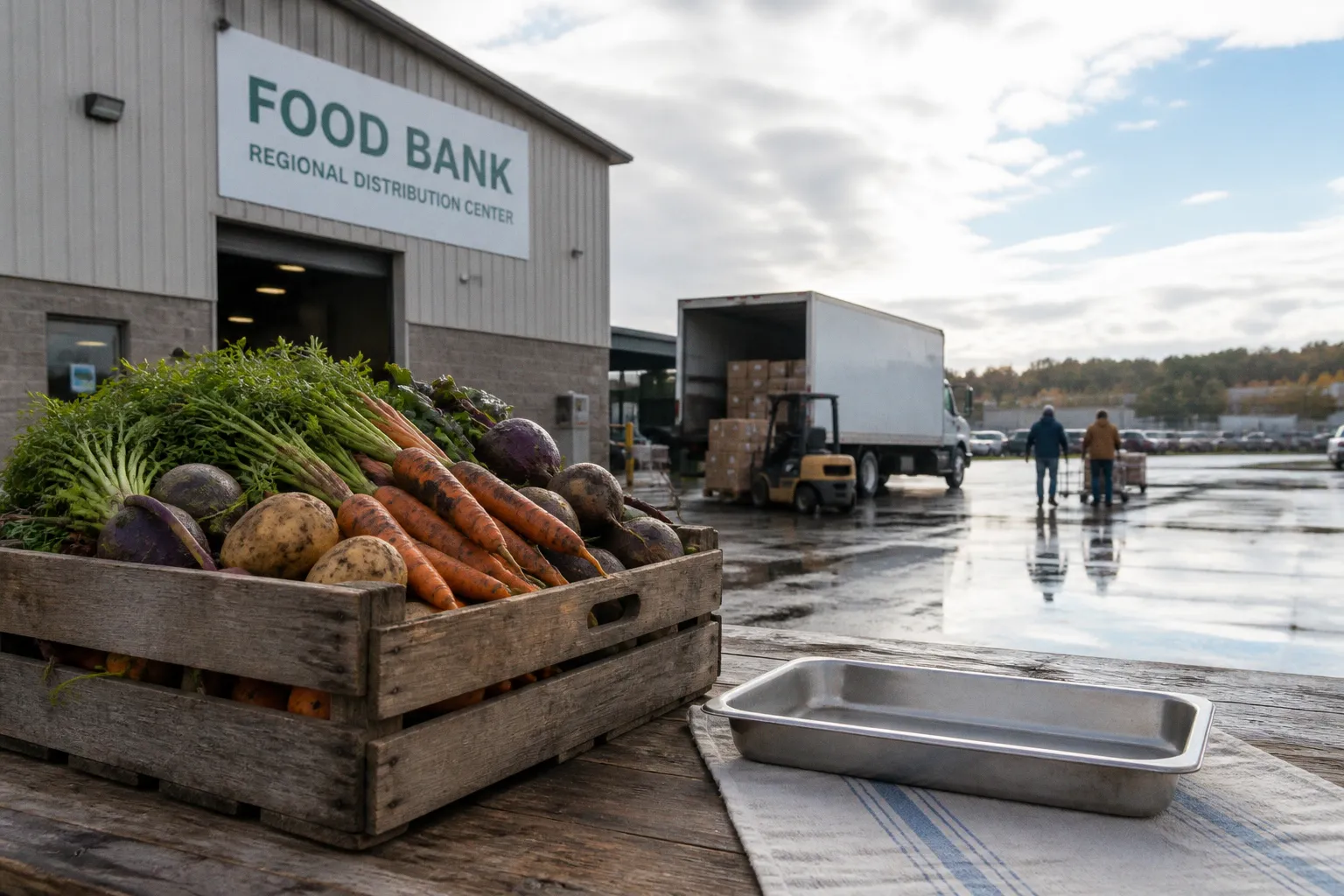
It is a failure of allocation: surplus is often located far from households that need immediate assistance, while local organizations lack the storage, transport, cooking capacity, or volunteer coordination to close the distance.
Compare car rental deals in United Kingdom
See available offersPartner link — DiscoverCars comparisonThat is why the choice between a food bank and a community kitchen is not a matter of institutional preference. It is a question of delivery architecture. A food bank builds supply capacity across a region. A community kitchen converts available resources into hot meals for people facing immediate hardship. Both are legitimate community welfare distribution methods, but they solve different bottlenecks.
For organizations developing food bank vs community kitchen outreach strategies, the decisive variables are clear: the condition of the beneficiaries, the reliability of the supply stream, available storage and transport, the presence of cooking infrastructure, and the time horizon of the intervention.
The logistics of scale: how food banks anchor regional supply chains
A food bank is primarily a warehouse and distribution hub. It collects food in bulk, receives donations or purchased inventory, manages storage, and supplies partner organizations such as food pantries, meal programs, shelters, or community agencies. Its principal output is not a plate of food. It is a dependable flow of ingredients and packaged goods into a wider local network.
That distinction determines the entire operating model.
A food bank must manage:
- inbound food recovery from farms, manufacturers, retailers, institutions, and donors;
- inventory classification by product type, shelf life, storage requirement, and nutritional value;
- warehouse space, including dry, chilled, and frozen capacity where available;
- transport scheduling and route density;
- allocation rules among partner organizations;
- food safety procedures and traceability;
- demand forecasting across multiple communities.
The food bank model becomes stronger as the number of partner organizations increases. A single warehouse can consolidate donations that would otherwise arrive in small, inconsistent quantities at separate local sites. It can purchase staple foods at wholesale or discounted rates, reducing the cost of each distributed unit. It can also absorb administrative work that smaller grassroots groups cannot sustain independently.
The Feeding America network illustrates the scale logic: approximately 200 regional food banks supply around 60,000 local food pantries and meal programs across the United States. The value of such a network is not only the quantity of food moved through it. It is the coordination layer connecting regional supply with last-mile delivery.
A similar principle applies to rural education and welfare campaigns in India. A volunteer biker network may be capable of reaching a remote settlement, but it will rarely be the most efficient structure for aggregating, storing, and sorting large volumes of food. Its comparative advantage is mobility. The food bank’s comparative advantage is inventory control. Separating those functions can produce a more sustainable yield from the same donation base.
What a food bank does well
Food banks are most effective when the objective is to create a repeatable regional supply system rather than a one-time public event. Their strengths are operational:
1. Aggregation. Multiple small donations can be consolidated into a usable inventory rather than distributed ad hoc.
2. Purchasing power. Cash can be converted into bulk quantities of staple foods at lower unit cost than retail shopping.
3. Partner coverage. Food banks can supply several neighborhoods or institutions without requiring each one to maintain a full procurement operation.
4. Inventory flexibility. Stored goods can be redirected as demand changes, provided the organization has adequate stock rotation and storage discipline.
5. Planning visibility. Warehouse records create a better basis for measuring inflow, outflow, shortages, and recurring demand.
The limitation is equally clear: food banks are not automatically direct-service organizations. They generally distribute inventory to partner agencies rather than serving meals to individual walk-in visitors. Some operate hybrid food pantry programs on-site, but that is a distinct service layer and should not be assumed from the warehouse function alone.
A food bank solves the supply problem first; a community kitchen solves the immediate consumption problem first.
Last-mile impact: the role of community kitchens in immediate crisis relief
A community kitchen prepares and serves hot, ready-to-eat meals directly to food-insecure people and vulnerable groups. Its operational cycle is shorter and more visible: procure ingredients, prepare food, cook, portion, and serve within a defined time window.
This model is particularly relevant when beneficiaries cannot safely store or prepare food. People experiencing homelessness, households without reliable cooking facilities, displaced families, and individuals affected by acute local emergencies may need a meal now, not a grocery package intended for several days of home preparation.
Community kitchens also reduce the practical burden placed on beneficiaries. A household may have food but lack fuel, utensils, refrigeration, time, or physical capacity to cook. A prepared meal addresses that constraint directly. Treating the absence of a home kitchen as a minor detail is a common failure in direct aid planning.
The kitchen model has its own set of bottlenecks:
- sufficient cooking equipment and safe preparation space;
- trained staff or volunteers;
- dependable water, fuel, electricity, and sanitation;
- menu planning that accounts for dietary, cultural, and medical needs;
- service timing and queue management;
- food safety and temperature control;
- waste management;
- transport of prepared meals when beneficiaries cannot reach the kitchen.
These requirements make community kitchens more labor-intensive per service cycle than a warehouse distribution model, although there is no universal cost comparison that applies across all jurisdictions. Costs vary substantially by facility, local prices, volunteer availability, regulatory requirements, and whether ingredients are donated or purchased.
The strategic benefit is speed. A community kitchen can transform a relatively small quantity of ingredients into a visible, immediate service. That can be critical during a flood, a displacement event, a local closure of public services, or a period when households have lost access to income.
Direct aid versus meal service programs
Food pantry distribution and community kitchen service are sometimes grouped together as interchangeable forms of hunger relief. They are not. A grocery package supports household autonomy and may cover several days, depending on its size and contents. A hot meal provides immediate nutritional access but does not necessarily create household food security beyond the service period.
A local pantry such as CAER, for example, describes a single grocery cart visit as supplying a family with approximately 7–10 days of food. That type of support has a different impact profile from a meal served at a community kitchen. The pantry extends the household’s food horizon; the kitchen addresses immediate consumption.
The distinction can be mapped as follows:
| Operational factor | Food bank and pantry pathway | Community kitchen pathway |
|---|---|---|
| Primary function | Aggregate, store, and distribute food inventory | Prepare and serve ready-to-eat meals |
| Main beneficiary requirement | Ability to transport, store, and prepare food | Immediate access to a nutritious meal |
| Core bottleneck | Warehouse capacity, inventory, and distribution routes | Kitchen capacity, labor, and service throughput |
| Time horizon | Multi-day household support when food packages are adequate | Immediate relief during the service window |
| Best use case | Regular neighborhood distribution through partner agencies | Crisis response, homelessness support, and meal access |
| Key impact metric | Households or agencies supplied, food volume moved, service regularity | Meals served, attendance, repeat access, and service reliability |
| Main risk | Inventory imbalance or weak last-mile partner coverage | Queue failure, food safety incident, or insufficient production capacity |
This comparison does not establish a hierarchy. It establishes a routing decision. A community welfare campaign that selects the wrong model may still distribute substantial resources while missing the actual constraint experienced by beneficiaries.
Strategic resource allocation: why bulk purchasing can outperform retail donations
The most visible donation is not always the most productive one. A box of retail groceries feels concrete, but a food bank can often convert a cash donation into more inventory because it buys in bulk or accesses discounted purchasing channels. That purchasing advantage improves resource allocation, particularly for staple products that are difficult to recover consistently through household donations.
Cash also allows an organization to correct inventory gaps. If donated supplies consist mainly of canned goods but the network lacks rice, pulses, cooking oil, infant products, or fresh ingredients, unrestricted funds can be directed toward the missing categories. A donation stream composed entirely of whatever is convenient for donors may produce volume without nutritional balance.
This is where audit-style thinking is useful. The relevant question is not how many boxes entered the warehouse. It is whether the input improved the organization’s ability to deliver appropriate food to the right population at the right time.
A practical resource allocation framework should examine five layers:
1. Supply quality. Is the donation nutritionally useful, culturally appropriate, safe, and within its usable shelf life?
2. Handling cost. Does accepting, sorting, storing, and transporting the item consume more capacity than its value justifies?
3. Demand alignment. Does the inventory correspond to what partner agencies and households regularly request?
4. Substitution value. Could a cash contribution purchase the same category more efficiently or fill a known shortage?
5. Distribution readiness. Is there a functioning route from the warehouse or kitchen to the intended beneficiaries?
Retail food drives remain useful, especially when they are designed around specific shortages and coordinated with the receiving organization. The weakness emerges when collection is treated as the end of the intervention. It is only an input. The impact is generated downstream through sorting, allocation, transport, and service delivery.
The hidden cost of poorly matched donations
Uncoordinated food donations can create several operational burdens:
- products arrive in quantities that exceed local demand;
- perishable items require rapid distribution that the organization cannot support;
- packaging formats are unsuitable for household use or kitchen production;
- dietary restrictions are ignored;
- volunteers spend service hours sorting low-value inventory;
- storage space is occupied by goods that displace more useful supplies.
The result is an avoidable bottleneck. A well-intentioned campaign may increase inbound volume while reducing throughput.
For grassroots charitable initiatives, this problem is particularly acute because volunteer time is usually the least replaceable resource. A vehicle can be rented, and warehouse shelving can be purchased, but a small organization may not have enough trained people to inspect, categorize, and redirect unsuitable stock. Campaign design therefore needs to account for the full handling chain, not just public participation.
The most effective donation message is specific. It tells contributors whether the organization needs cash, shelf-stable staples, fresh produce, kitchen equipment, transport support, or volunteer shifts. General appeals generate attention; precise appeals produce usable inventory.
Addressing the global hunger gap: from food waste recovery to local distribution
The scale of food waste creates a compelling case for recovery-based welfare programs, but the existence of surplus does not eliminate the need for logistics. Food must still be collected, checked, stored, transported, prepared, and distributed before it becomes assistance.
That conversion chain is where many programs lose efficiency.
Food that is recoverable in one location may be unusable in another because transport takes too long or refrigeration is unavailable. A community kitchen can sometimes absorb fresh ingredients quickly, while a food bank may be better positioned to manage shelf-stable goods over a longer period. Conversely, a food bank with appropriate cold storage may be able to protect surplus from immediate spoilage and allocate it through several partner agencies.
The operational decision depends on product characteristics:
- Shelf-stable food generally supports warehouse storage and scheduled pantry distribution.
- Fresh produce may require rapid movement, sorting, or immediate kitchen use.
- Prepared food has a short service window and is usually better suited to direct meal distribution.
- Frozen goods require reliable cold-chain capacity and appropriate transport.
- Specialized products, including infant or medically relevant foods, require controlled allocation rather than indiscriminate distribution.
A food recovery program should therefore define its acceptable inventory before it begins collecting. Otherwise, the campaign measures success by tonnage while transferring the real problem to the receiving organization.
Measuring impact without reducing people to units
Impact metrics are necessary for accountability, but they should reflect the service model. A food bank and a community kitchen cannot be judged by the same headline number.
For food banks, useful measures may include:
- volume of food received and distributed;
- proportion of inventory reaching partner agencies within its usable period;
- number and geographic coverage of active partner organizations;
- frequency of stockouts in priority categories;
- fulfillment rate against partner requests;
- share of funds directed to food procurement versus handling and administration.
For community kitchens, the operational picture may include:
- meals prepared and served;
- service days completed as scheduled;
- average wait time and peak queue length;
- repeat attendance among priority groups;
- meal composition and accommodation of dietary needs;
- quantity of prepared food discarded;
- reliability of kitchen staffing and equipment.
None of these indicators, taken alone, proves that a program has reduced food insecurity. They reveal where the system is functioning and where capacity is being lost. A high meal count can coexist with poor access if the kitchen is located far from the target population. A large warehouse inventory can coexist with weak impact if partner organizations lack vehicles or distribution staff.
Tonnage is an input metric. Relief begins only when the resource crosses the last-mile boundary and becomes usable support.
This is also why community engagement cannot be summarized by a universal score comparing dining-hall outreach with mobile grocery delivery. Local conditions determine whether people can travel, whether they trust the provider, whether service times match work schedules, and whether household food preparation is feasible. Programs need a baseline and a consistent method of tracking change, not a borrowed metric that conceals local constraints.
Matching outreach models to community vulnerability profiles
The right choice begins with the vulnerability profile, not the preferred organizational identity. A group that describes itself as a food recovery initiative may still need a kitchen. A volunteer transport network may generate more value by serving a food bank than by attempting to cook meals independently. The operating model should follow the constraint.
Choose a food bank or pantry pathway when:
- beneficiaries generally have a place to store and prepare food;
- the objective is to provide multi-day household support;
- the region has enough partner organizations to handle last-mile distribution;
- donations arrive in bulk or require centralized sorting;
- the program needs stable access to staple goods rather than daily prepared meals;
- transport routes can be consolidated across multiple delivery points.
This pathway is also appropriate when the initiative is building durable regional infrastructure. A food bank can become the backbone for schools, shelters, local NGOs, and community groups that each serve different populations but share procurement needs.
Choose a community kitchen when:
- beneficiaries lack cooking facilities or reliable access to fuel;
- homelessness or displacement makes grocery distribution impractical;
- the intervention responds to an acute crisis;
- prepared meals are culturally and operationally appropriate;
- the service location is accessible to the target population;
- the organization can maintain kitchen safety and a dependable staffing roster.
A community kitchen should not be dismissed as a short-term solution simply because it serves immediate needs. For people with no safe place to cook, a hot meal is not a temporary substitute for a more sophisticated service. It is the correct service at that point in the vulnerability profile. The strategic question is whether the kitchen has a defined role within a wider support pathway, including referrals to housing, health, education, or income services where those systems exist.
Use a hybrid model when the constraints are mixed
Many effective local hunger relief models require both systems. A food bank can supply staple inventory and ingredients, while a community kitchen converts part of that inventory into meals. A pantry can distribute grocery packages to households with storage capacity, while the kitchen serves people who cannot cook. A mobile vehicle can deliver food boxes to remote settlements and transport prepared meals to temporary shelters.
A hybrid model creates additional coordination requirements, so it should not be adopted merely because it sounds comprehensive. It needs a clear division of labor:
1. The food bank establishes procurement, storage, and allocation rules.
2. The kitchen defines menus, production capacity, and service windows.
3. The transport team maps routes according to beneficiary access rather than convenience.
4. Partner agencies record demand, shortages, and repeat needs.
5. Program leadership reviews the data and adjusts purchasing or service frequency.
For organizations working across rural communities, mobility can be the differentiator. Motorbike volunteers may not carry the volume of a truck, but they can provide route intelligence, small-lot delivery, and access to roads that larger vehicles cannot use efficiently. That function is most valuable when integrated into a broader allocation system. Without a reliable source of inventory and a documented delivery schedule, mobility becomes activity rather than infrastructure.
Designing a decision that can scale
A pilot should answer a narrow operational question. It should not attempt to prove that one model is universally superior.
A useful pilot might compare:
- household grocery distribution in one cluster of villages;
- scheduled hot-meal service in another cluster;
- a hybrid arrangement for a population with mixed access conditions.
The comparison should hold the target population and time period as stable as possible, then track the specific bottlenecks. The purpose is not to create a simplistic winner. It is to identify which resource is limiting service delivery.
A practical assessment can be organized around six questions:
- Who is being served? Households with cooking facilities, unhoused people, displaced families, schoolchildren, older adults, or another defined group?
- What is the time horizon? Immediate crisis relief, weekly household support, or regional food access over several months?
- Where is the food located? Near the beneficiaries, in a regional warehouse, at retail outlets, or in recoverable surplus streams?
- What capacity already exists? Storage, kitchen space, vehicles, volunteers, partner agencies, and local administrative support?
- What fails first under increased demand? Procurement, refrigeration, sorting, cooking, transport, queue management, or beneficiary communication?
- What will trigger a redesign? A stockout threshold, rising wait times, excessive waste, missed delivery routes, or declining attendance?
The last question is often omitted. A program that has no redesign trigger can continue operating after its original assumptions have expired. Sustainable yield depends on adaptation, not on preserving the first version of the plan.
Corporate integration without displacing local control
Corporate donors can strengthen either model, but only if their contribution is matched to the operating system. A company may offer vehicles, warehouse space, employee volunteers, procurement funds, or data support. These inputs have different values at different points in the chain.
For example:
- a logistics company may reduce food bank transport bottlenecks;
- a retailer may provide scheduled surplus recovery;
- a manufacturer may fund cold storage;
- a technology firm may improve inventory visibility;
- a local employer may finance recurring meal service;
- a corporate volunteer group may support sorting, packing, or route preparation.
The contribution should be specified in measurable terms: vehicle-hours, storage capacity, recurring cash allocation, number of trained shifts, or quantity of priority food categories procured. A large but irregular volunteer event may be less useful than a smaller commitment that arrives every week and aligns with the service calendar.
Corporate integration also requires governance. The community organization should retain control over beneficiary selection, allocation priorities, and service design. Donor visibility can be recognized without allowing branding requirements to redirect scarce staff time or create unequal access at service points.
The practical route: build the system around the bottleneck
The food bank versus community kitchen decision is ultimately a decision about where to place operational capacity.
If the regional system lacks aggregation, storage, and predictable procurement, build or reinforce the food bank pathway. If food exists but people cannot store or cook it, prioritize community kitchens. If the population is geographically dispersed, add mobile distribution and route coordination. If the problem changes by neighborhood, use a hybrid structure rather than forcing every beneficiary through a single channel.
The strongest food bank vs community kitchen outreach strategies are therefore not branded around one institution. They are designed around measurable constraints and reviewed against service outcomes. A warehouse should not be judged for failing to provide a hot meal when its role is to supply partner agencies. A kitchen should not be judged by warehouse throughput when its value lies in immediate, safe meal access.
For funders, the next step is to finance capacity where it is actually constrained: cold storage, fuel, transport, kitchen equipment, staff coordination, or unrestricted purchasing power. For policymakers, the priority is to reduce friction around food recovery, local distribution, and shared infrastructure without imposing a reporting burden that small grassroots organizations cannot carry. For community groups, the immediate task is to document the full delivery chain before expanding the public appeal.
Food insecurity is a distribution problem as much as it is a supply problem. The useful intervention is the one that moves resources through the narrowest bottleneck and converts them into reliable access. That is the standard against which both food banks and community kitchens should be funded, managed, and scaled.