Food Security Models: Which Program Fits Your Community?
26.1% versus 1.6% — that is the operational gap between households in acute food insecurity and those who are food-secure when it comes to engaging with food pantries, banks, and faith-based distribution networks in the United States.
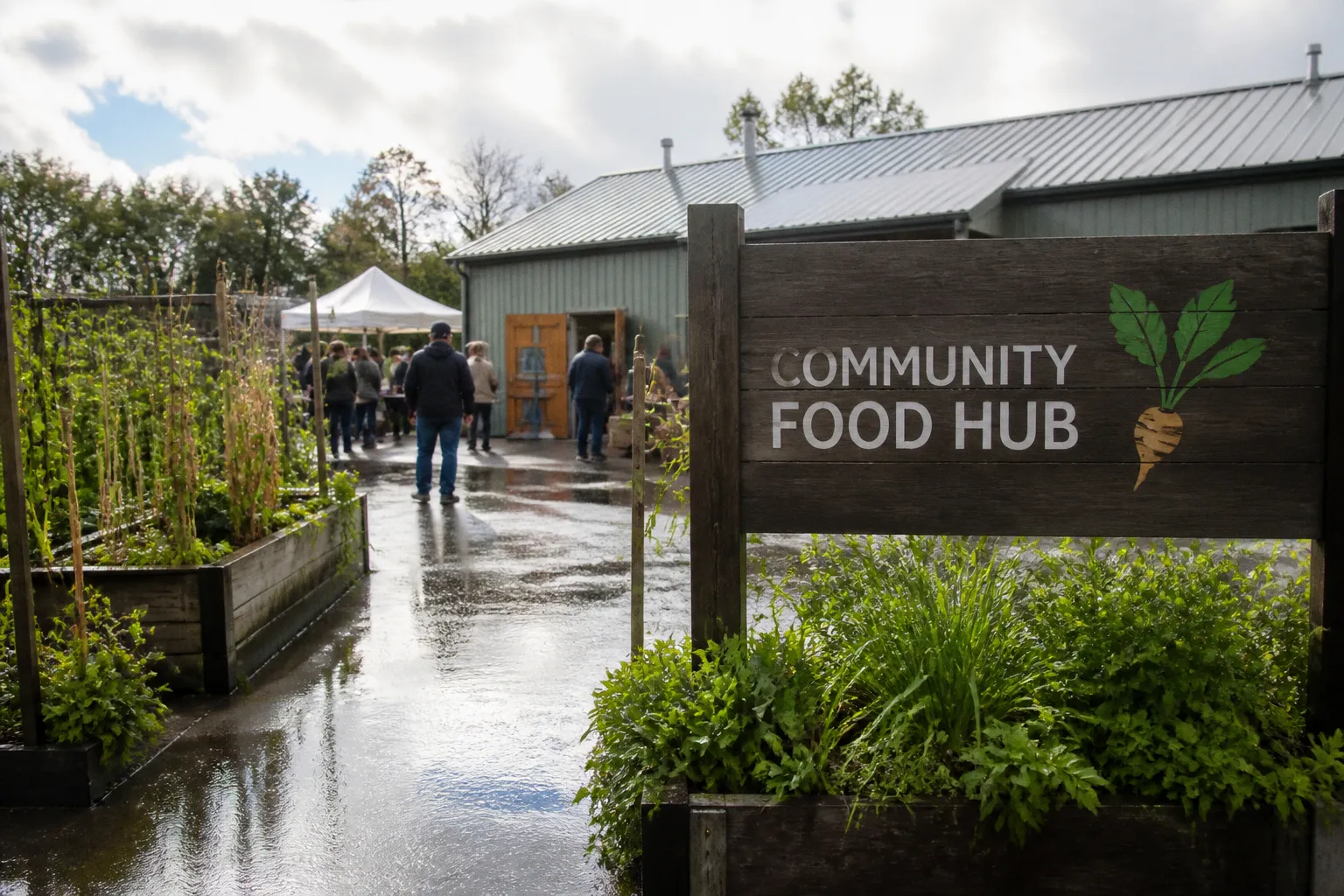
The figure, drawn from US community food source studies, quantifies the dependency threshold below which emergency infrastructure becomes the primary channel for nutritional access. For any grassroots organization evaluating which community food security program options to deploy, the gap is more than a sociological curiosity — it is a resource-allocation map. The challenge is not whether to intervene but which model produces sustainable yield against the specific bottleneck a community presents.
Compare car rental deals in United Kingdom
See available offersPartner link — DiscoverCars comparisonA community food security program is not a single instrument. It is a portfolio of mechanisms — emergency food banks, social supermarkets, decentralized community fridges, shared community kitchens, and community gardens — each calibrated to different definitions of success. Some deliver immediate caloric relief within a short acute window. Others engineer multi-year pathways toward food self-reliance. Selecting the right configuration requires the same rigor as fleet logistics: matching asset capacity to demand profile, mapping maintenance overhead, and forecasting the cost per outcome over a defined operating horizon.
A food security portfolio is only as strong as its weakest handoff — emergency relief without a self-reliance pathway simply extends the dependency curve.
Emergency Relief vs. Long-Term Self-Reliance: Defining Your Goal
The first variable to lock down is time horizon. A pure emergency relief model — the traditional food bank or pantry — optimizes for throughput in acute crisis. Pre-packed parcels, eligibility verification, and a fixed distribution cadence are designed to compress the distance between identified need and nutritional delivery. The model is operationally efficient and audit-friendly: it scales linearly with donated volume, requires minimal recipient-side engagement, and can be deployed within weeks.
The limitation is structural. The same study that quantified the 26.1% dependency figure also documented an additional data point: only 3.3% of food-insecure households at or below 185% of the Federal Poverty Level relied on emergency soup kitchens, compared to the much larger share using pantries, banks, and churches. That asymmetry reveals the bottleneck. Without a complementary pathway toward income recovery, kitchen infrastructure, or local production, the household returns to the queue. Emergency relief keeps people alive; it does not, on its own, change the conditions that put them in line. The constraint is not supply — it is the absence of an exit ramp.
The exit ramp question is the one most grassroots organizations postpone. It is easier to measure meals distributed than to measure whether a household no longer needs to show up. But the postponement has a compounding cost: every quarter of pure emergency distribution that lacks a handoff to self-reliance infrastructure is a quarter in which operating costs accumulate without reducing the underlying demand. The math is unforgiving. A food bank that serves 500 households per month and retains 90% of them the following month is not succeeding — it is servicing a fixed dependency at recurring cost. The metric that matters is not how many households are served but how many households graduate out of the need to be served. That reframing changes which model you build first.
Emergency relief models answer the question "who is hungry tonight?" — sustainable-yield models answer "who will be hungry next year?"
Long-term self-reliance programs invert the operational logic. Instead of pushing calories into a household, they invest in the household's capacity to produce, store, and prepare its own nutrition. Community gardens with market stands, food hubs aggregating local growers, and membership-based social supermarkets all sit on this side of the ledger. The capital cost per beneficiary is higher in year one, but the recurring cost declines as local production matures.
For a grassroots network evaluating where to allocate its next dollar, the decision matrix is straightforward: if the operational geography has a high density of acute, episodic need — a disaster zone, a post-pandemic economic shock, a sudden displacement event — the optimal first move is emergency relief infrastructure with a defined sunset. If the geography is characterized by chronic, structural poverty, the optimal first move is a self-reliance investment with a defined ramp-up. The worst outcome — and the most common one — is a default to emergency relief without a sunset, which becomes a permanent operating cost that crowds out self-reliance investment.
The Retail-Style Shift: How Social Supermarkets Empower Recipients
The social supermarket model represents a deliberate departure from the parcel-distribution paradigm. Where traditional food banks hand out pre-packed boxes, social supermarkets operate on a membership basis: recipients pay a nominal fee or symbolic contribution and select their own groceries in a retail-style environment. The model was the subject of a comparative study published in the British Food Journal on 26 July 2026, which examined the structural differences between food banks and social supermarkets across multiple European jurisdictions.
The data on this model are nuanced but converging. Three operational differences stand out:
1. Choice architecture. Recipients self-select items, which shifts the program's value from caloric throughput to dietary agency. For households managing diabetes, allergies, or cultural food preferences, this is not a peripheral benefit — it is a determinant of whether the food is actually consumed.
2. Stigma reduction. Retail-format environments normalize the act of receiving support. Members queue at checkouts rather than at charity counters, which has measurable effects on repeat engagement and on the willingness of working-class households to use the service during temporary income shocks.
3. Revenue offset. The membership contribution — typically a small symbolic fee — covers a portion of operating overhead and reframes the recipient as a contributing member rather than a passive beneficiary. This is not a profit mechanism; it is an accountability mechanism that improves resource-allocation discipline.
The trade-off is throughput. A social supermarket requires retail-grade shelving, refrigeration, and inventory-management systems. It also requires a member-services function to verify eligibility and renew memberships. For a grassroots organization without retail logistics experience, this is a meaningful capacity constraint. The capital expenditure on fixtures and cold-chain equipment can run two to three times that of a conventional pantry for the same square footage, and the staffing model skews toward retail associates rather than volunteers sorting donated boxes. That said, the operating cost per household served tends to converge with the traditional pantry model within 18 to 24 months, once membership density covers fixed overhead.
| Parameter | Traditional Food Bank | Social Supermarket |
|---|---|---|
| Distribution model | Pre-packed parcels | Member-selected groceries |
| Recipient cost | Free | Small membership contribution |
| Operational complexity | Low–medium | Medium–high |
| Dietary agency | Limited | High |
| Stigma exposure | Higher | Reduced |
| Throughput per square foot | Higher | Lower |
| Best-fit scenario | Acute emergency | Chronic structural need |
For networks evaluating this model, the question is whether the throughput reduction is justified by the long-term engagement and dietary outcomes. In communities with high dietary-diversity deficits — where households are receiving calories but not nutrition — the answer is usually yes. A household that selects whole grains, fresh vegetables, and culturally appropriate protein is a household whose children perform better in school and whose chronic-disease management costs decline. Those are downstream savings that rarely show up in a food program's own balance sheet but matter enormously to the community's overall health economics.
Decentralized Mutual Aid: Navigating the Risks of Community Fridges
Community fridges — sometimes called "freedges" — operate at the opposite end of the complexity spectrum. They are decentralized, mutual-aid installations: a refrigerator placed in a public or semi-public space, stocked by anyone and accessed by anyone, with no eligibility checks, no membership, and no transaction. The model is the fastest to deploy of any community food security program option, often operational within a single day of installation.
The structural advantage is radical accessibility. A household can access nutrition outside of business hours, without documentation, without waiting for a distribution window, and without navigating any institutional gatekeeper. For transient populations, undocumented residents, and individuals in acute crisis who cannot meet the documentation requirements of traditional pantries, this is the difference between eating and not eating. The low barrier also captures a demographic that traditional food banks systematically miss: working households with irregular income who qualify for assistance on paper but whose schedules — shift work, multiple jobs, childcare constraints — make fixed distribution windows impractical.
The bottleneck is regulatory. Community fridges currently lack specific guidance under the FDA Food Code. That regulatory gap is not theoretical: it exposes the program to food-safety risk, liability exposure, and inconsistent operation across jurisdictions. A fridge installed by a well-organized volunteer network in a compliant commercial kitchen may operate safely for years. A fridge installed in a residential garage with informal donations from households with unknown food-handling standards may become a public health vector within weeks. The liability question is not hypothetical — several municipalities have issued cease-and-desist orders to community fridges operating without site permits or food-handler certifications, and volunteer organizers have faced personal exposure in the absence of organizational liability shields.
Decentralization is an operational virtue only when paired with a documented cold-chain integrity protocol.
For a grassroots network deploying a community fridge, the minimum viable infrastructure includes:
- A commercial-grade refrigerator with continuous temperature monitoring and an alarm system that alerts volunteers when temperatures exceed safe thresholds.
- A documented donation policy that excludes high-risk items — raw meat, dairy past date, home-canned goods, and any item without a readable expiration label.
- A daily inspection checklist maintained by a rotating volunteer, with a photographic record stored for liability documentation.
- A written agreement with the host site defining cleaning responsibilities, insurance coverage, and incident-reporting procedures.
- A direct line to the local health inspector for incident response and a pre-established relationship that gives organizers a voice in how violations are handled before they become enforcement actions.
- Organizational liability coverage — either through a standalone policy or through a fiscal sponsorship arrangement with an established nonprofit entity.
The model is not a substitute for emergency food bank infrastructure. It is a complement — particularly valuable in neighborhoods where traditional pantries have insufficient coverage or restricted hours. The most effective deployment is one where the community fridge serves as a neighborhood-scale bridge: accessible enough to capture households that fall through the cracks of formal food-bank eligibility, but integrated into a broader network that can route long-term cases toward self-reliance programming. A fridge operating in isolation is a stopgap. A fridge operating as a node in a referral network is an intake channel.
Shared Infrastructure: The Role of Community Kitchens and Gardens
Two models sit at the intersection of emergency relief and self-reliance: community kitchens and community gardens. Both are infrastructure investments with multi-year amortization horizons, and both produce outcomes that cannot be measured in meals distributed alone.
Community kitchens function as public health instruments. They provide shared cooking space for households that lack functional kitchens, cannot afford cooking fuel, or experience food preparation as a social-isolation trigger. The model addresses food insecurity indirectly — by removing the barriers between receiving food and consuming food. For individuals transitioning out of homelessness, for elderly persons living alone, and for households in substandard housing without functioning appliances, the kitchen is the missing link in the nutritional chain. A pantry parcel that contains raw vegetables and uncooked grain is nutritionally useless to a household without a stove or cooking oil. The kitchen closes that gap, and in doing so, it transforms donated ingredients into actual meals — a conversion step that emergency relief models routinely overlook.
The skills-training dimension is often underestimated. Community kitchens that incorporate cooking workshops, meal-planning education, and food-preservation instruction create a transferable asset: knowledge that travels with the household even after the program relationship ends. For a self-reliance strategy, this is one of the highest-leverage interventions available. A household that learns to cook dried beans, preserve seasonal produce, and stretch protein across multiple meals is a household whose grocery cost per calorie declines permanently.
Community gardens operate on a longer cycle. They improve access to fresh produce, support mental health through outdoor activity and community engagement, and create a venue for intergenerational knowledge transfer around food cultivation. The data on gardens are clear on what they can and cannot do: they measurably improve produce access and psychosocial outcomes, but they do not, on their own, resolve household food insecurity. The research is explicit on this point — gardens require additional community support interventions to function as a stand-alone food security solution. A quarter-acre plot can produce several hundred pounds of produce in a growing season, but that output is seasonal, weather-dependent, and nutritionally narrow. It supplements a household's diet; it does not replace the need for a diversified food source.
| Parameter | Community Kitchen | Community Garden |
|---|---|---|
| Primary outcome | Meal preparation capacity | Fresh produce access |
| Capital cost | Moderate (facility, equipment) | Low–moderate (land, tools, water) |
| Operating horizon | Year-round | Seasonal (peak) |
| Direct food security impact | High | Moderate (supplemental) |
| Mental health / social impact | High | High |
| Self-sustainability potential | Medium | Low–medium |
For a grassroots network, the optimal deployment is usually a stacked configuration: a community garden producing seasonal produce, channeled through a community kitchen that prepares meals for both immediate distribution and skills-training programming. The combined model leverages the seasonal surplus of the garden and the year-round utility of the kitchen, and creates a training pathway for residents interested in food-service employment. The kitchen can also serve as a value-add processing site for garden surplus — turning peak-season tomatoes into preserved sauce, drying herbs, and freezing surplus greens — which extends the garden's nutritional yield across the full calendar year rather than the growing season alone.
Securing Sustainable Funding: Lessons from Government and USDA Grant Models
No food security program sustains itself on donated calories alone. The cost structure — facility, refrigeration, staffing, insurance, transportation — requires recurring capital, and the most resilient programs are those that diversify their funding base across philanthropy, government grants, and earned revenue.
Two funding models are particularly instructive for grassroots organizations. The USDA's Community Food Projects Competitive Grants Program (CFPCGP) funds community-led initiatives across a defined project typology: community food assessments, GIS analysis of food access, community gardens with market stands, food hubs, and farmers' markets. The program is competitive, requires a match, and favors projects with measurable self-reliance outcomes. For a grassroots network with the capacity to write a federal grant, this is one of the highest-leverage funding sources in the US landscape. The match requirement — typically dollar-for-dollar — is a feature, not a bug: it forces the applicant to secure co-funding from local sources, which in turn builds the multi-stakeholder buy-in that sustains the project beyond the grant period.
The Victorian Community Food Security Program in Australia offers a complementary model. In mid-2026, the state government committed $9 million to the second round of the program and launched a third round on 12 June 2026, with $6 million allocated specifically to local grants for community-led food relief initiatives. The local grant announcement on 17 July 2026 confirmed the stream as a primary deployment vehicle. The model is state-administered and locally distributed, channeling funds into community-led food-relief initiatives that span both immediate access and longer-term capacity building. Notably, the program does not draw a hard line between emergency relief and infrastructure — it recognizes that effective food-security work in diverse communities often blends the two, and it funds accordingly.
For a grassroots network building a funding strategy, the operating principles are:
1. Anchor on multi-year infrastructure grants rather than recurring emergency appeals. Infrastructure grants build durable capacity; emergency appeals rebuild the dependency curve. A three-year grant to build a shared kitchen and garden complex creates a physical asset that continues operating after the funding cycle ends. A three-year sequence of emergency-distribution grants creates a staffing and logistics dependency that collapses the moment funding shifts.
2. Match the funding stream to the program typology. USDA CFPCGP fits self-reliance models; state-level community food security programs fit hybrid models that blend relief and capacity building; private philanthropy fits capital expenditures; earned revenue (membership fees, market stand sales) fits operating overhead. Mixing these streams is not only possible but necessary — the most durable programs draw from three or four sources simultaneously.
3. Build a measurement framework before the grant is written. Funders — both government and philanthropic — increasingly require impact metrics tied to beneficiary outcomes, not just throughput numbers. A program that can report meals distributed per dollar of operating cost, household recidivism rates, and self-sufficiency progression has a structural advantage in competitive funding rounds. The measurement infrastructure itself becomes a grant-writing asset: the more rigorously a program tracks its own outcomes, the more competitive it becomes for the next round of funding.
The Love Glastonbury food redistribution program — 100 tonnes of food and approximately 204,000 meals distributed since July 2020 — is a useful benchmark for what a focused, volunteer-driven operation can achieve on a constrained budget. The model combined corporate surplus food recovery with volunteer logistics and direct community distribution. The metrics are auditable, the operating cost per meal is low, and the program demonstrates that scale is achievable without heavy infrastructure capital expenditure when supply-chain partnerships are well-structured. The Glastonbury case also illustrates the funding-diversification principle in practice: the program drew on local authority grants, corporate food-supplier partnerships, and direct community fundraising to sustain operations across multiple years without reliance on a single revenue stream.
Funding diversification is not optional — a single-source food security program is a single point of failure.
Building the Right Portfolio for Your Operating Context
The comparison above is not a recommendation for a single model. It is a diagnostic framework. A community experiencing acute, episodic need — a flood zone, a post-industrial economic collapse, a pandemic-era supply shock — requires emergency relief as the lead instrument, with a defined sunset and a planned transition into a self-reliance program. A community experiencing chronic, structural food insecurity requires the opposite sequencing: self-reliance infrastructure first, with emergency relief as a residual safety net.
The operational test for any program is whether it reduces the dependency curve over a defined horizon. Emergency relief programs that have no exit strategy extend the curve. Self-reliance programs without an emergency safety net leave acute cases unaddressed. The configurations that work are the ones that integrate both, with explicit handoff criteria between them. The handoff is the hardest part to design — it requires a referral protocol, a shared intake system, and a shared definition of what "graduated" means for a household that has moved from emergency relief into a self-reliance pathway.
For grassroots organizations with limited capital, the recommended starting point is a high-throughput emergency model — a food bank or community fridge network — paired with a low-cost self-reliance pilot — a single community garden plot or a shared kitchen program serving 20 to 30 households. The pilot generates the impact metrics needed to compete for infrastructure grants in years two and three. The emergency model maintains coverage during the ramp-up period.
The next dollar a grassroots network spends on food security should be evaluated against three questions: Does it reduce the dependency curve? Does it build durable infrastructure that outlasts the funding cycle? And does it create a measurable handoff point where households move from receiving emergency relief to sustaining themselves through local production, skills, and community networks? A program that answers yes to all three is not just feeding a community — it is building the institutional scaffolding for food sovereignty. That is the difference between a service and a legacy.