Community food security programs: a roadmap for local action
A community food security program rarely begins with a warehouse, a grant award, or a fleet of vehicles.
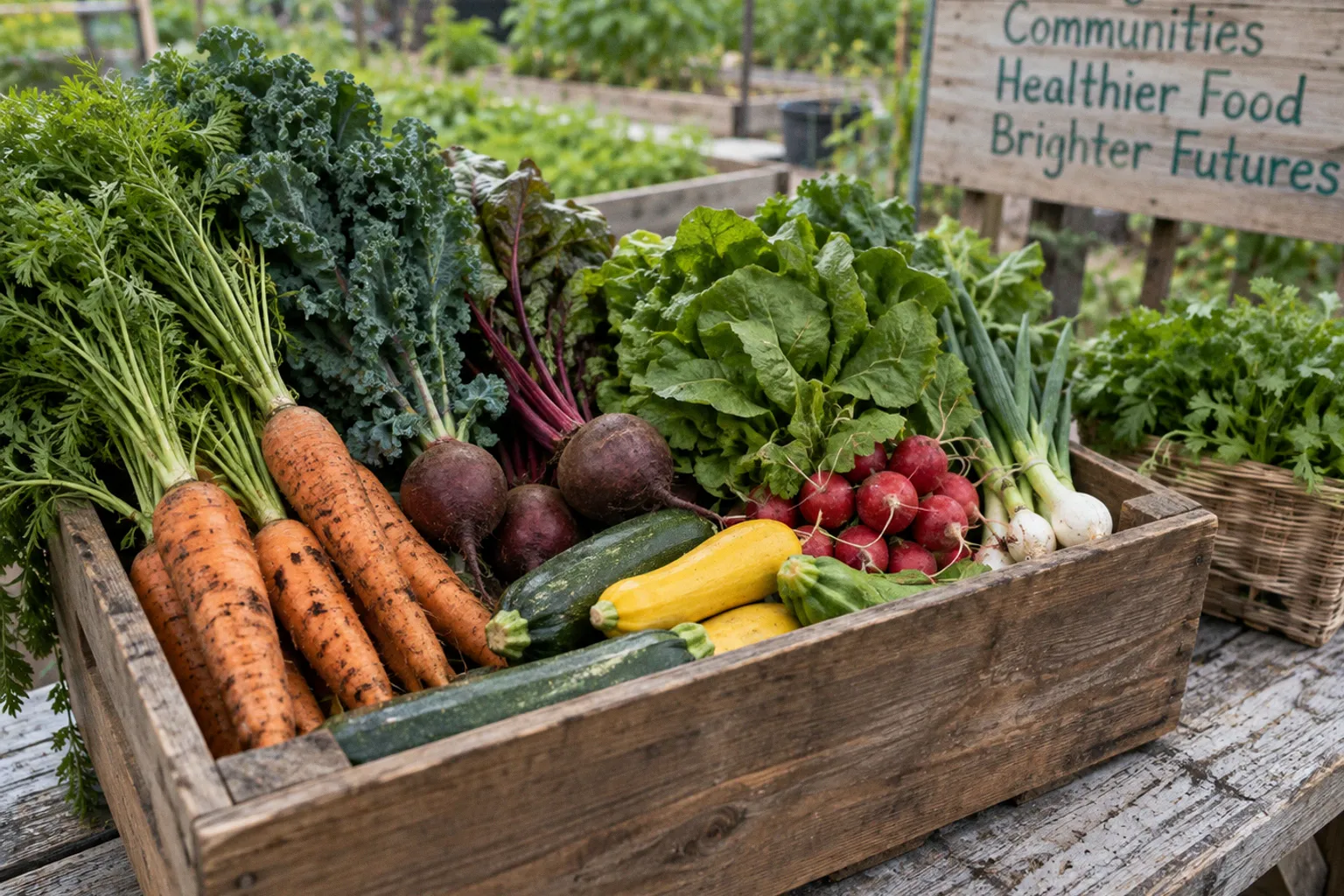
It begins when people notice that food is technically present in the wider region, yet remains out of reach for some households because it is too expensive, too far away, culturally unsuitable, irregularly supplied, or impossible to obtain with dignity.
That distinction matters. A food pantry can respond to an immediate gap, but a durable community welfare initiative must also ask why the gap persists and who is best placed to help close it. The strongest projects move gradually from emergency relief towards shared stewardship: residents, local institutions, growers, traders, schools, health workers, volunteers, and public agencies shaping a system together rather than delivering a service to people who are treated as passive recipients.
The practical question, then, is not simply how to distribute more food. It is how to build local agency around food access. These community food security program implementation steps offer a route from the first assessment to a more stable, community-led operation.
Start with the six dimensions of food security
Before organising a local food bank initiative or arranging the first distribution day, map the problem as residents experience it. Food security is often described through six connected dimensions: accessibility, affordability, availability, adequacy, acceptability, and agency.
Each dimension reveals a different kind of barrier:
- Accessibility asks whether people can physically reach food outlets or collection points. A village may have a market, but if transport is unreliable or the route is unsafe for older residents, the market is not truly accessible.
- Affordability concerns whether households can obtain enough food without sacrificing rent, medicine, school expenses, or other essentials.
- Availability looks at whether suitable food exists consistently, rather than appearing only during a short-term campaign or seasonal surplus.
- Adequacy considers nutritional quality, quantity, safety, and whether the food can support household needs over time.
- Acceptability recognises culture, faith, dietary practice, cooking facilities, and local taste. A parcel that cannot be prepared or is unfamiliar to the receiving household is not automatically a successful intervention.
- Agency asks whether people affected by food insecurity have influence over decisions, from the contents of food parcels to the location and opening hours of a distribution point.
This framework prevents a common mistake in organising grassroots hunger relief programs: treating food insecurity as a simple shortage of food. In many communities, the difficulty lies in the relationship between income, transport, storage, cooking fuel, seasonal work, disability, age, and social trust. A food distribution project that addresses only one element may relieve pressure temporarily while leaving the underlying pattern unchanged.
Build the assessment around local knowledge
A useful assessment does not need to be a large technical exercise. It does need to be conducted with care. Speak with residents, community elders, school staff, health workers, local vendors, growers, faith groups, and organisations already involved in welfare support. Each will see a different part of the system.
Questions should be concrete:
- Which households experience the greatest difficulty during particular months?
- Where do people currently obtain food, and what makes those routes workable or difficult?
- Which foods are regularly missing, unaffordable, or culturally unsuitable?
- Are there working wells, storage spaces, kitchens, transport routes, markets, or community halls that could support the project?
- What forms of assistance already exist, and where do they overlap or leave gaps?
- Which residents are trusted to convene discussions and resolve disagreements?
- What would make a new program feel respectful rather than intrusive?
I have found that the quality of the conversation often determines the quality of the intervention. When the first meeting is framed as an opportunity to listen and design together, people are more willing to describe practical barriers. When the meeting arrives with a finished model and asks residents only to accept it, the project may gain speed but lose legitimacy.
Food security is not only the presence of food; it is the presence of reliable access, cultural fit, dignity, and a meaningful say in the system.
Turn a group of supporters into participatory leadership
Many local initiatives begin with a small circle of energetic volunteers. That energy is valuable, but it should not be confused with a complete leadership structure. A sustainable program needs clear roles, open communication, and a way for people with direct experience of food insecurity to shape decisions.
The leadership group might include:
1. Resident representatives, including people from the households the program intends to serve.
2. Operational coordinators, responsible for schedules, storage, transport, volunteer rotas, and distribution-day procedures.
3. Local food-system partners, such as farmers, shopkeepers, market organisers, school kitchens, or cooperative groups.
4. Welfare and health contacts, who can help identify related needs without turning food support into an intrusive eligibility process.
5. Resource and administration leads, who track funds, in-kind contributions, records, safeguarding, and reporting.
6. Communication and dialogue facilitators, who keep information moving between the project team and the wider community.
The structure should remain proportionate. A village project does not need a bureaucracy designed for a national charity. It does need enough clarity that responsibility does not disappear into goodwill. If everyone is generally responsible, one person may end up arranging every delivery, answering every message, and carrying every unresolved disagreement.
Give residents real authority
Participation becomes meaningful when it affects decisions. Inviting residents to a meeting and then ignoring their recommendations is consultation in appearance only. A community advisory group should have defined areas of influence: food selection, distribution times, collection points, language used in communications, volunteer conduct, and the rules for responding when demand exceeds supply.
This is particularly important when outside groups bring equipment, funding, or transport. A biker network, for example, can make a valuable contribution to rural food distribution logistics, especially where roads and distances make conventional delivery difficult. But mobility does not confer authority. Riders may be able to reach a settlement quickly; village residents understand which routes are usable after rain, which households need discreet delivery, and which local relationships must be handled with patience.
The most respectful arrangement is therefore one of complementarity. The riding group supplies capacity, while local leadership supplies context and direction. That balance protects the project from becoming a spectacle of outside rescue and allows practical help to strengthen, rather than displace, local agency.
Translate the ten action steps into a local operating plan
The ten action steps associated with hunger-free community planning offer a useful menu rather than a rigid script. Their value lies in connecting emergency response with longer-term coordination. They include establishing local emergency food networks, involving low-income participants in advisory roles, combining public and private resources, and developing alternative access routes such as food cooperatives and farmers’ markets.
A local team can translate these principles into an operating plan with five connected layers.
1. Create an emergency response that is dependable
Emergency food support should have a known schedule, a clear contact point, and a process for communicating changes. People should not have to spend a day travelling to a collection site only to discover that supplies have arrived late or been exhausted.
For a small program, dependability may mean one regular distribution day and a separate process for urgent cases. Records should be simple enough for volunteers to maintain and respectful enough not to turn a household’s need into a public label.
2. Establish an advisory group with lived experience
The advisory group should not be reserved for professionals. Residents who have navigated food shortages, irregular employment, disability, high transport costs, or seasonal price changes often identify problems that an outside planner will miss.
Their contribution should be compensated where possible, or supported through transport, meals, childcare, phone access, or other practical arrangements. Participation has a cost, and asking people to volunteer their expertise indefinitely can reproduce the very inequalities the program seeks to address.
3. Link food support with existing resources
A community food security program may draw on schools, clinics, cooperatives, local government, faith organisations, agricultural groups, and small businesses. The aim is not to attach every institution to every activity, but to make useful connections visible.
For example, a school may provide a safe distribution venue, while a growers’ group supplies seasonal produce and a local health worker helps explain nutrition needs. A community hall may offer storage, but only if the project also addresses locks, pest control, ventilation, and responsibility for access.
4. Develop alternatives to one-way distribution
Emergency parcels are sometimes necessary, but they should not become the only expression of food security work. Depending on local conditions, longer-term options may include food cooperatives, community gardens, shared kitchens, farmers’ markets, school meal partnerships, bulk purchasing, or support for small producers.
These alternatives should be chosen because they fit the community, not because they sound innovative. A farmers’ market does little for households who cannot afford its prices. A community garden may fail if water access is uncertain or residents have no time to maintain plots. Good design begins with the local pattern of work and life.
5. Build a route towards local ownership
Outside support should be designed with an exit from dependence in mind, even when no immediate end date is possible. That might mean training local coordinators, transferring responsibility for procurement, establishing a resident-managed fund, or helping a cooperative negotiate directly with suppliers.
Sustainability is not simply the ability to keep receiving donations. It is the capacity to make decisions, solve ordinary problems, and adapt when the original supporters are no longer present.
Match resources to the real shape of the work
Funding community nutrition projects is often discussed as though the main task were locating a grant. In practice, the harder task is to describe the full resource requirement honestly. Food purchases are only one line in the operating picture. Transport, fuel, storage, weighing equipment, containers, communications, volunteer support, safeguarding, translation, data collection, and maintenance all affect whether a program can function reliably.
A basic resource map should distinguish between:
- Cash contributions, which can pay for food, fuel, repairs, staff time, rent, and other direct costs.
- In-kind support, such as donated vehicles, storage space, produce, kitchen access, printing, professional advice, or volunteer hours.
- Institutional support, including permission to use public facilities, help with coordination, or access to existing welfare networks.
- Community assets, such as local knowledge, trusted convenors, cooking skills, land, tools, and social relationships.
This distinction is especially important when applying for structured grant programs. The USDA Community Food Projects competitive grants program, for example, requires a dollar-for-dollar resource match, and that match may include in-kind support. A local team should therefore document donated goods and services carefully rather than treating them as invisible goodwill.
A budget that includes only food may appear efficient while quietly shifting the cost onto unpaid organisers. That is not a sustainable model; it is an unrecorded subsidy drawn from people whose time may already be limited.
Design the distribution system before announcing it
When organising the steps to launch a neighborhood food pantry, the distribution model should be settled before public commitments are made. The team needs to know:
- where food will be received and stored;
- how temperature-sensitive or perishable items will be handled;
- how deliveries will be grouped by route;
- who checks quantities and quality;
- how households are informed about timing and availability;
- what happens when demand exceeds supply;
- how volunteers respond to conflict or distress;
- how leftover food is redirected safely;
- who has authority to pause distribution if conditions become unsafe.
In rural settings, transport planning can determine the reach of the entire program. A route that looks short on a map may involve poor road surfaces, river crossings, seasonal flooding, or long waits for fuel. Motorbike volunteers can be highly effective for smaller loads and dispersed households, but they need safe loading practices, weather planning, maintenance support, and a clear understanding of what should not be transported on two wheels.
Measure what changes, not only what moves
Counting food parcels and delivery trips is useful, but it tells only part of the story. A program can distribute a large volume of food while remaining unreliable, culturally mismatched, or inaccessible to the people with the greatest need.
The leadership team should agree on a small set of key performance indicators before the project becomes busy. Possible measures include:
- the number of households reached and the consistency of that reach;
- the frequency of stock shortages or cancelled distributions;
- the distance and travel burden faced by participating households;
- the proportion of food selected or requested by residents;
- the share of resources coming from local partners;
- the number of residents participating in decisions;
- changes in access to fresh or culturally appropriate food;
- referrals to related welfare, health, education, or livelihood support;
- the time required to move food from arrival to distribution;
- volunteer retention and the distribution of responsibilities.
These indicators should be interpreted alongside conversation. A fall in attendance might mean the program is failing, but it might also mean a new market, school meal, or income-support measure has improved access. A high attendance figure might conceal long queues, embarrassment, or a distribution point that is difficult for disabled residents to reach.
Review the program as a living relationship
Continuous monitoring is not an inspection imposed from above. It is a way for the team to notice where the arrangement no longer fits local reality. Hold regular partner discussions, invite residents to comment without fear of losing support, and record both successes and tensions.
The review questions can remain direct:
1. Who is still not being reached?
2. Which part of the process creates the greatest burden for households?
3. Which task is placing too much pressure on one volunteer or partner?
4. What food is being used, and what is being left behind?
5. What has changed in prices, transport, work patterns, weather, or seasonal availability?
6. Which decisions should now move from the external team to local leadership?
7. What small adjustment would make the next distribution more dignified and more useful?
A program that learns can remain modest and still become stronger. A program that refuses to learn may expand while becoming less responsive.
The measure of a food security project is not how visibly assistance arrives, but how much local capacity remains when the delivery vehicle has gone.
From emergency relief to shared stewardship
There is no single timeline for implementing a community food security roadmap across every municipality, village, or neighbourhood. The pace depends on local infrastructure, seasonal conditions, existing organisations, funding cycles, and the trust between participants. What can be standardised is the discipline of beginning with assessment, sharing authority, mapping resources, planning logistics, and reviewing results.
The central movement is from relief to stewardship. Emergency food assistance remains an important protection when households face immediate need, but it cannot, by itself, resolve affordability, transport, production, storage, or decision-making barriers. Those questions require collaboration across the local food system and the patient development of resident leadership.
From the intersection of the biker crew and the village elders, the practical lesson is clear: a vehicle can carry food across a difficult road, but it cannot carry belonging, trust, or agency. Those are built through dialogue, reliable conduct, and the willingness to let communities define what a successful intervention should become. The most durable grassroots food programs do not merely reach people; they help create the conditions in which people can shape, sustain, and improve the systems that feed them.