Scaling Educational Impact: Lessons from Chad’s Girls’ Literacy Initiative
While The Borgen Project has separately surfaced a piece on "BelieveNBooks" aimed at improving girls' access to education, the Chad case provides the structural detail that smaller-scale operators can actually adapt.
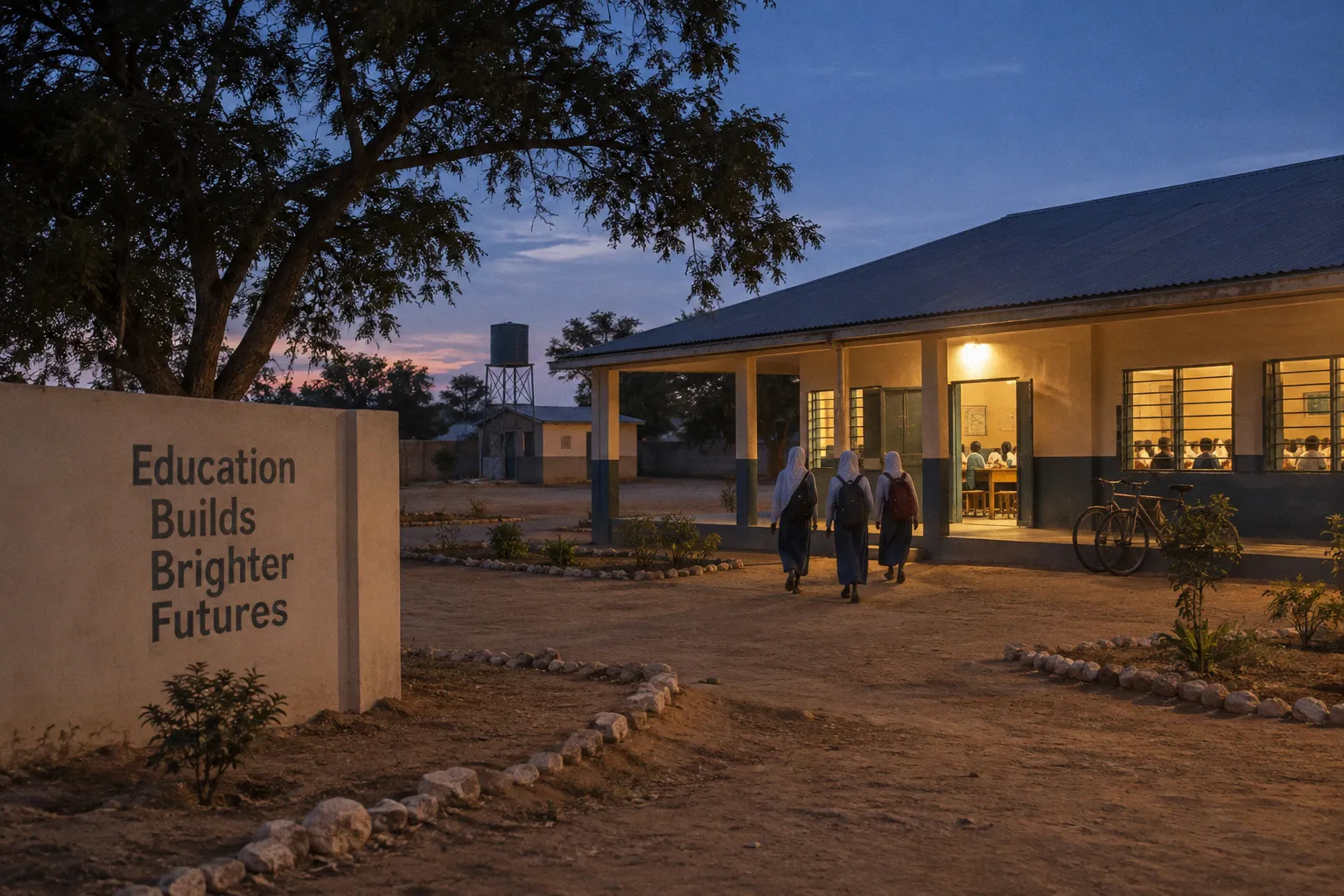
According to fundsforNGOs News, the African Development Bank has mobilized $11.26 million through its Transition Support Facility for a five-year programme designed to re-engineer girls' education infrastructure across Chad — a metric-driven blueprint that deserves line-by-line scrutiny from any grassroots network allocating scarce resources to school-building missions. The mechanics of the Girls' Education and Women's Literacy Project (PEFAF), approved in 2020 and running through 2026, offer the cleanest benchmark available right now for volunteer biker networks mapping their own intervention logic. While The Borgen Project has separately surfaced a piece on "BelieveNBooks" aimed at improving girls' access to education, the Chad case provides the structural detail that smaller-scale operators can actually adapt.
Where the Capital Lands
The funding flows into two physical anchors: the refurbishment of the Amriguébé school complex in the capital N'Djamena and the construction of a new facility in Massakory, Hadjer-Lamis province. Both sites are being equipped with science and IT laboratories — a deliberate step away from basic literacy-only delivery toward technically relevant learning environments. As reported by fundsforNGOs News, the project bundles in scholarships for vulnerable students, school kits, counseling centers to address gender-based violence, and community awareness campaigns targeting dropout rates. Headteacher Youssouf Malloum Malla noted that the new facilities let pupils develop scientific, digital, and technical skills, while national coordinator Moussa Bedei Ali positioned the investment as inseparable from Chad's sustainable development.
The Structural Frame
Two design choices separate this initiative from infrastructure-only builds, and both are reproducible at smaller scale.
1. Capital is paired with protective services and parent-facing support. The programme explicitly funds engagement with mothers to combat dropouts, recognizing that classroom walls do not retain girls on their own. Any volunteer network that builds a school without a safeguarding line item is leaving retention on the table.
2. The timeline is fixed and reviewable. By 2026, the project aims to consolidate gains and potentially expand to other provinces, giving implementers a defined endpoint against which impact metrics can be calibrated. Open-ended commitments without a review gate are the easiest line items to defund.
Where Volunteer Networks Should Apply Pressure
For groups operating under tighter budgets, the takeaway is procedural rather than aspirational. Decompose the per-school cost stack — infrastructure, learning materials, safeguarding layer, community outreach — and isolate the line items that survive without concessional finance. The equivalent discipline for grassroots biker networks is identifying which components of this model can be self-funded through volunteer mobilization, which require grant anchoring, and where the bottleneck shifts when international capital is unavailable. Until that mapping is complete, replicating the headline number is premature; replicating the cost architecture is not.