Restoring Access to Education for Children in Conflict-Affected Nigeria
The European Commission reported this week that community-based volunteers in northeast Nigeria — operating through Save the Children International with EU humanitarian aid backing — moved two…
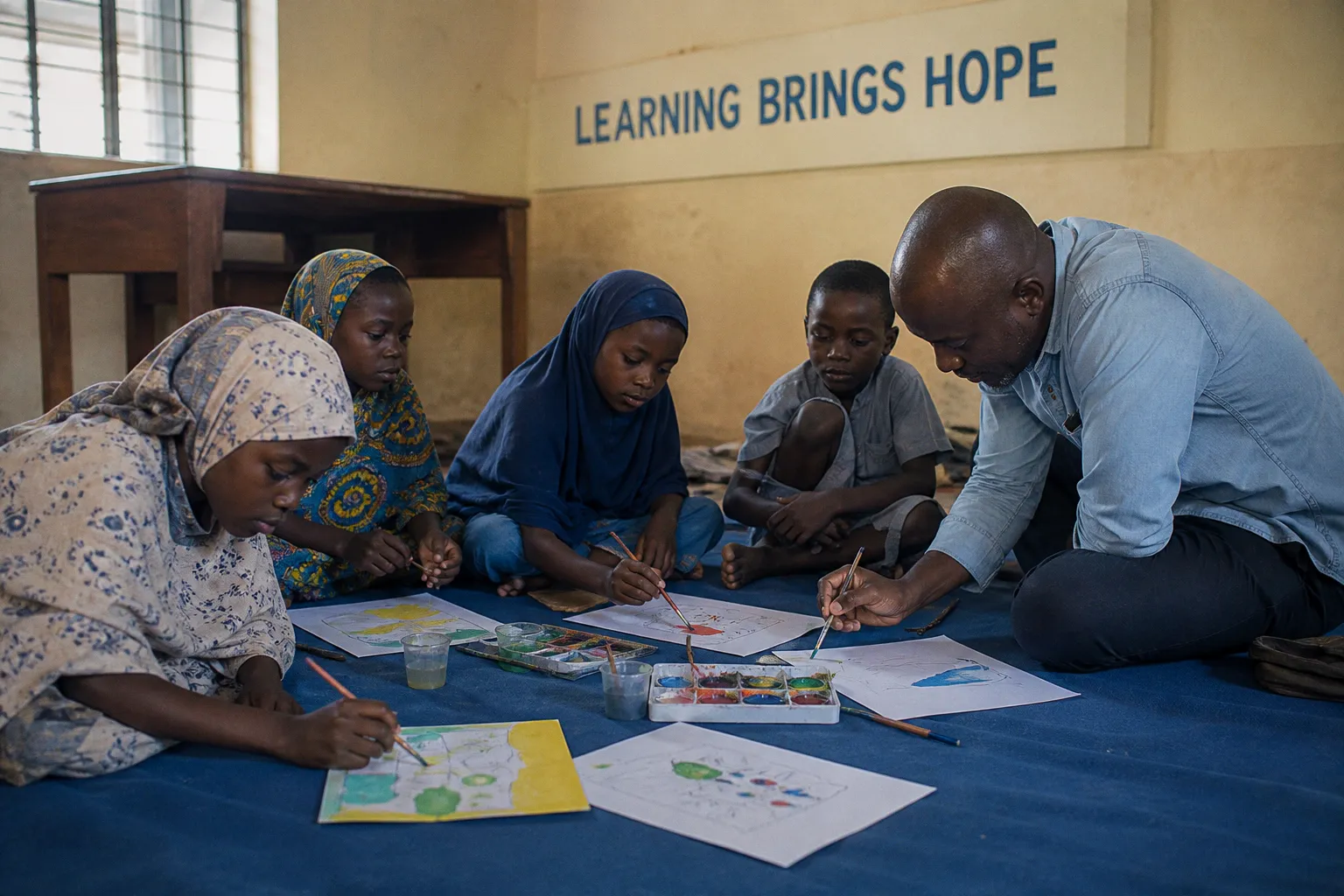
The European Commission reported this week that community-based volunteers in northeast Nigeria — operating through Save the Children International with EU humanitarian aid backing — moved two children, 12-year-old Binta and 5-year-old Mu'azu, from the margins of their communities back into classrooms. The intervention was mechanical: pay for the surgery, source the wheelchair, wire cash so the family doesn't collapse during recovery. No ribbon-cutting. No campaign launch. Just routing resources past the blockage.
The repair
Binta spent seven years outside the school system with worsening eye pain. Volunteers flagged her case, connected her to Yobe State University Teaching Hospital, and ran her surgery through the Children's Emergency Fund. The EC layered in multipurpose cash assistance to keep the household solvent during treatment — food, transport, the daily overhead that breaks fragile families when a caregiver stops working. Outcome: enrolled, literate, attending daily.
Mu'azu couldn't walk. His grandfather had tracked the problem for years with no solution in reach. The same volunteer network sourced a specialised wheelchair and registered the boy for school. He's now learning to navigate on wheels and preparing for his first classroom entry.
Why the volunteer network is the only delivery mechanism that works here
Northeast Nigeria has absorbed 16 years of armed conflict. The EC's numbers: 5.9 million people in the region need urgent aid, over 2.3 million are internally displaced, and between 400,000 and 500,000 live in zones completely cut off from conventional aid delivery. Outsiders can't anchor. The locals haul. In these areas, the community-based volunteer network isn't supplementing standard operations — it is the operation. Any model that depends on outside staff reaching every case is built on sand.
What we track
- Scalability of the Children's Emergency Fund approach — case-by-case referrals or a replicable pipeline across the displacement belt
- Cash layer integrity: multipurpose assistance only works if households aren't already tapped out; verify the baseline before wiring funds
- Mobility aid procurement — specialised wheelchairs aren't generic kit; check lead times against school enrollment windows
- Volunteer safety in areas where 400,000–500,000 people remain outside standard reach
If you're routing similar work elsewhere — rural India, the Sahel, wherever the dirt road outruns the government — the blueprint holds. Identify the specific barrier. Route the funding directly to the repair. Anchor the family so recovery doesn't bankrupt them. Move to the next case.