Philanthropic outreach events: what to gather before launch
The morning before any meaningful community gathering, when the bikers are loading crates into their sidecars and the village volunteers are sweeping the courtyard, there is a particular kind of quiet that settles over the preparations.
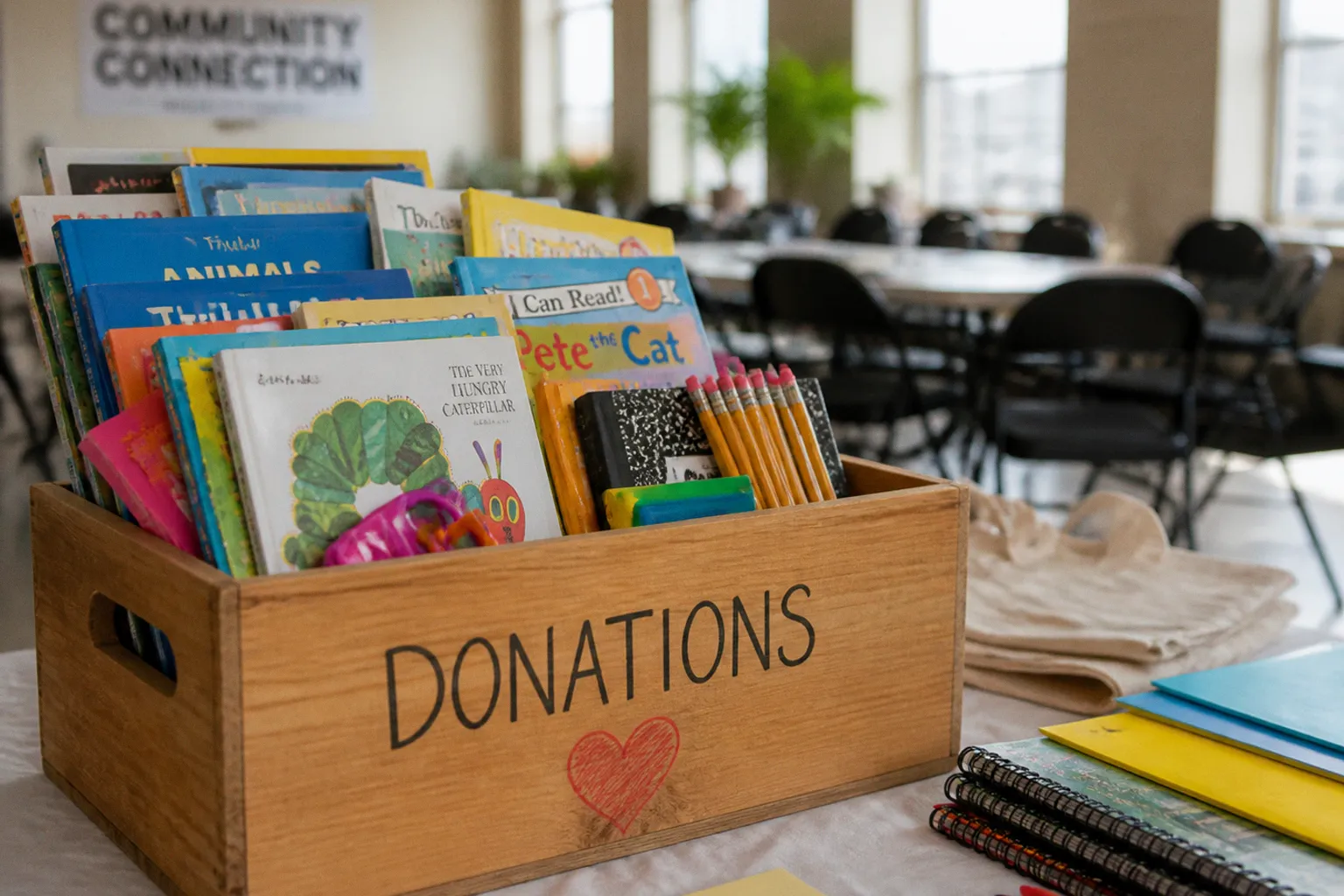
It is not the silence of uncertainty; it is the silence of people who understand that how you arrive matters as much as why you have come. In the rural districts where our networks operate, the line between a thoughtful outreach event and a careless one is drawn long before the first guest walks through the gate. It is drawn in the weeks of preparation, in the unglamorous decisions about folding chairs and printed fact sheets, in the discipline of treating a one-day gathering as a piece of stewardship rather than a transaction of goodwill. This is the work that precedes the work — and it is the part that determines whether the people you came to serve experience your presence as agency or as intrusion.
A philanthropic outreach event is not a campaign moment. It is a relationship, and like any relationship it needs infrastructure. The physical objects you gather, the digital tools you set up, the documents you have ready, and the timeline you keep are not bureaucratic busywork. They are the architecture of respect: they signal to a community that you have taken their time seriously, that you have anticipated their questions, and that you are prepared to be accountable for what you say your mission is. The checklist that follows is drawn from the kind of grounded preparation that separates one-off photo opportunities from the slow, durable work of grassroots solidarity.
Establishing the Planning Timeline and Core Team
Before any box is packed, before any banner is measured for the courtyard gate, the question of timing has to be answered honestly. A mid-sized community event — a fun run, a school supply drive, a cultural evening with local families — generally needs three to six months of preparation. A larger gala, a multi-village tour, or a national day of action runs closer to six to twelve months. These are not arbitrary brackets; they reflect the time it takes to build trust with local partners, secure permissions from village councils or municipal authorities, and allow the rhythm of the community to absorb your plans without disruption.
I have watched well-meaning groups compress this timeline into a few frantic weeks and then wonder, on the day itself, why the room felt thin. Preparation time is not slack to be tightened; it is the buffer that allows relationships to form. When you give yourself four months instead of six, you are not saving time — you are borrowing against the goodwill of the elders who would otherwise have walked you through the introduction.
The first concrete move, in the first two weeks of planning, is to recruit a core team of three to five trusted volunteers. This is not a general call for help; it is a deliberate assembly of people who will each own a defined slice of the work. One person takes logistics — venues, transport, supplies, setup. Another takes promotion, both physical and digital. A third owns the finances, from petty cash to donor receipts. The remaining two typically flex across whatever the day demands, but they should be named, not floating. A team of named people is what allows a grassroots event to survive a last-minute venue change without collapsing into improvisation. It is also what protects the project from burnout, because the labor of showing up for a community does not rest on a single pair of shoulders.
A core team of three to five named volunteers, recruited in the first two weeks, is what turns an outreach event from a one-day gesture into a durable piece of community stewardship.
Physical Tabling Kits and On-Site Infrastructure
When we ride into a village with our crates strapped down, the first thing we unpack is rarely the most important thing. The tables and folding chairs, the canopy tent weighted with proper anchors or paperweights, the tablecloths that cover the bare frames — these are not decorative choices. They are the visible promise that someone has thought about where a grandmother will sit, where a child can reach a coloring sheet, where the elder with a walking stick will find shade. Infrastructure is dignity, and dignity is built out of folding chairs.
A working events kit for tabling and outreach should contain, at minimum:
- Folding tables (at least two, sized so a child can lean on them comfortably)
- Folding chairs, more than you expect to need — guests always stay longer than planned
- Tablecloths that reach the ground, both for appearance and for concealing stored supplies
- A canopy tent with proper anchors or weighted paperweights, because rural courtyards are rarely flat
- A large banner, hung with bungee cords rather than tape, so it survives the wind
- Name tags for the volunteers, and a small stack of blank ones for visitors who want to stay involved
- Basic office supplies — pens that work, tape, scissors, a stapler, notepads, and a clipboard for sign-ups
The temptation is to treat the kit as a shopping list. It is more useful to treat it as a kit of relationships: every item in it exists to make a human encounter slightly easier. The clipboard with the sign-up sheet is not a metric; it is the first step toward someone becoming a recurring volunteer. The banner is not branding; it is the marker that tells a passerby, in a single glance, what this gathering is about and whether they belong here.
For environmental cleanups and outdoor days, the same logic applies, but the kit shifts. Volunteers should bring their own reusable water bottles, buckets, bags, and gloves, which both lowers the event's footprint and gives every participant a small piece of ownership over the work. Grabbers for those who cannot bend easily are not optional extras — they are the difference between an elder contributing meaningfully and an elder watching from the sideline. These are small objects. They carry the weight of inclusion.
Digital Engagement Tools and Donation Logistics
The physical table is one half of the conversation. The other half is the digital layer that lets a conversation continue after the tent comes down. For most grassroots events, the digital tools are modest, but they have to be in place before the first guest arrives, not assembled in panic halfway through the morning.
The working set typically includes:
- Business cards with a clean URL and a single, scannable QR code
- Paper sign-up sheets as a backup, alongside a tablet running an electronic form
- Impact story binders, printed, with photographs and short narratives from previous work
- A visible donation box, sealed, with a small lock and clear accounting instructions
- QR codes printed at poster size and taped at child height as well as adult height, so that anyone who wants to give can do so without asking permission
The QR code, in particular, is the quiet workhorse of a modern outreach event. When a passerby sees a banner, sits down at a table, and decides — in that small private moment — that they want to support the cause, the code is what turns intention into action. It has to work offline, it has to load in under two seconds on a two-year-old phone, and it has to land on a page that explains clearly where the money goes. If any of those three conditions fail, the moment is gone.
Sign-up sheets serve a function beyond headcount. They are how you learn that a retired schoolteacher in the next village would be willing to translate your materials into the local dialect. They are how you find out that the auto-rickshaw drivers' union has been looking for a literacy partner. They are how you discover that the woman who came to complain about a broken handpump is also the person who organizes the women's self-help group. Treat each sheet as a future conversation, not as a tally.
One detail that often gets missed: every online promotional and donation page should meet basic accessibility standards. That means alt text on images, sufficient color contrast, captions on videos, and a structure that reads cleanly with a screen reader. Accessibility is not a compliance footnote; it is the visible form of saying, in practice, that the people you serve are full members of the public.
| Digital Tool | Primary Role | Common Mistake to Avoid |
|---|---|---|
| QR code at child and adult height | Converts intent into immediate action | Landing page loads slowly or buries the donation button |
| Paper sign-up sheet | Captures people without smartphones or data | Treated as a headcount rather than a relationship map |
| Electronic tablet form | Cleaner data for follow-up | Replaces paper entirely, excluding those who need it |
| Donation box (sealed) | Cash contributions and visible trust | Left unattended, or without a clear chain of custody |
| Impact story binder | Anchors the cause in real faces and places | Stock photography instead of community-captured stories |
Developing a Comprehensive Media and Impact Kit
A media kit is not a press kit in the glossy sense. For a grassroots event, it is the bundle of materials that allows anyone — a local journalist, a visiting official, a curious teacher, a volunteer's grandmother — to understand what the organization is, what it has done, and what it is asking of the community. The materials should be prepared in advance, printed, and ready to hand over without scrambling.
A working media kit typically contains:
- A program fact sheet, one page, plain language, no jargon
- A cause fact sheet, explaining the underlying issue in two or three short paragraphs
- The official news release, ready to send, with quotes from named local voices
- Copies of any local government proclamations or endorsements, which signal institutional recognition
- Prepared speaker remarks for anyone who may be asked to speak unexpectedly
- Testimonial letters from supporters, ideally with photographs and the supporter's own words
The principle here is simple: if someone asks you a question, you should already have the answer printed. Not because you want to control the message, but because you want to honor the question. A village elder who asks what your organization has actually accomplished in the last three years deserves a printed, dated, honest answer — not a vague gesture toward a future aspiration. The testimonial letters, in particular, are powerful because they put a human face on the work. They also serve as a quiet form of accountability: when supporters put their names beside the cause, they are also saying they will be asked about it later.
I have learned to keep the cause fact sheet short on purpose. Long documents get folded and lost. A single page that a busy person can read in ninety seconds, and that names the specific local problem rather than gesturing at global statistics, will travel further than a glossy brochure. The same logic applies to the news release: it should be written in the language of the district, not in the language of headquarters. The shorter and more local the document, the more it will be passed from hand to hand.
Essential IT and AV Equipment for Seamless Execution
The technology layer of an outreach event is the one most likely to fail quietly and most likely to embarrass everyone when it does. The fix is not better technology; it is preparation. Every piece of equipment should be reserved, tested, and assigned to a named person before launch day.
The standard kit includes:
- Two laptops, because one will eventually have a problem
- A portable mi-fi device, with a working SIM and a data plan that has been topped up the night before
- A camera, with extra batteries and an empty memory card
- A portable projector, a tripod screen, and the correct cables
- Speakers tested at the actual volume of the venue, not the showroom
- A PowerPoint remote, so the speaker is not pinned to the laptop
- Extension cords, multi-plug adapters, and gaffer tape — the unglamorous backbone of every event
The mi-fi deserves its own paragraph. Rural event venues frequently have unreliable mobile data, and venues that look perfectly capable on a planning visit will, on the day, return a single bar of signal at best. A portable hotspot with a freshly loaded data plan is what separates an event that demonstrates its work from an event whose digital materials load as gray placeholders. The same applies to the projector and screen: they should be tested in the actual venue, with the actual lighting conditions, not in someone's living room the week before. A slide deck that looks fine on a desk can become unreadable under a canopy tent in afternoon sun.
The PowerPoint remote is small and unglamorous and indispensable. It allows a speaker to stand beside the audience rather than behind a screen, which is the difference between a presentation and a conversation. For grassroots work, almost everything depends on the conversation.
Bringing the Layers Together
A well-prepared outreach event is not the sum of its checklist. It is the integration of those objects into a single act of welcome. The tables and chairs create the room. The sign-up sheets and QR codes create the doorway. The media kit creates the memory. The IT and AV equipment create the conditions under which the story can actually be heard. And the core team, named and accountable, creates the human continuity that makes the next event possible.
There is one more figure that I keep returning to, because it captures something the checklist cannot. Roughly 55% of people who attend a community event report that it sparks a feeling of connection — and that feeling is what drives long-term engagement, whether as a donor, a volunteer, or simply as a neighbor who now recognizes the organization's volunteers when they ride back through the village. The objects we gather before launch are, in the end, the scaffolding for that feeling. They do not create it. They make room for it.
Roughly 55% of attendees say an outreach event sparks a real feeling of connection — and that single feeling is what carries the work past the closing of the tent.
The principle I would leave with anyone planning this kind of gathering is one I have learned from the village elders more than from any manual: preparation is a form of respect, and respect is the only currency that compounds. Gather your tables, your banners, your fact sheets, your hotspot, your named team of three to five — and gather them early — and the day itself will tell you whether the work has roots. If it does, the people you came to serve will not remember the checklist. They will remember that you were ready, that you arrived on time, and that you treated their time as something worth preparing for. That memory, more than any banner, is what gets passed on.