Modernizing Public School Infrastructure Through Federal Energy Grants
Department of Energy has posted the running tally on its Renew America's Schools program, and the receipt is worth a slow read for anyone tracking school infrastructure at scale.
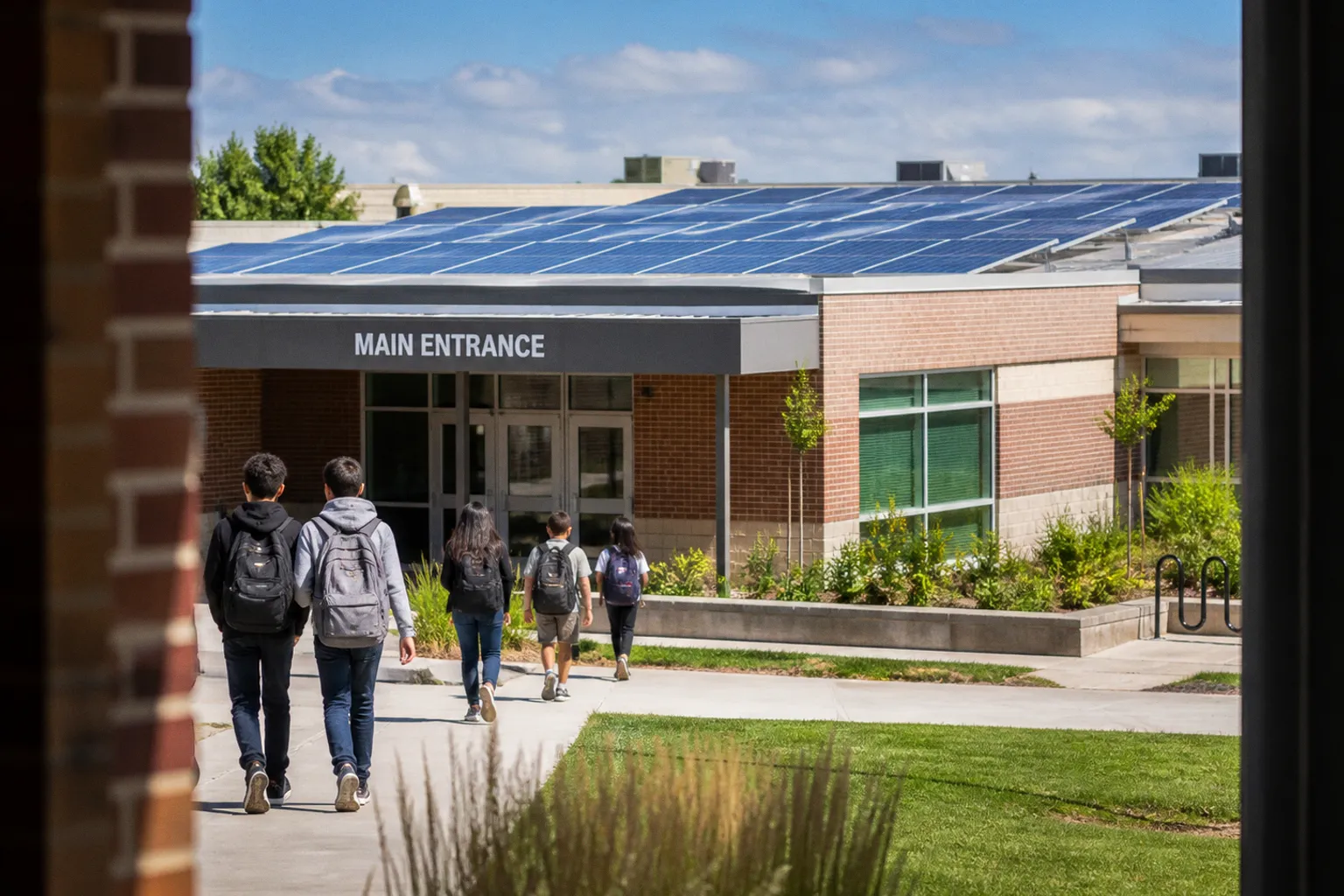
The U.S. Department of Energy has posted the running tally on its Renew America's Schools program, and the receipt is worth a slow read for anyone tracking school infrastructure at scale. Per the DOE's own program page, the $500 million initiative has so far moved $372.5 million into K-12 public school districts across 36 states, funding energy upgrades at roughly 410 facilities. Downstream, that work reaches approximately 197,000 students and 14,000 teachers now inside buildings that pull less power, cost less to run, and breathe cleaner air.
How the money got routed
The first funding line opened in 2022 with the Renew America's Schools Grant. The second round — the 2024 Prize and Grant cohort — named its selectees in August 2024. The stated scope is strictly mechanical: lower energy use, cut operating costs, lift indoor air quality, build healthier learning environments. On top of the facility work, the program funds capacity-building for energy management at over two dozen Local Educational Agencies. No curriculum rewrites, no admin expansion — just the building envelope and the systems tied to it.
The off-grid parallel
Separate coverage out of Sri Lanka points to Gunda Power running a corporate social responsibility initiative to take solar energy into rural schools. The public reporting carries only headline detail — district counts, installation figures, and timelines aren't in the snippets we can verify — so the only thing we can lock onto is the operating pattern. Distributed solar at the school gate is becoming the default entry point for energy work in underserved education systems, and CSR-funded models are carrying the upfront capital. For networks like ours, this is the template worth pressure-testing: a private operator funds the hardware, a school hosts the array, and a local crew handles the install.
The line item we don't keep
None of this runs through Indian terrain. But the DOE's accounting format — dollars committed, facilities upgraded, students downstream, teachers downstream — is the line item our volunteer network almost never produces. Before the next supply haul or the next volunteer mobilization, the honest question is whether we can put a number on the schools we've already serviced, the students inside them, and the recurring maintenance windows we're now committed to. If we can't quantify our own footprint, we're driving without an odometer. Fix that first, then chase the next route.