Indigenous cultural property: can copyright protect tribal art?
When volunteers from a biker crew roll into a village to repaint a school wall, the conversation that follows is rarely about paint or primer.
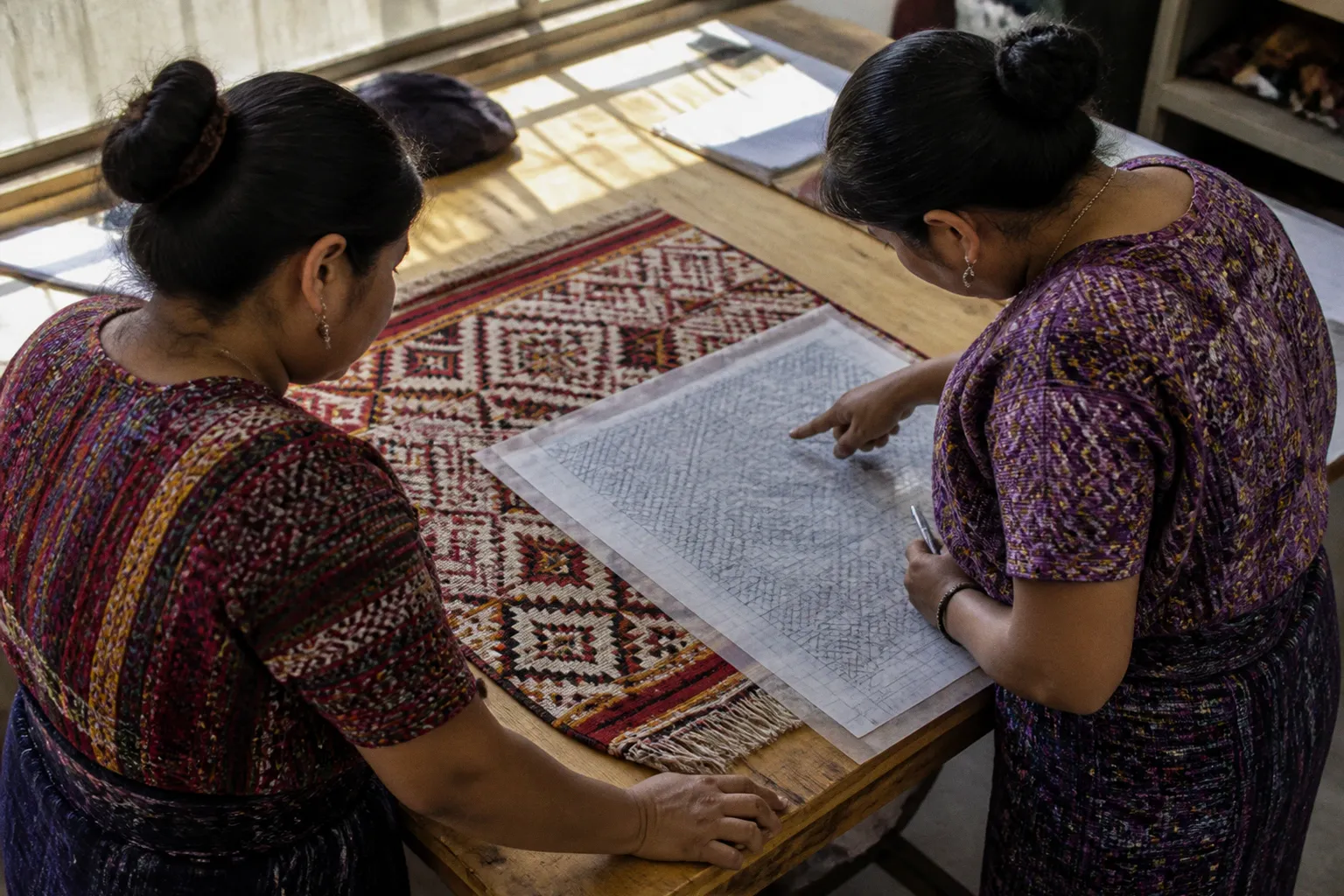
It tends to drift toward the symbols the elders want on that wall — a motif from a wedding blanket, a pattern from a basket, the line of a song — and then, almost always, toward the question nobody wants to voice out loud: who, exactly, owns those motifs? That question, followed honestly into a courthouse in Delhi, a marketplace in Phoenix, or a courtroom in Darwin, exposes a fault line between two ways of holding culture. Western copyright law was built for the lone artist with a signature and a fixed canvas. Tribal heritage was built for the community, the unbroken line of generations, and the responsibility to keep the pattern intact.
The standard answer to the heading question is uncomfortable: no, conventional copyright does not adequately protect tribal art, sacred designs, or the wider basket of traditional cultural expressions grouped under the umbrella of indigenous cultural property rights protection. The existing frameworks nudge, they police the dishonest, and they push new legislation forward — but they were not drafted with the village elder in mind, and the gap shows in every courtroom attempt to apply them.
The Fundamental Mismatch Between Copyright and Communal Heritage
Copyright, in nearly every major jurisdiction, begins with two assumptions that tribal traditions do not share. The first is individual authorship: a single mind conceives a work, fixes it in a tangible medium — paint on canvas, words on a page, notes on a staff — and registers a claim. The second is a bounded term: protection runs for the life of the creator plus a fixed number of years (seventy years in most major copyright systems, and around 120 years for standard corporate works), after which the work enters the public domain. Both assumptions treat the creator as a discrete node, distinct from the lineage that fed them.
Tribal cultural property operates on entirely different premises. A song may belong to a clan rather than to the elder who taught it to the children at the fire. A weaving pattern may be passed down orally, adjusted with each generation, and considered sacred — meaning it is not freely shareable even within the community, let alone with outsiders. The "author" of a design, in this framework, is not a person but a people; the duration of protection is not a lifetime plus seventy years but, in principle, forever.
A song belongs to the clan, not to the singer. A pattern belongs to the lineage, not to the hand that wove it last Tuesday.
This is why the phrase tribal art copyright laws generates so much anxious reading in legal blogs, NGO briefings, and nonprofit newsletters. The mismatch is not a footnote. It is the entire problem, and it shapes every conversation about cultural stewardship that crosses the threshold between a community and the outside world.
To put the gap in plain terms, here is how the two systems differ across the parameters that matter most in day-to-day negotiation:
| Parameter | Standard copyright | Tribal cultural property |
|---|---|---|
| Authorship | Individual creator | Clan, lineage, or community |
| Fixation | Required (written, painted, recorded) | Often oral, performative, or transmitted through practice |
| Duration | Life of creator + 70 years; ~120 years for corporate works | In principle perpetual, across generations |
| Transferability | Assignable, licensable, saleable | Generally held in stewardship, not sold |
| Who can grant access | The named rights holder | Elders, cultural custodians, or the community as a whole |
| Sacred restrictions | Not part of the framework | Frequently central — some knowledge is not to be shared at all |
| Inheritance | Passes through estate or contract | Passes through ceremony, kinship, and recognition |
The table is not a tidy refutation. It is a working map of where the friction sits. The parameters on the right are not abstractions; they are the daily reality of cultural custodians from San communities in southern Africa to First Nations along Australia's coast, from the Adivasi belts of central India to Native nations of the American Southwest.
The Indian Arts and Crafts Act: A Half-Shield
The single most-cited piece of legislation in conversations about native american art legal protection is the United States Indian Arts and Crafts Act of 1990, strengthened by amendments in 2010. Its purpose is narrow but worth stating precisely. The Act functions as a truth-in-advertising law. It makes it unlawful to market or sell any product as "Indian-produced" or as the work of a specific tribe when, in fact, it is neither. Penalties for misrepresentation can be significant, including fines and, in some cases, criminal exposure for repeat or willful offenders.
What the Act does not do is equally important to understand. It does not prohibit a non-Indigenous designer from borrowing motifs, patterns, or stylistic conventions from tribal art and selling the result under their own name. It does not create a registry of protected designs. It does not grant tribes a copyright over their traditional cultural expressions. As long as the labeling is honest in the narrow legal sense — the work is not falsely claimed to be tribal — the marketplace is largely left alone.
The Indian Arts and Crafts Act polices the label. It does not police the design.
This is the half-shield. For communities building a livelihood from their own craft traditions, the Act is genuinely useful: it gives honest vendors a cudgel against fraudulent competitors, and it gives tribal arts cooperatives a lever against the bottom-feeders who undercut their prices with imported fakes. For communities trying to stop the slow bleed of their visual vocabulary into mass-produced home décor, fast fashion, and souvenir kitsch, the Act is silent. The conversation around integration of traditional design into mainstream markets is therefore not a legal conversation at all under current US law; it is a negotiation, and the imbalance of leverage falls heavily on the side with the marketing budget.
In our own volunteer routes, where the question often turns to whether a school mural can carry a particular motif without giving offense, this distinction is not academic. A non-Indigenous biker painting a stylized thunderbird on a rural classroom wall is unlikely to face an IACA complaint, because nobody is selling the wall. The ethical question, however, is entirely separate from the legal one, and it is where the real work of dialogue begins.
The Bulun Bulun Precedent: Custodianship as a Legal Bridge
The most useful legal precedent for protecting indigenous intellectual property outside the United States comes from Australia, and it has been quietly influential since 1998. In Bulun Bulun v R & T Textiles, an Indigenous artist whose name has since become shorthand for an entire legal conversation sued an Australian textile company for reproducing one of his bark paintings on fabric sold commercially. The court did not stop at a standard copyright ruling. It went further: it held that an Indigenous artist entrusted with traditional knowledge under customary law owes a fiduciary duty to the Indigenous custodians of that knowledge — a legal obligation to act in their interest and to refrain from exploitation that contradicts customary law.
The decision matters because it gives lawyers a tool standard copyright does not. Rather than asking "is this design original to one named artist?", the court asked "does this artist hold the design in trust, and has that trust been honored?" Customary law — the unwritten, inherited body of rules that govern relationships within the community — entered the courtroom as a binding constraint on commercial action.
Custodianship, not authorship, became the legal anchor.
The case is not a silver bullet. It was decided within an Australian common-law framework, and its reach into other jurisdictions is uneven. Indigenous communities elsewhere have used it as a reference point in negotiations with museums, in licensing discussions with fashion houses, and in advocacy for stronger domestic legislation. What it demonstrates, more than anything, is that the law can be taught a new vocabulary. The vocabulary of stewardship, of duty, of relationship — words that come from the language of community rather than the language of commerce — has entered the courtroom and stayed.
Global Standards and the Push for Sui Generis Legislation
At the international level, the most cited instrument is Article 31.1 of the United Nations Declaration on the Rights of Indigenous Peoples, adopted by the General Assembly in 2007. The article states that Indigenous peoples have the right to maintain, control, protect, and develop their intellectual property over their cultural heritage, traditional knowledge, and traditional cultural expressions.
That single sentence is a north star, not a binding treaty. UNDRIP is a declaration, which means it carries moral and political weight but does not, on its own, rewrite any national copyright statute. The work of translating Article 31.1 into enforceable domestic law is happening unevenly across the world, and it is the central question of what legal scholars call sui generis legislation — that is, a law created specifically for this category of knowledge, designed from the ground up rather than adapted from existing copyright frameworks.
A working traditional cultural expression protection statute typically tries to do several things at once: recognize communal ownership as a legitimate form of holding; extend the term of protection beyond the standard life-plus-70-years horizon; require consultation and consent, often through recognized cultural authorities, before commercial use; and carve out sacred knowledge that is not for outside use at all, regardless of the compensation offered.
The honest summary is that no country has fully achieved this. New Zealand has made meaningful progress through its relationship with Māori iwi under the Treaty of Waitangi framework. Panama's special regime for indigenous designs is often cited as a regional model. Australia's current direction is described in the next section. Across South Asia — including India, where volunteer routes run through Adivasi belts rich with textile and craft traditions — the conversation is active and ongoing, but the legal map is still being drawn.
Funding the Future: Australia's $13.4 Million ICIP Commitment
For readers who track the politics of this field, the most concrete recent marker is Australia's National Cultural Policy — Revive. Under that policy the federal government has allocated approximately $13.4 million Australian dollars over four years to develop stand-alone legislation protecting First Nations traditional knowledge (TK) and Indigenous Cultural and Intellectual Property (ICIP, in the Australian shorthand).
The figure is worth pausing on, not because it is large in absolute terms — a national arts budget is never small enough — but because it signals direction. The Australian government has accepted, in writing and with funding attached, that the existing patchwork of copyright, consumer protection, and case law is insufficient. The job now is to draft a statute that treats cultural property as a distinct category, governed by principles drawn from Indigenous custodianship rather than borrowed from the Berne Convention.
A realistic observer would note that drafting such a statute is harder than funding one. Definitions of "traditional knowledge" have to be negotiated with the very communities whose knowledge is at stake. Enforcement mechanisms have to work across state and federal lines. Sacred knowledge — the material that must never leave the custodians — has to be protected even from the act of being defined. None of this is impossible. All of it is slow.
Legislation is the visible tip. The decades of dialogue underneath it are the part that actually shapes the law.
What This Means at the Village Gate
For the biker crews and the community liaisons who show up at the village gate with toolkits and good intentions, none of this is background noise. It shapes what motifs can responsibly appear on a school wall, what designs can be printed on a fundraising T-shirt, what stories can be recorded and shared, and — most importantly — how permission is asked.
In practice, three working principles have emerged from years of sitting on the step between the volunteer tent and the elder's verandah.
1. The question of provenance always precedes the question of permission. A pattern's history — which clan, which lineage, which ceremonial function — is something to be learned before it is ever used. Elders are generous with this teaching when they sense the question is genuine.
2. Commercial use and educational use are not the same conversation. A mural on a school wall is a community decision; a T-shirt sold in a city market is, under any emerging framework, a separate conversation that requires explicit, documented consent and, increasingly, benefit-sharing back to the source community.
3. The law is catching up to the practice, not the other way around. Communities that have spent decades asserting stewardship through custom, ceremony, and quiet refusal are now seeing those practices begin to enter the legal record — slowly, unevenly, but visibly.
The throughline across all three is agency. Communities that hold the legal vocabulary and the cultural vocabulary at the same time are the ones who can say yes on their own terms and no without apology. The role of the outside helper is to slow down enough for that agency to show up in the conversation.
Closing Reflection
The honest answer to the heading — can copyright protect tribal art? — is that copyright, as currently written, cannot do the job alone. It was built to reward individual creators for a bounded time, and it does that work reasonably well for the cases it was designed for. Tribal art asks the law to recognize something else: that some creations belong to a people, that some knowledge must outlast any single life, and that stewardship is a more accurate word than ownership.
The frameworks are shifting. UNDRIP's Article 31.1 sets the international standard. The Bulun Bulun case gave lawyers a custodial vocabulary. Australia's $13.4 million commitment signals that national governments can move from rhetoric to drafting. The Indian Arts and Crafts Act shows how much can be done with a truth-in-advertising half-shield, and how much is left unprotected beyond it. Around the world, sui generis legislation is being drafted, contested, redrafted, and in some places enacted.
The work for those of us who move between the volunteer tent and the village gate is to remember that the legal question is downstream of a human one. Every motif on a school wall, every recorded song, every design on a fundraising poster is part of someone's inheritance. The law is one tool among many for protecting that inheritance — and the most important tool, still, is the conversation chosen before the brush is ever picked up.