Community vs individual forest rights for tribal land
India’s Forest Rights Act (FRA), enacted in 2006 and enforced from 2008, creates two fundamentally different routes for recognizing tribal and forest-dwelling rights: Individual Forest Rights (IFR) and Community Forest Rights (CFR).
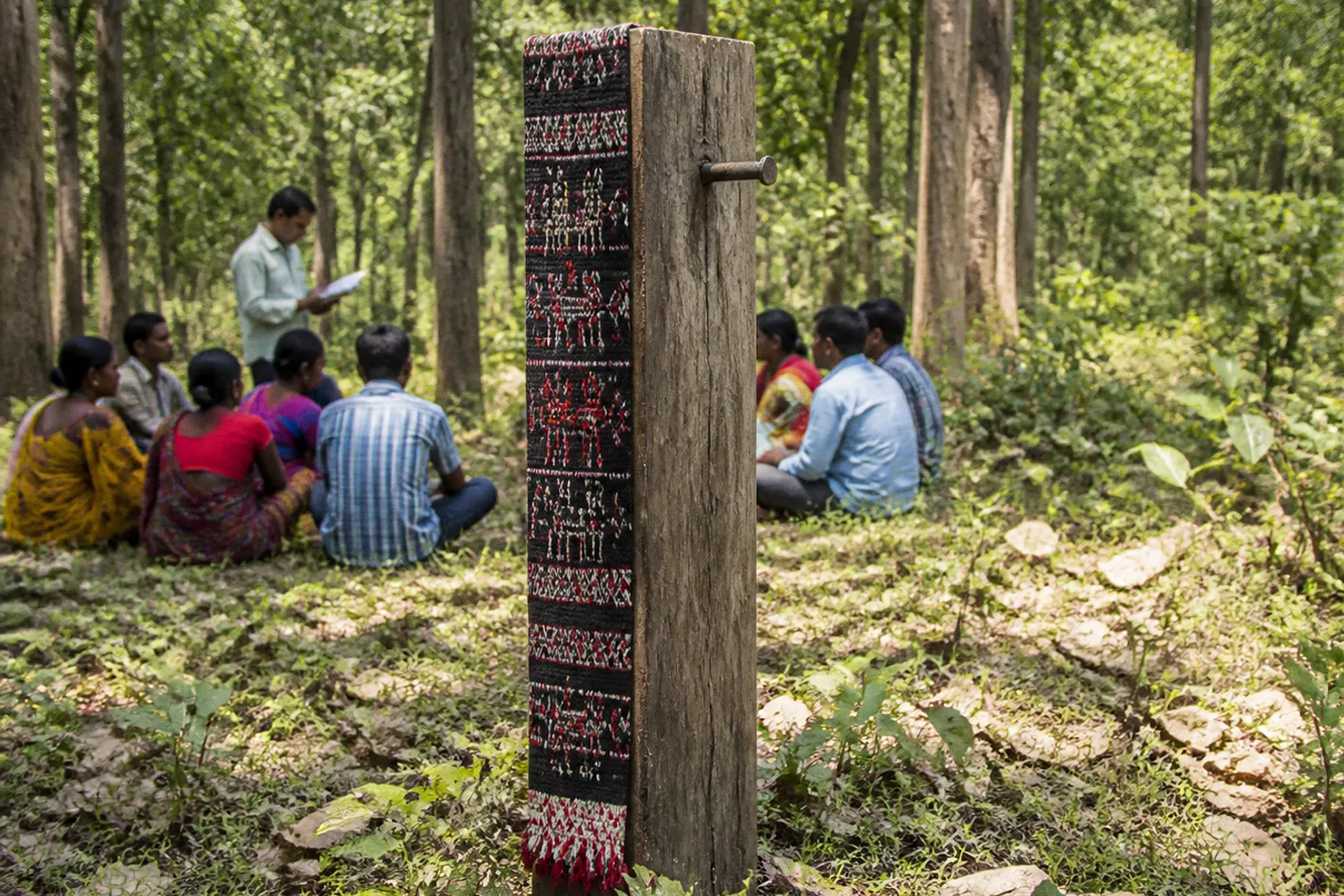
Treating them as interchangeable land titles is a structural error. One addresses a household’s habitation and self-cultivation; the other recognizes the village’s collective authority over traditional forest resources.
Compare car rental deals in United Kingdom
See available offersPartner link — DiscoverCars comparisonThe distinction has direct consequences for claim design, evidence, governance, and long-term livelihood planning. An IFR claim may secure a family’s recognized use of cultivated forest land, subject to a maximum of 4 hectares actually under cultivation. A CFR claim can cover grazing areas, water bodies, fishing, minor forest produce, habitat rights, and community management of forests. The question is not which category is universally better. The operational question is which right matches the resource being used and the institution capable of managing it.
An individual title protects a household’s cultivation. A community right protects the resource system on which many households depend.
The legal difference is also an economic difference
The most useful way to understand community forest rights vs individual forest rights is to separate the beneficiary, the asset, and the decision-making authority.
Under IFR, the beneficiary is an individual or family belonging to a Scheduled Tribe, or an eligible Other Traditional Forest Dweller (OTFD). The recognized rights relate primarily to habitation and self-cultivation on forest land. The statutory ceiling is 4 hectares, and recognition is tied to the land actually being cultivated rather than to an abstract entitlement to additional acreage.
Under CFR, the beneficiary is the community, with the Gram Sabha serving as the foundational statutory authority. The right may concern a shared forest, grazing ground, fishing area, water body, bamboo resource, honey collection area, mahua collection zone, or other minor forest produce traditionally used by the village. CFR can also include customary management and protection responsibilities under Section 3(1)(i) of the FRA.
These are different asset classes:
| Parameter | Individual Forest Rights (IFR) | Community Forest Rights (CFR) |
|---|---|---|
| Primary beneficiary | Individual or family | Gram Sabha and the wider eligible community |
| Main purpose | Habitation and self-cultivation | Collective access, use, protection, regeneration, and management |
| Typical resource | A defined household cultivation area | Forests, grazing land, water bodies, fishing areas, and minor forest produce |
| Area limitation | Up to 4 hectares actually cultivated | No equivalent household ceiling stated in the provided framework; scope depends on customary community use and evidence |
| Governance | Household use within recognized rights | Collective decisions through the Gram Sabha |
| Economic output | Household agricultural production | Shared forest-based livelihoods and community-managed resources |
| Transferability | Cannot be sold, transferred, or alienated to non-eligible parties | Does not convert a common resource into privately transferable land |
| Main implementation risk | Rejection, boundary disputes, and weak evidence of cultivation or habitation | Administrative friction, unclear mapping, internal governance failures, and claim rejection |
This distinction matters because a village may have strong evidence of collective use even when individual households lack complete documentary proof for every cultivated plot. Conversely, a household may need an IFR claim because community recognition alone does not provide the security required for habitation or family cultivation.
What IFR can solve—and what it cannot
Individual Forest Rights are designed for a specific problem: the failure to recognize the lawful relationship between a forest-dwelling household and the land it has traditionally inhabited or cultivated.
An accepted IFR claim can provide a formal basis for continued habitation and self-cultivation, within the statutory conditions. That recognition can improve planning for housing, farm investment, soil improvement, irrigation access, and household-level livelihood support. It can also reduce the uncertainty created when a family cultivates land without recognized tenure.
However, IFR should not be treated as a general land regularization mechanism. The right is limited by the actual area under cultivation, capped at 4 hectares, and subject to the eligibility requirements of the FRA. For OTFDs, the claimant must establish residence on forest land for at least three generations, or 75 years, before December 13, 2005. Scheduled Tribe claimants remain subject to the applicable statutory framework and evidence requirements.
The non-transferability rule is equally important. FRA-recognized land rights cannot be sold, transferred, or alienated to non-eligible parties. This protects beneficiaries from dispossession, but it also limits the way the right can be used as a conventional financial asset. An IFR title is not equivalent to freely tradable private property.
That restriction should shape program design. A bank, NGO, or corporate social responsibility initiative should not evaluate an IFR-recognized holding as though it were collateral that can be liquidated or transferred. The more appropriate investment logic is productive support: farm inputs, water access, extension services, storage, market access, and risk reduction that improve the sustainable yield of the recognized land without undermining tenure security.
The strongest use cases for IFR
IFR is usually the more relevant route when the problem is concentrated at household level:
1. A family has a defined cultivated plot. The land is used for self-cultivation, and the claim can be tied to a recognizable area rather than a broad community resource.
2. The household’s habitation is at risk. Recognition of habitation rights can create a more stable basis for public-service planning and household investment.
3. Agricultural support is being planned. Irrigation, soil treatment, seed distribution, and crop diversification require a clearly identified household beneficiary.
4. The claim is distinct from common-resource use. A family’s cultivated plot should not be substituted for a village-wide claim covering grazing, forest produce, or water access.
5. Evidence can be assembled at the household level. The case may rely on local testimony, cultivation history, maps, and other forms of admissible evidence considered through the statutory process.
The risk is that development agencies may push every household toward an individual title because it is easier to count. That creates a measurable output but can produce a weak social result. If the livelihood depends on bamboo, honey, grazing, fishing, or access to a shared forest, an IFR-only strategy may formalize a small agricultural plot while leaving the larger economic system unrecognized.
CFR is a governance right, not a larger IFR
Community Forest Rights are sometimes described as though they were simply bigger individual titles. That description is inaccurate and operationally dangerous.
CFR recognizes collective rights over traditional community resources and customary management systems. The Gram Sabha is not a ceremonial approval point; it is the institutional foundation of the claim process and subsequent governance. A community right therefore requires more than drawing a larger boundary around land. It requires a functioning decision-making structure, a defensible resource map, agreed rules for access, and mechanisms for monitoring use.
The economic value of CFR often comes from resources that cannot be divided efficiently among households. A forest used for grazing, collection of non-timber forest produce, fishing, water access, or cultural purposes may generate a higher sustainable yield when managed as a common resource. Fragmenting it into household parcels can create enforcement costs, reduce ecological continuity, and intensify internal disputes.
At the same time, CFR does not remove the authority of the Gram Sabha. The right is not a licence for an outside agency, private operator, or NGO to manage the resource on behalf of the community. External partners can provide mapping, legal support, logistics, training, market access, and monitoring systems, but the statutory governance structure remains local.
The resource categories that point toward CFR
A claim is more likely to require a community-rights framework when it involves:
- Minor forest produce, including resources such as bamboo, honey, or mahua, collected across shared forest areas.
- Grazing routes and common grazing zones, where access is used by multiple households and cannot be reduced to one private plot.
- Fishing and water bodies, particularly where seasonal access and collective rules determine the resource’s sustainability.
- Habitat rights for Particularly Vulnerable Tribal Groups, where the relevant territory extends beyond a single household’s cultivated field.
- Forest protection and regeneration, where the right includes customary management responsibilities.
- Cultural and livelihood landscapes, in which forests, water, movement routes, and gathering areas form one connected community resource.
The key test is not whether a resource has a market price. The test is whether its use is collective, customary, and dependent on coordinated governance. A commercially valuable forest product still requires community safeguards if its extraction affects the broader resource base.
The claim process determines the quality of the outcome
The Forest Rights Committee (FRC), elected by the Gram Sabha, plays a central role in verifying claims. The committee consists of 10 to 15 members. It examines claims before they move to the Sub-Divisional and District Level Committees.
This procedure creates an important distinction between administrative recognition and development support. An NGO may help organize documents or facilitate village meetings, but it should not replace the Gram Sabha or present its own assessment as the community’s statutory decision.
For both IFR and CFR, the claim file should be constructed around the right being asserted. A household cultivation claim needs evidence relevant to habitation and self-cultivation. A CFR claim needs evidence of customary collective use, the resource boundary, the community that uses it, and the governance practices that sustain it.
A practical claim architecture has five connected layers:
1. Eligibility layer. Establish whether claimants fall within the Scheduled Tribe or OTFD categories and whether the required historical residence conditions apply. For OTFDs, the relevant threshold is three generations, or 75 years, before December 13, 2005.
2. Resource layer. Define whether the claim concerns a household plot, a common forest, grazing land, a water body, a fishing area, minor forest produce, or a combination of customary resources.
3. Evidence layer. Assemble local records, maps, testimony, cultivation or use histories, and other forms of evidence available under the statutory process. The evidence must correspond to the claim, rather than merely prove that the claimant lives in a forested region.
4. Governance layer. Identify who makes decisions, how access is allocated, how extraction is controlled, and how disputes are handled. This layer is particularly important for CFR claims.
5. Escalation layer. Track the resolution of the Gram Sabha, the FRC verification, and the movement of the claim to the Sub-Divisional and District Level Committees. A rejected claim should not disappear into an administrative file; the reason for rejection must be recorded and analyzed.
This is where many programs lose efficiency. They invest in outreach but not in claim-quality control. The result is a high volume of submissions with weak boundaries, incomplete evidence, or a mismatch between the resource and the legal category.
The main bottleneck is rarely awareness alone. It is the conversion of customary use into a claim that is legally legible, locally validated, and administratively traceable.
Why CFR claims face a higher coordination burden
CFR claims have greater potential to protect community livelihoods, but they also carry a heavier governance load. An individual claim can often be assessed through the relationship between one family and one cultivated area. A community claim must establish the relationship between many households and a shared resource.
That introduces several predictable bottlenecks.
Boundary definition
A community forest may not align with a revenue boundary, administrative map, or contemporary survey record. Seasonal grazing, collection routes, and water access can extend across areas that are treated differently by different departments. A claim without a clear spatial description is vulnerable to rejection or later conflict.
Internal representation
The Gram Sabha must represent the community rather than a narrow group of households. FRC membership and village-level decision-making therefore matter. If women, remote hamlets, land-poor households, or Particularly Vulnerable Tribal Groups are excluded from the process, the claim may be formally collective but substantively unequal.
Resource pressure
CFR recognition does not eliminate ecological constraints. A forest can be legally recognized as a community resource and still be degraded by excessive extraction, fire, invasive species, or competing land uses. Management plans should connect access rules to regeneration rates and sustainable yield, not merely to anticipated revenue.
Benefit allocation
Market access for bamboo, honey, mahua, or other minor forest produce can increase income, but it can also transfer bargaining power to traders or create disputes over who receives the proceeds. A credible community system needs transparent collection records, agreed cost allocation, and a reserve for regeneration and monitoring.
Administrative friction
The Ministry of Tribal Affairs’ March 2026 Monthly Progress Report recorded 47,901 rejected Community Forest Resource or CFRR claims nationally, including 9,254 in West Bengal and 7,197 in Jammu and Kashmir. These figures do not by themselves explain why claims failed, and they should not be converted into a national rejection-rate estimate without a reliable denominator. They do, however, demonstrate the scale of the implementation problem and the need to treat claim preparation as a technical function rather than a one-time awareness activity.
Choosing between IFR and CFR in program design
Organizations supporting tribal communities often approach the issue through funding: should resources go toward household titles, community mapping, school access, livelihood infrastructure, or legal assistance? The answer depends on the bottleneck.
A useful allocation model separates four types of intervention:
| Program bottleneck | More relevant rights pathway | Practical support |
|---|---|---|
| Household cultivation is unrecognized | IFR | Evidence preparation, plot mapping, application support, and farm productivity services |
| Shared forest access is threatened | CFR | Community mapping, Gram Sabha facilitation, resource-use documentation, and legal process support |
| Forest produce is collected but generates low income | CFR, with livelihood support | Storage, aggregation, quality control, transparent pricing, and market-linkage systems |
| Habitation and public services are insecure | IFR and, where applicable, habitat-related community rights | Settlement documentation, service mapping, and coordination with local authorities |
| Claims are repeatedly rejected | Either, depending on the claim | Rejection analysis, evidence correction, procedural tracking, and escalation support |
| Community resources are recognized but degraded | CFR | Regeneration planning, fire management, monitoring, and enforceable access rules |
This approach prevents a common failure mode: measuring success by the number of forms submitted instead of the number of rights effectively recognized and usable by the intended beneficiaries.
For corporate partners and nonprofit funders, the most reliable performance indicators are not just claim counts. They include:
- the share of claims with complete spatial and beneficiary records;
- the time between Gram Sabha resolution and committee-level decision;
- the proportion of rejected claims with documented reasons and follow-up action;
- the number of villages with functioning resource-management rules after CFR recognition;
- the value retained by the community from minor forest produce;
- the condition of the resource base over successive monitoring periods;
- the participation of women, marginalized hamlets, and other affected groups in governance;
- the connection between recognized rights and actual improvements in schooling, health access, transport, or livelihood stability.
These metrics are more demanding than counting titles, but they provide a better measure of sustainable yield and institutional performance.
The role of education and rural infrastructure
Forest-rights work is not separate from education. A community that has to manage a forest resource, document claims, and negotiate with multiple administrative bodies requires basic institutional capacity. In remote tribal areas, this capacity is often constrained by distance, language barriers, limited record access, and weak transport links.
That is why rural education initiatives should be integrated with, rather than detached from, tribal land-rights programs. A repaired school does not resolve a rejected CFR claim, but a functioning school can become part of a broader civic infrastructure: a location for information sessions, record storage, digital access, youth mapping projects, and training on resource governance. The boundary must remain clear. Schools should not become informal substitutes for the Gram Sabha or legal institutions, but they can support the information systems that allow communities to participate effectively.
For volunteer networks and logistics-focused nonprofits, the intervention is especially practical. Transport, printing, mobile documentation units, satellite or map access where appropriate, and scheduled visits to dispersed hamlets can reduce the transaction cost of participation. The objective is not to centralize decisions in an outside organization. It is to make statutory participation physically and administratively possible.
Common errors in comparing tribal land claim types
The comparison between CFR and IFR becomes distorted when programs use the wrong evaluation frame. Five errors appear repeatedly.
1. Treating private ownership as the default measure of success. CFR is not an inferior version of IFR because it does not produce a household parcel. It protects a different economic and cultural asset.
2. Counting community claims as land distribution. CFR recognizes collective rights and governance over traditional resources; it does not automatically divide the forest into privately controlled plots.
3. Assuming one successful claim resolves all tenure problems. A household may need IFR while the same village also needs CFR. These pathways can be complementary rather than mutually exclusive.
4. Ignoring non-transferability. Neither the development partner nor the beneficiary should treat FRA-recognized rights as freely alienable property. Program contracts and financial models must respect this limitation.
5. Using rejection totals without diagnosing the process. A rejected claim may reflect an evidence gap, a boundary problem, an eligibility dispute, or administrative friction. Each requires a different remedy.
The correct comparison is therefore functional: which right protects the resource, which institution can govern it, and what support is required after recognition?
A funding and policy route that matches the law
The most efficient support model is layered.
First, fund claim readiness: local mapping, translation, documentation, Gram Sabha preparation, FRC training, and procedural tracking. Second, fund governance: community rules, transparent records, inclusion mechanisms, and conflict-resolution processes. Third, fund productive use: storage, processing, school-linked logistics, transport, and market infrastructure that raise the value retained locally. Fourth, fund monitoring: resource condition, benefit distribution, claim outcomes, and administrative delays.
This sequence matters. Market infrastructure introduced before tenure and governance are stable can increase extraction without strengthening community control. Conversely, legal recognition without livelihood support can leave communities with formal rights but limited sustainable yield.
Policy adjustments should focus on reducing the gap between statutory design and administrative execution. Claimants need clear rejection reasons, reliable spatial documentation, accessible procedures, and an institutional route for correction. Implementing agencies need performance metrics that reward accurate recognition and durable governance rather than raw disposal numbers.
For funders, the call to action is equally specific: direct capital toward the bottleneck that prevents rights from becoming usable. Where households lack recognition of cultivated land, support IFR claim quality and productive services. Where the livelihood base is collective, finance CFR mapping, Gram Sabha capacity, resource regeneration, and transparent market systems. Where claims are rejected at scale, invest in procedural analysis rather than repeating general outreach.
Community forest rights vs individual forest rights is not a contest between collective welfare and household security. It is a decision about matching legal recognition to the structure of life on the ground. IFR secures the household’s relationship with habitation and cultivation. CFR secures the community’s relationship with forests, water, grazing, produce, and customary management.
A serious tribal-support program should measure both, protect the authority of the Gram Sabha, respect the non-transferability of recognized rights, and allocate resources according to the actual bottleneck. That is the route from formal entitlement to durable community development.