Building Stability: How Housing Support Sustains Navajo Families and Education
The Office of the President of the Navajo Nation reports that Navajo veterans are receiving new homes as part of a wider effort to improve housing stability and keep families connected across the Nation.
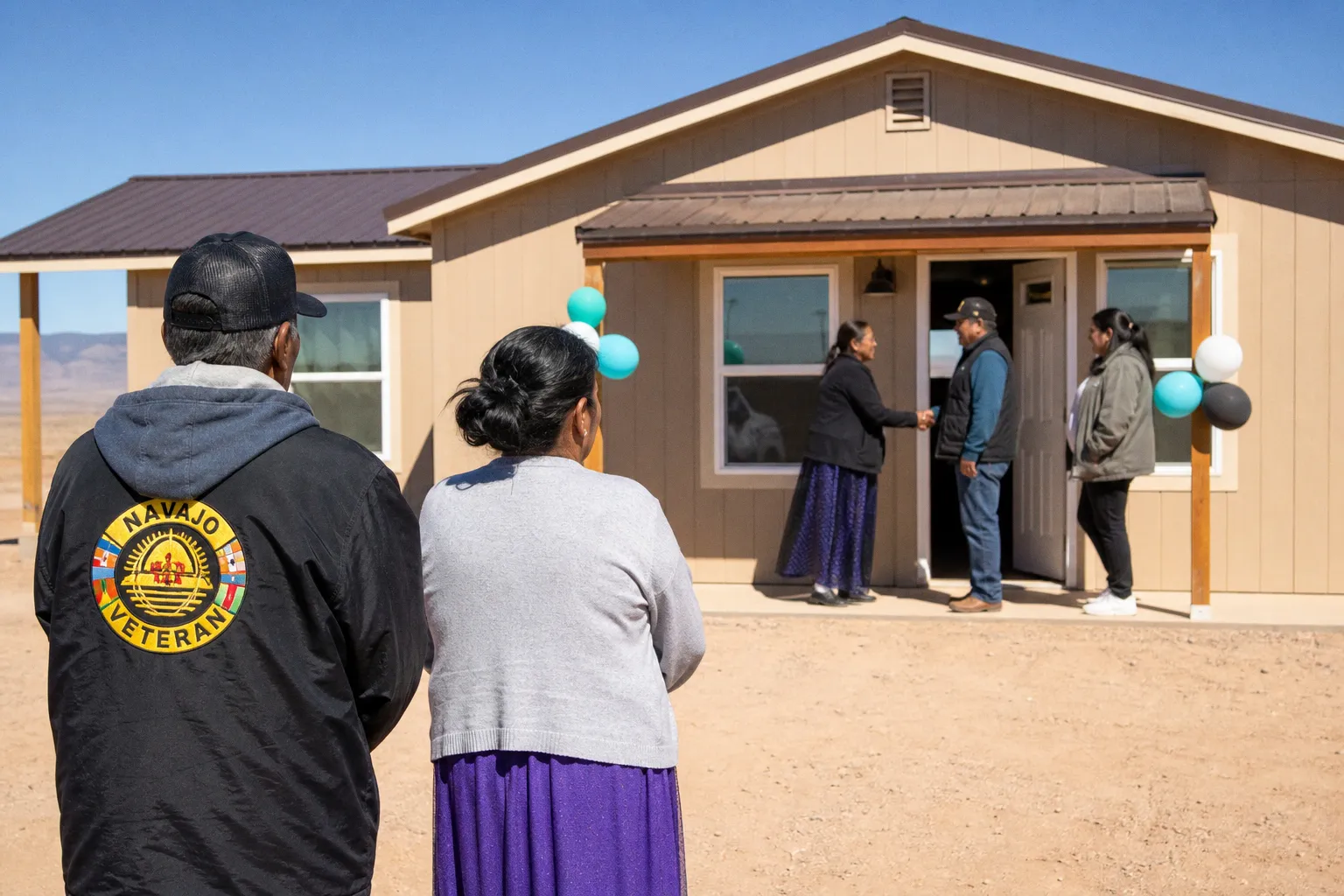
Honoring Service While Strengthening Navajo Communities for Generations to Come
The administration also highlighted home-repair assistance, access to benefits, and support for surviving spouses and Gold Star families. For crews working around schools and community facilities, the point is direct: a public project does not stand alone when the homes around it remain unstable.
Housing is the load-bearing work
A new home is not only a roof replacement with better paperwork. According to the Navajo Nation administration, housing support is being used to help veterans remain close to children, grandchildren, relatives, ceremonies, and their communities.
That matters because distance and access dictate whether a community can keep its people connected. The source describes homes as permanent gathering places where families can return and where language and traditions can continue to be shared. We should treat that as infrastructure, not ceremony.
For volunteer networks, the practical lesson is to stop separating “education work” from the conditions that allow families to use and sustain local institutions. A school repair may fix a building. Housing assistance can help hold the surrounding community in place. These are different jobs, but they operate on the same route map.
The administration says it has made support for Navajo veterans a priority. The measures identified by the source include new homes, home-improvement assistance, help for surviving spouses and Gold Star families, and support in reaching federal benefits and services.
No project list, budget, construction schedule, or number of completed homes is provided in the available material. We should not fill those gaps with assumptions.
What this means for field crews
The first mistake in community work is arriving with a finished plan and no local sequence. Housing, benefits access, family support, and public facilities may be handled by different offices or groups. If we haul materials to one site without checking how the surrounding work is organized, we risk building an isolated fix.
The Navajo Nation source specifically points to the Navajo Nation Veterans Administration and to efforts to improve access to earned benefits and services. That gives crews a clear coordination point to watch, even if the announcement does not provide a full operating plan.
For education-focused organizations, the responsible route is narrow:
- Do not present veteran housing as a school construction program.
- Do not claim that new homes automatically improve attendance, learning outcomes, or school access.
- Do recognize that family stability and community connection are part of the operating environment around any rural classroom.
- Confirm who owns the work before offering labor, transport, materials, or fundraising.
- Separate verified delivery from stated priority. An administration can identify a priority without the source proving the scale or completion rate.
This is basic load management. We need to know what has been anchored, what is still on the drawing board, and which agency carries the next lift.
What to track before committing
The current report establishes the direction of the effort, not its full field status. Before a biker network or nonprofit commits a route, we should look for documented answers on four points.
First, which veteran households have received homes and which still require repairs? The source confirms that veterans are receiving new homes and that existing homes needing repairs are also part of the administration’s focus. It does not provide a complete count or a location map.
Second, how are surviving spouses and Gold Star families being connected to support? The administration highlighted that assistance, but the available material does not specify an application process, timeline, or eligibility details.
Third, what services can the Navajo Nation Veterans Administration provide directly, and where are federal benefits involved? That distinction matters. A crew can transport tools and materials. We cannot substitute a construction run for benefits navigation.
Fourth, where does the work intersect with community facilities? The announcement frames housing as a way to keep families near relatives, ceremonies, and communities. It does not identify schools or education sites. Any link to classroom projects must therefore be planned separately and verified locally.
The route is simple: verify the responsible office, confirm the household or site need, check the repair scope, then haul. Do not promise a build because a priority has been announced. Do not treat a new roof, a benefits referral, and a school repair as the same job.
Before we turn a wheel, check the site, the owner, the materials, and the handoff. If any one of those is missing, stay parked.