Building Climate Resilience in Indigenous Schools: Lessons from the OECS-New Zealand Pilot
As reported by Winn FM, the Organisation of Eastern Caribbean States (OECS) Commission, through its Education Development Management Unit (EDMU), closed out the "Capacity Development for…
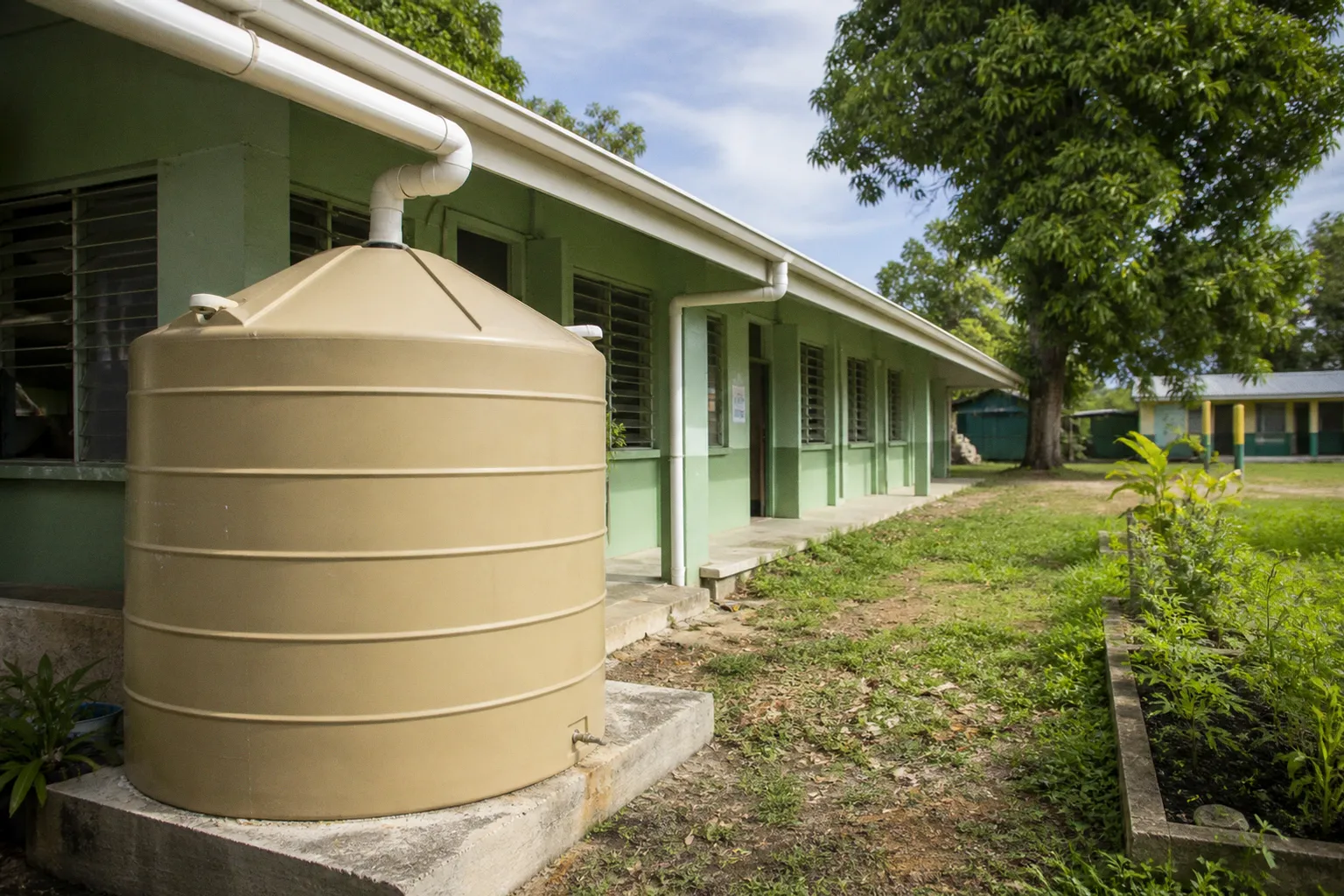
A 13-month bilateral pilot covering two primary schools in the Eastern Caribbean has produced a measurable bundle of structural works, emergency equipment, and trained response teams — a compact deployment model worth mapping for organizations building climate-resilient schools in indigenous and climate-vulnerable regions elsewhere. As reported by Winn FM, the Organisation of Eastern Caribbean States (OECS) Commission, through its Education Development Management Unit (EDMU), closed out the "Capacity Development for Disaster-Resilient Schools in Indigenous Communities" project on July 20, 2026, with financing from New Zealand's High Commission Fund for the Caribbean.
Deployment Footprint
The initiative targeted primary institutions that double as community shelters during natural disasters:
1. Atkinson Primary School, Kalinago Territory, Commonwealth of Dominica
2. Sandy Bay Government School, Saint Vincent and the Grenadines
Coordination ran through the respective Ministries of Education and national emergency management agencies. Dr Didacus Jules, Director General of the OECS, framed the outcome as "a tangible manifestation of our commitment to Strategic Priority 4: Building resilience in the face of an increasingly unpredictable climate."
Hardware and Training Outputs
The infrastructure package was tailored to each school's hazard profile:
- Atkinson Primary: a 100-foot drainage system to mitigate chronic yard flooding, plus custom wooden doors engineered for hurricane-force wind loads.
- Sandy Bay Government: two new water storage tanks with upgraded plumbing, and a heavy-duty chainsaw for community-led debris clearance.
- Both schools: emergency communication kits, portable gasoline generators, solar lighting, and PA systems to maintain operations during grid or network failure.
Hardware was paired with a structured training layer. Two-day face-to-face workshops, facilitated by Ms Joian Coipel in Dominica and Dr Idelia Ferdinand in Saint Vincent and the Grenadines, translated regional guidelines into hands-on school emergency protocols and stress-tested the disaster plans through isolation simulation exercises. An Education Team Sensitisation meeting then linked the outputs to the OECS Climate Smart Education Systems Initiative (CSESI) for regional integration.
Transferable Parameters for Climate-Vulnerable School Pilots
For NGOs and volunteer networks scoping school-hardening work in other regions, the OECS–New Zealand model surfaces four reproducible parameters:
1. Funding channel — a single bilateral donor instrument (the High Commission Fund) rather than pooled multi-donor grants, which simplifies procurement and reporting timelines.
2. Site selection — indigenous or marginalized communities where the school already serves as a designated emergency shelter, multiplying the resilience return per dollar deployed.
3. Bundled delivery — structural works, equipment, and training sequenced within a 12–14 month window so operational momentum is not lost between phases.
4. Regional anchoring — explicit linkage from the local pilot to a wider systems initiative (CSESI in this case) so outputs survive the project cycle.
The deployment confirms a working thesis: small, well-scoped bilateral pilots — anchored to national education ministries and validated through simulation — can produce outsized resilience gains when measured in school-days protected rather than dollars spent. Watch for the OECS Commission's publication of the project's evaluation report; that document will determine whether the model is positioned for scaling beyond the two initial sites.