Bridging the Educational Divide for Disadvantaged Filipino Students
According to Inquirer.net, the Philippine higher education equity apparatus is leaking from the middle — national tertiary dropout rate sitting at 39 percent, and subsidies for the poorest learners…
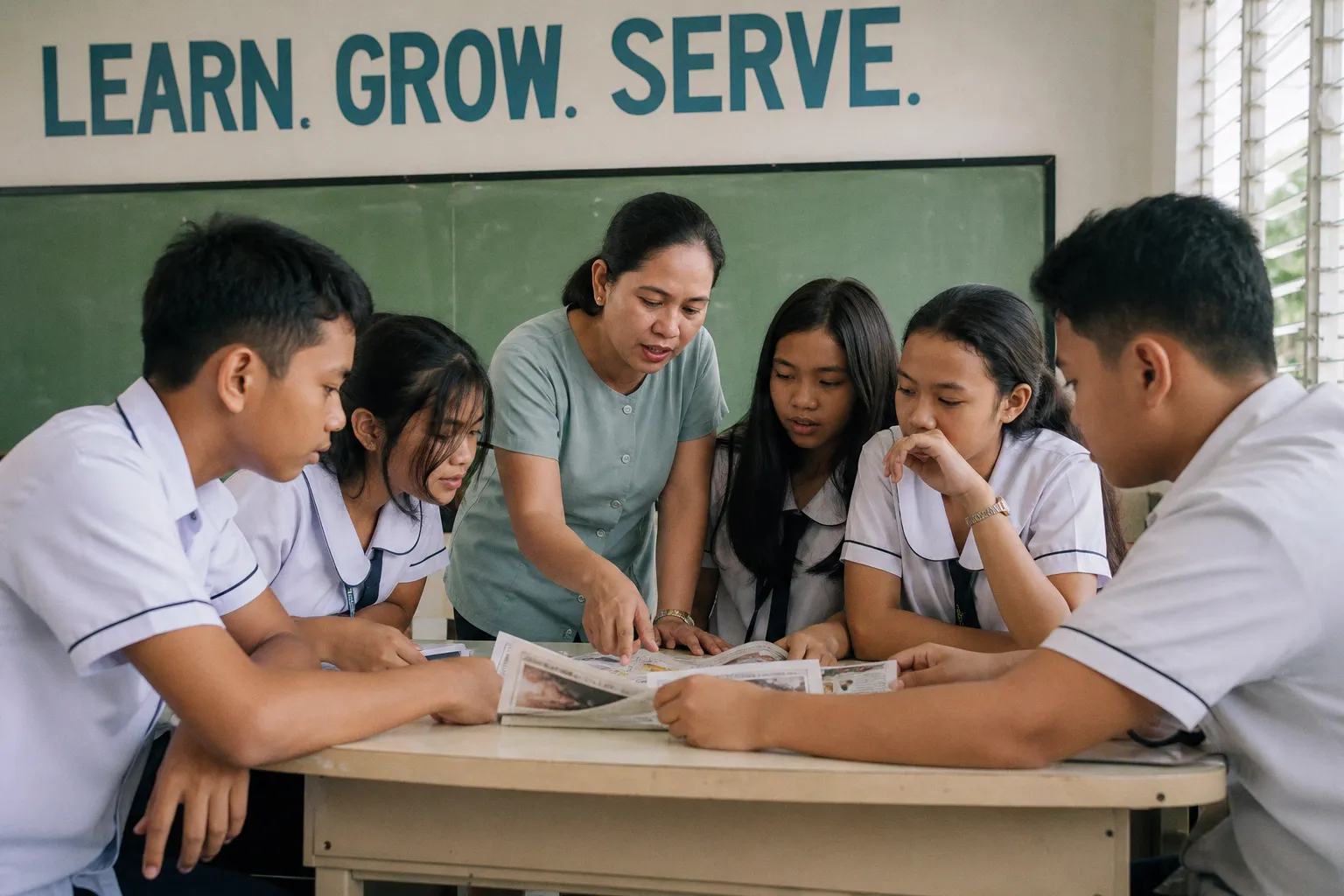
According to Inquirer.net, the Philippine higher education equity apparatus is leaking from the middle — national tertiary dropout rate sitting at 39 percent, and subsidies for the poorest learners cut from 74.24 percent coverage in 2018 to 30.74 percent in 2022. For anyone hauling school supplies into rural blocks, this isn't a foreign policy briefing. It's the same roster of failures we troubleshoot on our own routes: the schoolhouse might be rebuilt, but the student often never makes it through the door.
The structural failure
The Commission on Higher Education (CHED) put it bluntly: admission policies at state universities and colleges have been tilted toward privileged students for years. At least three out of every ten students leave school — temporarily or permanently — because of financial pressure, family problems, relocation, medical or mental health issues, or academic difficulty. That's not a scholarship gap. That's the foundation settling unevenly while we keep plastering the front wall.
The two programs carrying the load for academic year 2026–2027 are the Expanding Access to Scholarships for Equity Groups (EASEG) program and the CHEd Merit Scholarship Program. CHED has also pushed recommendations to state universities on running admissions to widen access for underprivileged applicants. The catch — and this is the one that matters to our own work — even with affirmative action and targeted recruitment, the "income advantage" persists. Scholarships alone don't fix structural inequality. They patch the crack; the wall still shifts.
What this maps to on our own roads
We see the same slow bleed in Indian rural belts. So when Education Times reports what PM SHRI Government Senior Secondary School in Raholi, Tonk district, just pulled off, we pay attention. Students from classes X to XII are running their own school newspaper — 'Raholi Shiksha Samachar' in Hindi, 'Raholi Education Times' in English, both print and digital, distributed free to every student. The roster covers field reporters, photographers, videographers, news writers, page layout designers, and editorial assistants. School teachers act as mentors. No government grant funds the newsroom. The principal, a journalism graduate named Yogendra Singh Naruka, bankrolled the inaugural issue in 2023 from his own pocket, and the teaching faculty keeps it running through voluntary contributions.
That's the kind of bypass we copy. Skip the broken subsidy pipeline. Build the skill set the student can carry out of the building.
Pre-departure checklist
- Track the student, not the building. Continued enrollment is the metric; ribbon-cuttings are a side note.
- Map the dropout drivers before the road map — financial, family, relocation, health, academic. Each one needs a different tool.
- Don't run a single scholarship model. Stack merit and equity programs the way CHED does, and pressure local colleges to rewrite admissions around access, not prestige.
- Watch the funding percentage year-over-year. In the Philippines, coverage dropped from 74.24 percent to 30.74 percent in four years. A slow bleed beats a sudden break every time.
- If the government grant isn't coming, fund the workaround locally. The Raholi school proved the model works.