Bridging the Education Gap: Why Rural School Electrification is Vital for Tanzanian Girls
A new report from Sustainable Energy for All drops a hard number on rural school planning: roughly 75% of girls in rural Tanzania drop out before completing primary school, against 25% in urban areas. The bottleneck isn't curriculum — it's electricity.
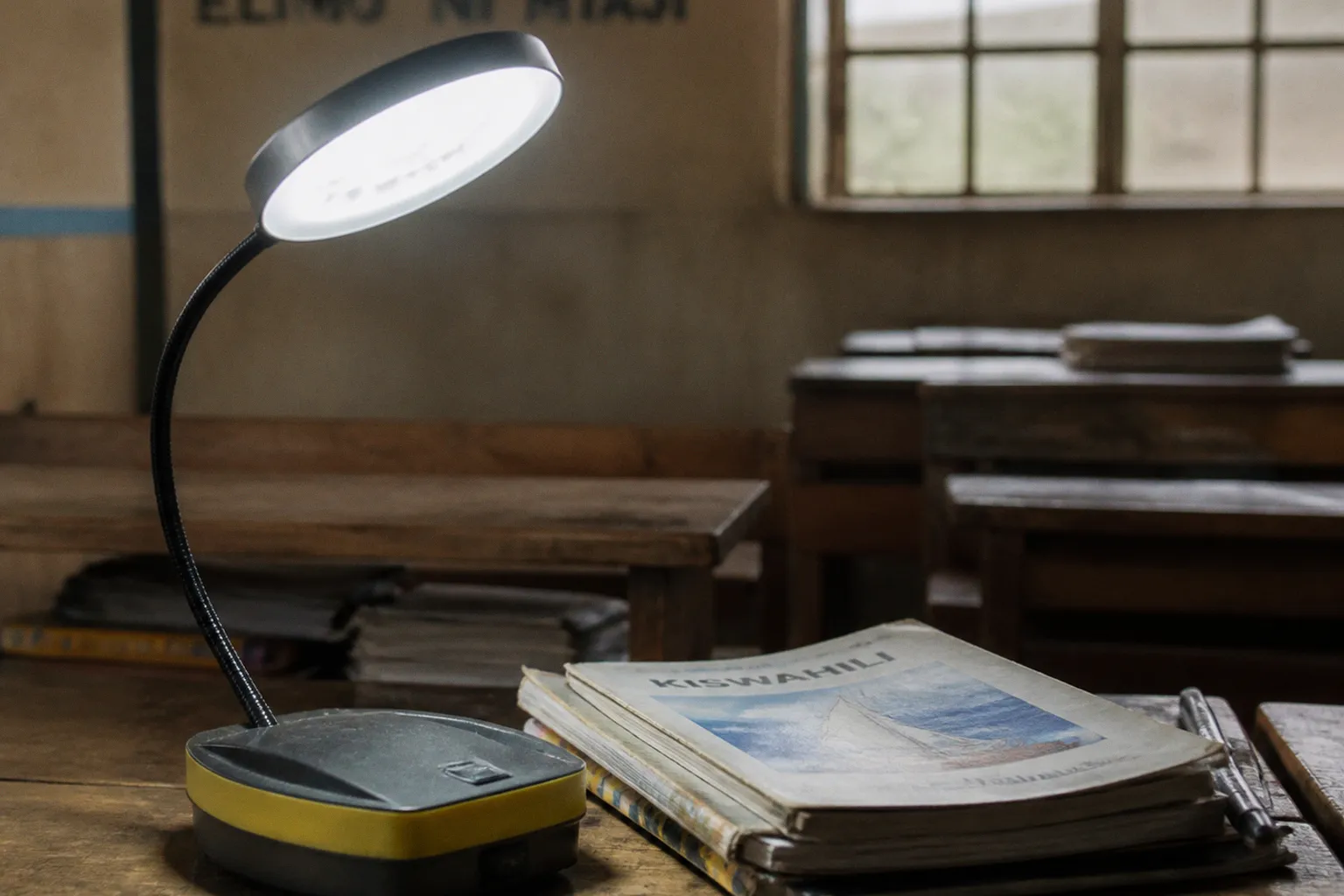
Field research across Dar es Salaam, Dodoma and Kigoma ties reliable school power to extended study hours, safer campuses, and access to digital tools, with device access flagged as the single most impactful change for female students. For any crew rolling into a rural build, that's the constraint worth scoping on day one.
Access vs. Reliability
The headline figures look workable: by 2023, roughly 60% of Tanzanian primary schools and 70% of secondary schools had electrical access, per the report co-authored by five Student Energy Career Training participants. Access is not the same as hours-of-use. Poorly lit rooms, intermittent supply, and a missing digital layer stack into a daily ceiling on what a girl can actually learn and when she can safely be there. The report frames it dry: energy poverty and education inequality reinforce each other. A school without stable power can't run evening study, can't run a perimeter light, can't charge a laptop for a class of forty.
Three Hits, One Lever
Field respondents named three transformative changes: extended study hours, improved safety and security on campus, and access to digital tools and science equipment. Translated into a builder's scope, that's three deliverables — evening lighting load, perimeter illumination, and a device-and-connectivity stack. The report singles out technology access as the single most consequential change for female students. Drop that line item and the rest of the electrification work doesn't pull its weight.
Pre-Flight for the Next Run
The geography is Tanzania, but the friction is what we already know on rural Indian sites: long approaches, restricted mobility, household duties pulling girls out before secondary, and a digital gap waiting at the classroom door. Globally, 272 million children remain out of school, with girls making up roughly half; in Sub-Saharan Africa, girls account for over 55% of out-of-school youth. Before the next site trip, check the load list. If the local grid is flaky, spec solar-plus-battery from the foundation pour — retrofit is double the labor. If the school is hours from the nearest tower, queue a connectivity line item next to the cement order. The data says the lever works when pulled. Anchor the build to that, not to the hope that the grid will catch up.