Beyond Bricks: How Strategic Partnerships Are Transforming Literacy Infrastructure
A foundation can cut a cheque for school walls, but walls don't teach a kid to read.
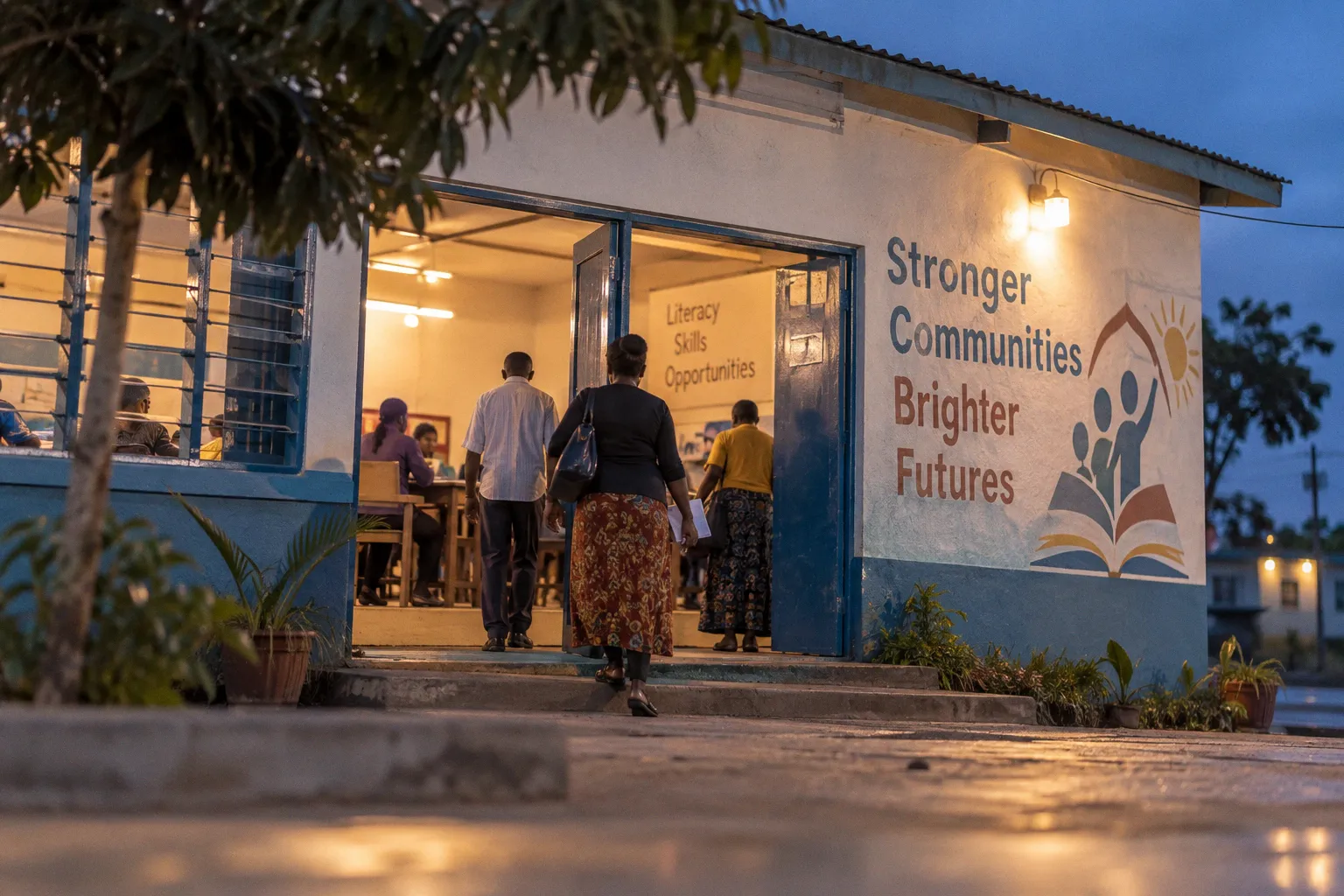
That is the friction we keep watching across the underserved map, and the Sandals Foundation's post-Hurricane Melissa rebuild across Jamaica's western and northern parishes is the clearest working blueprint on the table for what a real restart costs — in steel, labour, water tanks, and pre-staged partnerships.
The Jamaica rebuild, staged before the dust settled
Hurricane Melissa passed on October 28. Within hours the foundation had boots on seventeen school sites — clearing debris, running pest control, hanging temporary roofing, pitching tent classrooms. The partner manifest reads like a route plan: Team Rubicon, UNICEF, Mercy Chefs, crew from Sandals and Beaches Resorts. That emergency lane opened into a full structural rebuild valued at just over JM $214,000,000, timed so students walked into finished buildings for the 2026/2027 academic year.
Culloden Infant School in Westmoreland anchors the work at $100,572,000 — internal walls rebuilt, new windows and doors, a tougher roof, two modular classrooms, full electrical rewire, six water tanks, and a solar array. A new library came in through Good 360. Kings Primary and Infant School, which doubles as an emergency shelter, took $91,500,000 in similar upgrades plus a solar-powered computer lab, backed by Air Canada Vacations, Food for the Poor Canada, and InterCaribbean Airways. Whitehouse Early Childhood Institute, Petersville ECI, and Flanker Primary sit among five additional sites that received reroofing, tiling, and electrical work.
Three patterns any crew can copy
First, the emergency lane was already staged — clearing crews, pest control, tents — before the structural rebuild even began. Second, every flagship site got water security and solar, not just a new roof, which means the school keeps running through the next blackout or dry season. Third, the funding partners are named and pre-wired, so procurement did not stall once the rebuild kicked off. That sequencing — emergency response, then structure, then utilities, then learning space — is the difference between a ribbon-cutting and a working school year.
The wider pull — and what to lock down
The Jamaica work is one anchor in a wider shift. TheCable is flagging foundation pushes for stronger literacy programmes in underserved communities. Out of Tanzania, dailynews.co.tz is framing adult education as a development lever, not a charity line. From Kenya, Education News is pressing policymakers to define what basic education actually delivers beyond four walls and a roof. The direction is consistent — literacy and post-disaster school recovery are being treated as core infrastructure, not side projects.
For any crew scoping school-rebuild runs, the takeaway sits in the supply chain, not the headline. Confirm who is paying for solar and water tanks before the first brick goes down. Confirm which NGO owns the emergency lane so the school does not sit empty for a semester. And confirm the library or computer-lab partner by name, because that is where literacy actually lives after the paint dries.