Tribal Cooperative Setup: A Step-by-Step Launch Roadmap
A cooperative in the policy manual is one document. A cooperative on the ground — bylaws signed, bank account active, first Minor Forest Produce consignment dispatched — is another.
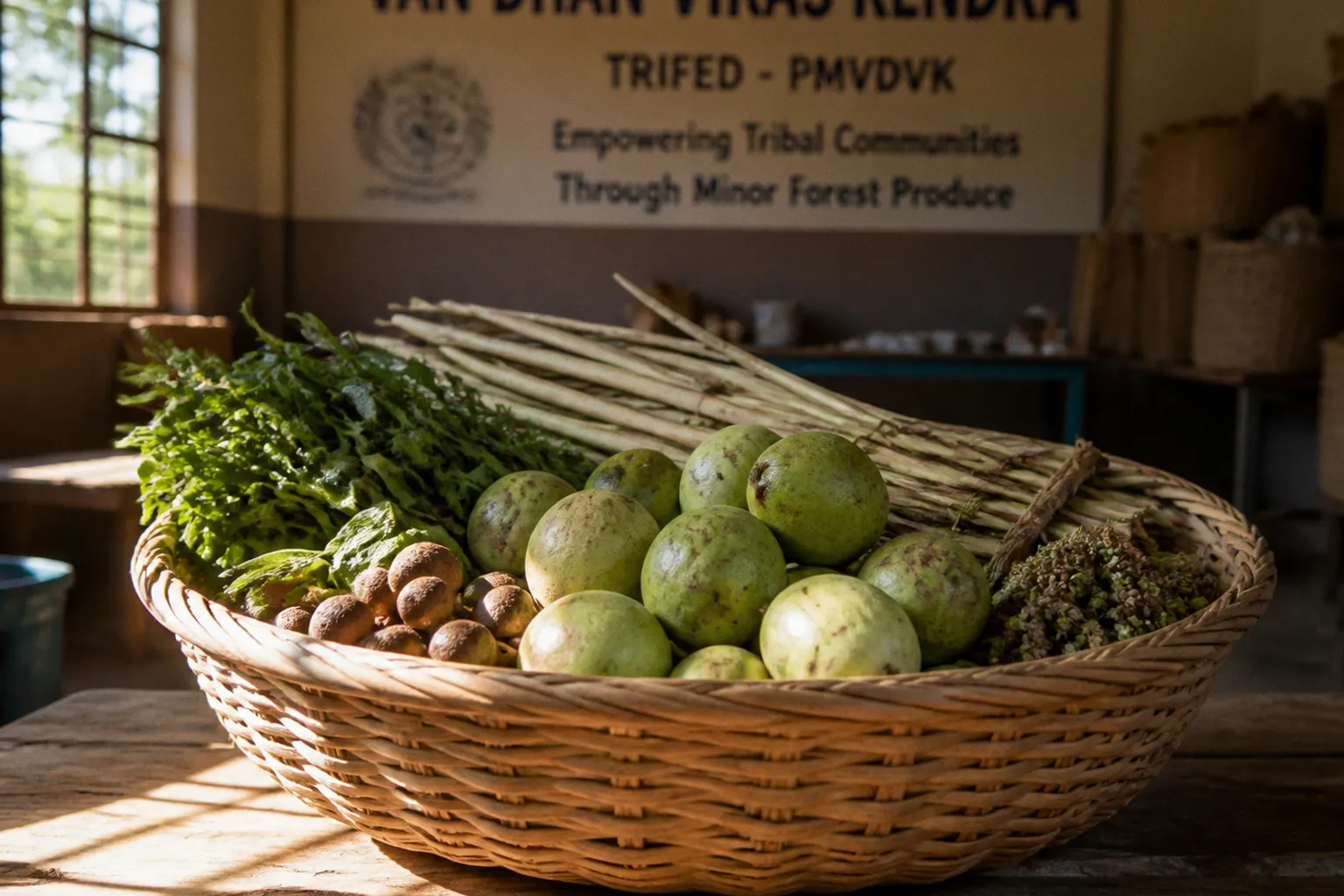
The space between the two is mostly paperwork, quorum math, and the six-to-twenty-four-month clock that nobody budgets for upfront. We have walked this route on multiple indigenous people support projects across India, and the same choke points keep showing up: miscounted founding members, feasibility studies that never get finished, registration filings returned for a missing annexure, and empanelment applications that sit on a desk because the tribal membership percentage was not provable on paper. This roadmap is the order of operations. Read it like a pre-ride inspection checklist — go down the list, fix what is missing, then turn the key.
Setting the Membership Floor: Numbers, Quorum, and Tribal Quotas
Before any registration form is filled, the membership question has to be answered cold. Not aspirationally, not in committee — on paper, with names, addresses, and the documentation that proves each person meets the eligibility criteria of the relevant cooperative act in your jurisdiction.
Founding member thresholds vary by statute. UK FCA regulations allow a minimum of three members. California requires five for agricultural cooperatives. The Cooperative Development Authority in the Philippines sets the bar at fifteen. Indian state cooperative acts typically require at least ten founding members for a primary cooperative society. So the first move is to read your own state or national cooperative act and write the number down. That number, not an approximate one, is what goes on Form A.
For any project that intends to ride the tribal livelihood pipeline — TRIFED procurement, Van Dhan Vikas Kendra formation, state tribal welfare department schemes — the membership math gets more specific. Under the operational guidelines for the Pradhan Mantri Van Dhan Vikas Karyakram, a Van Dhan Vikas Kendra is built from 15 Self-Help Groups. Each SHG can hold up to 20 Minor Forest Produce gatherers. That is roughly 300 beneficiaries per Kendra. The same guidelines require at least 60% tribal beneficiaries within each SHG.
When the cooperative is positioning itself as a supplier to TRIFED rather than as a beneficiary SHG, the bar moves higher. At least 70% of the persons comprising the supplier group or organization must be tribals. The President and General Secretary positions must be held by Scheduled Tribe members. Documented, not implied. Every identity certificate, caste certificate, and residence proof in the founder file needs to be cross-checked against the membership register before the first filing leaves your desk.
A cooperative without a clean membership roll fails the audit before it opens the bank account.
Governance structures must be locked at this stage too. Form a steering committee with a designated President, Secretary, Treasurer, and a minimum of three to five ordinary board members. Decide voting rights, quorum thresholds for general body meetings, and the rotation cycle for the executive. Write it into a draft charter before any legal registration begins. Registrars will ask for it.
Reading the Ground: Feasibility Before Bylaws
Most cooperative ventures die in year two because the feasibility study was skipped, shortened, or treated as a formality for the donor file. We treat it as the diagnostic that decides whether the route is worth running at all.
A feasibility study for a tribal livelihood cooperative typically covers five operational areas. Market access — who is buying the produce, at what price, on what schedule, and through what aggregation point. Resource availability — what Minor Forest Produce or agricultural commodity is in walking distance of the membership, in what season, and at what yield. Infrastructure — drying yards, storage godowns, processing equipment, transport links to the nearest mandi or procurement center. Working capital requirements — how much cash is needed between harvest and payment, and which financial institution will advance it. Risk profile — price volatility, monsoon failure, market closure, and the fallback plan if the primary buyer defaults.
This is the document the registrar will want to see attached to the bylaws, and it is the document the bank manager will read before sanctioning the seed capital loan. Do not draft it as boilerplate. Take the measurements on the ground. Walk the forest, count the gatherers, photograph the storage shed, sit in the buyer's office and ask the awkward questions about offtake volume. The cooperative acts do not require this depth, but the cooperative's survival does.
The typical timeline for moving from initial idea through steering committee, feasibility study, legal structuring, capitalization, and operational launch runs from six months to over two years depending on the complexity of the value chain and the responsiveness of the registering authority. Budget for the longer end if the membership is being drawn from dispersed hamlets and the registration jurisdiction is unfamiliar with tribal cooperative filings.
Filing the Charter: Legal Registration and Bylaws
Once the membership roll is clean and the feasibility study is signed off, the legal registration file can be assembled. The contents are largely prescribed, but the order in which they are produced matters less than the completeness of each annexure.
| Document | Purpose | Common rejection cause |
|---|---|---|
| Form A / Application for Registration | Triggers official scrutiny of the society | Missing signatures or incomplete member list |
| Charter / Memorandum of Association | Defines objectives, area of operation, share capital | Vague objectives or undefined operating area |
| Bylaws / Rules and Regulations | Internal governance, audit cycle, dispute resolution | Conflict with state cooperative act |
| Member Register with KYC | Identifies founders and proves eligibility | Tribal membership not documented |
| Feasibility Study | Justifies economic viability | Generic content with no local data |
| PAN, bank account opening letter | Establishes financial identity | Bank letter predates registration |
| Affidavit from President / Secretary | Declares correctness of documents | Unnotarized or incorrectly stamped |
Registration is filed with the office of the Registrar of Cooperative Societies in the relevant state, or with the body designated under the national cooperative legislation if the entity spans multiple states. Expect a query cycle. The registrar's office will return the file with objections, and the response window is finite. Track every objection in a register, close each one with a dated reply, and keep a copy of the corrected file on the cooperative's own records.
Bylaws need to be drafted with an eye to tribal development programs as well as commercial discipline. Specify how surplus is distributed, how members are admitted and removed, how the executive is elected and replaced, and what happens if the cooperative becomes dormant. These clauses rarely matter in year one. They always matter by year five.
Getting on the Procurement List: Institutional Empanelment
Registration gives the cooperative a legal identity. Funding and procurement require empanelment — getting the cooperative onto the official list of entities that ministries, public sector undertakings, and procurement agencies are authorized to transact with.
For tribal livelihood cooperatives in India, the principal route runs through TRIFED. The Tribal Cooperative Marketing Development Federation of India was set up in 1987-1988 to act as a central aggregator and marketer for tribal produce. Empanelment as a TRIFED supplier opens the door to offtake commitments, value-addition infrastructure support, and access to the Van Dhan Vikas Karyakram funding window.
The empanelment criteria, as published in the operational guidelines dated March 27, 2023, are non-negotiable. Tribal membership share of at least 70%. Key leadership positions held by Scheduled Tribe members. A functional governing body with documented meeting minutes. Audited financial statements for at least one prior operating year, or a credible projection if the entity is newly registered. Bank account in the cooperative's name. PAN and GST registration where turnover thresholds apply.
Build the empanelment dossier in parallel with the final registration steps rather than after. The processing cycle is not short, and any missing annexure resets the clock. We have watched applications sit for nine to fourteen months because the membership percentage claim was not backed by the certificate copies in the file.
State tribal welfare departments run parallel empanelment tracks for grants under scheduled tribe welfare programs, and these often need a separate application form, separate supporting documents, and a separate field verification visit. Treat each track as its own project. Do not assume that TRIFED empanelment carries over to the state scheme, or vice versa.
Empanelment is not the finish line. It is the loading dock. The cooperative still has to deliver.
Going Wide: From SHGs to LAMPS
A single Self-Help Group of twenty MFP gatherers is a unit. A federation of SHGs is an enterprise. The transition from one to the other is where rural tribal outreach becomes structurally serious.
Large Area Multi-Purpose Societies — LAMPS — were designed for exactly this scaling step. A LAMPS unit provides integrated credit, agricultural input supply, and Minor Forest Produce marketing services across a defined tribal block. It acts as a wholesale intermediary between village-level SHGs and the state or national procurement machinery. A single LAMPS can coordinate dozens of SHGs, aggregate enough volume to negotiate with institutional buyers, and access working capital lines that a standalone cooperative cannot.
The route from a registered cooperative to a LAMPS designation typically requires three operational proofs. First, an active membership base with documented MFP collection volumes across at least two harvest cycles. Second, audited accounts showing turnover and profit distribution consistent with cooperative principles. Third, a formal proposal routed through the district cooperative officer and the state tribal welfare department, with endorsements from the relevant block-level authorities.
Build the LAMPS-grade record keeping from day one of cooperative registration, not in year four when the upgrade application is due. Maintain a member-wise MFP collection register. Reconcile stock weekly. File GST returns on time. Hold general body meetings at the prescribed frequency and minute them. When the upgrade conversation comes up with the district officer, the file should already be in order.
The Verdict From the Boot
The cooperative route works. It works slowly, and it works only when the paperwork is treated as a load-bearing wall rather than a formality. The tribal welfare and community development pipeline in India has more funding windows, empanelment tracks, and value-chain programs than any operator can use at once — TRIFED, the Van Dhan Vikas Kendras, state tribal welfare grants, district mineral foundation funds, CSR allocations from mining and infrastructure majors. The bottleneck is never the funding. It is the cooperative on the ground that meets the eligibility criteria cleanly, files on time, and delivers what it commits to delivering.
Read your state cooperative act. Lock the membership threshold. Walk the forest and write the feasibility study with real numbers. File the charter with a complete annexure list. Build the empanelment dossier in parallel. Scale from SHG to LAMPS once the operational record justifies it. Each step is unglamorous. Each step is the difference between a cooperative that survives monsoon season and one that does not.