Strengthening Accountability in School Infrastructure Projects
A joint meeting in Wilton, Connecticut on August 24 put a hard question on the table: who signs an invoice they didn't help generate?
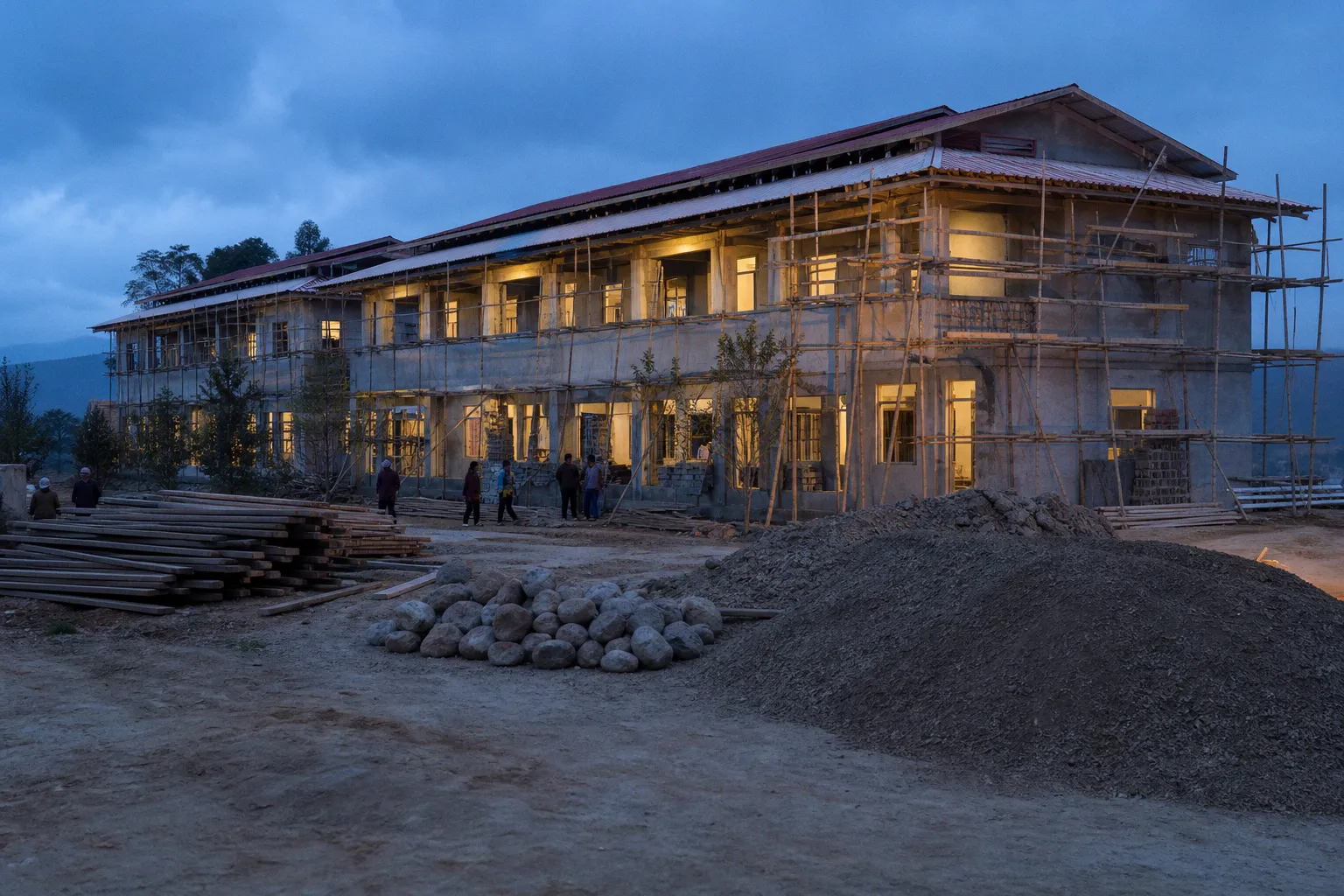
According to Good Morning Wilton, town and school officials interviewed two infrastructure consulting firms under consideration as the town's "owner's agent" on school building projects — an oversight role meant to sit between contractors, town staff, and a permanent building committee still being scoped. First Selectman Toni Boucher named the structural failure: if Department of Public Works and Finance Department staff must approve invoices from a process they aren't in, those employees carry liability without the context to catch errors. For any crew rebuilding schools — volunteer biker network or municipal build — that's the exact joint that snaps under load.
The Authority Chain
Board of Education Chair Ruth DeLuca hauled the oversight proposal onto the Board of Selectmen agenda after Boucher left it off an earlier one. The two consulting firms were grilled on authority, invoice approvals, employee liability, and financial responsibility. Boucher drilled into a specific failure mode: the owner's agent and building committee run day-to-day oversight, but town employees may still be required to sign off on payments. "If the town, a building person, or CFO, signs those invoices, and you've reviewed them and signed off on them," Boucher said, "but yet, they haven't been involved in the process, does that put them in a difficult position if something goes wrong?" That's the question every rebuild coordinator needs answered on paper, not in a handshake.
Why the Reimbursement Clock Matters
School projects chasing state reimbursement must run through state-approved educational specifications and a mandated municipal structure. Mistakes in planning, documentation, contracting, or invoice approvals don't just delay opening day — they shrink the share of project costs the state ultimately covers. Boucher said the permanent building committee would be the town's "first order of business," with the owner's-agent decision still under consideration. The committee shape is still open: one umbrella body with subcommittees for school and municipal projects, or two separate committees. Either frame holds if financial responsibility lines are drawn before the first invoice lands.
What Goes in the Route Binder
The wider signal across recent education news points the same way. In Nevada, new proposals target charter school oversight. In Togo, Education International's Go Public campaign is pressing for stronger public education funding and infrastructure accountability. In Nagaland's Mangmetong village, Under Secretary Mahipal Yadav verified a school infrastructure project on the ground. Different jurisdictions, same lever: tighten the oversight structure, name the signers, lock the liability trail. For grassroots rebuild networks, the Wilton checklist is short and blunt — stand up the building committee, define who signs, assign liability in writing, then break ground.