Corporate volunteer event insurance: who covers the liability?
A corporate volunteer day can look carefully planned right up until the moment someone is injured. A twenty-person team from a financial services firm travels four hours to repaint a rural primary school.
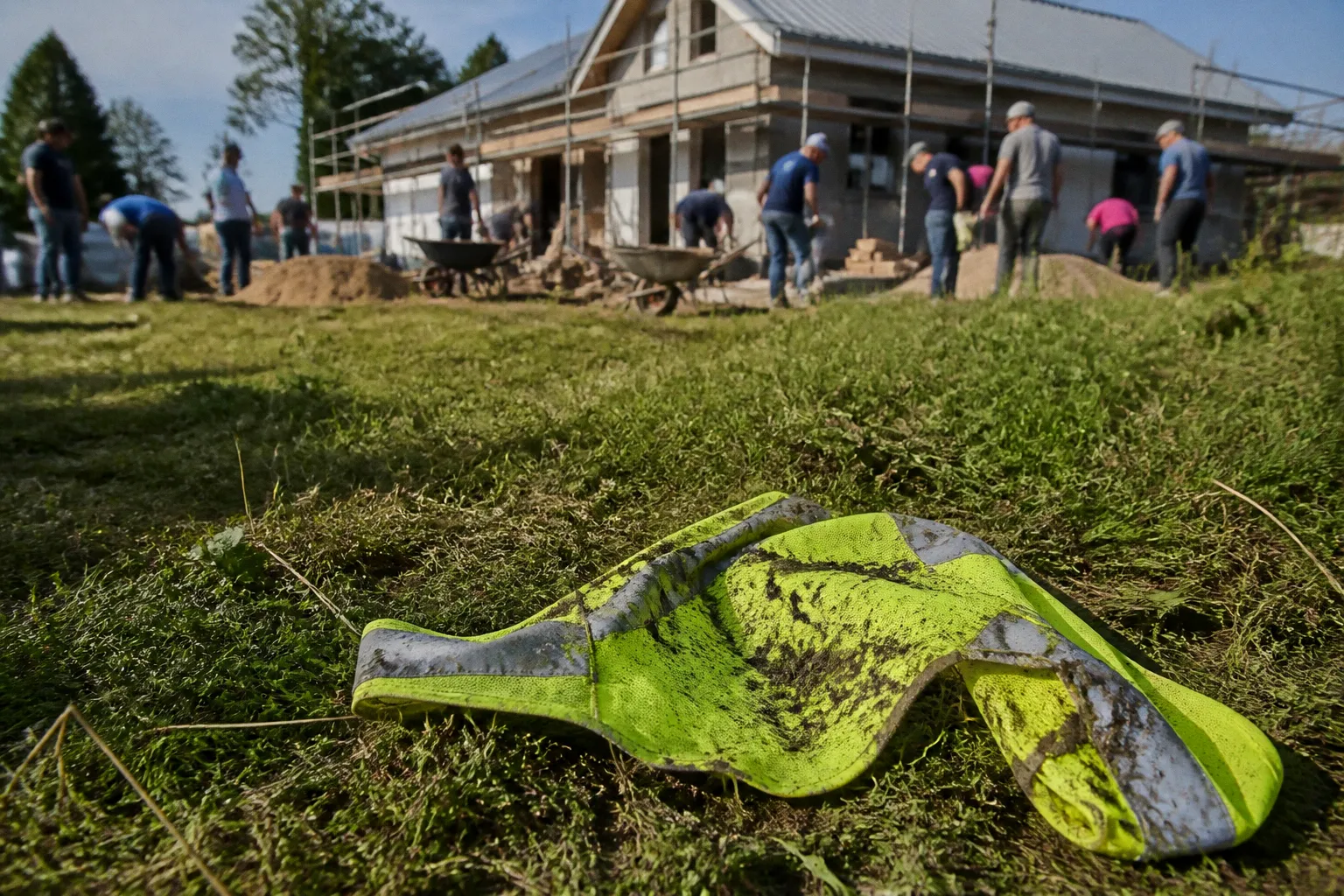
The children are curious, the work is steady, and then a volunteer steps on a loose brick at the edge of the playground. An ambulance is called. An arm is broken. The day changes, and with it every assumption the company carried about “doing good.”
Who pays for the hospital? Does the non-profit partner cover the medical bill? Does the corporation’s commercial general liability policy extend to a volunteer event held off-site, on a weekend, in a village? Does workers’ compensation respond? If employees drive their own cars, which policy addresses the accident? And what of the school itself—the premises, the broken brick, the quiet liability sleeping beneath the good intentions?
These are the questions no plaque at the ribbon-cutting ceremony ever asks. They are also the questions that quietly determine whether a corporate volunteering programme survives its second year or folds under the weight of a single claim. The gap between the way companies imagine their insurance coverage and the actual architecture of risk is wider than most programme managers realise.
A weekend of goodwill is not, by default, a weekend of coverage.
The Myth of Automatic Coverage: Why Standard Policies Fall Short
The most common assumption I encounter when sitting with HR teams and CSR leads is that insurance “just follows”—that the company’s general liability automatically extends to wherever its employees go, and that the non-profit partner’s insurance, in turn, shelters everyone under its roof. It is an understandable assumption. It is also an unsafe basis for planning.
Commercial general liability policies are written around the risks of a business’s operations. Depending on the wording, they may respond to bodily injury or property damage caused by the organisation’s negligence, but the relevant questions are often more specific than the certificate of insurance suggests:
- Is the volunteer activity included within the policy’s definition of covered operations?
- Are employees acting as volunteers still considered insured persons?
- Does the policy respond when the work takes place at a third party’s premises?
- Are construction, repair, electrical, painting, excavation, transport, or work at height excluded or restricted?
- Does the policy cover the company’s liability only, or does it also protect volunteers and the host organisation under an endorsement?
- Is there a territorial limitation that matters when the event is outside the company’s usual operating area?
A standard policy may respond to one part of the event and not another. It may cover the corporation’s legal liability to a child injured by an unsafe activity while excluding the employee who was injured while carrying it out. It may cover an office-based volunteering activity but require a separate endorsement for manual work at a school, community centre, or construction site.
The same caution applies on the non-profit side. A grassroots education organisation may carry general liability insurance for its premises and ordinary programmes, but that does not automatically mean every corporate volunteer is an insured person. The organisation may also have no authority to extend its policy to a company’s employees, contractors, vehicles, or equipment. A non-profit’s certificate of insurance confirms that a policy exists; it does not, by itself, prove that the proposed volunteer event falls within the policy’s scope.
That distinction matters because insurance follows policy wording, not goodwill. A partner’s confidence that “we have always done it this way” is not a coverage confirmation. Neither is a company’s assumption that its global insurance programme will respond identically in every country, state, or operating environment.
The liability gap begins with definitions
Insurance disputes often begin with a definition that nobody discussed before the event. Who is a volunteer? Is an employee volunteering during paid working hours in the same position as an employee who spends a personal Saturday repairing a school fence? Is a non-profit’s local coordinator an employee, a contractor, or an independent volunteer? Is a parent who helps carry supplies part of the insured group?
Those questions are not academic. They can determine whether an insurer treats a person as an insured, a third party, or someone outside the policy altogether.
A company should also distinguish between liability coverage and accident coverage. Liability insurance generally responds when the insured is legally responsible for injury or property damage to another person. It is not a universal medical fund for everyone present at the event. A volunteer who is injured without anyone else being legally liable may have no claim under the corporate general liability policy. That is the point at which volunteer accident and medical protection becomes important.
Navigating the Liability Gap Between Corporations and Non-Profits
Responsibility at a corporate volunteer event is rarely held by one organisation alone. It is layered across the corporation, the non-profit host, the owner or occupier of the premises, transport providers, contractors, supervisors, and sometimes the individual volunteer.
The corporation may be responsible for selecting and briefing its employees, supplying equipment, arranging transport, and ensuring that the activity fits within its risk appetite. The non-profit may control the site, understand the community context, coordinate access, and appoint local supervisors. The school or community institution may own or occupy the premises. A contractor may perform the technical work. Each role creates a different exposure.
At the foundation sits commercial general liability on the corporate side. This is the policy that may respond when a student, parent, passer-by, or other third party is injured—or when property is damaged—and the company is alleged to be legally responsible. Whether it does respond depends on the facts, the policy language, and any exclusions or conditions attached to the activity.
The non-profit may carry a parallel set of protections: general liability for its premises and programmes, employer-related coverage where applicable, directors-and-officers insurance for governance claims, and perhaps a volunteer liability extension. The presence of a volunteer endorsement can be significant, but it should not be treated as a substitute for the corporation’s own insurance. A non-profit’s policy is designed around its own operations and limits. It may not be adequate for a large corporate group, a high-risk activity, or an event involving vehicles and hired contractors.
The practical question is not simply, “Which organisation is insured?” It is, “Which policy is intended to respond to this particular loss?”
Three different injuries, three different insurance questions
Consider three incidents at the same school:
1. A student is injured by equipment left in a walkway.
This is primarily a third-party liability question. The investigation will look at who controlled the area, who brought the equipment, who supervised the work, and whether the injury resulted from negligence.
2. A corporate employee falls from a ladder while painting.
This is primarily an employee or volunteer accident question. The company’s general liability policy may not be the mechanism for paying the employee’s own medical costs. Workers’ compensation, employer liability provisions, occupational accident coverage, or a dedicated volunteer accident policy may become relevant, depending on the jurisdiction and the employee’s status.
3. A borrowed van damages another vehicle while transporting supplies.
This is an automobile liability question. It requires clarity about ownership, permission to use the vehicle, the driver’s insurance, the organisation’s liability, and whether non-owned or hired auto coverage is available.
These incidents may occur during the same afternoon, but they do not belong to the same insurance category. Treating “the event” as one indivisible risk is how important gaps remain hidden.
Personal vehicles require careful, qualified analysis
Auto exposure is one of the areas where volunteer programmes most often rely on assumptions. When employees drive their own vehicles to a remote school site, or when a non-profit’s van is used to transport a corporate team, several policies may be relevant. The answer depends on the driver’s personal auto policy, the vehicle’s ownership, the purpose of the trip, the applicable law, and the wording of the organisation’s insurance.
Personal auto policies vary. Some may respond to a journey connected with volunteering; others may restrict coverage where a vehicle is used for business purposes, transporting people for payment, or carrying out certain commercial activities. A policy may cover the driver’s legal liability but not the organisation’s separate exposure. It may also contain conditions or exclusions that are triggered by the nature of the trip. The driver’s policy should therefore be verified rather than assumed to exclude—or to cover—the activity.
For the organisation’s exposure, non-owned auto liability coverage is often the more dependable planning tool. It is designed to address the organisation’s liability arising from vehicles it does not own, including personal vehicles used in connection with organisational activities, subject to the policy’s terms. It generally does not replace the driver’s personal auto insurance, and it may not pay for damage to the volunteer’s own vehicle. It is also not a guarantee that every person or every journey is covered. The organisation should confirm who qualifies as an insured driver, whether volunteer use is included, whether transporting passengers is permitted, and whether the limits are appropriate.
If the organisation rents a vehicle, hired auto coverage may be needed instead. If a non-profit supplies its own van, its commercial auto policy may be primary for the vehicle itself, while the corporate programme may still need protection for its own acts or omissions. These distinctions should be settled before the event, not reconstructed after an accident.
| Exposure | Question to ask | Protection that may be relevant |
|---|---|---|
| Injury to a student, parent, or passer-by | Which organisation controlled the activity or premises? | Commercial general liability, premises liability, or an event endorsement |
| Injury to a corporate volunteer | Is the person covered as an employee, volunteer, or neither? | Workers’ compensation where applicable, occupational accident coverage, or volunteer accident and medical insurance |
| Damage caused by a personal vehicle | Does the driver’s personal policy permit and cover the journey? | Verified personal auto coverage plus non-owned auto liability for the organisation’s exposure |
| Damage caused by a rented vehicle | Who rented the vehicle and for what purpose? | Hired auto liability and any required rental protection |
| Damage to the school or community property | Who supplied the equipment and who controlled the work? | General liability, property coverage, or a project-specific endorsement |
| Work performed by a contractor | Who selected, supervised, and insured the contractor? | Contractor certificates, additional insured wording, and contractual risk allocation |
Essential Policy Endorsements for Volunteer Accident and Medical Protection
A general liability policy covers a different problem from a volunteer accident policy. The first is concerned with legal responsibility to others. The second is concerned with providing defined benefits when a participating volunteer is injured, whether or not another party was negligent.
This is where the conversation becomes granular, and where it becomes most worth having. If a corporate employee is injured while volunteering on a weekend, the medical bills, lost wages, and rehabilitation costs may not automatically be paid by the company’s general liability policy. Workers’ compensation may or may not extend to an activity outside the employee’s formal duties, depending on local law, the employer’s policy, and the circumstances of the event. It should be confirmed with the company’s broker or workers’ compensation adviser rather than inferred from the employee’s ordinary work status.
A dedicated Volunteer Accident and Medical policy can fill part of that uncertainty. Depending on the product, it may provide scheduled benefits for accidental injury, medical expenses, accidental death and dismemberment, or limited disability. The limits, exclusions, waiting periods, deductibles, territorial scope, and claims procedure all matter. Some policies are intended for organised volunteers generally; others are written for a particular event or a defined group.
The policy should answer practical questions:
- Are employees participating in a company-sponsored event eligible?
- Are non-profit staff and community participants included, or only the corporation’s volunteers?
- Does coverage apply during travel to and from the event, or only while the volunteer is on site?
- Are manual tasks, use of ladders, tools, paint, machinery, or water-related activities excluded?
- Is emergency transport included?
- Is medical coverage primary or excess over the volunteer’s personal health insurance?
- Are pre-existing conditions, disease, or gradual injuries excluded?
- How quickly must an incident be reported?
None of this makes the policy glamorous. It makes it usable. The purpose is not to turn every accident into a litigation event; it is to ensure that an injured person can receive appropriate attention while the organisations establish what happened and which liability policy, if any, should respond.
The host’s premises are not a blank space
Volunteer groups often arrive at places that are familiar to the host but unfamiliar to the visitors: a school with uneven paving, a community centre with improvised electrical connections, a rural site reached by an unmarked road, or a building undergoing repair. The non-profit may understand those conditions as part of daily life. The corporation still has a responsibility to ask whether the proposed activity is suitable for its volunteers.
A site-specific endorsement may be appropriate where the event involves unusual premises, a large number of participants, or physical work beyond ordinary office volunteering. At a minimum, the parties should identify who will inspect the site, who will correct hazards, who will provide protective equipment, and who has authority to stop the work.
The same principle applies to safeguarding. If children are present, the event may involve privacy, photography, supervision, and conduct risks that do not fit neatly into a standard liability discussion. A release signed by a parent is not a replacement for proper supervision or insurance. Nor does consent eliminate the consequences of negligent conduct.
Certificates are evidence, not architecture
Certificates of insurance are useful, but they are often treated as if they were the policy itself. They are not. A certificate may show the insurer, policy period, and limits, while saying little about endorsements, exclusions, additional insured status, or whether the particular volunteer activity is covered.
A corporation should ask for the relevant endorsement or written confirmation from the broker when the event involves manual work, transport, children, construction, medical activity, or travel across jurisdictions. The non-profit should do the same. If one party is to be named as an additional insured, the exact wording and whether coverage is primary and non-contributory should be reviewed. Those phrases have practical consequences, and they should not be added to an MoU as decorative legal language.
Insurance for volunteer events is not a single policy. It is a coordinated set of protections, each closing a specific gap.
The Role of Indemnity Agreements in Shared Responsibility Models
Once the insurance layer is understood, the conversation moves to the Memorandum of Understanding—the document that translates the partnership into a shared allocation of responsibility. This is where the relationship between a corporation and a non-profit becomes, in writing, a partnership rather than a transaction.
An indemnity clause may outline which party is responsible for which claims, but indemnity is not the same as insurance. A promise to reimburse the other party does not create money where the promising party has no assets or adequate coverage. Nor can a contract reliably transfer responsibility for conduct that the law does not permit a party to transfer. The indemnity should therefore be reviewed alongside the insurance programme, not used as a substitute for it.
A thoughtful agreement will address matters such as:
- who organises and supervises the volunteers;
- which activities are approved and which are prohibited;
- who controls access to the premises;
- who supplies tools, ladders, protective equipment, and transport;
- which party carries liability coverage for the event;
- whether volunteers are included as insured persons;
- whether additional insured status is required;
- who handles the first notification of an incident;
- who pays immediate emergency costs while coverage is being assessed;
- how incidents involving children or vulnerable people are escalated;
- who is responsible for contractors and subcontractors;
- how photographs, personal information, and public statements are managed.
The exact allocation of responsibility is not fixed by a universal corporate volunteering formula. It depends on the activities, the location, the parties’ control, the applicable law, and the policy wording. Painting a classroom is not the same risk as repairing a roof. Delivering books is not the same as transporting children. A general MoU copied from an earlier event may be inadequate when the programme changes.
Indemnity should clarify, not obscure
There is a temptation to make indemnity language as broad as possible. The corporation may seek protection from every claim connected with the event. The non-profit may be asked to accept responsibility for conditions it does not control. Both approaches can produce a document that looks strong but is difficult to defend.
A better agreement names the risks. If the non-profit controls the school premises, it should address the hazards it knows about and the systems it is responsible for maintaining. If the corporation selects the volunteers, supplies the equipment, or directs the work, it should accept responsibility for those decisions. If a specialist contractor is used, that contractor should carry its own insurance and provide evidence of it.
What I have learned from the best partnerships is that the indemnity agreement is not really about blame. It is about trust. When a community accepts a corporate team onto its school grounds, it is extending a form of stewardship—the school’s vulnerable population, its physical fabric, and its daily rhythms. The agreement is the mechanism by which the corporation acknowledges that stewardship seriously, in language that survives the departure of any individual HR manager or programme coordinator.
The non-profit, for its part, is not a passive recipient of corporate goodwill. It is the holder of the community’s trust, and the agreement is the instrument by which it protects that trust. A well-drafted MoU does not allocate every risk to the weaker party; it identifies the risks so that both parties can insure them properly.
The first twenty-four hours matter
When an incident occurs, the first response is often more important than the later argument over policy priority. The agreement should establish who calls emergency services, who contacts the family, who records the facts, who preserves photographs and witness details, and who notifies the broker or insurer.
That process should be proportionate. A minor trip may require an incident report even when no claim is expected. A serious injury may require immediate notification under the policy. A safeguarding concern involving a child may need a separate escalation route and should not be handled as an ordinary property-damage incident.
A clear reporting structure protects everyone. It prevents a well-meaning coordinator from promising payment, admitting liability, deleting a photograph, or allowing a damaged piece of equipment to disappear before the facts are recorded. It also shows the community that the partnership is prepared to take responsibility without turning the first response into a defensive exercise.
Market Trends and the Growing Need for Specialized Event Insurance
The market for volunteer event insurance is expanding, but the more important change is not the headline size of the market. It is the sophistication of the questions being asked.
Companies are moving from “Do we have insurance?” to “Is our insurance fit for this activity?” CSR managers who once circulated a generic certificate are increasingly asking about endorsements, named insureds, territorial limits, auto exposure, volunteer accident benefits, and exclusions. Non-profit directors who once signed an MoU without examining the indemnity clauses are beginning to request evidence that the corporate programme covers the actual work being proposed.
That shift is healthy. It also reflects the changing nature of corporate volunteering. Programmes are no longer limited to low-risk office activities or short visits. They may involve school repairs, environmental work, public events, food distribution, transport, community health initiatives, and projects carried out in unfamiliar locations. As the work becomes more ambitious, the insurance conversation must become more precise.
Specialised event insurance can be useful where the ordinary corporate programme does not fit the event. It may provide event-specific general liability, accident benefits, hired or non-owned auto protection, cancellation cover, or other extensions. But “specialised” does not automatically mean “complete.” The purchaser still needs to check whether the policy covers the actual activity, who is insured, where the event takes place, and what happens when an employee is injured rather than a member of the public.
The same discipline applies to international or cross-border programmes. A corporation may have a global master policy, but local admitted insurance requirements, regulatory rules, claims handling, and policy interpretation can vary. A non-profit’s domestic policy may not travel with volunteers across a border. The people arranging the event should involve the broker and, where necessary, local advisers early enough to make changes before the programme is announced.
Risk management is part of the insurance programme
Insurance is not a replacement for a safe event. Underwriters, brokers, and claims teams will all want to know what the organisations did to prevent foreseeable harm. A written risk assessment, volunteer briefing, site inspection, equipment plan, emergency contact list, and incident procedure are not merely compliance documents. They are evidence that the programme understands its obligations.
Before the trip, the parties should agree on:
- the precise scope of work and the tasks volunteers will not perform;
- the condition and ownership of tools and equipment;
- who provides competent supervision;
- the route and arrangements for transport;
- the nearest suitable medical facility;
- safeguarding and photography rules where children are present;
- emergency contacts for the corporation, non-profit, site owner, and insurer;
- the process for reporting injuries, property damage, and near misses.
During the event, the site should be inspected before work begins. Loose bricks, exposed wiring, unstable ladders, uneven ground, unsecured materials, and poor weather conditions should be addressed rather than explained away. Volunteers should receive a briefing that matches the actual work. “Be careful” is not a safety plan.
After the event, the partnership should review what happened. File incident reports while the details are fresh. Record near misses, not only injuries. Note which tasks proved more difficult than expected and whether the original insurance assumptions still fit the programme. Volunteer programmes evolve; insurance should evolve with them.
A practical way to read the coverage
The most useful question is often a simple one: who is injured, what happened, and whose conduct or property is connected to the loss?
| If the loss involves… | Start by examining… | Do not assume… |
|---|---|---|
| A member of the public injured at the site | General liability and premises control | That the host’s policy automatically covers the corporation |
| A corporate employee injured while volunteering | Workers’ compensation, occupational accident, and volunteer accident wording | That general liability pays the employee’s own medical costs |
| A personal vehicle used for the event | The driver’s policy and the organisation’s non-owned auto coverage | That a personal policy always excludes or always covers volunteer travel |
| A hired or borrowed vehicle | Hired auto provisions and the rental or owner’s policy | That the organisation’s general liability covers every vehicle exposure |
| Damage caused by tools or contractors | Responsibility for selection, supervision, and equipment | That an indemnity clause alone will fund the claim |
| A child or vulnerable person involved in an incident | Safeguarding procedures, liability coverage, and reporting duties | That a consent form removes the need for supervision |
The point is not to turn a community project into a legal seminar. It is to make sure the people planning the event understand which questions belong to which policy.
The non-profit is not a recipient of the company’s generosity. It is a co-author of the programme’s safety, and insurance is the shared language in which that co-authorship is written.
A Route Through the Risk
What I want to leave with is not a checklist. It is a posture. When a company approaches a grassroots NGO and proposes a weekend of volunteering, the conversation that matters most is not the one about logistics, transport, or meals. It is the conversation about responsibility.
Before the trip, verify that the non-profit partner carries current general liability insurance and ask what activities and premises it covers. Confirm whether volunteers are included as insured persons and whether the corporation can be named where appropriate. Ask the corporate broker to confirm, in writing, that the proposed volunteer activity falls within the company’s liability coverage or obtain a standalone event policy. Arrange volunteer accident and medical protection for participating employees where existing employee benefits do not clearly respond.
If transport is involved, identify every vehicle and every driver. Verify the relevant personal auto policies rather than making a blanket assumption about their exclusions. Add non-owned auto liability coverage for the organisation’s exposure when personal vehicles are used, and consider hired auto protection for rented vehicles. Confirm what the coverage does not pay for, including damage to the driver’s own vehicle.
Sign an MoU that names the specific activities, the specific exclusions, and the specific responsibilities of each party. Attach the insurance requirements to the agreement. Require reasonable evidence of contractor coverage where contractors are involved. Do not rely on a broad indemnity clause to solve a narrow insurance problem.
During the trip, the work of care continues. Walk the site before the work begins. Note loose bricks, exposed wiring, uneven ground, unstable equipment, and access problems. Brief every volunteer on the safety protocols, emergency contacts, safeguarding expectations, and location of the nearest hospital. Make sure someone has authority to stop the work if conditions change.
After the trip, the partnership is still alive. Debrief with the non-profit partner on what worked, what did not, and what the next event should learn from. File any incident reports, no matter how small, while the detail is still fresh. Review near misses. Re-evaluate the coverage before the next programme, especially if the number of volunteers, location, equipment, or type of work has changed.
Closing Position
I have sat with schoolteachers who welcomed corporate teams onto their campuses with genuine warmth, and I have seen the difference when that warmth is met with a serious, well-insured, structurally respectful partnership. The difference is not in the budget or the number of employees deployed. It is in the willingness of the company to treat the community not as a backdrop for its own engagement metrics, but as a partner whose stewardship deserves the same diligence the company brings to its own operations.
Insurance, in this sense, is not a footnote. It is a vocabulary. It is the language in which a corporation’s commitment to a community becomes specific, testable, and honest.
There is no single corporate volunteering insurance coverage package that answers every question. A volunteer event may require general liability, volunteer accident and medical protection, workers’ compensation analysis, non-owned auto liability, hired auto coverage, site-specific endorsements, and a carefully drafted indemnity agreement. The right combination depends on the activity, the people involved, the premises, the vehicles, the jurisdiction, and the wording of the policies.
A weekend of goodwill is, by default, not a weekend of coverage. With the right endorsement, the right agreement, and the right posture, it can become a weekend of genuine, mutual, and well-protected partnership. That is the standard the sector is moving toward—and the standard every grassroots volunteer network, rural school, and corporate programme manager should be prepared to demand.