NYC Schools Halt Generative AI for Students to Prioritize Human-Led Learning
According to a NYC.gov announcement, Mayor Zohran Kwame Mamdani and Chancellor Kamar H.
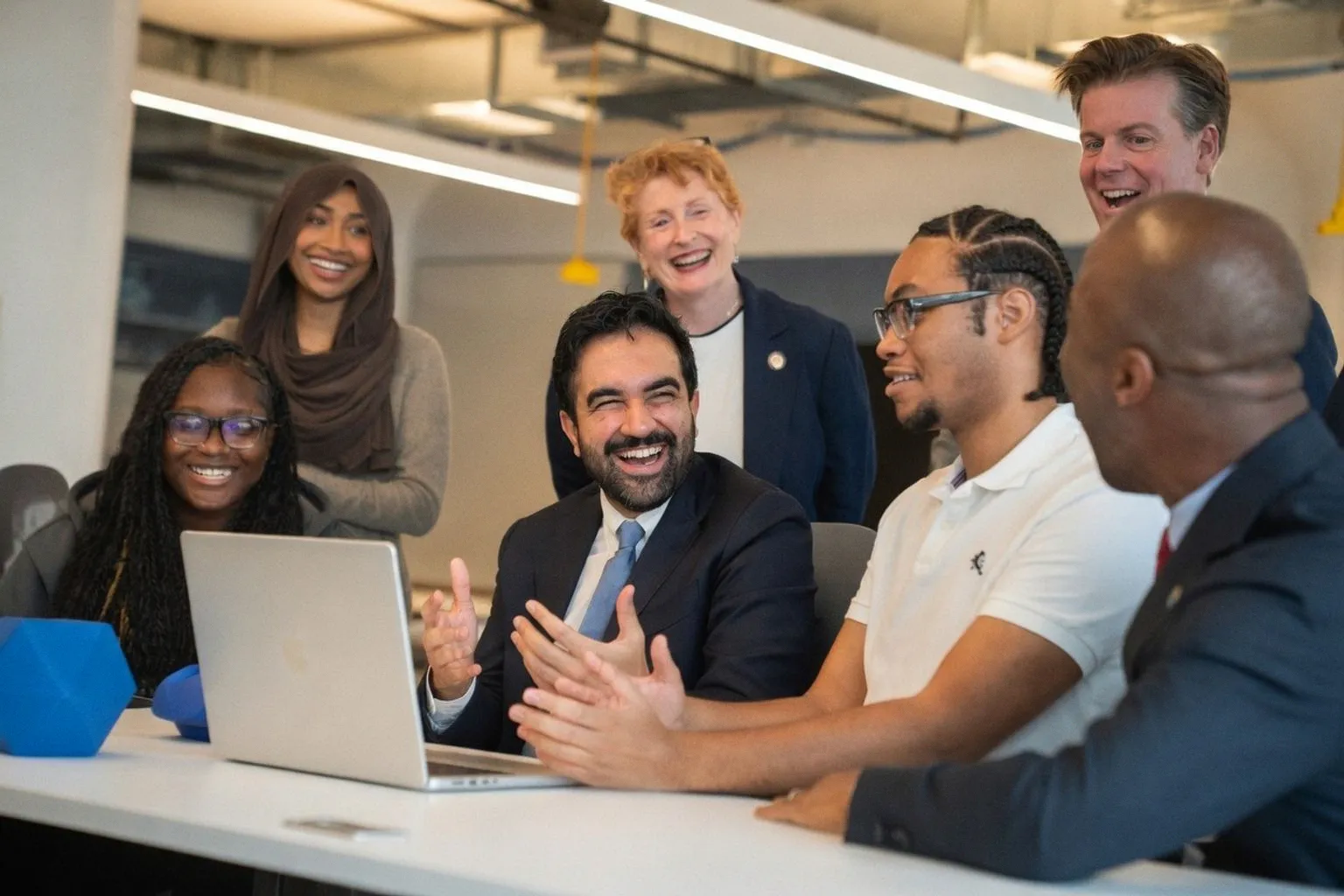
Samuels have put a hard one-year stop on student-facing generative AI for every child from 2-K through 8th grade in New York — roughly 600,000 kids, or two-thirds of the system. The pair framed it as protecting the human connection in learning rather than banning tech. We care because ed-tech vendors are not waiting for the verdict before pitching the same tools to rural districts in India. If the world's largest school system is hitting the brakes, every grassroots builder on a dusty road should know the road conditions changed.
What the moratorium actually covers
We read the NYC.gov release twice so we did not miss a bolt. Here is the spec sheet:
- One-year moratorium, effective in the 2026-2027 school year.
- No student-facing generative AI for grades 2-K through 8th.
- Companion chatbots prohibited across all grades, not only the younger band.
- Twice-yearly AI critical thinking modules for high schoolers.
- Limited AI pilots in a small number of high school classrooms — narrow test lanes, not open roads.
- Age-appropriate screen time restrictions layered on top.
- A new Technology in Schools Coalition — students, educators, parents, union partners, elected officials, advocates, outside specialists — convening through the year to publish recommendations.
Chancellor Samuels, according to the release, said the policy is meant to lead with evidence before scaling. Governor Kathy Hochul backed the move. Public Advocate Jumaane D. Williams called it a foundation, not a final word. The coalition's report is the deliverable that matters for year two.
Why a rural Indian rebuild crew should care
We have all sat through the pitch: AI tutor in every classroom, personalized learning at scale, dashboards for the headmaster. The pitch sounds the same whether the buyers sit in a state capital or under a tin roof. NYC just told every vendor in the room: prove it first. That is not our fight, but the wind from it reaches us.
Three things matter for anyone hauling bricks, paint, and solar panels to a village school this season:
1. Do not let the donor drive the syllabus. If a funder offers an AI lab as part of a rebuild package, ask which grade it serves and whether those children would fall under the same 2-K through 8th logic. The moratorium does not bind us, but the principle does.
2. Human bandwidth is the load-bearing wall. Teachers, peer learning, after-school clubs — we build around them, not around a tablet rack.
3. Screen time is not free. If we install a digital setup, we also install a usage policy. Age-appropriate limits are no longer a Western luxury; they are becoming the baseline expectation.
What we are watching, and what to lock down
The Technology in Schools Coalition report at the end of the 2026-27 school year will set the template other districts borrow. The high school pilots are the narrow lanes to watch — if they survive a real audit, the next fight is what counts as "student-facing." Expect vendor rebrands: "tutor," "study buddy," "learning companion" — all trying to route around the chatbot ban. Watch also whether any Indian state follows with its own guardrails for ed-tech in government schools.
Before we wire up any classroom, we hold this checklist:
- Grade band on every device. No generative AI tools below grade 9, full stop.
- Companion chatbots off by default across all grades.
- A written usage policy in the headmaster's hand before the first tablet powers on.
- A teacher-training hour, not a vendor webinar.
- An exit clause: if the tool does not lift reading or math scores in one term, it comes out.
Lock the policy before the device. Ed-tech will not wait for our coalition report.