Grassroots fundraising: how to bypass hidden platform fees
A grassroots fundraising campaign can lose money before the first school wall is repaired, the first classroom desk is hauled in, or the first community welfare shipment leaves the depot.
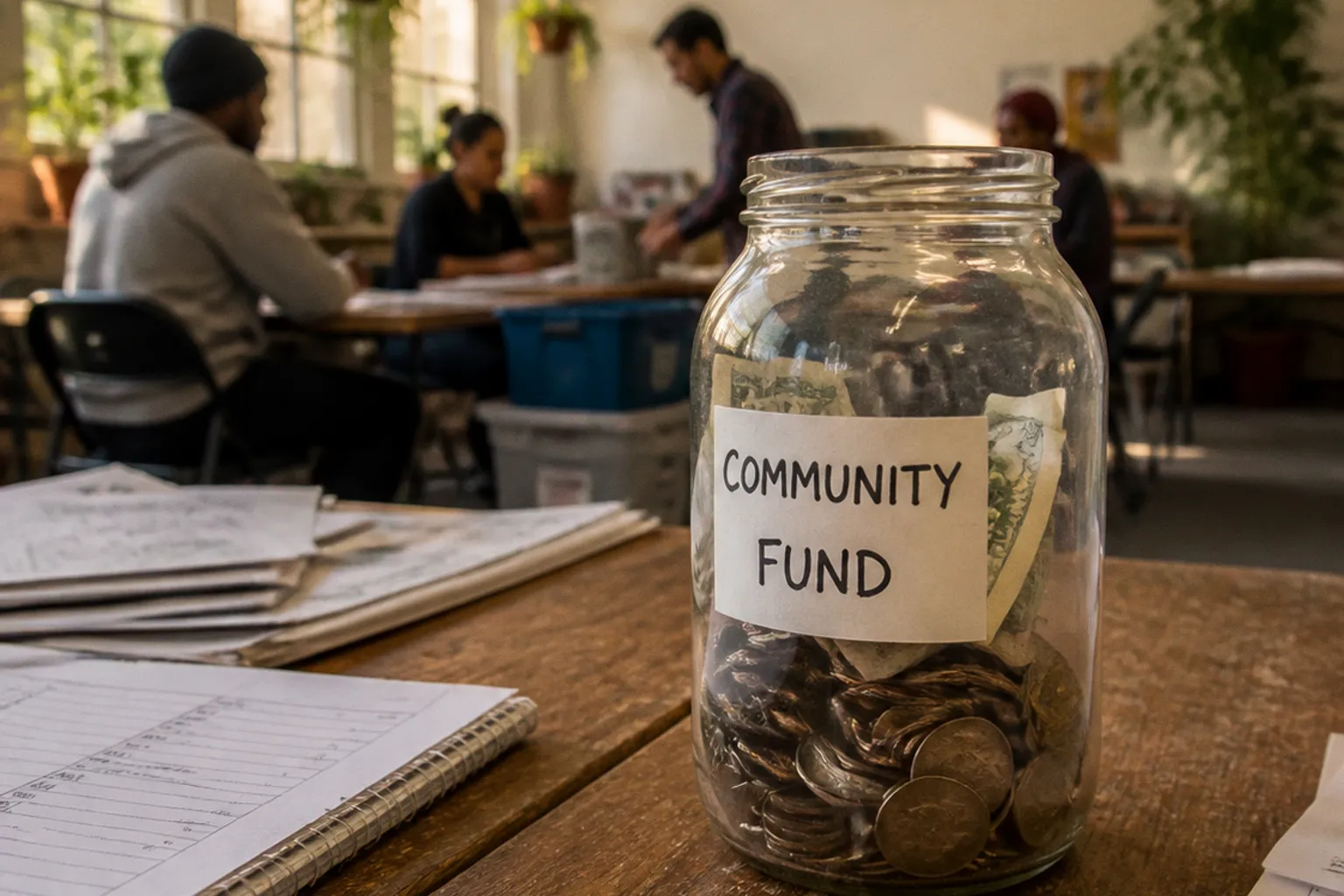
The loss usually sits in plain sight: a processing percentage, a fixed charge on every donation, a monthly subscription, a chargeback penalty, or a payout delay that forces the field team to cover costs from another account.
The problem is not that payment platforms charge for moving money. The problem is that campaigns often budget against the headline fee and miss the rest of the load. A campaign that raises $10,000 does not automatically have $10,000 available for materials, transport, labor, or education supplies. The platform decides the final number.
We need to treat fundraising software like any other piece of field equipment. Read the load rating. Check the failure points. Know what reaches the worksite.
The fee is not one number
The first mistake in a grassroots fundraising campaign is treating the platform fee as a single percentage. Most systems combine several charges, and each one changes the amount that survives the trip from donor to project account.
For a verified nonprofit, standard card processing commonly runs at 2.2% plus $0.30 per donation. Personal or individual campaigns commonly face 2.9% plus $0.30. That fixed $0.30 matters when donors make small contributions.
A $10 donation charged at 2.2% plus $0.30 loses $0.52 before the money reaches the campaign. That is 5.2% of the original contribution. A $100 donation loses $2.50, or 2.5%. The percentage did not change. The fixed charge did the damage.
That is why small-donation campaigns need a different budget model from a campaign funded by a few large gifts. A community ride, school supply drive, or local welfare event may collect dozens or hundreds of small payments. The published percentage can look acceptable while the fixed charge quietly increases the effective cost.
The fee stack may include:
- Payment processing: A percentage of the donation plus a fixed amount per transaction.
- Platform charges: A separate percentage, monthly subscription, setup fee, or campaign fee.
- Donor tips: A pre-selected contribution routed to the platform rather than the nonprofit.
- Chargebacks: Fees created when a donor disputes a payment.
- Fraud monitoring: Extra charges for screening transactions or reviewing suspicious activity.
- Card updater services: Costs linked to keeping stored payment details current.
- Currency conversion: A variable cost for international donations.
- Payout delays: A cash-flow problem when funds settle after the project has already started.
We do not need to call every charge unreasonable. We do need to put every charge on the route map.
A fundraising platform is not free because the word “free” appears on the front page. The only number that matters is the amount cleared for the project account.
Compare the routes before launching
We should compare platforms against the campaign we are actually running, not against a generic nonprofit profile. A national organization with a donor database, recurring gifts, tax workflows, and international payments has a different equipment list from a volunteer network raising money for a rural classroom repair.
The main options fall into several practical groups.
| Platform model | Typical cost structure | Where it fits | Main operational risk |
|---|---|---|---|
| GoFundMe for verified charities | 2.2% + $0.30 per donation | Fast public campaigns and simple charity appeals | Processing fees remain even without a platform fee |
| GoFundMe personal campaign | 2.9% + $0.30 per donation | Individual-led or informal campaigns | Higher processing cost and weaker nonprofit controls |
| Zeffy | No platform fee; payment costs covered through optional donor tips | Small and mid-sized nonprofit campaigns | Donors may be asked to tip, and the checkout experience must be explained |
| Schoolfundr | No platform or setup fee; roughly standard 3% card processing passed to the campaign | School-linked and education-focused drives | Advanced CRM and international functions may be limited |
| Classy, now GoFundMe Pro | $299 monthly starting fee, plus 4% transaction fee and 2.2% platform fee on the cited professional plan | Larger nonprofits with established fundraising operations | Fixed subscription cost can outweigh the benefit for smaller campaigns |
The table is not a ranking. It is a routing decision.
GoFundMe is easy to recognize and quick to deploy. That has value when a campaign needs public reach without building a separate donation page. But “no platform fee” does not mean no cost. Verified charities still pay the processing charge, and individual campaigns use the higher rate.
Zeffy takes a different approach. It presents itself as free to nonprofits and covers platform and card-processing costs by asking donors for an optional tip during checkout. That can remove a direct campaign deduction, but the donor-facing screen becomes part of the operation. We need to know what the donor sees, whether the tip is pre-selected, and how clearly the nonprofit is separated from the platform’s revenue model.
Schoolfundr is built around education campaigns and charges no platform or setup fee while passing roughly the standard 3% card-processing cost to the campaign. For a rural classroom project, that can be a workable middle route: fewer deductions than a platform with layered fees, without asking every donor to understand a more complicated tipping structure. The tradeoff is functionality. A simple school drive may not need a large CRM. A multi-year welfare program probably will.
Classy is a different machine. The cited professional plan starts at $299 per month and adds a 4% transaction fee plus a 2.2% platform fee. That may make sense for a larger nonprofit that needs donor management and reporting. It is a poor fit for a short campaign whose total volume cannot absorb the fixed monthly cost.
Calculate the net amount, not the headline target
A fundraising target is only useful if it is tied to a net delivery target.
Suppose the field plan needs $5,000 for school materials and transport. If the campaign uses a fee structure of 2.2% plus $0.30 per transaction, the gross target must exceed $5,000. The exact amount depends on the number and size of donations. Ten large payments will produce a different result from five hundred small ones.
The working calculation is simple:
Net funds = gross donations − percentage fees − fixed transaction fees − platform fees − chargebacks − other listed deductions
If the platform uses a donor-covered fee or tip model, the calculation changes:
Net funds = gross donations − deductions not covered by donors
We should also model the donor experience. A donor who intends to give $20 may see a platform tip request at checkout. Some will accept it. Some will remove it. Some will abandon the payment because the final screen is unclear. The available facts do not establish whether tipping models improve or reduce long-term donor retention, so we should not build a forecast around that assumption. We can only test the checkout and report what the donor is being asked to pay.
For a campaign supporting public education or local welfare, the budget should separate three layers:
1. Program cost: Materials, transport, tools, labor, permits, storage, and other direct delivery expenses.
2. Fundraising cost: Processing, platform charges, event permits, payment terminals, printed materials, and campaign communications.
3. Contingency: A reserve for damaged materials, fuel changes, weather delays, replacement tools, or a payout arriving later than expected.
The second layer is where many grassroots campaign budget mistakes begin. Organizers count the banner, fuel, and classroom supplies. They do not count the transaction drain across hundreds of small donations.
Small gifts need extra torque
Fixed fees punish small payments. We can reduce that effect by giving donors a clear reason to consolidate contributions where appropriate. That does not mean pressuring people into larger gifts. It means designing the campaign around realistic payment behavior.
If a donation form defaults to $5, $10, and $25, the campaign should understand the cost of each route. A $5 donation under a 2.2% plus $0.30 structure loses $0.41. The effective cost is 8.2%. A $25 donation loses $0.85, or 3.4%. The same processor can be efficient for large gifts and expensive for micro-donations.
This is also why event collections can behave differently from online campaigns. A single payment terminal transaction may still carry fees, but an event that consolidates donations through fewer larger payments can reduce the number of fixed charges. That introduces its own controls and accounting requirements. Cash handling, reconciliation, and donor records still need an anchor.
“Free” platforms still need an inspection
Zero-fee platforms can be useful. They are not a bypass from all operational work.
A platform that covers processing through donor tips shifts the cost conversation from the nonprofit to the donor. That may preserve more of the campaign’s gross funds, but it can also create confusion. If a donor believes the extra amount goes to the school repair or welfare program when it goes to the platform, trust takes a hit. The campaign team needs to inspect the checkout wording and communicate it without dressing it up.
We should inspect five points before sending the campaign live:
- Who pays the card-processing cost? The nonprofit, the donor, or a combination?
- Is the donor tip optional? A pre-selected amount can function differently from a clearly optional contribution.
- What happens after a refund? The original processing fee may not return to the campaign.
- When are funds paid out? Settlement windows can create a gap between collection and field deployment.
- What records are available? We need transaction exports, donor details where permitted, receipts, and reconciliation tools.
A platform may advertise no setup fee while charging for a monthly subscription. Another may have no platform fee but pass through card processing. A third may show a donor tip that looks like part of the charity contribution. These are different cost structures. We should not stack them under one label.
The same rule applies to payment methods. International donations may involve currency conversion or additional payment charges, and the exact cost varies by payment method and currency. If the campaign expects money from outside the operating country, we should not estimate the final net amount from domestic card rates alone.
Zero-fee fundraising removes one axle from the load. It does not remove settlement delays, donor confusion, chargebacks, or reconciliation work.
Build the campaign around the project’s cash cycle
Payout delays are not a footnote. They can force a field team to borrow, postpone procurement, or pay suppliers from unrestricted funds. That turns a processing issue into a program issue.
Before launch, we should write down the sequence:
1. Donations enter the platform.
2. Payments clear fraud and card checks.
3. The platform settles the balance.
4. Funds reach the organization’s bank account.
5. Materials are ordered.
6. Transport and field work begin.
7. Receipts and donor reporting are completed.
Then we compare the settlement window with the work schedule. If the platform pays out after the material supplier requires a deposit, the campaign has a liquidity gap. The answer may be to move the launch date, split the project into stages, use an existing reserve, or choose a platform with a more workable payout process.
The field plan should not depend on money that has been pledged but not settled.
For a two-wheel volunteer network, this matters twice. Riders may be able to haul tools and supplies into a rural area, but they cannot haul an unpaid invoice out of the bank. We need funds cleared before the route is committed.
Chargebacks create another failure point. A donor can dispute a transaction after the campaign has counted it toward the target. The platform may remove the donation and apply a chargeback fee. If the campaign has already purchased materials against that money, the shortfall lands on the project.
We should keep a small reserve for reversals and avoid treating the displayed campaign total as spendable cash. The platform balance is not the same as cleared funds.
Match the platform to the job
The right platform depends on the campaign’s scale, donor pattern, and control requirements.
For a short local school drive
A simple education campaign may not need a full donor-management system. A platform with no setup fee and only standard card processing can keep the structure light. Schoolfundr’s cited model fits this type of campaign when the project does not require advanced CRM functions or broad international support.
The priority is a clean donation page, clear project accounting, and a payout schedule that matches the repair route.
For a public charity appeal
GoFundMe can provide speed and recognition. It may suit a campaign that needs to start quickly and does not want to build a custom donation system. But we must budget for the 2.2% plus $0.30 processing charge for verified charities. The absence of a platform fee changes the stack; it does not erase it.
If the campaign is run as a personal campaign rather than through a verified nonprofit, the cited processing rate rises to 2.9% plus $0.30. That difference needs to be visible in the budget before the link is distributed.
For a nonprofit that wants to protect the gross donation
Zeffy’s model can reduce direct deductions from the campaign by covering platform and card-processing costs through optional donor tips. This can be useful when every dollar is assigned to a specific material or service. The team still needs to explain the checkout flow and inspect how the donor-facing tip is presented.
The platform does not become costless in a broader sense. The cost is being handled through the donor interaction.
For a larger organization
Classy, now GoFundMe Pro, is built for a different operating profile. A $299 monthly starting fee, combined with a 4% transaction fee and a 2.2% platform fee on the cited professional plan, requires enough activity to justify the machinery. The value may sit in donor management, reporting, and campaign infrastructure rather than in a low transaction rate.
We should not bolt that system onto a small rural repair campaign because it looks professional. Extra machinery has its own maintenance cost.
The practical bypass: remove avoidable layers
We cannot bypass legitimate card-processing costs in every case. We can bypass avoidable platform layers and stop allowing unclear pricing to set the budget.
Use this sequence before launch:
1. List every charge in writing. Include percentage fees, fixed transaction fees, monthly subscriptions, setup costs, chargebacks, refunds, fraud monitoring, card updater services, and payout conditions.
2. Run three donation mixes. Model small gifts, medium gifts, and larger contributions. Fixed fees change the result.
3. Separate gross and net targets. The public target should cover the amount required for delivery plus the expected fundraising cost.
4. Check the donor checkout. Remove default assumptions. Confirm whether tips are optional and where the money goes.
5. Confirm the payout schedule. Do not schedule procurement against unsettled funds.
6. Decide how disputes are handled. Record who absorbs chargebacks and whether the reserve can cover them.
7. Reconcile after every campaign push. Compare platform reports with bank receipts and the project ledger.
8. Review the platform after the event. A route that worked for one campaign may not fit the next one.
There is no prize for choosing the platform with the lowest advertised fee. The useful measure is the cleared amount per unit of administrative effort and field risk.
If the campaign raises $10,000 and keeps roughly 97% after a fee structure that passes through about 3% in card processing, the project has about $9,700 before other expenses. That is a workable planning figure only if the campaign confirms what the remaining costs include. It does not cover transport, storage, event permits, or chargebacks unless those are already accounted for.
Final inspection before the route starts
We should be able to answer these questions without opening another browser tab:
- What is the exact processing charge for our nonprofit status?
- Does the fixed fee apply to every donation?
- Is there a platform fee in addition to processing?
- Is a monthly subscription charged even if the campaign is inactive?
- Who pays the card-processing cost?
- Is the donor tip optional, and is it pre-selected?
- Can donors pay from other countries, and what currency costs apply?
- How long can funds remain unsettled?
- What happens when a payment is refunded or disputed?
- Can we export the records required for accounting and donor reporting?
- Does the platform have the CRM and reporting tools the project actually needs?
- What amount will be available for materials after every deduction?
If we cannot answer those points, the campaign is not ready to launch.
Hidden fees are not a theoretical problem. They change the number of desks we can buy, the distance a supply vehicle can travel, and whether a repair crew starts on schedule. Grassroots fundraising works when the money route is treated with the same discipline as the physical route.
Set the target from the net requirement. Anchor the cash cycle. Bypass platform layers that add no field value. Then launch.