Global Education Summit Allocates $2 Billion to Girls' Schooling in Conflict Zones
By our reading of The Guardian's coverage, the 2026 Global Education Summit locked in $2 billion in donor pledges aimed at girls' schooling in conflict-affected regions — cash routed into safe…
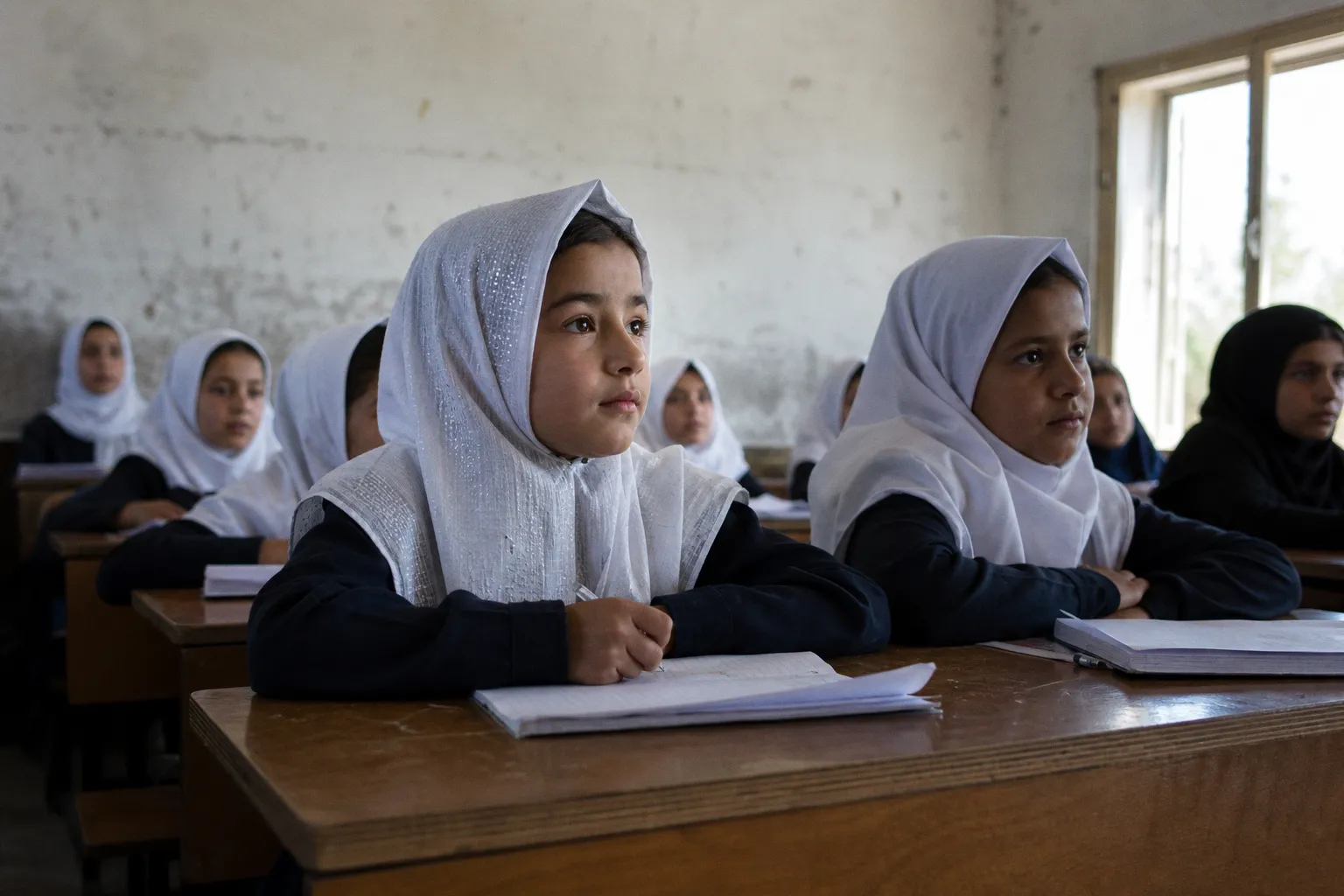
By our reading of The Guardian's coverage, the 2026 Global Education Summit locked in $2 billion in donor pledges aimed at girls' schooling in conflict-affected regions — cash routed into safe learning environments and teacher training programs across sub-Saharan Africa and the Middle East. The geography matters. None of those dollars are tagged for the rural Indian classrooms we haul tools into. The working question for the crew is mechanical: does a global surge toward crisis-zone education siphon attention away from the slow rebuild work in Indian villages, or does it carve parallel lanes we can actually ride?
What the pledge actually covers
Per The Guardian, the Summit commitments land on two specific tracks: safe learning environments and teacher training, both in conflict-affected regions. Sub-Saharan Africa and the Middle East are the named geographies. That is the load the donors agreed to haul. There is no mention of South Asia, no mention of Indian rural rebuilds, and no published window for partnership with grassroots outfits outside the named zones. If your outfit operates inside one of those two regions, this is a live funding stream to monitor. If you are anchored in India, the relevant move is to track the implementing agencies over the coming months and read the criteria as they filter down — not to expect a check in the mail.
The adjacent signal in the same feed
Sitting next to the Summit news are three pieces that carry no donor dollars but matter for our line of work. A Moldova brief surfaces teachers and parents pushing back against the Restart education reform, with the capital's mayor publicly calling the restructuring politically motivated and staff raising concerns about how changes will land in individual schools. A Draw Your Box headline points to CJP youth education protests drawing a response from the Indian diaspora abroad. An Elle India op-ed asks what the Indian system needs to fix first. Details on the latter two are limited to titles in our pack, but the pattern is familiar from the saddle: policy churn at the top, classroom reality at the bottom. Top-down restructuring without ground-level buy-in generates friction. Our work runs on a different axis — torque on bolts, paint on walls, books on shelves — but we read the same road signs.
Three checkpoints from the saddle
First, watch whether any portion of the $2 billion tranche gets routed through NGOs with an existing South Asia footprint. That would change the terrain for outfits like ours. Second, watch whether implementing agencies publish partnership criteria that a grassroots Indian rebuild crew can actually meet, or whether the door stays sized for larger institutional players. Third, watch how the domestic Indian debate — the CJP protests, the Elle India framing — intersects with or bypasses the global funding conversation entirely. We don't ride for the headlines. We ride for the schools. But we read the headlines so we know which road is being repaved and which one still needs us to haul gravel.