Ensuring Tribal Welfare Benefits Reach Every Eligible Household in Madhya Pradesh
Per DD India, the Secretary's convoy pulled into the Eklavya Model Residential School at Morod, Indore — an EMRS serving students from Particularly Vulnerable Tribal Groups (PVTGs), Classes 6 through 12.
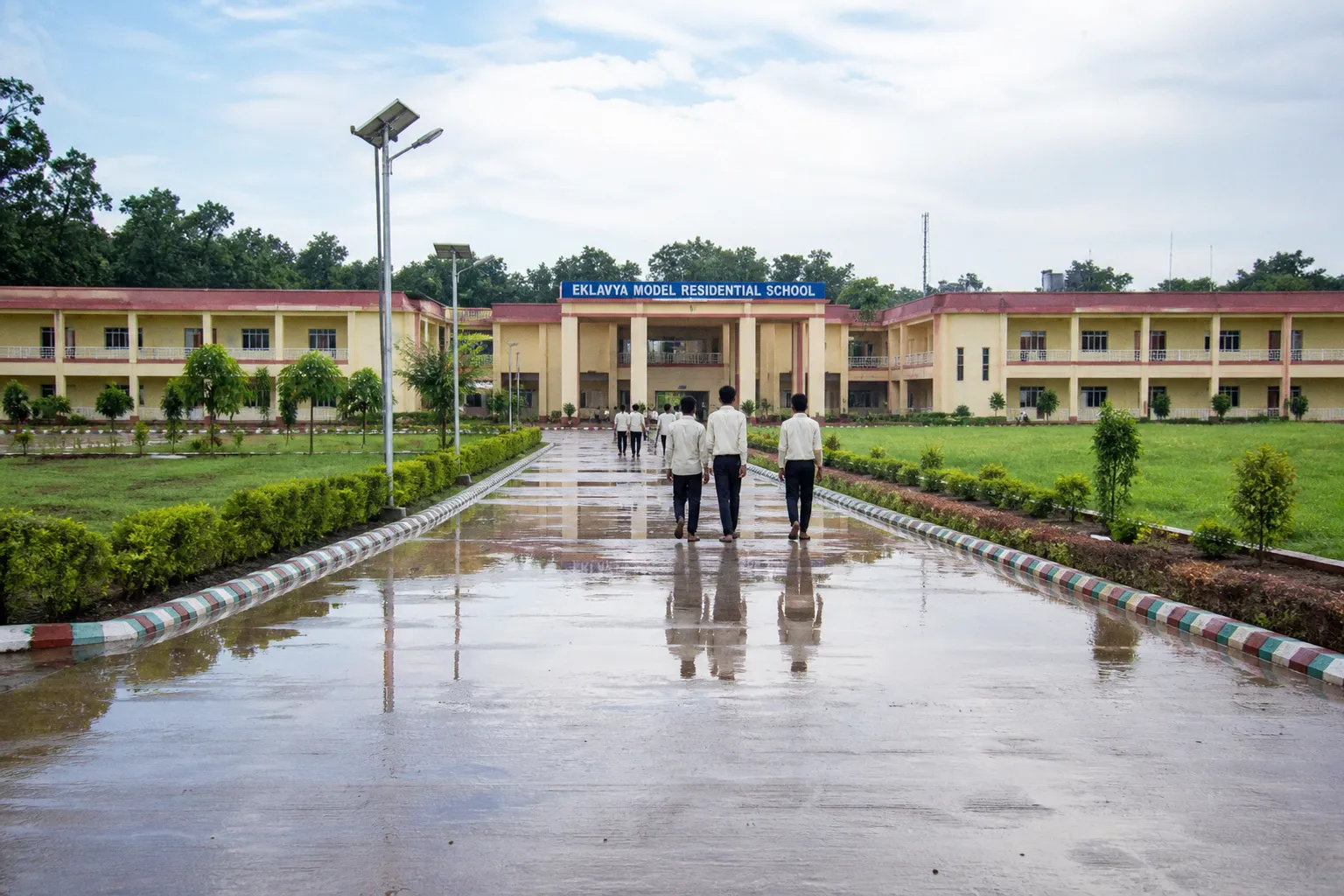
The State Rolls In, The Boats Are Still On Us
India's Ministry of Tribal Affairs Secretary Ranjana Chopra spent Thursday on the ground in Madhya Pradesh, running a hard review of welfare schemes across the Indore division — and what she found on the first stop should matter to anyone riding into a tribal school with a toolkit on the back.
She walked the digital smart classrooms, talked to students, checked the teaching setup. The school runs under the PM-JANMAN and Dharti Aaba Janjatiya Gram Utkarsh Abhiyan (DA-JGUA) framework — two schemes we need to know by name when we plan routes or coordinate with local officials.
What The Route Actually Hits
The rest of the day was a logistics survey, not a photo op. Chopra's team moved through Khargone district, stopping at:
- Bunkar Suvidha Kendra, Maheshwar — a weaving centre run by a Sahayata Samuh under NRLM, producing 1,000–2,000 Maheshwari sarees daily, marketed through TRIFED, SHGs and Zilla Panchayats. One weaver had just shown at a Delhi fashion event.
- Adi Sewa Kendra, Keriyakheri — a single-window facilitation hub handling ration cards, scheme enrolments, grievance redressal, including a recent nationwide Jan Sunwai.
- A tribal homestay in Khargone — owner-operated, state-monitored through a hired agency for quality control. Community-led rural tourism, training and handholding included.
- Centre of Competence for Sickle Cell Disease, Indore — screening, counselling and treatment support for tribal populations under the Ministry's elimination push.
The day ended at a Divisional Commissioner progress review meeting in Indore.
Why This Maps To Our Work
Here is the friction we care about: the Secretary reviewed a school that already has digital classrooms, a state-monitored homestay programme, and a single-window centre for scheme access. That is the baseline. When our crews roll into villages without these layers, we are not rebuilding from zero — we are filling gaps the system has not yet reached.
Three checkpoints for the next route plan:
1. Ask which schemes are active at the school. PM-JANMAN and DA-JGUA funding flows change what local authorities can supply versus what volunteers must haul in.
2. Check the homestay and SHG networks. Where women's collectives are already producing and marketing through TRIFED, our supply runs can integrate instead of duplicate.
3. Verify the single-window centre exists. If it does, patta holders, ration cards and enrolments get processed locally. If it does not, expect our teams to absorb more administrative friction on arrival.
The state machinery is rolling. Our job stays the same — anchor the points the convoy skips, and torque down where the bolts are still loose.