Uniondale Community Groups Unite to Provide Essential School Supplies for Local Students
There is a particular kind of pressure that settles on a household in late August — the quiet arithmetic of backpacks, notebooks, pencil cases, and the question of whether every child walking through…
When Three Hands Reach for the Same Desk
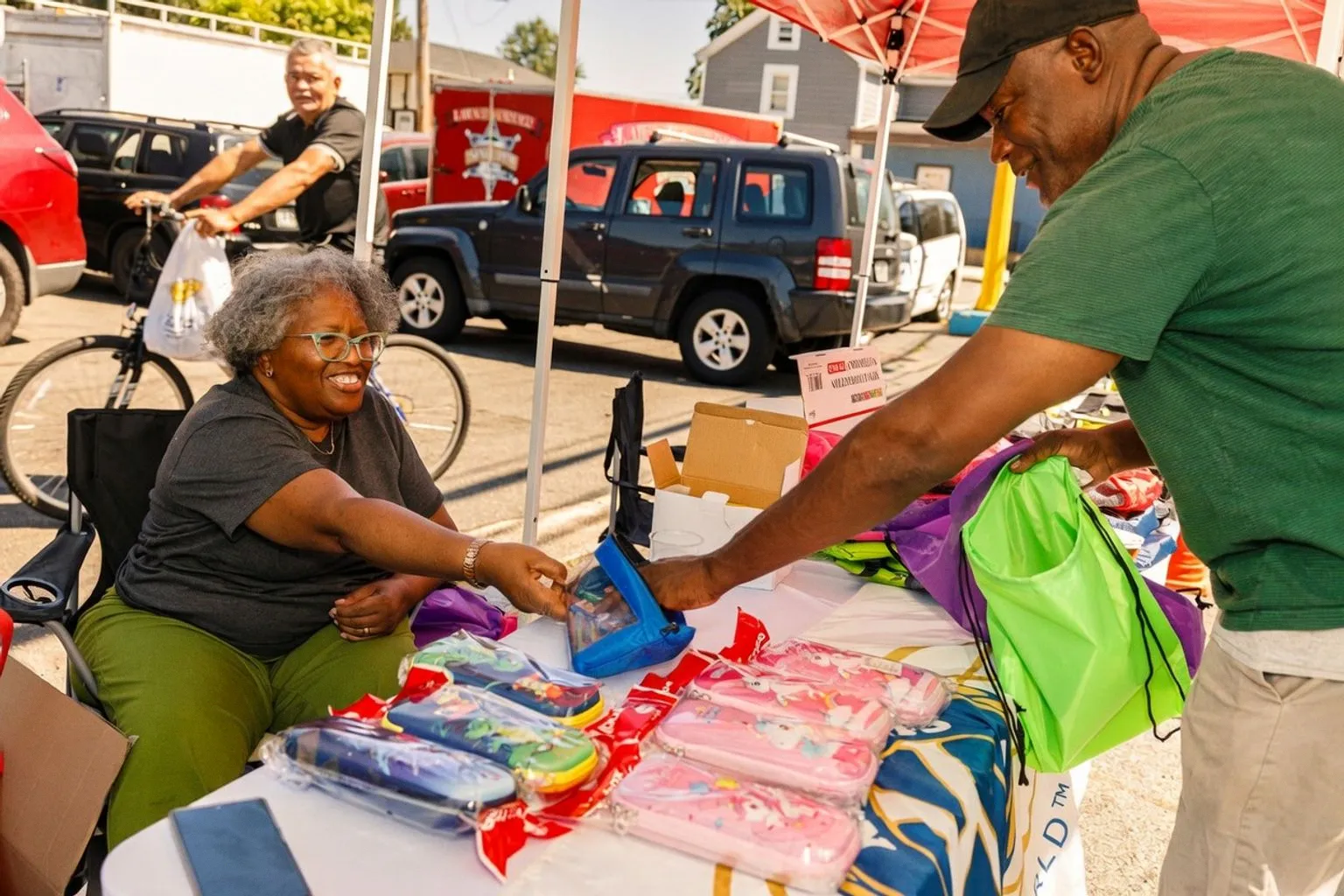
There is a particular kind of pressure that settles on a household in late August — the quiet arithmetic of backpacks, notebooks, pencil cases, and the question of whether every child walking through a classroom door will feel equally prepared to sit down and learn. In Uniondale, New York, that pressure met an answer on August 15, when three organizations — the Kiwanis Club of Uniondale, Viper Collision, and the Joey Foundation — came together for what was reported as their first-ever joint effort, hosting a school supply giveaway at Front Street Mufflers, Tires & Auto on Front Street.
A Partnership Built on Local Trust
What makes this event worth pausing over is not the supplies themselves — backpacks, book covers, pencil cases in unicorn and dinosaur prints — but the architecture of the collaboration behind them. The Kiwanis Club brought its civic network; Viper Collision and the Joey Foundation contributed their own reach; and the auto shop, owned by Amelia Montenegro, offered its physical space as a gathering point. Reinaldo Richard, a Kiwanis member, and Montenegro also prepared refreshments for attending families, turning a distribution event into something closer to a community moment. Nassau County Legislator Olena Nicks visited during the giveaway, lending a visible layer of institutional acknowledgment to what was, at its core, a grassroots initiative.
The partnership's stated aim was straightforward: to ease the back-to-school burden for local families and ensure students had what they needed before the first bell. But beneath that simplicity lies a model that anyone working at the intersection of community welfare and education will recognise — the willingness of disparate groups to pool resources around a shared, immediate need rather than waiting for a larger system to respond.
A Pattern Playing Out Across Communities
Uniondale's effort is not isolated. Reports from Waterbury, Connecticut, describe a donation of roughly a thousand backpacks and school supplies to young people ahead of the school year, while other communities have organised what local outlets are calling "Days of Caring" back-to-school drives. The specifics differ — scale, geography, the organisations involved — but the underlying impulse is consistent: families shoulder a real cost each autumn, and community networks, however informal, step into the gap.
For those of us who work at the grassroots level, these moments are instructive. They remind us that effective intervention does not always require a grand programme or a five-year strategy. Sometimes it begins with a conversation between a civic club, a local business, and a foundation that has never worked together before — and a shared decision to act on something concrete, like a child's readiness for school.
What Stays With Us
The Uniondale giveaway, by all available accounts, was modest in scale and generous in spirit. It did not rebuild a school or overhaul a curriculum. It did something smaller and, in its own way, essential: it told families that their community had noticed the weight they carry each August and chosen to help lighten it. That kind of stewardship — rooted in dialogue, grounded in local agency, and expressed through tangible care — is the thread that connects a muffler shop in New York to a village classroom anywhere in the world where someone decides that a child's dignity begins with the tools placed in their hands.