How Two Delaware Students Built a Nonprofit to Bridge the Educational Resource Gap
Two teenagers took one look at the map of their state, traced where the resources stopped flowing, and decided to haul the rest of the way themselves.
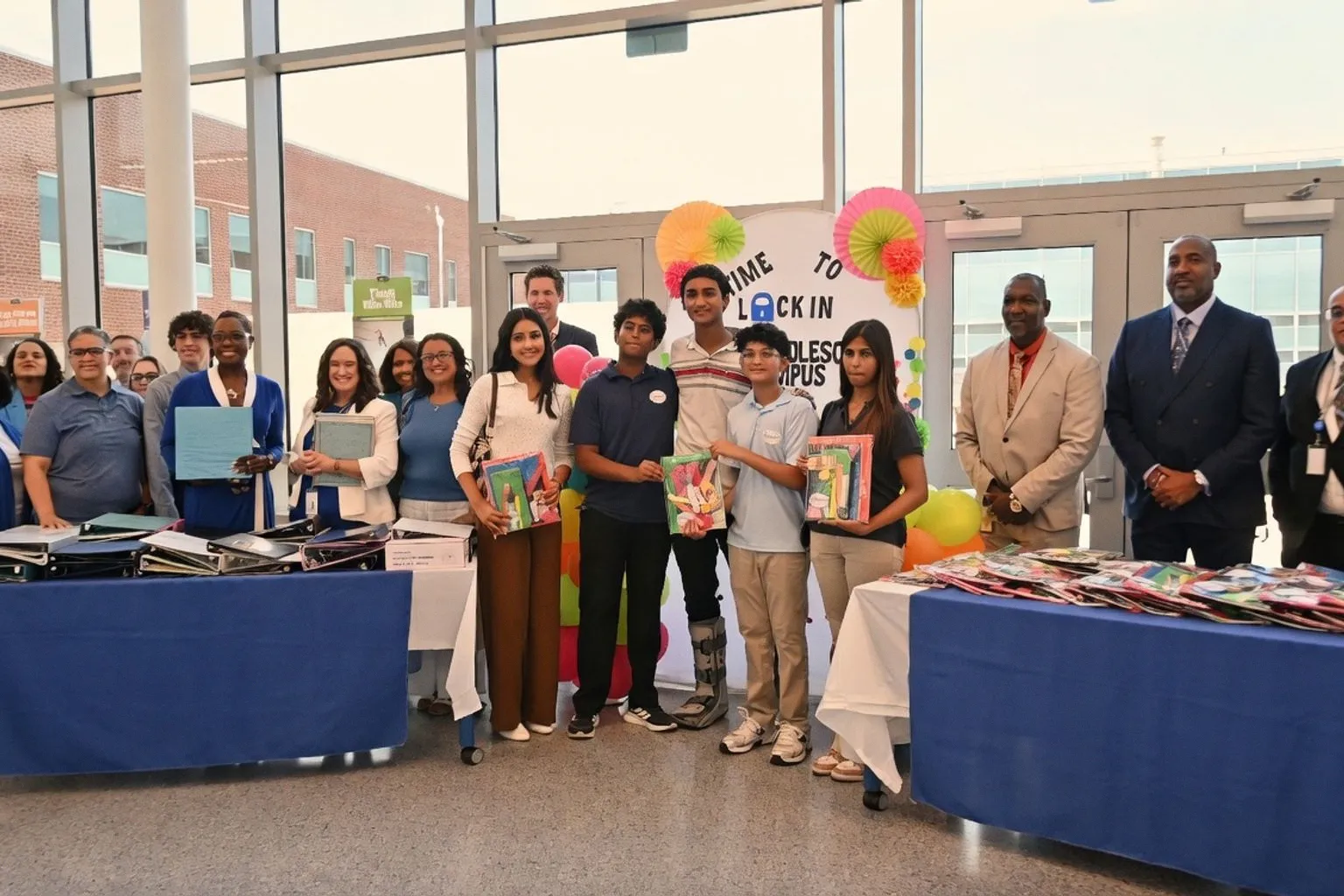
That's the short version of SkillSphere Foundation, a student-led nonprofit that founders Devkrishna Manappattu and Ridhun Gujja launched last year to push business education, financial literacy, and school supplies into Delaware schools that aren't getting them.
The announcement worth flagging: SkillSphere officials joined the Delaware Department of Education Secretary this week for a tour at Dover Middle School and a supply donation drop. The hand-off matters less than the network behind it.
How the operation got wired
Manappattu, a rising senior at Appoquinimink High School, and Gujja, a rising sophomore at Wilmington Charter School, built SkillSphere after noticing that access to business and leadership opportunities tracked sharply to geography inside their own state. Schools north of New Castle County had established pipelines into clubs like Business Professionals of America and the Technology Student Association. Schools south of the county line generally did not. Transportation gaps and missing supplies were the choke points.
The fix was operational, not rhetorical. They registered a nonprofit, lined up community partners, hosted six educational workshops, and report direct contact with more than 100 students. Funding has come through fundraising, donations, and sponsorships—over $1,500 raised so far—and they now count the Delaware Department of Education and the Delaware Community Center as formal partners. Seven title one schools are in the supply pipeline, with the goal of covering all three Delaware counties.
Why the format holds up
We know what that kind of operation looks like from the route side. The interesting detail is the supply-and-transport problem they solved early. Students in underserved districts couldn't always get to SkillSphere's events, so the organization reversed the flow—going to the schools rather than waiting for students to show up at a central venue. That's a logistics call, not a feel-good one, and it's the part that scales.
The financial literacy and business track is built around the gaps the founders identified in their own schooling, with marketing and tech woven in alongside core money-management content. Workshop delivery runs through community partners, which keeps the volunteer load distributed instead of pooling it on two teenagers.
What to watch on the next leg
Gujja and Manappattu say SkillSphere is expanding into Pennsylvania. That's a second state, longer haul routes, and a fresh roster of partner relationships to anchor. For grassroots nonprofit watchers, three checkpoints are worth tracking: whether the Pennsylvania rollout mirrors the Delaware partner model or stretches the core team past its operating capacity; whether the title one school commitments already made in Delaware hold steady through the expansion push; and whether the financial literacy workshops can move from one-off events into a repeatable curriculum that doesn't depend on the founders personally running each session.
Two students, one year in, a real state-level partnership on file, $1,500 raised, six workshops run, 100-plus students reached, and a second state in the works. The story worth following isn't the donation photo. It's the supply chain underneath it—and whether it survives the next hundred miles.