Committed to improving education quality in government schools, says Haryana CM
Haryana Chief Minister Nayab Singh Saini has put 150 new government school buildings on the drawing board, with international-standard designs and a full kit of digital and physical infrastructure planned across the state's 719 Model Schools.
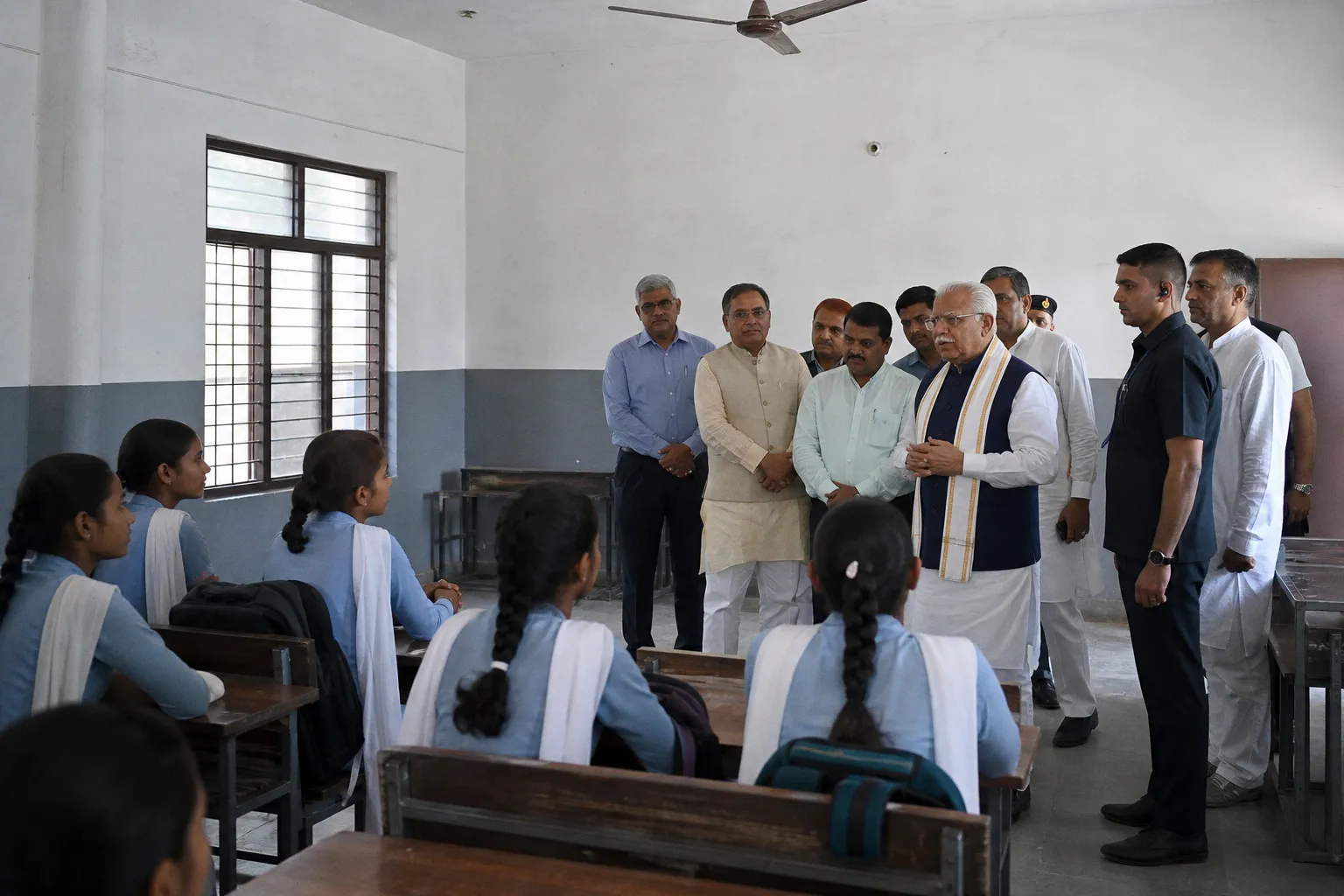
The announcement landed at a Chandigarh review meeting on August 1, with Education Minister Mahipal Dhanda seated at the table. For volunteer crews and NGO networks already routing rebuilds through rural Haryana, the pledge matters less for the headline and more for the procurement pipeline it triggers downstream.
What the order actually covers
The CM's office laid out a building programme — 150 new schools designed against benchmarks pulled from leading states and reputed institutions, with expert guidance built into the brief. Upgrades sit alongside the new builds, targeting the 719 Model Schools, which span Sansriti Model Schools, the Chief Minister's Early English and Excellence Schools, and PM-SHRI Schools. The hardware list is long and concrete: additional classrooms, separate toilets, strong boundary walls, playgrounds, science and computer laboratories, digital labs, smart classrooms, libraries, new furniture, and tablets. Layered on top: AI-based learning facilities, vocational education streams, and state-of-the-art digital libraries.
The CM directed Finance and Education Department officers to guarantee no funding crunch on these works and to push every construction job to the earliest completion. He framed the 150 new schools and 719 Model Schools as role models for the rest of the state — and Haryana itself as a leading state in school education if the plan lands on time.
Where this usually breaks
We have ridden enough dirt roads and staged enough village builds to know the gap between a review meeting and a finished classroom is measured in monsoon cycles, contractor disputes, and budget reallocations. "No shortage of funds" reads clean on a press note; it gets tested at the first delayed reimbursement to a contractor mid-slab. International-standard designs pull in consultants and longer approval chains — which means longer lead times before a single brick is laid. And the to-do list per school is dense: classrooms, separate toilets, walls, playgrounds, labs, smart classrooms, libraries, furniture, tablets. That is not a single tender; it is a stack of them, each with its own delivery slot.
What to track from the road
Three checkpoints worth logging over the next quarter: whether the 150-school design tender posts publicly with a defined delivery window, whether Model School upgrades start with verifiable groundwork — foundations poured, lab fit-outs underway, furniture trucks dispatched — rather than ribbon-cut photo-ops, and whether state funding actually reaches district education offices on schedule. For biker-build networks coordinating with district administrations, that last item is the one that decides whether volunteers line up against an open build site or a locked gate.